How to Find Trending Products for Dropshipping: A Complete 2026 Guide
Learn how to find trending dropshipping products for your store. We recommend tools, research techniques, and share awesome tips!
.avif)

Finding winning products for dropshipping isn't about luck. It's about knowing where to look, understanding what customers actually want, and timing your moves before competition gets thick. This guide walks you through the exact process of how to find trending products for dropshipping in 2026, covering every angle from free research tools to AI-powered platforms. Whether you're trying to find good dropshipping products for your first store or scaling an existing business, the strategies here will help you spot high-demand items with lower saturation—which means better margins and more consistent sales.
What Makes a Product Worth Dropshipping?

Before diving into the research methods, let's nail down what separates a winner from a dud. Not every trending product is profitable to dropship. The best dropshipping products share a few core traits.
First, they ship easily. High-volume, oversized, or fragile items create logistics nightmares and eat into your margins. Lightweight products with simple packaging hit faster, cheaper, and with fewer returns.
Second, margins matter. What makes a good dropshipping product is the gap between what you pay and what you sell it for. You're targeting 15-40% profit margins after all fees. Products priced too low don't justify the marketing spend. Too high and they sit idle because nobody bites.
Third, real demand beats hype. A product trending on TikTok for three weeks is different from something with consistent month-over-month search volume. That's where tools matter—they show you if people are genuinely searching for something or if it's just noise.
Finally, low saturation wins. If everyone and their cousin is already selling it, your margins shrink and ads get expensive. You want products people actively want to buy, but that haven't been picked apart by a thousand other dropshippers.
What Products are Trending Currently
Current market data paints a clear picture of what's moving right now. According to recent dropshipping statistics, fashion remains the largest segment, accounting for over 34% of all dropshipping sales, driven by trends that shift constantly and customer demand for personalized, branded items. Stainless steel drinkware experienced a 90% jump in search interest over the past year, with buyers specifically seeking durable, reusable, and stylish options.
Pet products remain consistently strong across all seasons. Beauty tools, fitness gear, home decor, and phone accessories continue to see year-round demand with quick trend refreshes, making them reliable categories to test new products. TikTok Shop has emerged as one of the fastest-growing sales channels, with the 18-24 age group spending an average of 76 minutes daily on the platform.
Here are some of the specific statistics backing up where demand sits in 2026:
- Global ecommerce sales exceeded $7 trillion in 2024 and are projected to reach $10.4 trillion by 2028.
- 43% of US consumers prefer shopping online to in-store, creating consistent opportunities for dropshippers.
- The Asia Pacific region holds 35.2% of the global dropshipping market share, with a projected 24.5% annual growth rate through 2030.
- North America accounts for 33% of market share with expected 23.5% growth through 2030.
- Over 60% of consumers discover new products via short-form video content on TikTok, Instagram Reels, and YouTube Shorts.
How to Search Trendy Dropshipping Products
Finding products to dropship starts with strategic searching. You're not browsing random storefronts or guessing—you're following data trails and looking for products people are actively hunting for.
How to Identify Your Target Audience and Find Good Items to Dropship to Them
Before you search for anything, get crystal clear on who you're selling to. Your target audience determines which products make sense and which will flop. A 35-year-old homeowner shops differently than a college student. A parent with young children seeks different solutions than a pet owner.
Start by asking: Who has a genuine problem that a product solves? Or who buys on impulse? Home organization enthusiasts make different purchases than fitness enthusiasts. People interested in sustainable living want different items than gamers.
Once you identify your audience, search Google Trends for terms they'd use. If you're targeting fitness enthusiasts, search "home gym equipment" or "resistance training gear." Look for related searches and related topics—these show you what your audience actually cares about. Google Trends reveals rising queries too, which pinpoints what's gaining momentum in your niche.
Pay attention to geography. Google Trends shows location data—darker regions indicate higher search interest. If you notice "smart water bottles" spike in California and New York, that's a signal to focus marketing there or tailor messaging to those markets.
Related searches show intent. If people searching for "yoga mats" are also searching "non-slip yoga mat" and "eco-friendly yoga mat," you know they care about specific features. Tailor your product selection and marketing to match what people are actually hunting for.
Use Google Search Console to monitor how your own site ranks for these terms. Track clicks, impressions, and click-through rates to see which product pages are converting. This tells you what your audience actually buys, not just what they browse.
How to Use AI Dropshipping Product Finders
Modern dropshipping isn't manual spreadsheet work anymore. AI-powered tools do the heavy lifting—analyzing market data, spotting patterns, and serving up winning products in minutes instead of weeks.
Dropshiptool.io is a powerful all-in-one platform that automates the product research workflow. The platform features an AI sales tracker that monitors real-time sales performance across thousands of products, a comprehensive product database updated daily, an ad spy tool to analyze competitor strategies, and the ability to track live Shopify store sales data. The platform also curates weekly hot product drops selected by experts, ensuring you're seeing genuinely viable items rather than random trending lists.
What sets Dropshiptool.io apart is the data reliability. Everything provided to users is live and updated daily, which matters when you're making investment decisions. You're not looking at yesterday's trends or guesses—you're seeing what's actually moving right now.
The workflow is straightforward. You log in, browse the product database or check the weekly expert-curated drops, review the sales metrics, check the ad spy tool to see how competitors are marketing similar items, and import products directly into your store. The platform handles the heavy data analysis so you focus on strategy and marketing.
This beats manual research because AI can process thousands of products simultaneously, catch emerging trends faster than humans, and surface products with the exact margin profile you're looking for.
How to Identify Rising Dropshipping Trends
Spotting trends early is what separates successful dropshippers from people constantly chasing what's already saturated.
Google Trends is your primary free tool here:
- Head to trends.google.com and search for product categories or specific items. The graph shows search volume over time—you're looking for upward trajectories, not flat lines. Upward movement means growing interest. Flat lines mean it's either established (low growth potential) or unpopular (low sales potential).
- Compare terms side-by-side. If "smart water bottle" is rising faster than "regular water bottle," people are shifting to smarter options. This tells you where to focus inventory.
- Set your timeframe strategically. A year-over-year comparison shows seasonal patterns—you'll spot that "Christmas decorations" spike every October-November, while "summer sandals" peak in June-July. This helps you time product drops for maximum visibility and demand.
- Location filtering reveals geographic demand. If "portable AC units" are trending harder in Arizona and Texas than New England, you know where to target ads and where demand is strongest.
- Related topics and related queries are gold. These show adjacent products people search for and what problems they're trying to solve. Someone searching "knee pain relief" might also search "knee braces" or "joint supplements"—these adjacent products can bundle well or inform your niche selection.
Google Search Console complements Trends by showing your own site's performance. Here is how you use it:
- Set it up with your domain, and you'll see which keywords drive clicks, which rank on page one, and which have room to improve. This tells you which products your audience is actually buying vs. just clicking.
- Switch to "Shopping" filter in Google Trends to cut out casual searches and surface purchase-intent queries. Someone searching "Rare Beauty liquid blush" is closer to buying than someone searching "blush color ideas." This filter eliminates noise.
- Use the Shopping filter to see shopping-specific queries, which show stronger intent than general web searches.
10 Best Dropshipping Products to Sell in 2026
Based on current trends, market data, seasonal demand, and search volume, these categories are performing consistently across the US market in 2026:
1. Pet Cooling Accessories & Comfort Items – Summer and year-round, pet owners spend heavily on comfort items. Pet cooling mats, elevated pet beds, and grooming tools see consistent demand. Pet supplies dominate year-round with high margins.
2. Smart Home Gadgets – From smart thermostats to automated lights, home automation continues to rise. People want convenience and energy savings, creating reliable demand for smart home dropshipping products.
3. Wellness & Self-Care Tools – Facial rollers, massage devices, portable saunas, and wellness gadgets remain hot. The self-care trend isn't fading—it's deepening. High-ticket wellness items offer excellent margins.
4. Portable Tech & Chargers – Portable power banks, fast chargers, and travel-friendly tech accessories move constantly. Tech-savvy audiences always want the latest, and margins stay healthy.
5. Claw Clips & Hair Accessories – Simple, affordable, trending on TikTok, and profitable. Hair clips and accessories made a massive comeback and remain strong, especially with Gen Z.
6. Sustainable & Eco-Friendly Products – Glass straws, reusable bags, bamboo products, and eco-friendly home goods see steady growth. Environmental consciousness drives purchasing, and profit margins are competitive.
7. Fitness & Workout Equipment – Resistance bands, yoga mats, dumbbells, and fitness trackers maintain consistent demand, especially after New Year's resolutions hit.
8. Bedroom Organization & Storage – Bedside organizers, under-bed storage, hanging organizers, and decluttering tools perform well as people spend more time at home.
9. Kitchen Gadgets & Appliances – Blenders, air fryers, coffee makers, and kitchen tools drive repeat purchases. People invest in their kitchens, and these items have solid margins.
10. Fashion Basics & Accessories – Leather bags, minimalist jewelry, quality basics, and staple pieces sell year-round. Fashion has the largest market share in dropshipping for a reason—it's always in demand.
How to Find Trending Dropshipping Products in USA
The US market has specific behaviors and preferences worth understanding. Americans respond to convenience, quality, and storytelling. They also trust social proof—reviews, influencers, and peer recommendations carry weight.
Start with US-specific trends. Set Google Trends to "United States" as your location. Search volume patterns differ by region—what's hot in New York might be flat in rural Montana. US audiences heavily influence TikTok, Instagram, and YouTube trends, so if something's viral on these platforms, US demand follows.
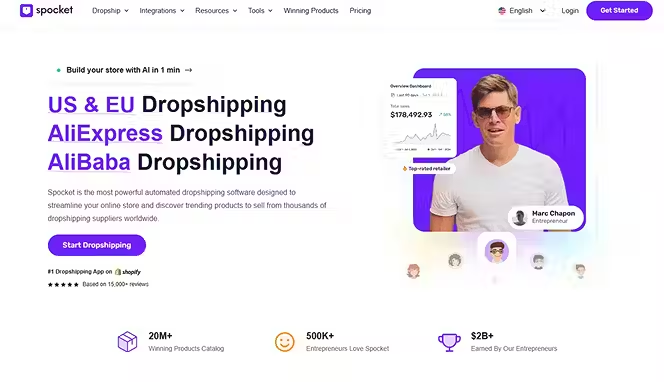
Spocket is a trusted platform offering over 100 million trending dropshipping products specifically curated for the US and EU markets, along with access to top US and EU dropshipping suppliers. The platform provides 24/7 VIP customer support, 1-click product imports, white label dropshipping, private label dropshipping options, branded invoicing capabilities, etc..
Spocket's trending products section is updated daily and shows what's moving right now in US markets. The platform also offers print-on-demand dropshipping services, allowing you to create custom-branded products that stand out from generic competitors. For seasonal products, Spocket's seasonal collection helps you stock up on items timed for specific months and holidays.
Access Spocket's women's clothing collection if that's your niche—it's curated specifically for US fashion demand. Their white label dropshipping option lets you private label products and build authentic brands, not just resell identical items as competitors.
Check product reviews and sales velocity on Spocket. Products with high reviews and consistent sales are proven winners. Rising stars showing growth are opportunities to get in before saturation.
Competitive Research Approach
Check what winning US dropshippers are selling. Look at top stores on Shopify, Amazon, and TikTok Shop. What products appear in multiple stores? That's validation—real demand. What's selling in small quantities with few reviews? Opportunity to improve and capture market share.
Use competitor ad analysis. Tools like Facebook Ad Library and TikTok Ad Library show what competitors are advertising and how much. If one ad is running constantly for a product, it's probably working.
Seasonal & Holiday Planning
The US has specific holiday shopping cycles. Valentine's Day (February), Mother's Day (May), Father's Day (June), Back-to-School (August), Black Friday/Cyber Monday (November), and Christmas (December) all create demand spikes.
Start marketing these products 4-6 weeks before the holiday. Run ads 2-3 weeks out. This is when people start shopping, and you want visibility. Work backward from the holiday date to plan inventory and marketing.
Key Strategies for Finding the Best Products
Monitor Social Media Trends – TikTok, Instagram Reels, and YouTube Shorts move fast. Products going viral on these platforms see demand spikes. Track hashtags like #TikTokMadeMeBuyIt, #VirtalTok, and niche-specific tags. Use tools that aggregate trending hashtags and show velocity.
Check Competitor Stores – Successful dropshippers using Shopify public shops leave their stores open. Browse top shops in your niche. What products dominate? What's selling out? What has hundreds of positive reviews? That's market validation.
Analyze Search Intent – People searching "how to" or "best" are in research mode. People searching brand names or specific models are ready to buy. High-intent keywords convert better. Look for low-competition, high-intent keywords in Google Trends.
Test Aggressively – Don't bet your whole budget on one product. Test 3-5 products with small marketing budgets. See which converts. Double down on winners, kill losers fast.
Track Profit, Not Just Volume – A product that sells high volume but has thin margins might make less money than a lower-volume, high-margin item. Calculate full profit including all fees—platform fees, payment processing, shipping, returns, and ads.
Factor in Seasonality – Products with 90-day windows (holiday items, seasonal gear) need quick execution. Evergreen products allow steady, year-round sales. Mix both.
Use Data Over Gut Feel – "I think this will sell" loses to "Google Trends shows 300% growth and competitors are advertising heavily." Let data guide decisions.
Common Mistakes When Choosing Dropshipping Products
Avoid these traps that drain dropshippers' time and money:
Chasing Fleeting Trends – A product trending for a week might not sustain demand. Look for three-month minimum trends before committing marketing budget. Micro-trends are perfect for testing but risky for scaling.
Ignoring Shipping Costs – A $10 product that costs $6 to ship overseas leaves almost no margin. Check suppliers' shipping rates before committing. Some suppliers have huge shipping costs that make products unprofitable.
Picking Based on Personal Taste – "I like this product" doesn't equal "customers will buy this." Let Google Trends, customer data, and search volume guide decisions, not personal preference.
Oversaturated Niches – Jumping into a niche with hundreds of competitors selling identical products means price wars and low margins. Look for less-obvious angles—underserved sub-niches with real demand.
Ignoring Quality – Cheap products from unreliable suppliers create returns, refunds, and customer complaints. This tanks reputation and conversion rates. Spend time vetting suppliers.
Overlooking Return Logistics – Some products have high return rates. Clothing, electronics, and anything size-dependent see more returns. Factor this into margins.
Forgetting Customer Reviews – A product that 100 stores sell with average 2-star ratings might have a fundamental problem. Dig into reviews to understand the pain point.
Seasonal & Evergreen Strategy Mix
The smartest dropshippers mix both approaches. Seasonal products like Christmas decorations, holiday gifts, and summer gear create massive sales spikes during specific windows but die off entirely in off-season.
Evergreen products like phone cases, office supplies, beauty basics, and pet items sell year-round consistently. They're less exciting than seasonal wins but more predictable.
Run this mix: 60-70% evergreen products you can scale steadily throughout the year, and 30-40% seasonal items timed for peak demand. This balances consistent income with big spike opportunities.
For evergreen products, focus on recurring buyers and repeat orders. For seasonal items, focus on high-volume, fast checkout. The marketing approaches differ, but both matter for full-year revenue.
Before You Push Trendy Dropshipping Products…
Before importing that product and running ads, answer these questions:
Will it ship profitably? Confirm supplier shipping costs. Calculate landed cost (product + shipping + fees). If it's not at least 40% of your selling price, pass.
Is there real search demand? Google Trends showing upward movement? Yes. Specific monthly search volume? More than 1,000 searches monthly? Good sign. Under 100? Risky.
Who's the customer? Can you describe them specifically? Where do they hang out online? What problems does this product solve? If you can't answer this clearly, the targeting will suffer.
What's the competition look like? How many listings appear when you search? Do established brands dominate? Or mostly unknown sellers? If unknown sellers are killing it, there's room.
Can you market it differently? Will you compete on price, or do you have an angle—branding, positioning, content, community? Competing on price is a losing game.
What's the realistic margin? After all costs, what's left? 20% margin is solid for scaling with ads. Under 15% and you're betting on massive volume or organic traffic.
Conclusion
Dropshipping offers real opportunity, but only for entrepreneurs willing to research properly and move decisively. The barrier to entry is low, which means competition is fierce. This guide laid out exactly how to find trending products for dropshipping in 2026.
Start your product research today using the tools and methods covered here, validate your top three product ideas with data, then move quickly. Now you know how to find trending products for dropshipping, so use Spocket today and build your business momentum!
Start your dropshipping business today
How to Find Trending Products for Dropshipping FAQs
What are some good dropshipping products websites in 2026?
Top platforms for sourcing dropshipping products include AliExpress, Shopify's built-in supplier ecosystem, Dropshiptool.io (which offers AI-powered product research with live sales tracking), Spocket (offering US and EU suppliers with print-on-demand options), and Printful (for print-on-demand custom products). Each platform has different supplier bases and product ranges, so many successful dropshippers use multiple platforms simultaneously to access wider product selection and supplier options.
How to find trending products for dropshipping in India?
Finding trending products for Indian dropshipping requires understanding local consumer behavior through Google Trends (set to India region), analyzing Indian social media trends on YouTube Shorts and Instagram, checking local marketplaces like Flipkart and Amazon India to see what's selling, and leveraging platforms like Qikink that specialize in Indian dropshipping suppliers and print-on-demand services. Track seasonal festivals, weather patterns, and cultural events that drive purchasing decisions specific to India's market dynamics and consumer preferences.
What are the top 10 winning products for dropshipping in USA?
The top winning dropshipping products in 2026 include pet cooling accessories, smart home gadgets, wellness and self-care tools, portable tech and chargers, claw clips and hair accessories, sustainable and eco-friendly products, fitness and workout equipment, bedroom organization and storage solutions, kitchen gadgets and appliances, and fashion basics and accessories. All of these categories have demonstrated consistent search demand on Google Trends, strong sales velocity on platforms like Spocket, and proven profit margins between 20-40% when sourced from reliable suppliers.
How do I find dropshipping products with high profit margin?
High-profit dropshipping products typically cost you 25-35% of the selling price (after all fees), leaving 15-40% margin for profit. Look for products with built-in scarcity or unique branding potential like print-on-demand items that buyers can't find elsewhere. Avoid ultra-competitive commodities where everyone charges the same. Research supplier costs on Dropshiptool.io and Spocket, calculate backward from your desired margin, then test marketing to that audience. Niche products with less competition naturally support higher prices and margins.
What is the best way to research trending dropshipping products online for free?
The best free method combines Google Trends (for search demand validation), Google Search Console (for keyword insights and performance), and competitor analysis on Shopify stores, Amazon, and TikTok. Set up Google Alerts for your niche keywords to stay updated on emerging trends. Check TikTok hashtags like #TikTokMadeMeBuyIt to spot viral products early. Use YouTube Trends to see what videos are gaining momentum. Cross-reference all sources—if multiple tools show the same product rising, confidence increases that you've found a genuine opportunity worth testing with paid ads.


Launch your dropshipping business now!
Start free trial


Related blogs

Dropshipping Supplier Directory: Where to Find Vetted Suppliers
Browse our directory of vetted dropshipping suppliers across the US and EU, complete with niches, shipping speed, and pricing. Start your free trial today.


How to Negotiate With Dropshipping Suppliers: 9 Tactics That Actually Work
Learn how to negotiate with dropshipping suppliers on price, MOQs, and payment terms. Proven tactics and email scripts to boost your margins. Try Spocket free.

Best Clothing Dropshipping Suppliers: The 2026 Guide
Compare the best clothing dropshipping suppliers for 2026 — US/EU shipping speeds, pricing, and product quality — and find the right fit to launch your store.