Skincare Dropshipping in 2026: The Complete Guide to Suppliers, Products & Profits
Start skincare dropshipping in 2026 with vetted US & EU suppliers, top products, and compliance tips — then launch with Spocket's $1 trial.
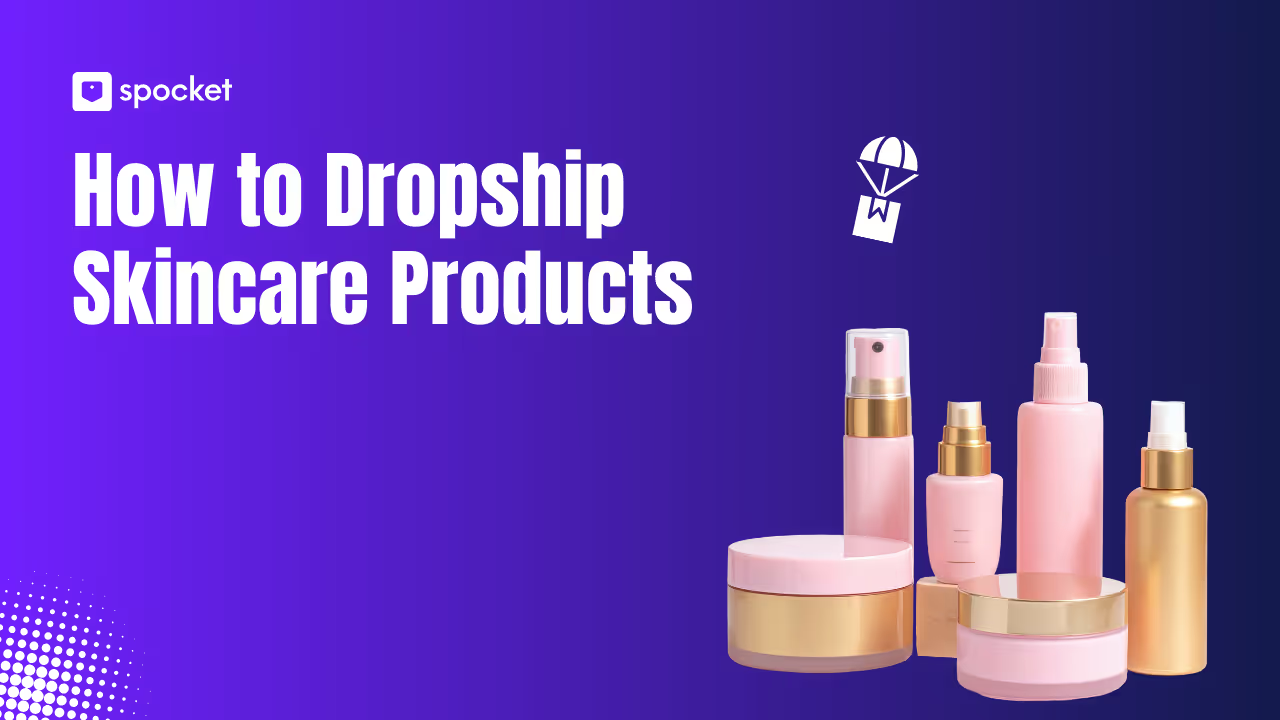


Skincare dropshipping lets you sell cleansers, serums, and beauty tools online without buying inventory upfront — your supplier ships directly to the customer while you run the storefront and marketing. It's one of the few dropshipping niches where people buy again and again once they find something that works, which is exactly why it's worth doing properly instead of listing random products and hoping.
This guide covers what skincare dropshipping actually is, which products and suppliers are worth your time in 2026, how to stay compliant in the US, EU, and UK, and how Spocket's vetted supplier model compares to the alternatives. You can start testing this niche today with Spocket's trial.
What is Skincare Dropshipping And Why It Plays by Different Rules
Skincare dropshipping means selling skincare products through your own store while a supplier holds the stock and ships directly to your customer. You never touch the product — your job is picking the right products, writing pages that convert, and driving the right traffic.
.avif)
The global skin care market is on track to generate roughly $204 billion in 2026, growing about 3.17% a year, inside a beauty and personal care industry worth close to $698 billion overall this year. That's the opportunity. The catch: skincare isn't "list it and forget it" — it touches people's skin, comes with real compliance rules, and punishes sloppy sourcing with chargebacks and bad reviews.
Skincare isn't a neutral category like phone cases, though, and that changes three things in practice:
- Claims matter legally, not just ethically. Say "cures acne" instead of "helps with the look of blemishes" and your product can get regulated as a drug, not a cosmetic.
- Returns are stickier. Once a jar is opened, it usually can't go back on a shelf — decide your returns policy upfront, not after the first complaint.
- Trust is the actual product. A shopper choosing between two similar serums is really choosing which brand they trust not to irritate their skin.
None of this makes skincare harder to sell — it just means the winning stores treat compliance and sourcing as part of the product, not an afterthought.
Is Skincare Dropshipping Profitable? Margins, Risks & What Drives Repeat Orders
Dropshipping skincare products can be genuinely profitable — but the profit comes from the same customer buying three or four times a year, not one big sale.
What drives it:
- Repeat purchases. Cleansers, moisturizers, and serums run out. A customer who likes your serum is back in six to eight weeks — few niches offer that built-in reorder cycle.
- Bundles. An "AM routine" set (cleanser + moisturizer + SPF) lifts average order value without adding a new supplier.
- Subscriptions. Even a simple "reorder every 60 days" email flow turns one-time buyers into recurring revenue.
What eats into it:
- Inconsistent quality. You don't handle the product, so your supplier's batch consistency is your quality control — the top cause of bad reviews.
- Compliance slip-ups. An exaggerated claim or missing ingredient list is the fastest way to get flagged by ad platforms and processors.
- Chargebacks. Beauty products draw more "it didn't work" disputes than most categories — clear product pages and patch-test notes reduce this a lot.
The niche rewards stores that get sourcing and compliance right from day one.
Skincare Formulas vs. Beauty Tools: Where the Real 2026 Opportunity Is
Most guides only cover serums and moisturizers — that's half the picture. Beauty tools (gua sha stones, LED facial devices, facial steamers, hydrogel eye patches) are pulling major search and social traction alongside traditional formulas, and stores selling only one half of this category leave money on the table.
Why it matters for your product mix:
- Tools carry lower compliance risk than active-ingredient formulas, making them a low-friction way to test a new sub-niche.
- Tools are highly shareable — a gua sha demo or LED mask "get ready with me" video does more organic marketing than a static cleanser photo ever will.
- Formulas still drive the reorder engine — tools win the first sale, consumables win the repeat one.
The winning 2026 catalog mixes both: a few viral, shareable tools to pull people in, and replenishable formulas to keep them coming back. Spocket's skincare category already carries both from vetted suppliers.
How to Choose a Profitable Skincare Niche
Your niche decides whether your store reads as curated and expert-led, or as a generic store that happens to sell beauty products and that shows up directly in conversion rate.
Sub-niches that convert well because shoppers already know what they want:
- Sensitive skin - fragrance-free, barrier-support formulas; this audience buys on safety, not hype.
- Men's grooming - simple 2-in-1 routines, direct benefit-led messaging.
- K-beauty - layered routines, "glass skin" positioning; storytelling sells more than specs here.
- Clean beauty - vegan, minimal-ingredient, recyclable packaging; this shopper reads your ingredient list before your price.
Before committing: confirm demand is consistent (not a short spike), check how crowded your angle already is on Google and social, make sure your price band leaves room for shipping and refunds after margin, and confirm your supplier can keep stock. A tight, single-audience store beats an "everything beauty" store almost every time.
Best Skincare & Beauty Products to Dropship in 2026
Your product mix should match what people already buy on repeat, not just what's trending this week.
.avif)
1. High-velocity formulas: cleansers (gel, foaming, oil), moisturizers (lightweight daily, barrier creams), sunscreen (a repeat-order staple — keep claims cautious), and serums (niacinamide, peptides, hyaluronic acid carry strong margins).
2. Beauty tools (the 2026 growth category): gua sha stones and facial rollers, LED facial devices, facial steamers, and hydrogel eye patches.
3. Ingredient-led winners: niacinamide (oil control and barrier support), bakuchiol as a gentle retinol alternative (sensitive-skin "night renewal" positioning), peptides (firming, anti-aging, premium feel), and ceramides + hyaluronic acid (hydration and barrier repair — easy to bundle into AM/PM routines).
4. Bundles that lift AOV: an AM kit (cleanser + moisturizer + SPF), a PM kit (cleanser + serum + night cream), and a travel set of minis.
Before adding any product, check shelf life and batch/expiry documentation, packaging that won't leak in transit (pumps and tubes beat glass droppers), and whether the formula is heat-sensitive enough to need regional fulfillment. For adjacent categories, browse Spocket's haircare, body care, and nail care suppliers to build a full routine-based catalog.
Private Label vs. White Label Skincare Dropshipping: Which One Fits Your Store
This is the question most guides skip — and it's usually the first thing sellers get confused about once they outgrow reselling generic products.
- Reselling - list a supplier's existing product as-is and focus on marketing. Fastest start, no formulation decisions.
- White label - sell a supplier's existing formula under your own brand and packaging. Real brand identity without developing a formula from scratch.
- Private label - the product itself is customized for your brand, usually with higher minimum order quantities and longer lead times, in exchange for stronger differentiation.
If you're testing a niche, reselling through a vetted marketplace supplier lets you validate demand before committing to a formula or MOQ. Once a niche is converting, white label is usually the more practical next step than jumping straight to private label — brand ownership without the MOQ and lead-time commitment. See our breakdown of white label beauty dropshipping with Jubilee for a closer look at one option.
Start your dropshipping business today
Dropship Skincare Products with Spocket
Compliance First: How to Sell Skincare Legally in the US, EU & UK
Compliance isn't a "later" task here — it protects you from payment disputes, ad account bans, and customers with genuine reactions to undisclosed ingredients.
US FDA and MoCRA: Since the Modernization of Cosmetics Regulation Act (MoCRA) took effect, cosmetics sold in the US need a designated responsible person, and manufacturing facilities face registration requirements. In practice: keep claims cosmetic and appearance-focused ("helps hydrate") rather than drug-like ("treats acne"), and make sure your product page's ingredient list matches the physical label exactly.
EU/UK: Selling into Europe or the UK typically requires a designated Responsible Person, a Product Information File (PIF) documenting safety and formula details, and product notification before sale. If a supplier can't name their Responsible Person, that's a red flag before you list anything.
Storefront checklist:
- Show the full ingredient list as text, not buried in an image
- Add a short claims disclaimer ("Results vary by skin type. Always follow directions.")
- Include a patch-test note on active-ingredient products
- Avoid "cures acne," "medical-grade results," or "guaranteed in 24 hours" — these trigger both compliance issues and refund disputes
- Put your returns policy near "Add to cart," in the footer, and in the confirmation email
Get this right once and you'll spend far less time firefighting refunds later.
How to Find Reliable Skincare & Beauty Dropshipping Suppliers
Since you never touch the product, your supplier effectively is your quality control. Vet for: documentation (ingredient lists, batch/expiry info, compliance-ready labeling), batch consistency (identical formula and packaging order to order — a hidden cause of bad reviews), packaging quality (leak-resistant seals and pumps), shipping reliability (a realistic window by region), and returns handling (who pays for damaged reshipments).
Order 2–3 samples of any hero product before listing it. Shake, leave it upside down overnight to check for leaks, and compare the physical label to your planned product page. This half-day of testing catches problems before they become one-star reviews.
Spocket vs. Other Skincare Dropshipping Suppliers
Not all "skincare suppliers" solve the same problem — the structural differences matter more than star ratings.
The honest tradeoff: want a fully custom formula from scratch? A private-label manufacturer is still the right tool. Want a compliant, sellable skincare store launched this month with no MOQ and no multi-week overseas wait? That's what Spocket's vetted US/EU network is built for. Browse the live skincare and beauty supplier catalog to see stock, pricing, and shipping regions before committing.
How to Start Skincare Dropshipping: Step-by-Step
- Pick a niche and a small starter catalog — one audience, 4–5 products, not "everything beauty."
- Set up your store and policies first — shipping timelines by region, a hygiene-friendly returns policy, a patch-test note.
- Import and optimize, don't just import — rewrite titles to match real search terms, add a visible ingredient list, keep claims benefit-led.
- Launch with UGC and micro-influencer content, not paid ads first — routine videos build the trust this category needs.
- Scale with bundles, subscriptions, and reorder flows rather than only chasing new customers — the reorder cycle is where the real profit sits.
Tight on budget at the start? Our guide on starting a dropshipping business with no money covers how to sequence these steps without overspending upfront.
Product Page & Content SEO for Skincare (Including AI Overview Optimization)
A skincare product page's real job is answering the safety and fit questions a shopper has before they contact support — which is also exactly what gets a page cited in Google's AI Overviews and in ChatGPT or Perplexity answers.
Map keywords the way people actually search ("niacinamide serum for oily skin," not just "serum"), use the main phrase in the title and first few lines, and add texture shots and packaging close-ups for engagement. For AI-answer visibility specifically, open each section with a one-sentence direct answer before the detail (the format used throughout this guide), and structure FAQs as clear questions — that's the format AI answer engines pull from most reliably.
Marketing, Pricing & Scaling Without Burning Ad Spend
Skincare marketing works best leaning on content and trust rather than heavy ad spend, and pricing works best when every cost is accounted for upfront.
Content that earns organic reach: real, unfiltered routine videos; micro-influencer seeding (smaller, engaged audiences outperform big names on trust); and ingredient-education posts that double as SEO content.
Pricing: cover cost of goods, shipping, a refunds buffer, and customer acquisition cost, then aim for roughly 2–3x product cost for real margin after ad spend. Bundles and reorder reminders for consumables are the two easiest AOV levers.
Scaling: as you add SKUs or suppliers, run every new product through the same vetting checks from above, add complementary items rather than random ones, and consider Google Shopping or additional marketplaces once your core store is stable. For adjacent product ideas, see our health and wellness products guide and top dropshipping products overall.
Customer Service & Returns for Skincare
Your policies are part of the sale here — a hesitant shopper wants to know what happens if a product irritates their skin before they check out.
- Unopened-only returns, with full refunds or replacements for genuinely damaged items (photo documentation speeds this up for both sides)
- Ready-made responses for common tickets: allergy concerns ("we recommend a patch test if irritation occurs, discontinue and contact us"), delayed shipments, and damaged items
- Review timing: ask 1–2 weeks after delivery, once someone's actually used the product
Start Your Skincare Dropshipping Store Today
Skincare dropshipping in 2026 rewards sellers who treat sourcing and compliance as part of the product, not the ones chasing whatever's trending on TikTok this week. Pick a focused niche, mix shareable tools with repeat-purchase formulas, source from suppliers who can document what's actually in the bottle, and keep your claims honest. Do that consistently and you've got a business that compounds through reorders instead of needing a new customer every single day.
Spocket's vetted US and EU skincare suppliers mean you can start sourcing compliant, ready-to-sell products today — no MOQ, no overseas shipping wait.
Skincare Dropshipping FAQs
What is skincare dropshipping?
Skincare dropshipping is a fulfillment model where you sell skincare products through your own online store while a supplier holds the inventory and ships orders directly to customers, so you never handle stock yourself.
Is skincare dropshipping profitable in 2026?
Yes — the category benefits from a built-in repeat-purchase cycle few other dropshipping niches have, though margins depend on a focused niche, careful supplier vetting, and keeping compliance and chargebacks under control.
Is dropshipping skincare legal?
Yes, as long as the products meet the rules where you sell — in the US that means following FDA and MoCRA labeling requirements and avoiding drug-like claims, and in the EU/UK it means working with a Responsible Person and proper product notification.
Do I need FDA approval to sell skincare products?
Cosmetics aren't "approved" by the FDA the way drugs are, but they are FDA-regulated — labels must be accurate, and drug-like claims (like "treats acne") can get a product reclassified and regulated as a drug instead of a cosmetic.
What are the best skincare dropshipping suppliers?
It depends on your goal: private-label manufacturers suit sellers building a fully custom formula, open marketplaces suit sellers prioritizing catalog size over vetting, and vetted marketplace suppliers like Spocket suit sellers who want compliant, ready-to-sell US/EU products with no MOQ.
What's the difference between private label and white label skincare dropshipping?
White label means selling an existing supplier formula under your own brand and packaging, while private label means the formula is customized specifically for your brand — usually with higher minimum orders and longer lead times.
What are the best skincare products to dropship right now?
A mix works best: replenishable staples (cleansers, moisturizers, sunscreen, niacinamide or peptide serums) for repeat orders, paired with shareable beauty tools (gua sha stones, LED devices, facial steamers) that drive first-time discovery through social content.
How do I find reliable skincare dropshipping suppliers?
Vet for ingredient documentation, batch-to-batch consistency, leak-resistant packaging, realistic regional shipping timelines, and a clear returns process — and order samples yourself before listing any hero product.
Can I dropship skincare on Shopify?
Yes, most major ecommerce platforms support skincare stores; compliance responsibility (accurate labeling, honest claims, ingredient disclosure) sits with the seller regardless of platform, so choosing vetted suppliers matters more than the platform itself.
What's the best return policy for opened skincare products?
Accept returns on unopened items only, but offer full refunds or replacements for damaged or defective products with photo proof — and place the policy where shoppers will actually see it before checkout, not buried in a terms page.


Launch your dropshipping business now!
Start free trial


Related blogs
Dropshipping Supplier Directory: Where to Find Vetted Suppliers
Browse our directory of vetted dropshipping suppliers across the US and EU, complete with niches, shipping speed, and pricing. Start your free trial today.

How to Negotiate With Dropshipping Suppliers: 9 Tactics That Actually Work
Learn how to negotiate with dropshipping suppliers on price, MOQs, and payment terms. Proven tactics and email scripts to boost your margins. Try Spocket free.

Best Clothing Dropshipping Suppliers: The 2026 Guide
Compare the best clothing dropshipping suppliers for 2026 — US/EU shipping speeds, pricing, and product quality — and find the right fit to launch your store.