Highest-Paying Skilled Trades You Can Learn Today
What trade makes the most money? Discover which skilled trades pay $100K+. Real salary data, specialization paths, and the fastest routes to six-figure income.


The skilled trades are in serious shortage right now. You've probably heard that college degrees are saddled with crushing debt while skilled trades workers are pulling in six figures without the loan burden. But not all trades pay the same—and if you're going to spend 4-5 years training, you want to know which trade makes the most money. We researched actual salary data from 2026 to show you where the real money is in the trades. Whether you're starting fresh out of high school, thinking about switching careers, or just curious what trade makes the most money, this is what you need to know.
Why Skilled Trades Pay Well Now
The trades are experiencing a perfect storm of rising demand and shrinking supply. Older workers are retiring faster than young people are entering the field. Meanwhile, infrastructure spending, manufacturing automation, renewable energy projects, and constant home maintenance needs are creating endless work. Companies can't fill positions, so they're raising pay to attract talent. This isn't temporary—it's structural. Every year from now through the 2030s, skilled trades will remain in critical shortage across North America. That means job security and pricing power for workers who develop real skills.
How Much Does a Trade Job Actually Pay?
The money varies dramatically by trade, location, experience level, and industry. Entry-level trainees or apprentices typically earn $40,000–$65,000 annually while learning on the job. After 5-7 years of experience, journeyperson-level workers make $75,000–$100,000+. Senior specialists and business owners? They're regularly hitting $120,000–$200,000+. Some trades top out lower (around $85,000–$95,000). Others, especially in industrial and specialized work, regularly break $150,000+. Geography also matters—electricians in San Francisco earn 20-30% more than electricians in rural areas, though cost of living is wildly different too.
Top Paying Skilled Trades in 2026
Here is a list of what trades make the most money. If you want to join apprenticeships and work your way up, they are perfect for you. Check them out:
1. Elevator Installers and Repair Technicians
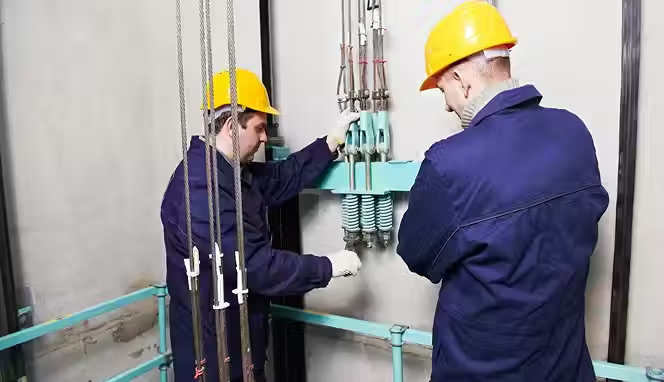
Elevator technicians maintain and repair the mechanical systems that move people between floors in buildings. When an elevator breaks, it costs the building money. Companies hire fast, pay premium rates, and expect immediate solutions. These technicians work on hydraulic systems, controls, safety mechanisms, and emergency protocols. The work is highly specialized and requires technical knowledge combined with problem-solving under pressure.
How to enter: Most elevator technicians go through a 4-5 year union apprenticeship while earning wages. You'll start as a trainee, learning on actual equipment in the field. After apprenticeship, you'll earn a license and can work independently or for service companies.
Why it pays: Elevator work is unionized in most markets, which protects wages. There are fewer than 30,000 elevator technicians in the US, creating artificial scarcity. Overtime is common and well-compensated. Building owners pay whatever it takes to get systems fixed.
Earning potential: Entry-level apprentices earn $50,000–$70,000 while learning. Journeyperson technicians average $82,000–$110,000 annually. Experienced technicians in major metros earn $130,000–$150,000+, especially with overtime. Running your own elevator service company can generate $200,000+.
2. Master Plumber

Master plumbers diagnose and repair water, gas, and waste systems in homes, commercial buildings, and industrial facilities. Unlike residential plumbers who handle basic repairs and fixtures, master plumbers tackle complex installations, renovations, underground work, and emergency situations. They read blueprints, size systems correctly, coordinate with other trades, and ensure code compliance. The work involves problem-solving—finding leaks, determining root causes, designing solutions that actually work.
How to enter: You'll complete a 4-5 year apprenticeship, logging specific hours of on-the-job training under a licensed plumber. You attend classroom instruction learning code, safety, and system design. After apprenticeship, you'll sit for a journeyperson license. To become a master, you need additional years of experience (usually 2-5 more) plus passing an advanced exam.
Why it pays: Plumbing is essential and can't be outsourced. Emergency calls pay premium rates. Master plumbers command higher billing because they solve complex problems clients can't figure out themselves. Most eventually start their own business where margins are better. Unlike many trades, plumbing work is steady year-round.
Earning potential: Entry-level apprentices earn $40,000–$50,000 while training. Journeyperson plumbers average $55,000–$85,000 annually depending on location and whether they do residential or commercial work. Master plumbers average $85,000–$120,000+. Plumbers running their own company regularly earn $150,000–$200,000+ annually.
3. Industrial Electrician
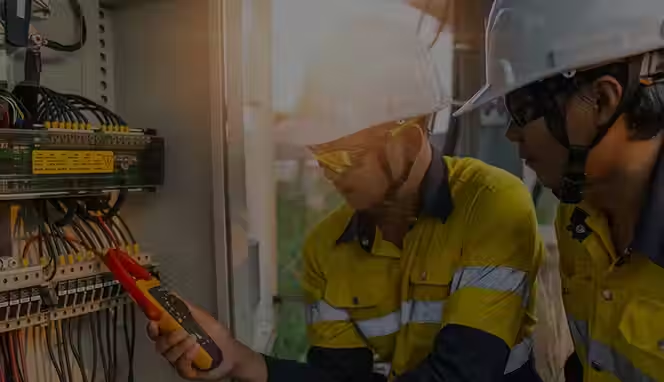
Industrial electricians work on complex electrical systems in manufacturing plants, data centers, hospitals, commercial buildings, and power facilities. This is different from residential wiring—you're installing and maintaining systems that power entire operations. The stakes are higher (downtime costs thousands per minute), the equipment is more sophisticated, and the salaries reflect that. You work with three-phase power, industrial controls, automation systems, and specialized equipment.
How to enter: Start with a 4-5 year apprenticeship combining classroom and field work. You'll learn blueprint reading, electrical theory, code requirements, safety protocols, and actual installation/troubleshooting. After apprenticeship, you earn a journeyperson license. From there, you can pursue specialized certifications in areas like data center electrical systems, renewable energy, or industrial automation.
Why it pays: Industrial facilities can't afford downtime. They'll pay premium wages for electricians who can diagnose and fix problems quickly. Industrial work is more stable than residential (less seasonal variation). Specialization pays significantly more—if you're the person who understands data center power distribution or solar installation systems, companies will pay for that expertise.
Earning potential: Entry-level apprentices earn $45,000–$60,000 while training. Journeyperson industrial electricians average $75,000–$95,000 annually. Experienced industrial electricians specializing in high-demand areas (data centers, renewable energy, manufacturing automation) make $120,000–$180,000+. Electrical contractors running their own industrial service company earn $200,000+.
4. Commercial HVAC Technician
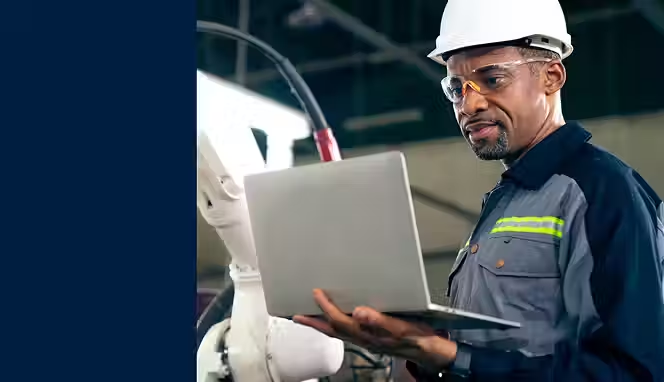
Commercial HVAC technicians maintain heating, cooling, and ventilation systems in large buildings—hospitals, data centers, office complexes, manufacturing facilities, hotels. Unlike residential HVAC work, commercial systems are more complex, serve larger areas, and require precision. When a hospital's cooling system fails, someone's paying whatever it takes to get it fixed. Commercial techs work on rooftops, in mechanical rooms, coordinating with other trades, and troubleshooting sophisticated controls.
How to enter: Most states require a 4-5 year apprenticeship. You'll start as a helper, learning systems while working alongside licensed technicians. You attend technical classes on refrigeration, electrical components, controls, and code requirements. You'll also need to get comfortable with the full range of commercial HVAC equipment, from large-capacity recovery machines and balometers to megohmmeters and phase rotation meters that are not often needed in residential work. After apprenticeship, you earn a license. Most commercial techs continue getting certifications in specific equipment (Carrier, Trane, etc.).
Why it pays: Commercial clients have less price sensitivity than homeowners—they care about reliability and speed. Emergency calls command premium rates. Commercial work is steadier than residential (peak summer doesn't matter if your data center needs cooling year-round). Specialization pays well—if you're certified on hospital HVAC systems or data center cooling, you're valuable.
Earning potential: Entry-level apprentices earn $38,000–$52,000 while learning. Journeyperson commercial HVAC techs average $55,000–$90,000 annually. Experienced techs specializing in commercial/industrial work (chillers, large systems, data centers) earn $110,000–$160,000+. HVAC contractors running their own service company earn $150,000–$300,000+.
5. Specialized Welder
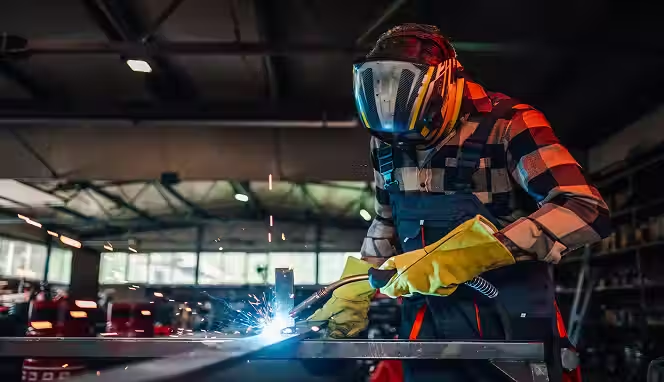
General welders make decent money, but specialized welders make significant money. Underwater welders work on offshore oil rigs and subsea infrastructure. Pipeline welders travel to major projects. Aerospace welders work on components for aircraft manufacturers where tolerances are measured in thousandths of an inch. Structural welders build the steel frameworks for buildings and bridges. Each specialization has different risks, skill requirements, and compensation.
How to enter: Start with basic welding certification (6 months–2 years). Learn different processes (MIG, TIG, stick, flux-core) and pass certification exams through the American Welding Society (AWS). From there, pursue specialized certifications. Pipeline welders might get pipeline-specific credentials. Aerospace welders need additional certifications for working in controlled environments. Underwater welders require commercial diving certification plus welding expertise.
Why it pays: Specialized welding is rare. Most people who enter trades don't pursue specialized credentials. Pipeline projects are temporary contracts—you work intensely for 6-12 months, then move to the next project. Underwater welding involves hazard pay. Aerospace welding demands precision and carries liability—errors can cause failures. Structural work on major projects involves union protection and safety requirements that push wages up.
Earning potential: Entry-level general welders earn $40,000–$55,000 annually. Specialized welders break into $80,000–$120,000+ quickly. Pipeline welders on active projects earn $100,000–$150,000+ annually (contract work, often 6-12 month assignments). Underwater welders earn $100,000–$200,000+ annually. Aerospace welders earn $90,000–$130,000+. Experienced welders running their own fabrication shop earn $200,000+.
6. Powerline Technician
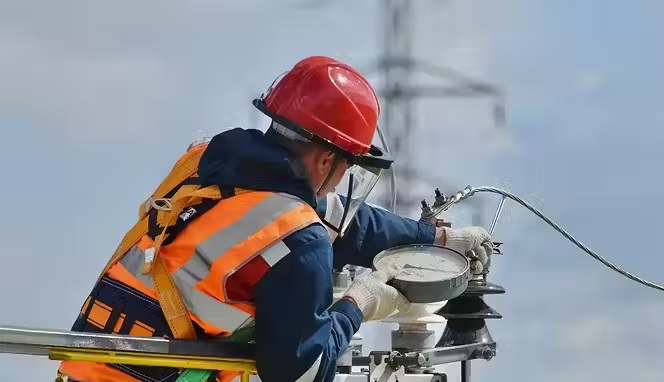
Powerline technicians install and maintain the electrical distribution network that carries electricity from power plants to homes and businesses. You work on poles 40+ feet in the air, often in harsh weather conditions, handling high-voltage lines that can kill instantly. The work is dangerous, physically demanding, and critical infrastructure that can't fail. When storms knock out power, you're the person restoring it.
How to enter: Most utilities operate apprenticeship programs. You'll start as a line worker or apprentice, learning safety protocols, climbing techniques, equipment operation, and electrical theory while working. Apprenticeships typically take 4-5 years. You'll earn wages throughout. After apprenticeship, you become a journeyperson and earn full wage rates.
Why it pays: Powerline work is unionized in most areas. There's genuine hazard pay—the work is dangerous and uncomfortable. Storm response is overtime, and utilities budget heavily for storm recovery. You have job security (utilities can't outsource this work), union protection, and excellent benefits. Experienced techs can transfer to supervisory roles or specialized areas like renewable energy infrastructure.
Earning potential: Entry-level apprentices earn $50,000–$70,000 while training. Journeyperson powerline technicians average $100,000–$130,000+ annually. Experienced technicians, especially those handling storm response or specialized infrastructure, earn $140,000–$170,000+. Union benefits typically include excellent pensions, making total compensation even higher.
7. Millwright
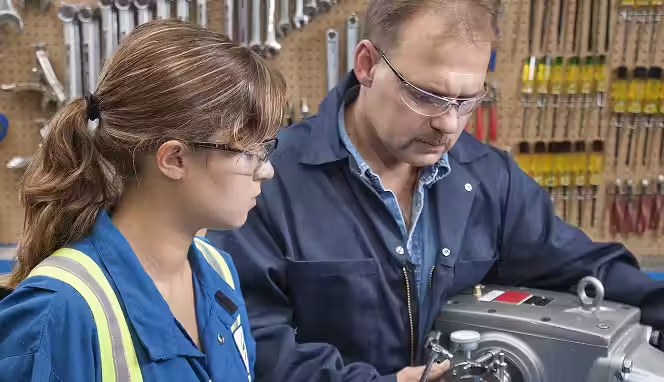
Millwrights install, maintain, and repair industrial machinery and equipment in manufacturing plants, food processing facilities, steel mills, and power plants. This is precision mechanical work—aligning equipment within thousandths of an inch, ensuring proper bolt tension, troubleshooting complex systems. When manufacturing equipment breaks, production stops. That urgency drives premium pay. Shutdown millwrights work on planned maintenance during facility shutdowns—intensive work for high compensation.
How to enter: Most states require a 4-5 year apprenticeship combining classroom and field training. You'll learn machinery operation, blueprint reading, precision measurement, hydraulics, electrical basics, and safety. After apprenticeship, you earn a journeyperson license. Many millwrights pursue additional certifications in specific equipment or hydraulic systems.
Why it pays: Industrial maintenance is critical and specialized. Manufacturing facilities can't afford extended downtime. Shutdown work is intensive—you might work 12-14 hour days during a planned maintenance shutdown, earning premium pay. As facilities age, more maintenance is needed. There aren't enough qualified millwrights, creating bidding wars for talent.
Earning potential: Entry-level apprentices earn $50,000–$65,000 while learning. Journeyperson millwrights average $85,000–$110,000 annually. Experienced millwrights, especially those doing shutdown work or specializing in certain machinery, earn $130,000–$160,000+. Senior millwrights or supervisors in large facilities earn $140,000–$180,000+.
8. Heavy Equipment Operator
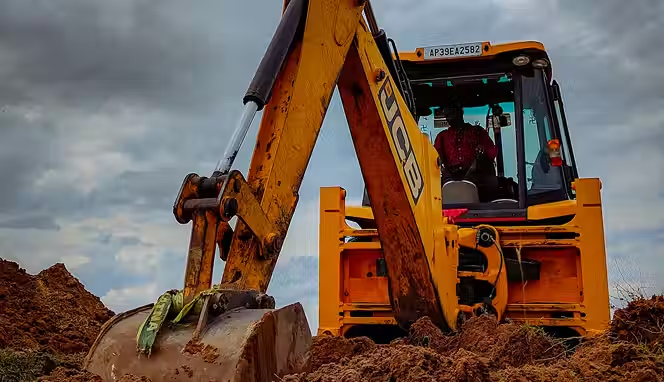
Heavy equipment operators run machinery on construction sites—cranes, bulldozers, excavators, graders, and loaders. The operator often determines construction speed and safety. A skilled crane operator can make complex lifts happen smoothly. An incompetent operator creates delays, safety hazards, and cost overruns. Good operators command premium pay. Tower crane operators (the tall cranes on large construction projects) make more than ground equipment operators because the skill requirement and hazard are higher.
How to enter: You'll need a high school diploma and pass a written test. Then you'll complete equipment-specific training—either formal training programs (1-2 years) or apprenticeships. Most equipment manufacturers offer certification programs. Some operators start as equipment laborers and work their way up. Getting commercial licensing through the local jurisdiction is often required.
Why it pays: Construction timelines are inflexible. If the crane operator isn't skilled, projects fall behind schedule, costing thousands daily. Large equipment operators working on major construction projects command top dollar. Overtime is common on construction sites. Some operators move between projects seasonally, commanding premium rates during peak construction.
Earning potential: Entry-level equipment operators earn $45,000–$60,000. Experienced general equipment operators average $70,000–$100,000+. Tower crane operators on major projects earn $100,000–$150,000+. Operators running their own equipment rental or contracting business earn $150,000–$300,000+.
9. Aircraft Mechanic and Avionics Technician
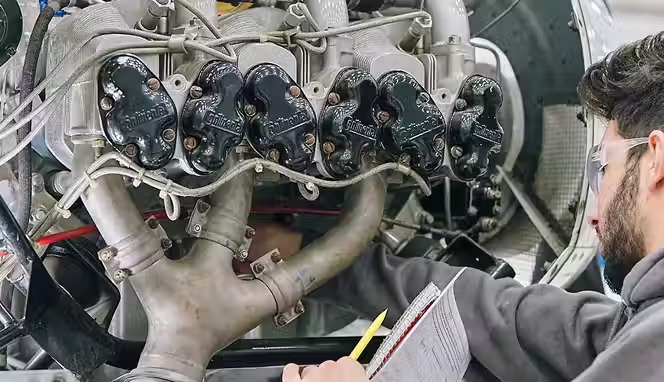
Aircraft mechanics maintain and repair aircraft, engines, airframes, and systems. Avionics technicians specialize in the electronics—radar, navigation, communication systems. This work requires precision, detailed technical knowledge, and adherence to strict federal regulations. One mistake can cause catastrophic failure at 35,000 feet. That accountability drives rigorous training and premium pay. You work at airports, maintenance facilities, or for airlines.
How to enter: Most require FAA certification through an FAA-approved program or military experience. Programs typically take 1-2 years. You'll learn aircraft systems, maintenance procedures, and troubleshooting. After training, you'll apply for your FAA airframe and/or powerplant mechanic certificate. Avionics technicians need additional electronics training and FAA certification.
Why it pays: Aircraft maintenance is heavily regulated. Companies must hire only FAA-certified mechanics. There aren't enough certified mechanics to meet demand. Airlines can't fly without aircraft, so they budget generously for maintenance staffing. Aviation is stable—planes still need maintenance regardless of economic conditions.
Earning potential: Entry-level aircraft mechanics earn $50,000–$70,000. Experienced mechanics average $80,000–$110,000+ annually. Avionics technicians average $75,000–$95,000. Senior mechanics or those at major airlines earn $120,000–$150,000+. Mechanics in aerospace manufacturing or specialized helicopter work earn $100,000–$140,000+.
10. Wind Turbine Technician
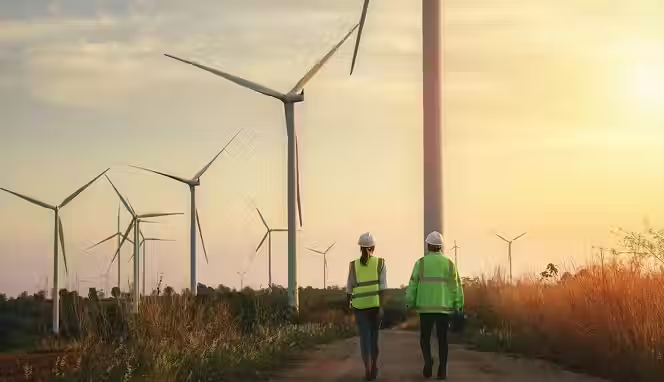
Wind turbine technicians install, maintain, and repair massive wind turbines generating electricity on wind farms. You'll climb 300+ feet to access turbines, performing maintenance, replacements, and repairs. The work is technical (electrical, mechanical, hydraulic systems), demanding (heights, weather exposure), and growing explosively as renewable energy expands. This is one of the fastest-growing trades in North America.
How to enter: Most positions require a certificate or associate degree in wind energy or renewable technology—programs run 1-2 years. You'll learn turbine systems, electrical troubleshooting, safety protocols, and climb training. Some utility companies operate their own training programs. Physical fitness and comfort with heights are prerequisites, not optional.
Why it pays: Wind energy is rapidly expanding and government-subsidized. Companies are building wind farms across the country. There aren't enough trained technicians. The work is remote (farms are often hours from cities), hazardous, and physically demanding, justifying premium pay. Turbines are complex and break regularly, creating steady work.
Earning potential: Entry-level technicians earn $50,000–$65,000. Experienced technicians average $75,000–$95,000+ annually. Senior technicians or those in high-paying regions earn $100,000–$130,000+. Some utilities hire turbine technicians into career paths leading to supervisory roles paying $130,000+.
Specialization, Location, and Business Ownership
The difference between making $80,000 and $180,000 in the same trade usually comes down to three factors.
Specialization: A general electrician makes less than an industrial electrician. A residential plumber makes less than a master plumber doing complex commercial installations. A general welder makes less than a pipeline or aerospace welder. Specialization requires additional training and experience, but it pays significantly more. If you want to know what trade makes the most money, specialize in the areas where companies have the highest problems-to-solve and budget to match.
Geographic location: Electricians in San Francisco earn 35-40% more than electricians in rural areas. But cost of living also differs dramatically. What matters is take-home pay after taxes and living expenses. You might make more hourly in expensive cities but actually pocket more money in regions with lower costs. Some trades migrate seasonally—pipeline welders follow projects, heavy equipment operators move between construction sites. This flexibility can mean $200,000+ annually for people willing to travel.
Business ownership: Most high-income tradespeople eventually run their own business. An electrician working for a company earns $90,000–$110,000. An electrician running their own electrical contracting company earns $200,000–$400,000+. The same applies to plumbing, HVAC, welding, and other trades. Business ownership carries risks (cash flow, liability, managing employees), but the upside is substantially higher. Many tradespeople spend 10-15 years building expertise and customer relationships, then launch their own shop at 35-40 and build significant wealth.
How Trades Compare to College Degrees
A trade takes 4-5 years of training while earning $40,000–$50,000 annually. By year 5, you're earning $70,000–$90,000+ with no student debt. By year 10, you're earning $100,000+. A bachelor's degree takes 4 years of full-time school with zero income and $20,000–$100,000 in debt. Even accounting for time-value differences, trades are financially competitive much faster. You gain job security sooner, have lower financial risk, and maintain mobility—if you don't like your employer, you can take your skills to another company or start your own business. Meanwhile, many college graduates are still paying student loans at year 10. Trades aren't "easier" than college—they're just different. You'll work physical jobs, learn on the job, and deal with customer demands. But financially, the math increasingly favors trades, especially if you eventually specialize or run your own business.
How to Choose Which Trade Makes the Most Money for You
Don't pick a trade purely based on salary projections. The highest-paying trade for someone else might be miserable for you. Consider these factors.
Physical demands: Some trades are physically brutal. Pipeline welders work in extreme weather, away from home for months. Powerline technicians work at heights in storms. Heavy equipment operators spend 12+ hours in machinery. If you have physical limitations or just prefer working indoors, choose accordingly. Specialization can reduce physical demands—industrial electricians work in climate-controlled facilities more than residential electricians.
Work environment: Some prefer consistent work locations (working at the same facility daily). Others want variety (traveling between job sites). HVAC technicians visiting different buildings daily experience different environments than millwrights at single manufacturing plants. Some trades work indoors, others outdoors. Weather, customer interaction, and physical environment differ dramatically. Spend time observing people actually doing the work before committing.
Job security and work consistency: Some trades are seasonal or project-based. Construction work fluctuates with economic cycles. HVAC demand is steadier (people always need heating/cooling). Utility work (powerline, water systems) is recession-resistant. If you value stability, choose trades with consistent demand. If you're comfortable with variable income and prefer seasonal work patterns, project-based trades might suit you.
Path to specialization: Some trades have clear paths to lucrative specialization. Welding has well-defined specialties (pipeline, aerospace, underwater). Electrical work has clear progression (residential → commercial → industrial). Others are more linear (elevator technicians don't really specialize). If you value continuous growth and increasing income, choose trades where specialization is possible.
Startup and business ownership potential: Some trades scale to business ownership easily (electricians, plumbers, HVAC contractors generate substantial revenue). Others are harder to scale as businesses (powerline technicians work for utilities; aircraft mechanics need FAA oversight). If business ownership is your goal, choose trades with entrepreneurial pathways.
Conclusion
The skilled trades offer real career pathways to earning substantial income without college debt. Not all trades pay the same—what trade makes the most money depends on specialization, location, and your willingness to eventually run a business. Elevator technicians, industrial electricians, master plumbers, specialized welders, and powerline technicians consistently earn $120,000+ with experience. The 10-15 year timeline to six-figure income through business ownership is realistic for people who specialize, build customer relationships, and manage their business effectively. If you're serious about earning good money without massive education costs, the trades are a viable path. Start with an apprenticeship, build expertise, consider specialization, and eventually run your own business. That formula has created wealth for thousands of tradespeople.
Start your dropshipping business today
What Trades Make the Most Money FAQs
Can I really make six figures in a skilled trade?
Yes, but not immediately. Entry-level trades pay $40,000–$50,000 while you're learning. By year 5-7, experienced journeyperson-level workers earn $85,000–$120,000. Six figures typically requires specialization (industrial work, specialized welding, business ownership), location advantage (expensive regions pay more), or business ownership. Some specialized trades like offshore welding hit six figures much faster. The timeline is usually 10-15 years to consistent six-figure income through business ownership.
Which trade makes the most money starting from day one?
Apprentices don't make much initially—most earn $40,000–$50,000 while training. However, some apprenticeships pay slightly better—powerline utility apprentices often earn more than electrician apprentices because utilities budget generously. By year 2-3 of apprenticeship, wages increase significantly. If you want money quickly, look for union apprenticeships in utilities or major construction firms where apprenticeship wages escalate faster.
Is the job market for trades actually as good as people say?
Yes, but it varies by trade and location. Electricians, plumbers, HVAC technicians, and welders are consistently in shortage. Demand is genuine—facilities need maintenance, new construction requires trades, utilities face retirements. However, oversaturated markets exist in some regions. Before committing to training, research actual job availability and wages in your specific area. Some trades are oversupplied in certain regions while undersupplied in others.
Do I really need a union to earn good money in trades?
Not necessarily, but union membership typically provides better wages, benefits, and job security. Union electricians earn more than non-union electricians in the same market. However, non-union tradespeople can earn well, especially through business ownership or specialization. The trade-off: unions provide stability and protection; non-union work offers flexibility but less security. Both can lead to six-figure income.


Launch your dropshipping business now!
Start free trial.avif)


Related blogs

How to Set Up Automated Order Fulfillment With Spocket and Shopify
Set up a smoother Shopify dropshipping workflow with Spocket by connecting your store, importing products, processing orders, syncing tracking, and reducing manual fulfillment tasks.


How to Open a Business Bank Account for Your Dropshipping Store
Set up your dropshipping finances the right way with a dedicated business bank account built for payouts, supplier payments, taxes, and long-term store growth.

Spocket vs Dropified: Which Tool Is Better for Multi-Store Scaling?
Compare Spocket and Dropified for multi-store dropshipping, supplier quality, automation, fulfillment, product sourcing, and scaling across ecommerce platforms.