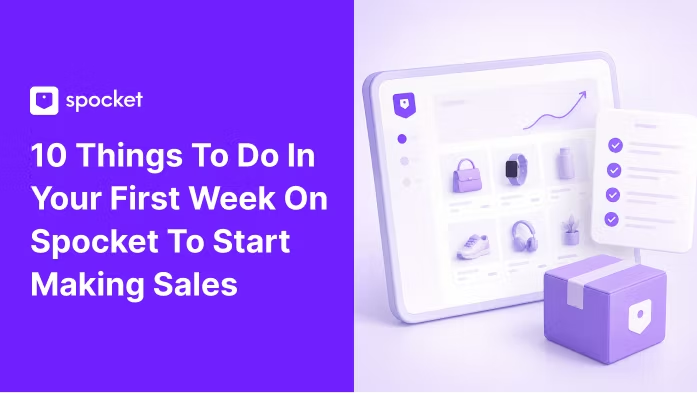
10 Things to Do in Your First Week on Spocket to Start Making Sales
Start selling faster with this first-week Spocket checklist covering products, suppliers, pricing, samples, store setup, and launch tips.
.avif)

Your first week on Spocket should not be spent randomly browsing products or adding everything that looks interesting. It should be used to build a focused launch foundation for your dropshipping store. That means choosing a clear niche, selecting reliable dropshipping suppliers, checking shipping times, setting profitable prices, ordering product samples where possible, improving product pages, and preparing your store for targeted traffic. Spocket helps beginners access fast-shipping products, US and EU suppliers, product importing, branded invoicing, and order automation, making it easier to launch with confidence. However, sales depend on how strategically your store is set up. Here’s how to start dropshipping with Spocket in your first week and move from setup mode to sales mode with a clear, practical plan.
Why Your First Week on Spocket Matters?
Your first week on Spocket should be about validation, not perfection. Instead of importing random products, focus on building a small, sales-ready dropshipping store with a clear niche, reliable suppliers, fast-shipping products, and profitable pricing.
Many beginners struggle because they add too many unrelated products, copy generic descriptions, ignore shipping times, or price items without checking margins. That makes the store look unfinished and can reduce customer trust.
A focused first week helps you:
- Choose Spocket products with real demand
- Avoid slow-shipping or low-margin items
- Work with reliable dropshipping suppliers
- Create better product pages before sending traffic
- Build a repeatable process for testing products
Think of week one as your launch sprint. The goal is not to build a perfect store. It is to create a clean, focused store that is ready for traffic and early sales. Using Spocket from day one helps you skip guesswork, find reliable dropshipping suppliers faster, and build a store that feels ready for real customers — not just product testing.
10 Things to Do in Your First Week on Spocket to Start Making Sales
To start dropshipping with Spocket, follow a clear first-week plan. Focus on the steps that directly affect sales: niche clarity, product quality, supplier reliability, shipping speed, pricing, and store trust.
.avif)
Define One Clear Niche Before Adding Products
One common beginner mistake is adding unrelated products just because they look interesting. A focused dropshipping niche makes your store easier to brand, easier to market, and easier for shoppers to trust.
Choose a niche based on:
- Buyer intent
- Product availability on Spocket
- Repeat purchase potential
- Clear customer pain points
- Visual appeal for ads and social media
Good beginner-friendly niches include pet accessories, home organization, fitness gear, beauty tools, eco-friendly products, and baby essentials.
Avoid building a general store in week one unless you already have a strong testing strategy. A focused niche helps you choose better products, write clearer product descriptions, and attract the right buyers.
Search for Products With Fast Shipping and Strong Margins
When searching for dropshipping products on Spocket, do not pick items only because they are cheap. Look for products customers want, can receive quickly, and can be sold profitably.
Shortlist products that:
- Ship from your target market or nearby region
- Have clear product images
- Solve a specific problem
- Leave room for a healthy markup
- Offer useful variants
- Work well as gifts, impulse buys, or repeat purchases
A simple rule: shortlist 10–15 products first, then narrow them down to 5–8 launch-ready products. This keeps your store focused without making it feel empty.
Check Supplier Details, Processing Time, and Shipping Time
Before importing a product from Spocket, check the supplier details, processing time, shipping destinations, product cost, and delivery estimates. A trendy product is not worth adding if shipping is too slow or the margin is too thin.
Faster delivery from regional, US, or EU dropshipping suppliers can improve the customer experience and reduce support issues.
Use this rule before adding any product:
Do not add a product only because it looks trendy. Add it because the supplier, shipping time, and profit margin make sense.
Order Product Samples for Your Best Products
Before you promote a product heavily, order a sample if possible. Product samples help you check quality, packaging, delivery time, and how the item looks in real life. This is especially important if you plan to run ads or position the product as a bestseller.
Start with samples for:
- Your main hero product
- Products you plan to advertise
- Higher-ticket items
- Products where size, texture, color, or material matters
Samples also give you original content for your store. You can take real photos, record short videos, create UGC-style reels, and write more honest product descriptions. This makes your product page feel more trustworthy than a page using only supplier images.
With Spocket, ordering samples helps you test products before scaling, so you can launch with more confidence instead of guessing what customers will receive.
Import Products Strategically Instead of Filling Your Store
Do not import 50–100 products in your first week. A large catalog may look impressive, but it is harder to edit, organize, and optimize. A smaller, curated store looks cleaner and helps shoppers understand what you sell.
A better first-week setup is:
- 1 hero product
- 4–7 supporting products
- 1–2 upsell or bundle-friendly products
Before publishing each Spocket product, review and edit:
- Product title
- Product description
- Images
- Variants
- Tags
- Pricing
- Shipping information
- SEO title and meta description
This approach keeps your store focused and sales-ready. Spocket makes product importing easier, but the real advantage comes when you choose products carefully and polish them before sending traffic.
Rewrite Product Titles and Descriptions for Buyers
Supplier descriptions are often basic. They may list features, but they do not always explain why someone should buy the product. To start making sales, your product page should answer customer questions and make the product feel useful, clear, and trustworthy.
Each product description should include:
- What the product is
- Who it is for
- Main benefits
- Key features
- Size, material, or usage details
- Shipping expectations
- Care instructions, if needed
- A short trust-building line
For example, instead of using “Portable Pet Water Bottle,” write:
“Leak-Proof Portable Dog Water Bottle for Walks and Travel.”
This title is clearer, more searchable, and more buyer-focused. When you rewrite your Spocket product descriptions, you improve both product page SEO and the customer experience.
Set Profitable Prices With Product Cost and Shipping in Mind
Many beginners price products too low because they only look at product cost. But profitable dropshipping pricing should include shipping, platform fees, marketing costs, discounts, and your desired profit margin.
Before publishing a product, check:
- Product cost
- Shipping cost
- Platform or transaction fees
- Marketing cost
- Desired profit margin
- Competitor price range
Spocket pricing tools and global pricing rules can help you set consistent markups across your store. Still, review your hero products manually. These are the products most likely to drive sales, so their pricing should feel competitive while still leaving enough room for profit.
A good price should not just look affordable. It should support ads, discounts, and long-term growth.
Set Up Branded Invoicing and Store Trust Elements
Trust is one of the biggest conversion factors for a new dropshipping store. Before sending traffic, make sure your store looks like a real brand, not a quickly built product page.
Set up branded invoicing on Spocket where available, and add basic trust elements such as:
- Logo
- Clear return policy
- Shipping policy
- Contact page
- FAQ page
- Product reviews, if available
- Secure checkout badges
- About Us page
- Branded invoice details
Branded invoicing helps the post-purchase experience feel more professional. It also makes the order feel like it came from your store, not a random third-party supplier. For beginners, this small step can make your Spocket dropshipping store look more polished from day one.
Connect Spocket Properly With Your Store Platform
Before launch, make sure your ecommerce store is fully connected to Spocket. This helps sync products, variants, pricing, inventory, and order flow, so you are not manually managing every update.
Spocket connects with popular ecommerce platforms, including:
- Shopify
- WooCommerce
- Wix
- BigCommerce
- Squarespace
- Ecwid
For Shopify users, Spocket Shopify dropshipping is especially useful because you can import products, manage orders, and work with suppliers through a connected workflow. This makes it easier to launch faster and avoid common setup mistakes.
Create a Simple First-Week Marketing Plan
Uploading products is not enough. To start making sales, you need targeted traffic. Keep your first-week marketing plan simple and realistic instead of trying every channel at once.
Start with:
- 3 short-form videos for your hero product
- 2 product-led blog posts or buying guides
- Product benefit posts on Instagram, TikTok, Pinterest, or Facebook
- A small launch discount
- One abandoned cart email
- Helpful posts in relevant communities without spamming
- One small paid ad test only after the product page is ready
In week one, focus on one product, one audience, and one traffic channel. Spocket helps you find and add products faster, so you can spend more time testing what actually brings visitors and sales.
Review Analytics and Improve Before Scaling
Your first week is not just about launching. It is about learning from early activity. Once people visit your store, use the data to improve before adding more products or increasing ad spend.
Check these metrics:
- Product page visits
- Add-to-cart rate
- Checkout started
- Conversion rate
- Best traffic source
- Bounce rate
- Customer questions
- Abandoned carts
Then improve what matters most:
- Product images
- Pricing
- Offer
- Product description
- Shipping clarity
- CTA buttons
- Store trust signals
If a product gets clicks, carts, or sales, double down on it. Improve the page, test more content, and increase traffic slowly. With Spocket, you can keep testing products without rebuilding your store from scratch, which makes it easier to learn, improve, and scale.
First-Week Spocket Checklist
Use this simple checklist to stay focused during your first week on Spocket. The goal is to move from product research to a clean, sales-ready dropshipping store without wasting time on random products.
- Day 1: Choose your niche and target audience
- Day 2: Find 10–15 products on Spocket
- Day 3: Shortlist 5–8 products based on shipping time, profit margin, and supplier details
- Day 4: Order samples for your top products where possible
- Day 5: Import products and rewrite titles, descriptions, and product details
- Day 6: Set pricing, branded invoicing, store policies, and trust pages
- Day 7: Launch your first traffic test and review analytics
This first-week plan helps you use Spocket with purpose. Instead of guessing what to sell, you build a store around better products, reliable dropshipping suppliers, and a clear path to your first sale.
Common Mistakes to Avoid in Your First Week on Spocket
Beginners often lose time because they try to do too much too quickly. Your first week should be focused on building a store that feels trustworthy and ready for buyers.
Avoid these common mistakes:
- Adding too many unrelated products
- Ignoring shipping time and supplier location
- Copying supplier descriptions without editing them
- Pricing products without checking margins
- Not ordering samples for key products
- Launching ads before product pages are ready
- Forgetting return, shipping, and contact policies
- Choosing products only because they are trending
- Not checking how the store looks on mobile
- Giving up before testing and optimizing
A better approach is to start small, review each product carefully, and use Spocket to find products that match your niche, customer expectations, and profit goals.
How to Know You Are Ready to Start Selling?
Your Spocket dropshipping store is ready for traffic when the basics are in place. Before posting ads or sharing your store widely, run through this quick launch check.
You are ready to start selling when:
- Your niche is clear
- Products have been reviewed
- Shipping time is visible
- Product titles and descriptions are rewritten
- Prices include product cost, shipping, and profit margin
- Checkout works properly
- Store policies are published
- Mobile design looks clean
- Your first marketing channel is chosen
- Analytics are installed
Once these are done, you can start sending targeted traffic with more confidence. Spocket helps make the setup faster by giving you access to products, suppliers, importing tools, and order support in one place, so you can focus on testing and improving your store.
Final Thoughts
Your first week on Spocket should feel like a launch sprint, not a search for the perfect store setup. Focus on the basics that move you closer to sales: choosing reliable products, checking supplier and shipping details, writing better product pages, setting profitable prices, and testing your first traffic source.
You do not need hundreds of products to begin. You need a focused niche, a few strong products, clear store policies, and a shopping experience customers can trust.
With the right first-week checklist, Spocket can help you move faster from product research to real sales without getting stuck in endless setup.
Start your dropshipping business today
First Week With Spocket FAQs
Can I start making sales in my first week on Spocket?
Yes, it is possible to get your first sale in the first week if your store is already set up, your products are well chosen, and you drive targeted traffic. However, beginners should treat the first week as a launch and validation period rather than expecting guaranteed sales.
What should I do first after signing up for Spocket?
Start by choosing a niche, connecting your store, searching for products with fast shipping, checking supplier details, and building a small list of products that have clear demand and profit potential.
How many products should I import from Spocket in the first week?
A good starting range is 5–8 products. This gives you enough variety to launch while keeping your store focused and easy to optimize.
Should I order samples before selling Spocket products?
Yes, ordering samples is recommended for your best products. It helps you check quality, packaging, delivery time, and product accuracy before promoting the item heavily.
What are the best products to sell on Spocket?
The best products are usually problem-solving, visually appealing, easy to explain, and profitable after product and shipping costs. Pet products, home organization items, beauty tools, fitness accessories, and giftable products are common categories to explore.
Is Spocket good for Shopify dropshipping?
Yes, Spocket is commonly used for Shopify dropshipping because it allows users to find suppliers, import products, and manage orders through a connected workflow.
How do I price products from Spocket?
Calculate the product cost, shipping cost, platform fees, marketing cost, and desired profit margin. You can use pricing rules as a starting point, but review each important product manually before publishing it.
Do I need ads to make sales with Spocket?
Not always. Ads can help, but you can also use organic content, SEO, social media, Pinterest, influencer outreach, product-led blog posts, and email marketing. The key is sending targeted traffic to a product page that is ready to convert.
Why am I not getting sales after importing products from Spocket?
Common reasons include weak product selection, unclear product descriptions, poor pricing, slow shipping, no trust elements, low-quality images, or untargeted traffic. Importing products is only the first step; optimization and marketing drive sales.
What is the biggest mistake beginners make with Spocket?
The biggest mistake is importing random products without checking demand, shipping time, supplier details, margins, or store fit. A smaller, well-optimized product catalog is usually better than a large unfocused one.


Launch your dropshipping business now!
Start free trial


Related blogs
Dropshipping Supplier Directory: Where to Find Vetted Suppliers
Browse our directory of vetted dropshipping suppliers across the US and EU, complete with niches, shipping speed, and pricing. Start your free trial today.

How to Negotiate With Dropshipping Suppliers: 9 Tactics That Actually Work
Learn how to negotiate with dropshipping suppliers on price, MOQs, and payment terms. Proven tactics and email scripts to boost your margins. Try Spocket free.

Best Clothing Dropshipping Suppliers: The 2026 Guide
Compare the best clothing dropshipping suppliers for 2026 — US/EU shipping speeds, pricing, and product quality — and find the right fit to launch your store.