EPROLO Alternatives: The Best Options for Dropshipping Sellers
Discover the top EPROLO alternatives for dropshipping, including features, pricing, integrations, pros, cons, and how to choose the right platform for your ecommerce business.

.avif)

If you’re searching for EPROLO alternatives, you’re likely trying to solve a specific operational problem—faster shipping, better supplier quality, stronger automation, simpler product imports, or more dependable workflows as your store grows. EPROLO can work well for many sellers, but it’s not a universal fit for every business model, niche, or scaling plan.
The good news is that you’re not limited to one platform. The dropshipping ecosystem includes supplier marketplaces, automation-first tools, AliExpress-focused managers, and fulfillment platforms designed to reduce manual work. Multiple independent comparison sources list a wide range of alternatives depending on whether you prioritize shipping, automation, or supplier sourcing.
This guide breaks down the best options in a practical, business-first way—so you can choose an alternative that matches your store’s goals and reduces the friction that slows down growth. It’s also written for sellers who want to make money online through a sustainable ecommerce model, not just chase short-term wins.

Why sellers look for EPROLO alternatives
Switching tools is rarely about trends—it’s usually about bottlenecks. Most sellers explore alternatives when they hit one (or more) of these pain points:
- You need faster shipping to reduce refund requests and chargebacks.
- You want higher-quality suppliers and more consistent product standards.
- You need stronger automation for order routing, tracking, and inventory updates.
- Your store is scaling and you want more reliable workflows (especially for multiple stores or channels).
- You want a platform that fits your strategy—curated marketplace vs agent-style sourcing vs AliExpress automation.
How to choose the right EPROLO alternative
Choosing well is about matching your store model to the platform’s strengths—not choosing the most popular tool.
Here are the criteria that matter most when comparing EPROLO alternatives:
Supplier network and product quality
If your niche depends on perceived quality (beauty tools, home goods, baby products), a curated supplier network is usually better than a “mass catalog” approach.
Shipping speed and warehouse coverage
If your customers are mostly in the US or Europe, choosing a platform known for strong US/EU supplier access can meaningfully improve delivery expectations. Spocket positions itself around sourcing from US and EU suppliers and curated products, which aligns well with this strategy.
Automation depth
If your business model requires scaling product volume, repricing rules, bulk fulfillment, or multi-store management, automation-heavy tools become more valuable than supplier curation.
Integrations
Always confirm what you actually need:
- Shopify-only?
- WooCommerce?
- Multi-channel (eBay, Amazon, etc.)?
The best alternative is often the one that matches your selling channels cleanly.
Pricing structure and scalability
Some tools charge monthly fees, some charge per feature, some are “free platform” but monetize through services. If you’re building a side hustle and want to keep burn rate low early, choose a tool with a pricing structure you can sustain even when sales are inconsistent.
The best EPROLO alternatives at a glance
To keep this focused and useful, the alternatives below are organized by what they’re best for, not by hype. Let’s explore!
1. Spocket: Best for US/EU suppliers and a more premium store experience
If your priority is building a store that feels more “brand-first” (faster delivery, better perceived quality, fewer customer complaints), Spocket is one of the strongest EPROLO alternatives to consider.
This option is ideal when you want to reduce delivery-time friction and sell products that customers trust more quickly—especially in US/EU-focused markets.
Why Spocket stands out
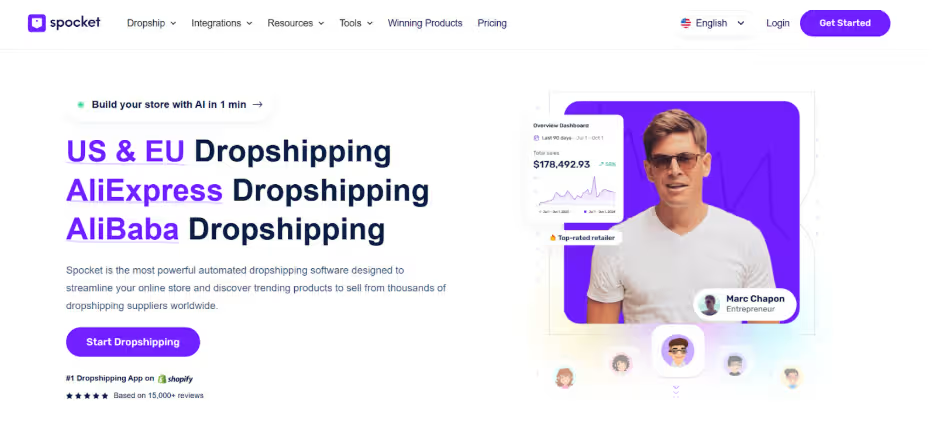
Spocket positions itself as a dropshipping platform focused on connecting merchants with US and EU suppliers and curated product selection, which can help reduce long shipping timelines that often trigger refunds.
Where Spocket fits best
- You’re targeting customers primarily in the US and Europe
- You want a more premium catalog than “random marketplace listings”
- You want a workflow that supports easier product sourcing and store building
- You care about customer satisfaction and repeat purchases
What to check before committing
- Whether the supplier mix matches your niche
- Shipping times for your specific product categories (not just general claims)
- Your pricing strategy (curated catalogs can sometimes mean higher base cost)
If your goal is sustainable revenue—not just quick flips—Spocket often aligns better with a “brand-building” approach than pure arbitrage.
2. AutoDS: Best for automation-heavy dropshipping operations
AutoDS is frequently positioned as an automation-first alternative for sellers who want to reduce manual work across importing, pricing, inventory syncing, and order processing.
This is a strong choice if your main pain is operational workload and you want rules-based automation to keep the store running smoothly at scale.
Why sellers choose AutoDS over EPROLO
AutoDS markets itself as an EPROLO alternative for streamlined operations and automation, especially for merchants who want more advanced automation features.
Best use cases
- You’re running many products and want automation to prevent stock/price issues
- You’re scaling beyond a small catalog
- You value automation systems as much as supplier sourcing
Potential drawbacks
Automation platforms can have a learning curve. The tool is powerful, but you’ll want to allocate time for:
- pricing rules setup
- supplier mapping
- testing fulfillment flow before scaling ad spend
3. DSers: Best for AliExpress-focused dropshipping and bulk order management
If your current model relies heavily on AliExpress product sourcing, DSers is one of the most common options merchants use because it’s designed around AliExpress workflows and bulk operations.
This alternative is best when your store strategy is AliExpress-first and you want smoother product import + bulk fulfillment rather than a curated supplier marketplace.
Why DSers is a common alternative
DSers promotes workflows like supplier optimization, product import, and multi-store management for AliExpress dropshipping.
There’s also a widely used app listing describing features merchants value such as bulk order processing and automation for tracking updates and pricing rules.
Best use cases
- You’re sourcing primarily from AliExpress
- You need bulk fulfillment tools
- You want a more optimized supplier-selection workflow
Tradeoff to understand
AliExpress-based models can still face shipping variability depending on supplier and region, so your product selection process and shipping messaging matter a lot.
4. Zendrop: Best for sellers prioritizing fulfillment systems and faster logistics options
Zendrop positions itself around being a more structured fulfillment engine, with options tied to warehousing/3PL-style logistics and faster fulfillment capabilities in certain contexts.
This option makes sense when your biggest growth limiter is shipping speed and you want more fulfillment infrastructure—especially if you’re trying to lower support tickets and refunds.
What Zendrop highlights
Zendrop promotes US fulfillment options and logistics features geared toward scaling. It also positions itself as an all-in-one dropshipping software with product sourcing and fulfillment tools.
Best use cases
- You want more reliable fulfillment and logistics options
- Your niche is sensitive to delivery speed
- You’re planning to scale and want systems built for growth
What to test first
- Shipping speed to your main customer regions
- Product quality consistency across categories
- How tracking updates sync back to your storefront workflow
5. Shipping and fulfillment tools that often appear as EPROLO alternatives
Some review sources list operational tools (shipping and logistics platforms) as “alternatives” even if they aren’t classic dropshipping supplier marketplaces. This happens because merchants compare EPROLO against tools that solve adjacent problems like shipping labels, fulfillment workflows, and delivery optimization.
If your issue isn’t sourcing products—but shipping, tracking, and fulfillment operations—then a logistics-focused tool may solve your real problem better than switching supplier platforms.
This category is worth considering if:
- you already have suppliers you like
- but your shipping workflow is the bottleneck
Which EPROLO alternative is best for your business model
The right pick depends on what you’re optimizing for.
Use this section to match your store strategy to the platform type—because the “best” tool changes depending on whether you’re scaling, testing, or building a brand-first store.
- If you want faster US/EU shipping and a more premium product experience: Choose Spocket. It’s positioned around curated suppliers and US/EU sourcing, which can support better delivery expectations and customer trust.
- If you want maximum automation and rules-based operations: AutoDS is a strong fit, especially if you’re managing large catalogs and want automation to reduce manual errors
- If you want AliExpress-scale product variety and bulk tools: DSers is built for AliExpress-based workflows and bulk fulfillment.
- If your biggest problem is fulfillment speed and logistics: Zendrop emphasizes fulfillment infrastructure and faster options in certain workflows.
A practical “switching checklist” before you migrate away from EPROLO
Switching tools without a plan usually causes inventory issues, refund spikes, and customer confusion. Use this process. Treat migration like a mini project—your goal is to avoid downtime, mismatched variants, and broken tracking workflows.
Step 1: Audit your current catalog
- Identify top 20% products that generate 80% of revenue
- Remove low-performing SKUs before migrating
- Note which products are refund-prone and why
Step 2: Decide what you’re switching for
Pick one primary reason (shipping speed, automation, supplier quality). If you try to solve everything at once, you’ll pick a tool that does nothing perfectly.
Step 3: Test fulfillment and delivery before importing everything
No matter the platform:
- test 3–5 products
- check tracking updates
- validate packaging/quality
- confirm delivery estimates match your customer promise
Step 4: Migrate in phases
- Start with one collection
- Monitor refunds and support tickets
- Only then expand catalog migration
Step 5: Update your policies and product pages
Your new supplier workflow may change:
- shipping timelines
- return conditions
- tracking behavior
Keep your customer-facing pages accurate.
Common mistakes when choosing EPROLO alternatives
These mistakes are why sellers switch platforms repeatedly without real improvement. If you avoid these errors, you’ll save weeks of testing and reduce the risk of margin loss.
Mistake 1: Choosing based only on “more products”
More products rarely means more profit. Winning stores usually have a curated catalog and strong pages, not endless listings.
Mistake 2: Ignoring shipping promise vs reality
If your ads promise fast delivery but your supplier can’t meet it, refunds will erase profit. This is why US/EU supplier strategies matter for many stores. Spocket is often considered for this reason.
Mistake 3: Not testing automation flows
Even great tools can fail if:
- variants map incorrectly
- tracking doesn’t sync
- out-of-stock behavior isn’t handled
Always place test orders before scaling traffic.
Mistake 4: Underpricing and over-discounting early
Many beginners price like a marketplace instead of a brand. Then ads + refunds destroy margins. If you’re building a side hustle, protect cash flow with margin discipline.
How to turn the right tool choice into sustainable growth
A platform won’t magically create sales—but it can remove friction so your marketing and product strategy actually work. This section is about building a stable engine: fewer refunds, smoother fulfillment, and compounding traffic so you’re not stuck buying every sale with ads.
Build for trust first
- clear shipping timelines
- clear return rules
- tracking updates
- support response expectations
Make your operations “boring”
Boring operations are profitable operations:
- stable suppliers
- consistent shipping
- fewer surprises
This is how dropshipping becomes a legitimate path to passive income over time (not instant, but compounding).
Use content + SEO to reduce dependency on ads
If you want to grow long-term:
- publish buyer-intent content
- optimize collection pages
- build email flows
That’s how many sellers make money online consistently instead of constantly chasing trends.
Start lean, scale what works
If your goal is to make money without investment in inventory, keep your catalog small and intentional. Focus on winners, then expand.
Final takeaway
EPROLO isn’t the only way to run a successful dropshipping store. The best alternative depends on what you’re optimizing for: speed and customer trust, automation and scale, or AliExpress-based product breadth. Independent comparison sources list many options, but the smartest move is to match platform strengths to your business model and validate with test orders.
If your goal is a more premium brand feel with faster US/EU delivery expectations, Spocket is often a strong direction to evaluate first. If your goal is automation-first scaling, AutoDS may fit better. If you live in AliExpress workflows, DSers remains a common choice.
Start your dropshipping business today
FAQ about EPROLO alternatives
What’s the best EPROLO alternative for faster shipping?
If your main goal is faster delivery (especially US/EU customers), Spocket is often considered because it’s positioned around US and EU suppliers and a curated catalog. Start by testing a few products in your niche and confirming real delivery timelines.
What’s the best alternative for automation?
AutoDS is designed around automation features and is commonly compared against other dropshipping tools when the priority is reducing manual workload. Test rules, product mapping, and order routing before migrating your entire store.
What if my store is AliExpress-focused?
DSers is built for AliExpress workflows and is commonly used for product import, supplier optimization, and bulk order tools. Confirm how tracking and variants sync into your store to avoid customer issues.
Are “shipping tools” really alternatives to EPROLO?
Sometimes. Some competitor lists include shipping/fulfillment platforms because merchants compare tools that solve adjacent problems like label buying, tracking, and logistics workflows. If sourcing isn’t your issue, a shipping tool might solve more than switching supplier platforms.
How do I choose the right alternative quickly?
Start by naming your #1 pain (shipping speed, supplier quality, automation, or AliExpress workflows). Then test 3–5 products end-to-end on the new platform before migrating everything. A phased switch prevents inventory mistakes and refund spikes.


Launch your dropshipping business now!
Start free trial


Related blogs

Dripshipper Reviews: Is This Coffee Dropshipping Platform Worth It?
Read this detailed Dripshipper review covering features, pros, cons, pricing, customer feedback, profitability, and better dropshipping alternatives.


Is BigBuy Legit? Honest Review for Dropshipping Businesses
Find out if BigBuy is a reliable dropshipping supplier, including its features, pros, cons, pricing concerns, reviews, and alternatives for ecommerce sellers.

What is Micromarketing and How to Use it Effectively
Learn what micromarketing is, how it works, its benefits, examples, and how ecommerce businesses can use it to target niche customers effectively.