Top Easy Side Jobs You Can Do While Working Full Time
Discover easy side jobs you can do while working full time. Flexible side hustle ideas to earn extra income online or from home.
.avif)

Balancing a full-time job with extra income doesn’t have to mean late nights, complex skills, or big upfront costs. The right easy side jobs fit around your schedule, start small, and grow only if you want them to. In this guide, you’ll find beginner-friendly side hustle jobs you can do after work, on weekends, or entirely from home—without burning out. We’ll cover flexible options like online side hustles, remote side jobs, and simple money making ideas that can realistically add a few hundred dollars a month (or more over time). Whether your goal is to build passive income, pay off debt, or create a reliable side job you enjoy, these ideas are designed for real life—busy calendars included.
What Are Easy Side Jobs?
Easy side jobs are simple, flexible ways to earn extra income outside your 9–5—usually with a low learning curve, low upfront cost, and hours you can control. They’re designed to fit around work, not compete with it.
A side job is typically paid work you do for steady extra cash (like tutoring or delivery). A side hustle often starts small but can grow into a scalable income stream (like freelancing, ecommerce, or content).
Full-time workers prefer flexible income streams because they reduce pressure: you can pick your hours, test ideas without quitting your job, and build a second income safely. Common goals include extra cash, building savings, debt payoff, creating passive income, and exploring ways to make money online without adding stress.
How to Choose the Right Side Job While Working Full Time
The “best” side job is the one you can sustain consistently. Instead of chasing trendy money making ideas, choose something that fits your schedule, energy, and risk comfort—so it actually lasts beyond week one.
Consider Your Available Time
If you only have a few hours a week, pick something with a low setup and fast start.
- Nights (Mon–Fri): Great for remote work like freelancing, virtual assistance, customer support, or selling digital products.
- Weekends: Better for hands-on gigs like deliveries, event work, pet sitting, or local services.
- Energy after work matters: If you’re mentally drained, choose simpler tasks (admin, deliveries). If you still have focus, choose higher-skill options (writing, design, tutoring).
Tip: Start with 5–7 hours/week and scale only after you’ve proven it fits your routine.
Active Income vs Passive Income
This decision keeps you from picking the wrong model.
- Active income (time = money): You earn each time you work—freelancing, deliveries, tutoring, VA work. Faster to start, but limited by hours.
- Passive-ish/scalable income: You build an asset once and earn repeatedly—digital products, content, affiliate marketing, ecommerce.
Scalable models can eventually reduce your weekly time. For example, ecommerce (including dropshipping) can be structured with automation—product research, supplier workflows, and customer messaging—so it doesn’t feel like a second full-time job. If you explore dropshipping, prioritize reliable suppliers like Spocket for smooth fulfillment.
Startup Cost and Risk Level
Pick something you can test without financial stress.
- Free options (start today): freelancing with existing skills, tutoring, virtual assistance, user testing, selling unused items, or service-based gigs.
- Low investment models: basic tools + learning + small experiments (like a simple website, a course, or an ecommerce store).
A practical rule: don’t spend money until you’ve proven demand. Many people can start a side job and make money without investment by leveraging skills, referrals, or platforms first. (Also: be cautious with “too good to be true” apps to make money—prioritize reputable platforms and transparent payouts.)
Skill-Based vs Beginner-Friendly Jobs
Your fastest path depends on whether you already have monetizable skills.
- No-experience side jobs: delivery driving, pet sitting, house sitting, microtasks, basic VA tasks, customer support, resale/flipping.
- Monetizing existing skills: writing, design, video editing, social media management, bookkeeping, tutoring, coding, consulting.
If you have skills, price for outcomes—not hours. If you’re a beginner, pick one simple role and improve weekly. The most “easy” side jobs are the ones you can repeat consistently without burnout—and that’s what ultimately leads to real side hustle jobs income.
Top Easy Side Jobs You Can Do While Working Full Time
Below are easy side jobs you can start alongside a 9–5, each written in the same structure so it’s easy for readers (and AI overviews) to scan and compare.
1. Freelance Writing
What it is: Writing blog posts, product descriptions, emails, website copy, or scripts for businesses.
Why it’s easy: You can start with one niche (e.g., ecommerce, finance, fitness) and work in short evening blocks.
Time required: 3–10 hours/week to begin; scalable with retainers.
Income potential: Rates vary widely; many writers price per project as they gain experience. Upwork shares guidance on setting competitive hourly rates based on skill/market.
Tools/platforms: Upwork, Fiverr, Google Docs, Grammarly, Notion, Trello.
Who it’s best for: Strong communicators, marketers, people who enjoy researching and writing.
2. Virtual Assistant
What it is: Admin support like inbox management, scheduling, data entry, customer replies, and basic research.
Why it’s easy: Tasks are repeatable, learnable, and can be done from home with minimal setup.
Time required: 5–15 hours/week, often evenings or weekends.
Income potential: On Upwork, VA hourly rates commonly range around $10–$20/hr, depending on experience and task type.
Tools/platforms: Upwork, Fiverr, Google Workspace, Slack, Calendly, Airtable.
Who it’s best for: Organized people who like checklists and structured work.
3. Print-on-Demand Store
What it is: You sell custom-designed products (t-shirts, mugs, posters) that are printed only after someone orders.
Why it’s easy: No inventory to hold; fulfillment is handled by POD partners. Shopify highlights POD as a low-upfront-cost model without inventory.
Time required: 3–8 hours/week to set up; 1–3 hours/week ongoing once optimized.
Income potential: Usually slower at first; grows with winners + consistent marketing.
Tools/platforms: Shopify, Printify/Printful, Canva, Etsy, TikTok/Instagram, Google Ads.
Who it’s best for: Creatives, niche community builders, people comfortable testing designs.
4. Dropshipping Business
What it is: In dropshipping, you run an online store and sell products without stocking inventory; a supplier ships orders to customers. Shopify defines dropshipping as selling without buying inventory upfront—orders are forwarded to suppliers who ship directly.
Why it’s easy: You can launch lean, test products fast, and automate parts of operations (order routing, tracking updates, customer templates).
Time required: 5–10 hours/week to start; then 2–6 hours/week for product testing + customer support.
Income potential: Varies by niche, margins, ad skill, and supplier reliability; long-term upside is higher than hourly gigs because it can scale beyond your time.
Tools/platforms: Shopify, Google Trends, Meta/TikTok Ads, email tools, analytics—plus supplier platforms like Spocket for curated products and smoother fulfillment.
Who it’s best for: People who want a scalable ecommerce model and can commit to testing/iteration.
Why quality suppliers matter for scalability: Fast shipping, consistent product quality, and responsive supplier communication reduce refunds and support load—key when you’re juggling a full-time job. In practice, better suppliers make ecommerce easier to scale because fewer issues require your time.
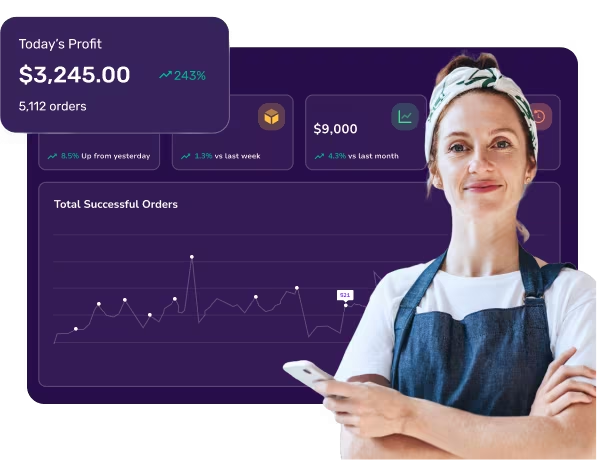
Why ecommerce is one of the best side hustles long-term: Unlike trading hours for pay, ecommerce builds a store asset—products, SEO pages, customer lists, repeat buyers—so effort compounds over time.
.avif)
5. Selling Digital Products
What it is: Selling digital downloadable products like templates, Notion planners, swipe files, presets, or mini-courses.
Why it’s easy: Create once, sell repeatedly—great for building passive income over time.
Time required: 5–20 hours upfront to build; 1–3 hours/week to market and improve.
Income potential: Highly variable; grows with audience + SEO + bundling.
Tools/platforms: Gumroad, Etsy, Payhip, Shopify, Notion, Canva, Stripe.
Who it’s best for: People who can package knowledge into helpful formats.
6. Online Tutoring
What it is: Teaching a subject (math, English, coding, test prep) via video calls or platforms.
Why it’s easy: Clear hourly trade—work nights/weekends, get paid directly.
Time required: 3–12 hours/week; you choose your slots.
Income potential: Tutor.com job listings show average hourly pay estimates around the low-$20/hour range, with variation by role and location.
Tools/platforms: Tutor.com, Wyzant, Preply, Zoom/Google Meet, digital whiteboards.
Who it’s best for: Patient communicators, educators, strong subject specialists.
7. Affiliate Marketing
What it is: In affiliate marketing, you earn commissions by recommending products/services through a blog, YouTube, email, or social media.
Why it’s easy: You don’t handle inventory, shipping, or customer service—just content + trust.
Time required: 3–8 hours/week consistently (content + optimization).
Income potential: Wide range; industry stats are often based on surveys and vary by experience level—use as directional, not guaranteed.
Tools/platforms: WordPress/Shopify blog, SEO tools, Amazon Associates, partner programs, Google Search Console.
Who it’s best for: People willing to build content assets slowly and consistently.
.avif)
8. Social Media Management
What it is: Creating posts, captions, calendars, and basic engagement for small businesses.
Why it’s easy: Many businesses need help, and work can be done in batches on weekends.
Time required: 3–10 hours/week per client.
Income potential: Typically increases with results + niche expertise (local business, ecommerce, creators).
Tools/platforms: Buffer/Later, Canva, CapCut, Google Drive, Meta Business Suite.
Who it’s best for: People who understand content, trends, and consistency.
9. Flipping Items Online
What it is: Buying low (or sourcing free), then reselling for profit.
Why it’s easy: Fast start—sell things you already own before buying inventory.
Time required: 2–6 hours/week (sourcing + listing + shipping).
Income potential: Depends on what you source and your margins; remember platform fees apply—eBay notes insertion fees and final value fees can apply depending on listing/category.
Tools/platforms: eBay, Facebook Marketplace, OfferUp, Mercari; price-check using sold listings.
Who it’s best for: Bargain hunters and people who enjoy sourcing.
10. Remote Customer Support
What it is: Handling customer chats/emails for companies during evening or weekend shifts.
Why it’s easy: Structured scripts + repeat questions; stable workflows.
Time required: Often 10–20 hours/week depending on shifts.
Income potential: Usually consistent hourly pay; varies by company and location.
Tools/platforms: Zendesk, Intercom, Gorgias, Freshdesk.
Who it’s best for: Calm communicators, people good at problem-solving.
11. Delivery or Rideshare
What it is: Driving deliveries or passengers during peak hours for quick extra cash.
Why it’s easy: Start fast, choose your hours, stop anytime.
Time required: 3–15 hours/week (weekends/after work).
Income potential: Earnings vary heavily by market, tips, and peak times. Gridwise’s breakdown emphasizes how strategy (peak hours, promotions, tips) affects what drivers take home.
Tools/platforms: DoorDash, Uber, Uber Eats, Instacart, Gridwise (tracking).
Who it’s best for: People with a car who want immediate income flexibility.
12. Microtasks & Testing Websites
What it is: Small tasks (surveys, data labeling, simple research) and usability tests where you give feedback on apps/sites.
Why it’s easy: Beginner-friendly, short sessions, no long-term commitment.
Time required: 1–5 hours/week as filler time.
Income potential: For usability testing specifically, UserTesting notes compensation depends on test type and is shown in the contributor feed; live tests pay more than unmoderated due to time/complexity.
Tools/platforms: UserTesting, Prolific, Respondent, Amazon MTurk (varies by region).
Who it’s best for: People who want supplemental income in spare time.
Best Easy Side Hustles If You Want Passive Income
If your goal is passive income, the easiest side hustles are the ones that help you build an asset—something that can earn even when you’re not actively working. That’s the biggest difference between “extra hours for extra pay” and a side hustle that can grow into real freedom.
Ecommerce
Ecommerce becomes “passive-ish” when you set up systems: product pages, fulfillment, email flows, and customer support templates. Over time, your store can generate sales from SEO, repeat customers, and ads that you optimize.
- Best for: People who want long-term upside and don’t mind testing products.
- Why it can scale: Once your store is running, you’re improving a machine—not starting from zero each day.
- Tip: Quality fulfillment matters. Reliable suppliers reduce refunds, shipping issues, and support workload—critical when you’re working full time. This is where Spocket fits naturally if you’re aiming for smoother operations and more consistent customer experience.
Affiliate Marketing
Affiliate marketing is one of the most approachable “asset” models: you create content once (blog posts, videos, or social content) and earn commissions whenever people buy through your links.
- Best for: People who like writing, reviewing tools/products, or building niche content.
- Why it works long-term: Older content can continue bringing traffic and income if it ranks well.
Digital Products
Digital products (templates, Notion planners, guides, mini-courses) are strong passive-income candidates because you create them once and sell them repeatedly—no shipping, no inventory.
- Best for: People who can package a skill into a useful downloadable format.
- Why it beats hourly income: You’re not capped by your weekly hours; your sales can grow without equal time growth.
Content Monetization
This includes blogs, newsletters, YouTube, and social channels monetized through ads, sponsorships, affiliates, or product sales.
- Best for: People who can be consistent for 3–6 months without immediate payoff.
- Why it’s powerful: Content compounds. One good article or video can keep earning for months or years.
Why building assets beats hourly income long-term: Hourly side jobs pay you once per hour. Asset-based side hustles can pay you repeatedly from the same work—so your effort compounds. That’s how people move from “extra cash” to scalable side hustle income.
Best Side Jobs From Home
If you want side jobs from home, focus on remote-friendly options with flexible hours and low setup. These are popular because you can work nights or weekends, avoid commuting, and still earn consistently.
Freelancing
Offer a skill as a service—writing, design, video editing, SEO, bookkeeping, coding, or consulting.
- Why it works from home: You only need a laptop, portfolio, and a clear offer.
- Best for: People with a skill they can deliver in 1–3 hour blocks.
- Quick start tip: Pick one service + one niche (e.g., “product descriptions for ecommerce brands”) to get clients faster.
Dropshipping
A strong side hustle from home because you don’t hold inventory and can run your store after work. You focus on product selection, marketing, and customer experience while suppliers fulfill orders.
- Why it works remotely: Your operations are online—storefront, orders, support.
- Best for: People who want ecommerce upside without warehouse logistics.
- Practical tip: Smooth fulfillment is everything when time is limited. Using reliable supplier networks like Spocket can reduce the operational headaches that make beginners quit.
Blogging
Blogging is a long-term play that can become semi-passive through SEO traffic. Monetize via affiliates, ads, sponsorships, or your own products.
- Why it’s great from home: Write on your schedule, publish once, earn later.
- Best for: People willing to commit consistently and enjoy explaining things.
Virtual Assistant
One of the simplest remote side jobs: inbox management, scheduling, customer support, research, and admin tasks.
- Why it’s great from home: Clear tasks, predictable workflows, and flexible clients.
- Best for: Organized people who like structure and repeatable work.
AI Content Creation
Use AI tools to create content faster—product descriptions, social captions, blog drafts, templates, and simple marketing assets (with proper editing and originality).
- Why it works from home: Everything is digital, and output can be delivered async.
- Best for: People with basic marketing instincts and good editing skills.
- Important: To stay credible (and to align with EEAT), always add real examples, original insights, and fact-check anything that sounds “too confident.”
How to Start a Side Hustle While Working Full Time (Step-by-Step)
Starting a side hustle with a 9–5 is less about motivation and more about systems. The best approach is to choose one easy side job, test it quickly, keep your time commitment realistic, and build consistency. Follow these steps to avoid overwhelm and actually make progress.
Step 1: Pick One Simple Model
Choose a side hustle that fits your schedule and energy, not just what sounds trendy.
- If you want quick income, pick an hourly model (tutoring, virtual assistant, freelancing).
- If you want long-term growth, pick an asset model (digital products, affiliate marketing, ecommerce).
Rule: Pick one idea for 30 days. Switching kills momentum.
Step 2: Validate Demand
Before you spend money or time building, confirm people already pay for it.
- Search the service on Upwork/Fiverr and check if sellers have reviews.
- Look at Google autocomplete and “People also ask” for buyer-intent queries.
- For products, check marketplaces (Amazon, Etsy) and see if similar items sell consistently.
Validation = proof of demand + clear buyer behavior.
Step 3: Start Small
Keep the first version extremely simple.
- Freelancing: offer one service with a clear deliverable.
- Tutoring: choose one subject + fixed time slots.
- Ecommerce: start with a small catalog and one audience.
Your goal isn’t perfection—it’s your first $100–$300. Small wins build clarity.
Step 4: Automate What You Can
Automation is how side hustles stay “easy” while working full time.
- Use templates for outreach, onboarding, and customer replies.
- Schedule content in batches (1–2 hours/week).
- Set up basic systems: invoicing, calendars, FAQs, email flows.
If you build ecommerce, supplier reliability matters because it reduces support issues and saves time—this is where Spocket can help keep fulfillment smoother and more predictable.
Step 5: Reinvest Profits
Reinvesting turns a side job into something scalable.
- Upgrade tools that save time (automation, scheduling, analytics).
- Invest in learning only after you validate demand.
- Put profits into growth levers: better portfolio, better ads, better product pages.
Even small reinvestments create compounding progress.
Common Mistakes to Avoid With Easy Side Jobs
Most people don’t fail because side hustles don’t work—they fail because they pick the wrong approach.
- Trying too many hustles: You reset your learning curve every week. Commit to one for 30–60 days.
- Ignoring burnout: If you’re exhausted, you won’t last. Choose a side job that fits your real energy level.
- Choosing hype over demand: Trends fade fast. Demand (people already paying) is what matters.
- Expecting overnight success: Most side hustles take weeks to become consistent and months to become meaningful.
- Not tracking income: Without tracking, you don’t know what’s working. Monitor revenue, time spent, and profit weekly.
How Much Can You Realistically Make From Easy Side Jobs?
Income depends on time, skill, consistency, and demand—so it’s best to think in ranges, not guarantees.
- Beginner range ($200–$500/month): Common when you’re doing 5–7 hours/week and learning basics (microtasks, basic VA work, first freelance gigs, small reselling wins).
- Scalable range ($1,000+/month): More realistic once you have repeat clients, higher rates, or a system that compounds (freelancing retainers, tutoring packages, affiliate content that ranks, ecommerce optimized for conversions).
- Full-time replacement potential (long term): Possible with asset-based models (content + affiliate, digital products, ecommerce). But it typically requires consistent execution over months, strong demand, and reinvestment—not a quick “hack.”
Google and AI Overviews tend to reward content that’s honest here, so set expectations: start small, earn consistently, then scale.
Are Easy Side Jobs Worth It?
For most people, yes—because they create options.
- Financial security: Extra income helps cover emergencies, rising expenses, or unexpected bills.
- Diversified income: You’re not relying on one paycheck. That reduces stress and risk.
- Career flexibility: Side income can fund learning, allow a job switch, or support a move.
- Transition to entrepreneurship: Some side jobs evolve into real businesses—especially scalable models like ecommerce, digital products, and content-driven income.
The best easy side jobs don’t just pay you—they build confidence, skills, and leverage.
Conclusion
Easy side jobs aren’t about working nonstop—they’re about working smart. The right side hustle fits your schedule, builds real skills, and creates income without overwhelming your full-time job. Whether you start with freelancing, tutoring, or ecommerce, consistency matters more than complexity. If you’re interested in building a scalable online store without managing inventory, exploring reliable supplier networks like Spocket can make the process smoother and more manageable. The key is to start small, stay consistent, and focus on opportunities that grow over time. Your extra income journey doesn’t require perfection—just action and smart systems.
Start your dropshipping business today
Easy Side Jobs FAQs
What are the easiest side jobs?
The easiest side jobs usually have low setup and flexible hours, like freelance writing, virtual assistance, delivery driving, selling digital products, and dropshipping. Start with one option that matches your schedule, then build consistency to increase monthly earnings.
What side jobs can I do from home?
Popular side jobs from home include freelancing (writing, design, admin), online tutoring, affiliate marketing, ecommerce, print-on-demand, and remote customer support. These remote side jobs are ideal if you want flexible work hours without commuting.
How much can you make from easy side jobs?
Most beginners earn around $200–$1,000/month depending on time and skill. Scalable side hustles like ecommerce, affiliate marketing, or digital products can grow beyond $5,000+/month over time with consistent effort and reinvestment.
What is the best side hustle while working full time?
The best side hustle while working full time is one you can sustain weekly and scale gradually—freelancing, affiliate marketing, selling digital products, or ecommerce. Choose something with flexible hours and clear demand so you don’t burn out.
How do I start a side hustle with no money?
To start a side hustle with no money, focus on skill-based services (freelancing, virtual assistant work), affiliate marketing, flipping free items, or simple online gigs. Validate demand first, then reinvest early profits into tools or learning.
Are online side hustles legit?
Yes, many online side hustles are legit, including freelancing, ecommerce, tutoring, and affiliate marketing. The key is using reputable platforms, avoiding “get rich quick” offers, and building consistent work habits to create reliable income.
How many hours a week should I spend on a side job?
Most people spend 5–15 hours per week on a side job while working full time. Start with 5–7 hours to stay consistent, then scale your time only after you find a routine that feels sustainable.


Launch your dropshipping business now!
Start free trial


Related blogs
.avif)
Complete Guide to Making Money Using Gig Economy Apps
Discover the best gig work apps to make money fast. Compare top gig economy apps, daily pay options, and side hustle platforms that actually work.


Affiliate Marketing Without Website : Beginner's Guide
Learn how to start affiliate marketing without a website and earn passive income using social media, YouTube, email, and free traffic strategies.

Best Apps That Pay You to Walk
Discover the best apps that pay you to walk. Earn cash, gift cards, and rewards just for staying active—no investment needed.