Dropshipping in Canada: Complete Guide to Starting Your Online Business
Learn how to start dropshipping in Canada with our 2026 roadmap. Discover the best suppliers, legal requirements, and dropship in Canada from scratch.


Dropshippers Canada unite!
If you're considering e-commerce, dropshipping in Canada offers a low-risk entry point. You don't need a warehouse. You don't need to buy inventory upfront. When customers order, your supplier ships directly to them. You pocket the difference between what you charge and what the product costs. It's a straightforward model that hundreds of Canadian entrepreneurs use to build online stores. This guide covers everything from the basics of what is dropshipping to finding the best dropshipping suppliers in Canada.
What is Dropshipping in Canada?

Dropshipping is a business model where you sell products without holding stock. Here's the basic idea: you set up an online store, market it, take customer orders, then pass those orders to a supplier who handles packing and shipping. You never touch the product. The customer receives it directly from the supplier, but they see your branding on the box and invoice.
It's different from traditional retail, where you buy inventory upfront, store it, and hope it sells. With dropshipping, you only pay for products after customers buy them. This eliminates dead inventory sitting in a warehouse.
The dropshipping definition in Canada is straightforward: it's order fulfillment without inventory holding. You're a middleman between the customer and the supplier. Your job is to create a store people want to buy from and market products people actually need.
For Canadian entrepreneurs, this model works because startup costs are minimal. You don't need significant capital. You can start from home with just a laptop and internet connection. It's why so many people are asking how to get into dropshipping. The barrier to entry is genuinely low.
How Does Canadian Dropshipping Work?
The process has several key steps. A customer finds your store and places an order. You receive a notification with their shipping address and payment details. You log into your supplier's dashboard or send them the order details. The supplier picks the item from their warehouse, packs it, and ships it to your customer. Your customer receives their package and rates the purchase. You keep the profit.
That's the basic flow. But understanding how Canada dropshipping works means understanding the relationships involved.
Seller of Record
You're the seller of record. Your name appears on invoices. You're responsible for customer service. If someone has a complaint, they contact you first, not the supplier. If a package arrives damaged, you handle the return and refund. This is critical—you can't just disappear when problems arise.
Fulfillment Partners and Profit Margins
Your supplier is purely a fulfillment partner. They don't advertise your products. They don't handle customer complaints. They don't negotiate with dissatisfied buyers. You're responsible for all front-end interactions.
Margins matter here. If your supplier charges you $10 for a product and you sell it for $25, you've made $15 before costs. But you'll pay platform fees (Shopify charges around 2%), payment processing fees (2-3%), and possibly advertising costs. Your actual profit might be $5-8 per order. This is why volume matters. You need consistent sales to make real money.
How does dropshipping work in Canada specifically? It works the same as anywhere else, but with Canadian tax obligations. You're responsible for collecting and remitting GST/HST if your revenue exceeds $30,000 per year. You might also have provincial registration requirements. You'll need a Canadian address and a Canadian business registration.
Is Dropshipping Legal in Canada?
Yes. Dropshipping is completely legal in Canada when done properly. There's no law against it. The Canada Revenue Agency recognizes it as a legitimate business model. But like any business, you have legal obligations.
First, you can only sell legal products. No counterfeit goods. No weapons or restricted items. No illegal substances. No products that violate intellectual property rights. Your store must comply with Canadian consumer protection laws.
Second, you need to handle taxes correctly. If your annual revenue exceeds $30,000, you must register for GST/HST. You collect this tax from customers and remit it to the government. The rate is 5% federal GST in some provinces and up to 15% HST in others. Get this wrong and you'll face penalties.
Third, your terms and conditions matter. You need clear return policies. You need a privacy policy explaining how you handle customer data. You can't make false claims about your products. You must be transparent about shipping times.
Fourth, you may need to register your business. If you operate under a business name different from your legal name, provincial registration is typically required. If you incorporate, you'll go through the federal incorporation process.
Is dropshipping legal in Canada? Yes. But "legal" means following these rules. Many people start dropshipping businesses without worrying about taxes or registration. That's not illegal in the beginning—it becomes illegal when you ignore obligations once you're supposed to be registered.
How to Start Dropshipping in Canada
Here's how to get from zero to a functioning dropshipping store.
1. Pick Your Niche
Don't sell everything. Pick a niche category. Fashion is popular. Home decor works. Electronics accessories. Pet supplies. Gaming gear. Whatever niche you choose, it should meet two criteria: you should have some interest in it, and there should be real customer demand.
Research what's selling. Check Amazon.ca bestseller lists. Look at Shopify stores in your niche. See what products have reviews. See what prices people are paying. Look for gaps. If everyone sells phone chargers, that's probably saturated. But maybe there's demand for specialized phone chargers for specific devices.
2. Register Your Business
You can't operate indefinitely under your legal name. Register with the Canada Revenue Agency to get a Business Number. This is required if your revenue exceeds $30,000 annually. Even if you're starting small, register early. It makes everything else easier—opening a business bank account, paying taxes, applying for credit.
Check your provincial requirements too. Ontario, British Columbia, Alberta, and other provinces have specific rules. Some require business name registration. Some don't. Spend 20 minutes on your provincial website to confirm what you need.
3. Build Your Store
Choose an e-commerce platform. Shopify is the most popular choice for Canadian dropshippers. Other options include WooCommerce, BigCommerce, or Wix. Pick whichever feels intuitive to you.
Design a clean, mobile-friendly store. Most people shop on phones. Your site needs to work well on small screens. Write clear product descriptions. Use good photos. Make navigation simple. Customers should be able to find what they want in 3-4 clicks.
Set up payment processing. Stripe and PayPal handle most transactions in Canada. Add a shipping calculator so customers know costs before checkout. Don't hide shipping fees—it kills conversions.
4. Find Your Suppliers
This is the hardest part. Bad suppliers tank businesses. Good ones make money.
Start by understanding what you need. How fast can they ship to Canada? What's the shipping cost? What's the product quality? Do they accept returns? How's their customer service?
Use platforms like Spocket, which connects you with vetted suppliers across North America. Modalyst does something similar. SaleHoo is a directory of over 8,000 suppliers. Zendrop Canada focuses specifically on Canadian sellers. These platforms let you browse products and research suppliers before committing.
Order samples. Don't just look at pictures. Buy a few items yourself. Check quality. Time how long shipping takes. See if the packaging is professional. If you wouldn't want to receive this product as a customer, don't sell it.
Read supplier reviews. Check their response times to customer support inquiries. Ask them questions. How do they handle returns? What's their policy on defective items? A good supplier answers quickly and clearly.
5. Select Products and Price Them
Start with 20-30 products, not 500. You want to actually manage what you're selling. You want to be able to describe each product well. You want to understand the market for each one.
Price for profit, not just competition. Calculate your actual costs: supplier cost, platform fees, payment processing, shipping, advertising. If a product costs $10, you pay $0.58 in Shopify fees, $0.75 in payment processing, and $8 in shipping. You've already spent $19.33. If you sell it for $25, you've made $5.67. That's your margin before advertising and your time.
Compete on service or selection or targeting, not just price. Amazon already exists. You can't outprice them. But you can target a specific customer. You can write better product descriptions. You can market smarter.
6. Market Your Store
No store sells itself. You need traffic.
Start with organic channels. Build an Instagram account around your niche. Post photos of products in use. Share tips related to your category. Share customer reviews. This is free and builds an audience over time.
Paid advertising works but requires testing. Facebook and Instagram ads let you target specific demographics. Google Shopping ads put your products in search results. TikTok ads work for younger audiences. Start small—$10-20 per day—and track what works. Don't spend big money on a strategy you haven't tested.
Blog content helps too. Write about topics your customers care about. If you sell pet supplies, write about pet training, health tips, product recommendations. Optimize these for search engines. This builds traffic over months, but it's compounding.
Why Dropship to Canada?
The Canadian e-commerce market is growing. People shop online. They're comfortable with credit cards. They expect fast shipping and easy returns. This creates opportunity.
Geographically, Canada is positioned well for dropshipping. The United States is right next door. Many quality suppliers operate in US border states. Shipping from there to Canada is fast and cheap. It's one reason why dropshipping in Canada works better than in many other countries.
Canadian customers also expect good service. Delivery times matter. If you're shipping from China and it takes 30 days, people get frustrated. If you can promise 7-10 day delivery from a North American warehouse, that's a competitive advantage.
Tax and regulations are clear in Canada. The rules exist, but they're not onerous. You know exactly what you need to do. You're not dealing with unclear government policies. This creates stability for your business.
10 Best Dropshipping Suppliers in Canada
Here is a list of the 10 best dropshipping suppliers in Canada. For dropshipping Canada consumer goods and other items, they’re pretty ideal. You can source directly from Canadian dropshippers and find Canadian dropshipping suppliers by trying them out:
1. Spocket
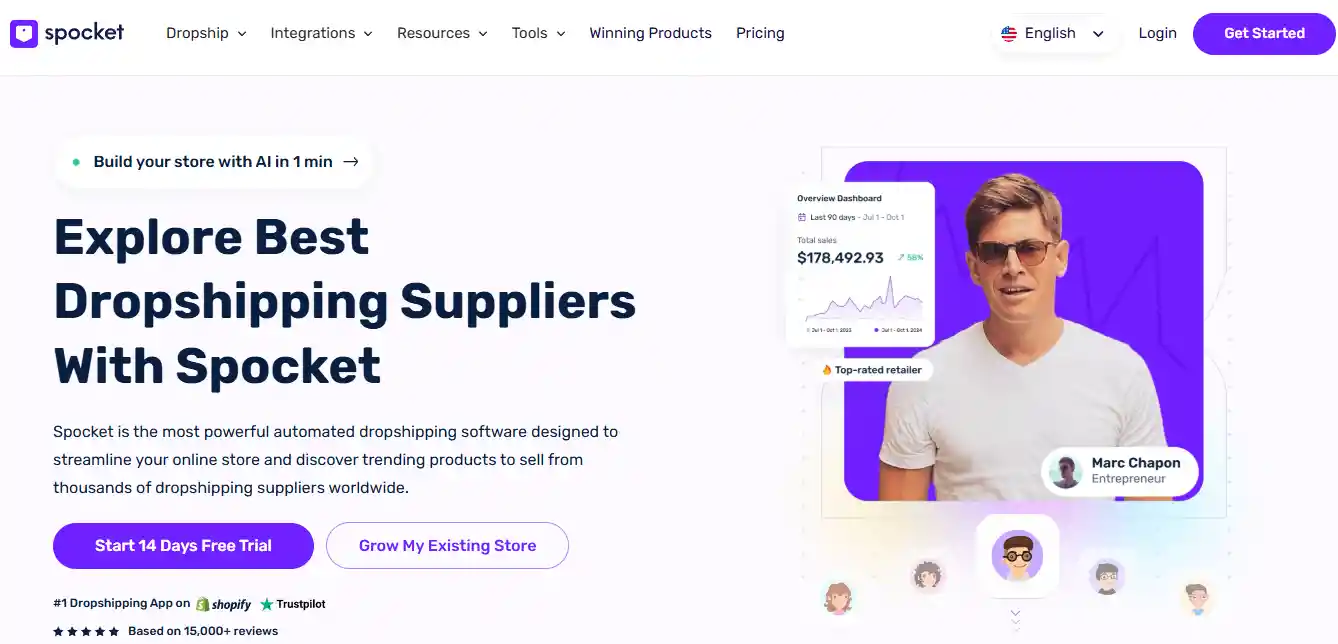
Spocket is the top choice for Canadian dropshippers. It connects you with suppliers from Canada and the US. You can filter by location to find suppliers closest to your customers. Real-time inventory shows what's actually available. The platform integrates with Shopify, WooCommerce, and most other stores.
What makes Spocket stand out is its focus on North American suppliers. Most items ship within 7-10 days to Canadian addresses. You can also import products from AliExpress through Spocket if you want, but they ship from North American warehouses instead of China, cutting delivery time to weeks instead of months.
The downside is cost. Free plans limit you to 25 products. Paid plans start at $39/month. But if you're serious about dropshipping in Canada, Spocket is worth it. Sprocket also offers a 7-day free trial and comes with Print-on-demand services, 24/7 VIP customer support, and branded invoicing.
2. Printful
Printful is best if you want print-on-demand products. They have a fulfillment center in Ontario, so Canadian customers get fast shipping. You can design and sell t-shirts, hoodies, mugs, phone cases, hats, and more.
Everything is printed to order. You don't hold inventory. You set your profit margin. When someone buys, Printful prints and ships it. Branding is built-in—you can add your logo to packaging.
Printful works with Shopify, WooCommerce, Etsy, and standalone stores. No setup fees. You pay per item. The quality is consistently good. This is ideal if you want to build a real brand instead of just reselling generic products.
3. Modalyst

Modalyst connects you with over 10,000 suppliers, mostly North American-based. You get access to millions of products across categories. Real-time inventory syncing prevents overselling. The platform handles price adjustments automatically.
Modalyst integrates with Shopify, WooCommerce, and BigCommerce. Free plans let you import 25 products. Paid plans remove limits. Shipping to Canada is fast since most suppliers are in North America.
The interface is straightforward. You can browse products, read supplier reviews, and import items in minutes. Customer support is responsive.
4. Zendrop Canada
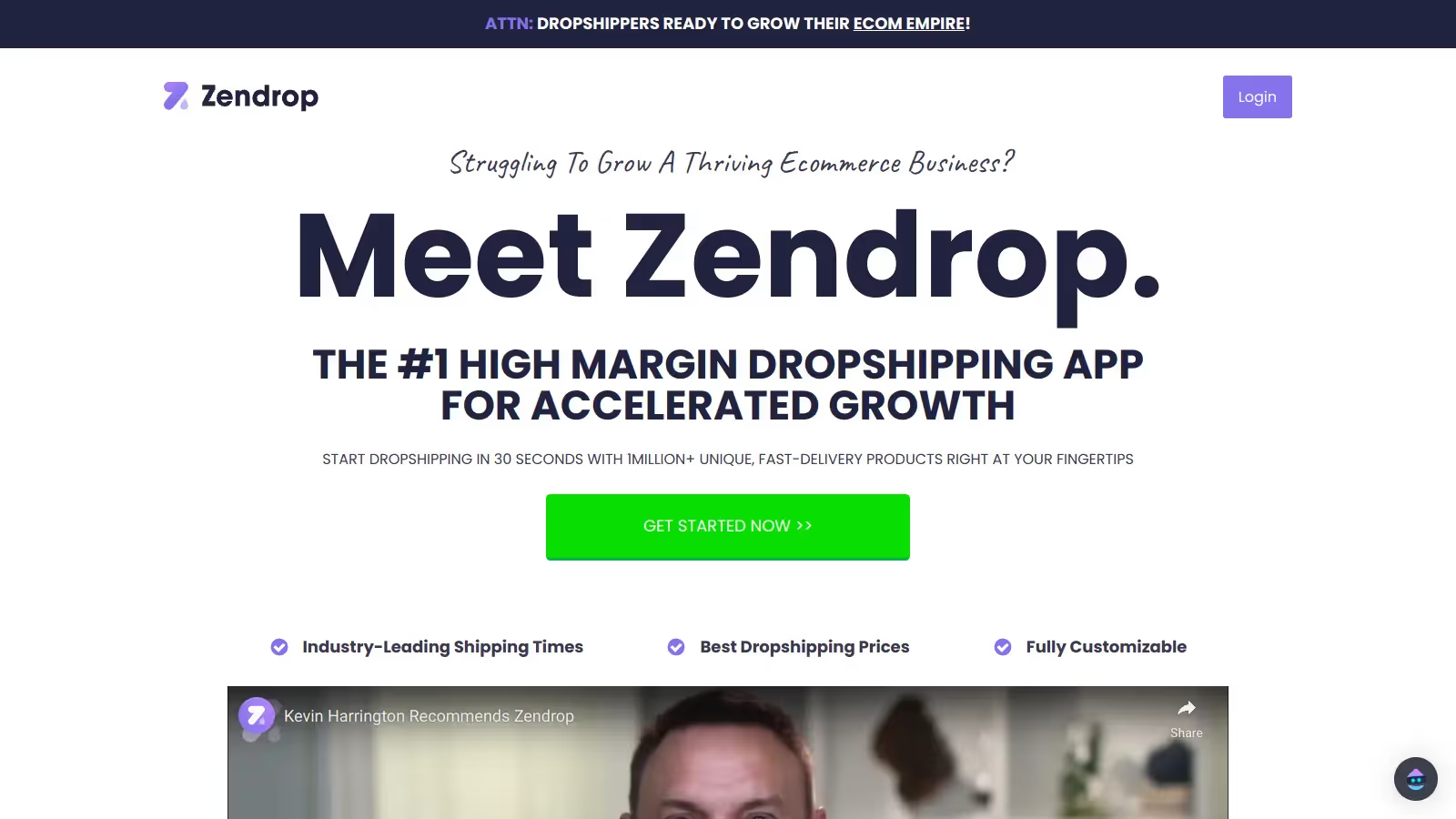
Zendrop Canada specifically targets Canadian sellers. They've built the platform around what Canadian dropshippers need. You get access to North American suppliers with fast shipping. Print-on-demand is integrated, so you don't need separate accounts.
Zendrop includes product research tools showing demand and pricing trends. You can see what's trending before you commit to products. AI-generated store builders let you launch quickly.
Free accounts browse products. Paid plans unlock automation and advanced research tools. It's good if you want data-driven product selection.
5. SaleHoo
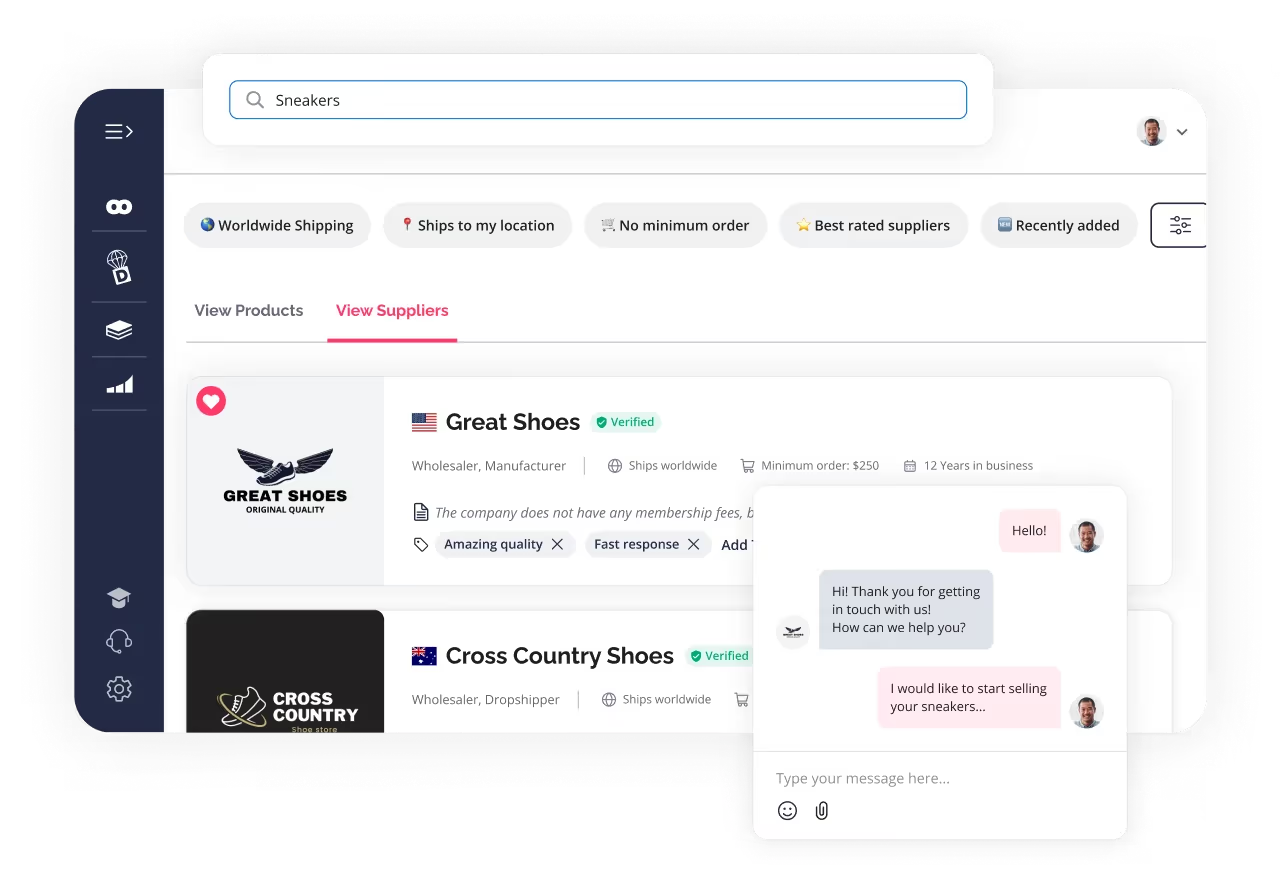
SaleHoo Canada is a mature directory with over 8,000 verified suppliers. Every supplier goes through a vetting process. This reduces scam risk significantly. You get direct contact information and can negotiate custom deals with suppliers.
The platform includes a market research tool showing profit potential for different products. They offer courses on dropshipping strategy. It's more of an education-plus-directory model than an automation platform.
The trade-off is that SaleHoo requires a paid membership. There's no free tier. But if you're serious and want verified suppliers, it's worth considering.
6. CJ Dropshipping
CJ Dropshipping Canada is excellent if you want to sell on eBay. It's one of the few platforms integrating with eBay. You can also use it with Shopify, WooCommerce, and Etsy.
CJ has print-on-demand services for certain products. They let you request custom sourcing if you can't find what you need in their database. You can negotiate private labels on some items.
The main limitation is that most CJ suppliers are China-based, so shipping takes longer. If you want faster delivery, look elsewhere.
7. AppScenic
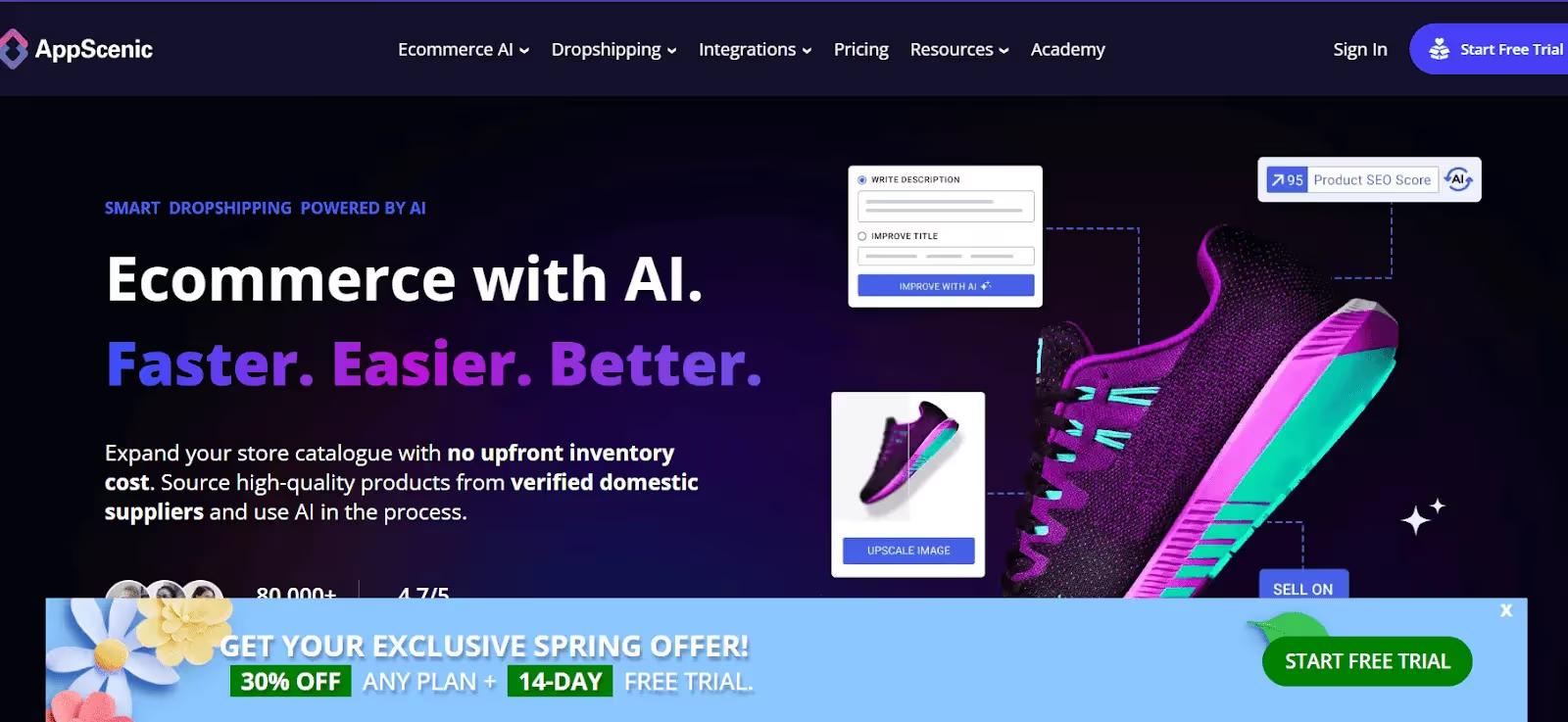
AppScenic focuses on premium dropshipping products. Instead of generic items from AliExpress, you get branded products from legitimate suppliers. This helps you compete on quality.
AppScenic has over 1 million products from suppliers across the US, Canada, UK, and Europe. They automate order processing. Integration is limited to four platforms, and you need a paid subscription.
8. Doba
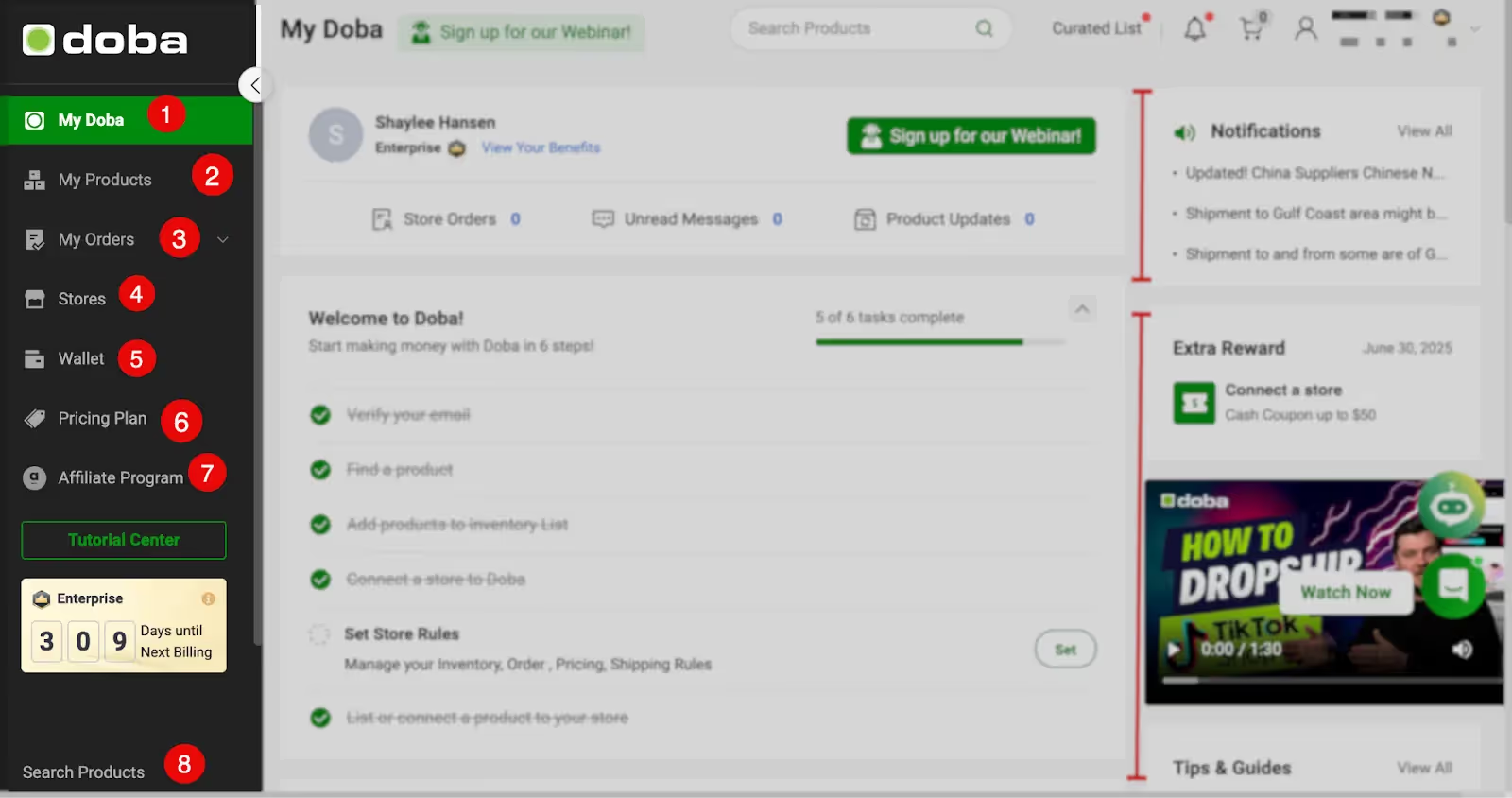
Doba integrates with Amazon, which most competitors don't. You can sync products across Shopify, Amazon, eBay, Walmart, and other platforms simultaneously. This is huge if you want to sell on multiple channels.
Doba connects you with shipping carriers like UPS and FedEx. They offer clearance sales on certain items, boosting margins. The platform gives access to premium suppliers once you're a paid member.
9. Alidrop
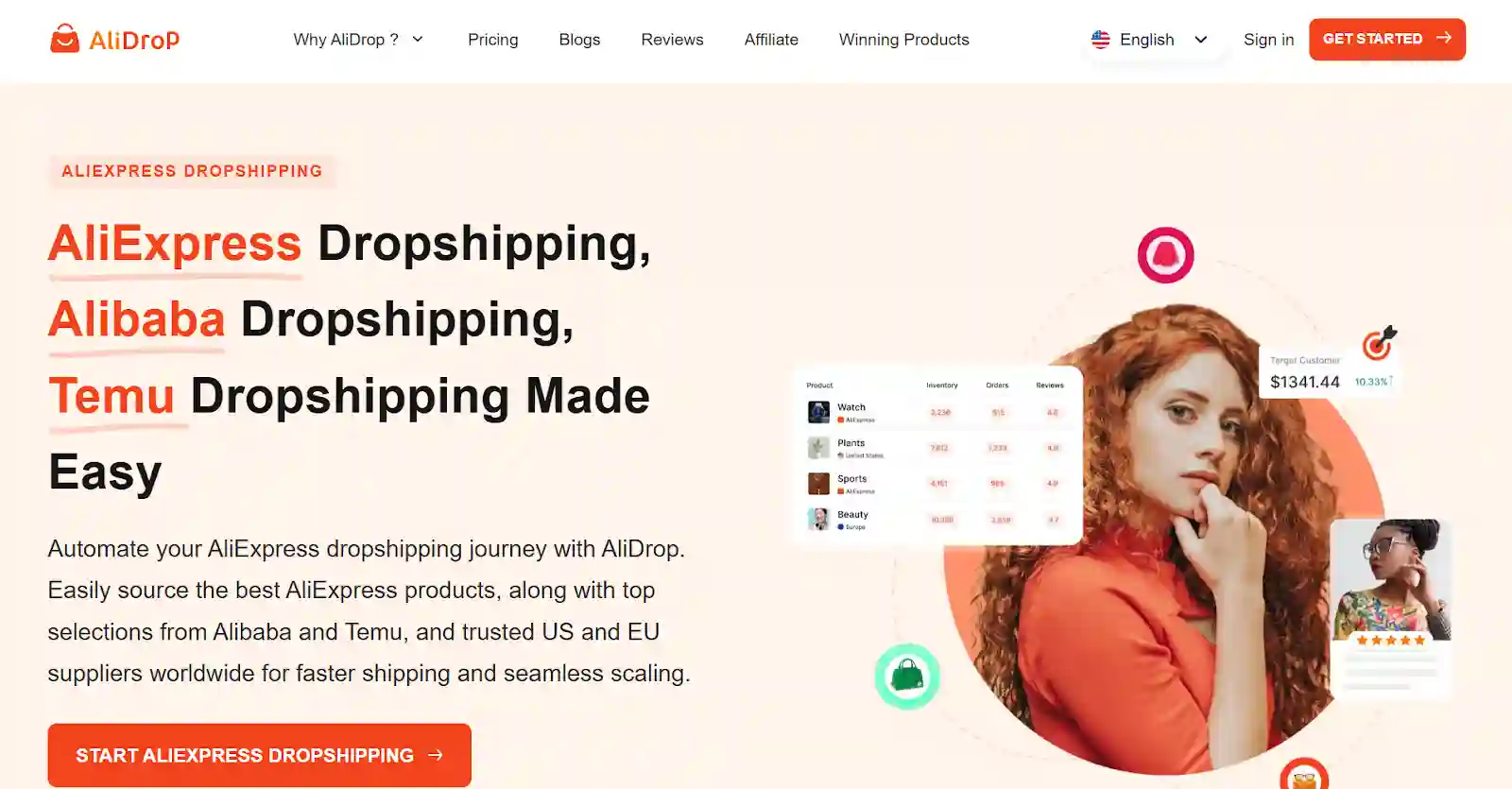
Alidrop is another great choice we recommend for dropshipping to Canada. Even though it is meant for AliExpress, Temu, and Alibaba dropshipping, you can source Canadian dropshipping products from Chinese sellers and warehouses. Alidrop can help you find US and EU dropshipping suppliers in Canada and connect with them. You can check out the Alidrop marketplace to find winning Canada dropshipping items.
10. Free Dropshipping Suppliers in Canada
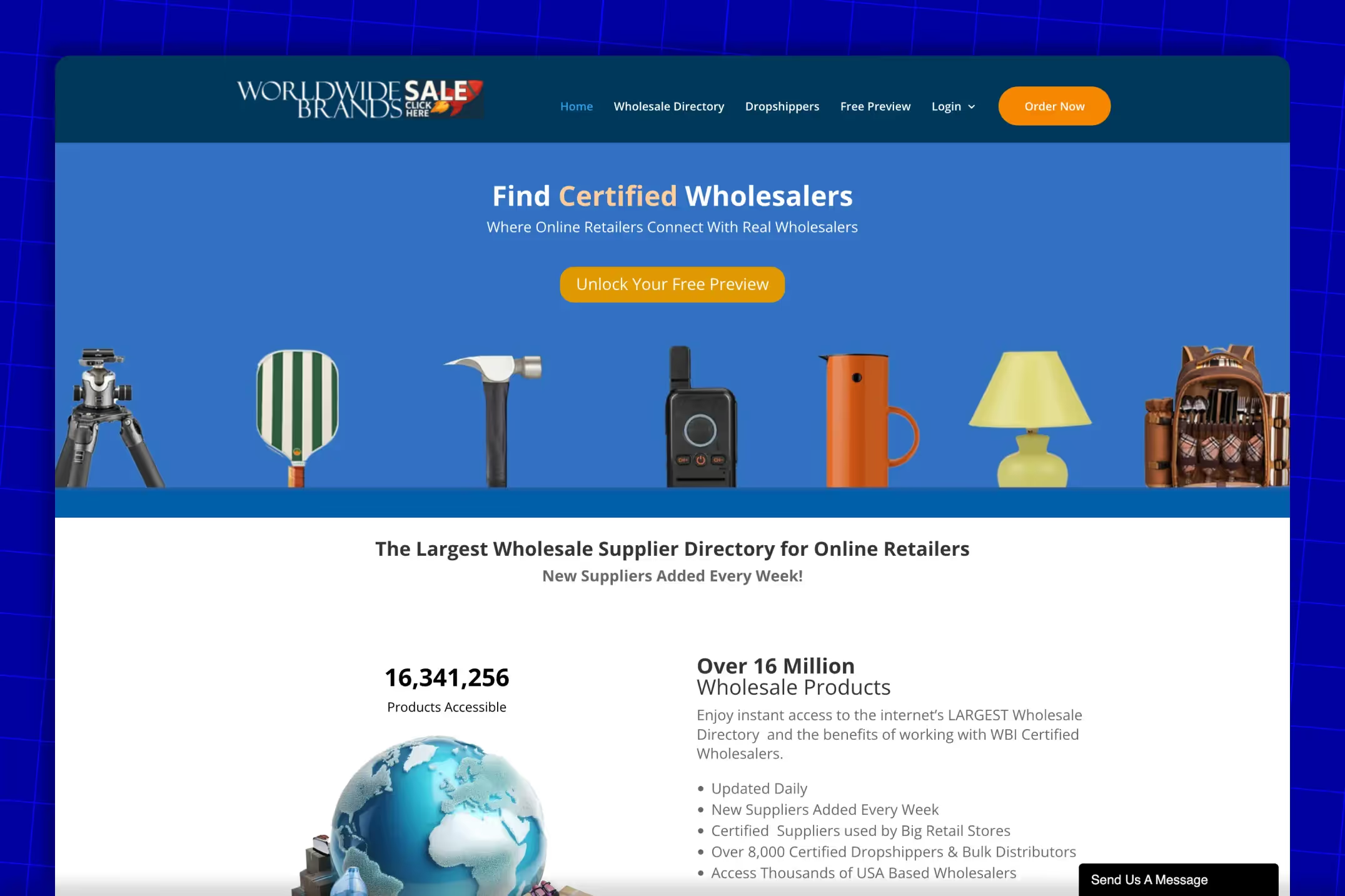
You don't always need to pay. Some suppliers work directly with retailers. You can reach out to small manufacturers and negotiate terms. AliExpress has Canadian sellers and free dropshipping suppliers if you're willing to deal with slower shipping. But honestly, paid platforms like Spocket or Modalyst give better results because suppliers understand the model and respond faster. Check out our guide to free dropshipping directories to explore more options for Canadian suppliers beyond this list.
Regional Dropshipping Centers in Canada
If you want to work with local suppliers, a few regions stand out.
Dropshipping center Toronto: Ontario is Canada's largest population center. Suppliers here can reach most of Canada quickly. Toronto specifically has warehousing infrastructure. Searching "dropshipping center Toronto" yields various fulfillment companies offering dropshipping services.
Dropship in Vancouver: Vancouver has port access and a strong import/export infrastructure. Suppliers here work with US companies regularly. Dropship in Vancouver for quick access to Asian suppliers and US markets.
Dropship Alberta: Calgary and Edmonton have several small fulfillment operations. Dropship Alberta for central Canadian shipping. The region also sees strong seasonal demand for outdoor and travel-related products, especially given Calgary's popularity as a gateway to the Rockies. Entrepreneurs scouting fulfillment partners in the area often combine supplier visits with road trips, and services like RV rentals Calgary make it easy to cover ground between warehouses spread across Alberta's major cities.
Dropship Montreal: Quebec has French-language suppliers and those focused on Quebec markets specifically. Dropship Montreal if your target audience is French-speaking.
Finding the Right Supplier
When you're searching for how to find a supplier for dropshipping in Canada, look for these specifics:
Shipping speed: How many days to Canadian addresses? 7-10 is good. Anything over 14 is slow.
Shipping cost: Are they transparent? Some suppliers charge flat rates. Others charge by weight. Calculate your average shipping cost and factor it into pricing.
Product quality: Order samples. Don't skip this.
Return policy: Do they accept returns within 30 days? What about damaged items?
Responsiveness: Email them questions. How fast do they reply? Are they helpful?
Minimum order: Some suppliers require minimum purchase volumes. Know your requirements upfront.
Starting a Dropshipping Business in Canada: Costs and Margins
You can launch a dropshipping business in Canada for under $500 CAD if you're lean. Here's realistic breakdown:
Domain: $12-15 annually Shopify: $29-299 monthly (start with the basic plan) App subscriptions: $10-100 monthly Initial inventory samples: $50-200 First month marketing: $100-500
Total startup: $300-1000 depending on what you choose.
Profitability depends on your niche and marketing. Average margins run 20-50%. If you sell a product for $25 that costs $10, you've made $15 margin. After platform fees, payment processing, and advertising, your actual profit might be $5-8 per order. Making $1,000 monthly profit requires roughly 125-200 orders at these margins.
Dropshipping Business Registration in Canada
You can't run indefinitely without registering. Here's what you actually need:
Sole proprietorship: No registration needed initially, but register if you use a business name. Your personal assets are at risk.
Partnership: More complex. Register and get a partnership agreement.
Corporation: Protect your personal assets. Requires incorporation with federal or provincial government. More paperwork, more costs.
Business Number: Required if revenue exceeds $30,000. Apply through CRA. Takes about 15 minutes.
Most dropshippers start as sole proprietors and incorporate later if they scale.
Taxes for Canadian Dropshippers
GST/HST registration happens when your annual revenue hits $30,000. You collect tax from customers. You remit it to the CRA quarterly or annually depending on your province. It's straightforward but mandatory.
Keep business records. Track expenses. Save receipts. Track income. You'll need these for tax filings. Many dropshippers use accounting software like Wave (free) or QuickBooks to track everything.
Conclusion
Starting a dropshipping business in Canada is feasible. The market exists. Customers want to buy online. Suppliers are available. You don't need massive capital. You can start from home.
But feasible doesn't mean easy. You'll compete with others doing the same thing. You'll need to market consistently. You'll handle customer complaints. You'll manage suppliers who sometimes fall short. You'll deal with taxes and regulations.
If you're willing to do the work—finding good suppliers, marketing your store, providing real customer service—dropshipping in Canada can generate real income. Start small. Test products. Learn what works. Scale from there. Thousands of Canadians are building successful dropshipping businesses right now. Now you can too, with Spocket.
Start your dropshipping business today
Dropshipping Canada FAQs
What is dropshipping in Canada and how does it differ from other e-commerce models?
Dropshipping is a sales model where you sell products without holding inventory. When customers order, you send details to a supplier who ships directly to them. You keep the difference between the selling price and supplier cost. Unlike traditional retail, you don't need a warehouse. Unlike wholesaling, you don't buy in bulk upfront. You only pay for products after customers purchase them. It's the lowest-barrier way to start selling online in Canada.
How does the legal registration process work for Canadian dropshipping businesses?
If you use a business name different from your personal name, register it with your province. Get a Business Number from the Canada Revenue Agency once your revenue exceeds $30,000 annually. You can operate as a sole proprietor, partnership, or corporation. Most people start as sole proprietors and incorporate later. Provincial requirements vary slightly, so check your specific province's business registry website. Registration typically costs under $200.
What are the key differences between dropshipping suppliers in Canada versus those in other countries?
Canadian and US suppliers ship faster to Canadian customers—typically 7-10 business days versus 30+ from Asia. They understand Canadian regulations and payment systems. Prices are often higher but you save on shipping costs. Return processes are simpler. Customer service is usually in English or French, not translated. For a Canadian dropshipping business, North American suppliers generally outperform international ones despite higher product costs.
How much can you realistically earn from a dropshipping business in Canada?
Margins typically range from 20-50% depending on your niche. If you sell something for $25 that costs $10, you've made $15 before platform and advertising fees. After Shopify ($29-100/month), payment processing (2-3%), and ads, your actual profit might be $5-8 per order. Making $1,000 monthly profit requires about 125-200 orders. Earnings depend entirely on how much traffic you drive and conversion rates you achieve. Some people earn thousands monthly. Others struggle for months. It depends on execution, not the model itself.
What are the tax obligations Canadian dropshippers must handle?
If annual revenue exceeds $30,000, register for GST/HST with the CRA. You collect this tax from customers and remit it quarterly or annually. Track all business income and expenses. Keep receipts. File taxes annually. Most provinces require filing by June 15. Use accounting software like Wave or hire a bookkeeper. The cost of staying compliant is minimal compared to the risk of ignoring requirements. Non-compliance leads to penalties and audits.
How do you find reliable dropshipping suppliers that ship quickly to Canada?
Use platforms like Spocket, Modalyst, or Zendrop Canada that vet suppliers. Filter results by location to find North American-based suppliers. Order samples before committing. Check supplier reviews. Ask them directly about shipping times to Canada. Contact their support team and note how quickly they respond. Join Facebook groups for Canadian dropshippers and ask for supplier recommendations. Research supplier background and check if they've been in business for at least a year. Good suppliers want long-term relationships, not one-off transactions.


Launch your dropshipping business now!
Start free trial


Related blogs
Dropshipping Supplier Directory: Where to Find Vetted Suppliers
Browse our directory of vetted dropshipping suppliers across the US and EU, complete with niches, shipping speed, and pricing. Start your free trial today.

How to Negotiate With Dropshipping Suppliers: 9 Tactics That Actually Work
Learn how to negotiate with dropshipping suppliers on price, MOQs, and payment terms. Proven tactics and email scripts to boost your margins. Try Spocket free.

Best Clothing Dropshipping Suppliers: The 2026 Guide
Compare the best clothing dropshipping suppliers for 2026 — US/EU shipping speeds, pricing, and product quality — and find the right fit to launch your store.