Coffee Gear Dropshipping for Home Baristas
Coffee gear dropshipping lets you sell premium barista tools without holding stock. Find the best suppliers and top products to launch your store in 2026.
.avif)

Home coffee culture has grown into one of the most active niches in consumer retail. More people are setting up proper home coffee bars, chasing espresso quality at home, and spending on gear that actually improves their brew. That shift has created a real commercial opening for online sellers. Coffee gear dropshipping lets you tap into this demand without warehousing a single item.
You list premium barista tools, brewing accessories, and espresso gadgets in your store, and your supplier ships directly to the customer. It is a low-overhead model with a wide product range and a buyer base that keeps coming back. If you are serious about selling coffee equipment and accessories online, 2026 is the year to move. Welcome to our full guide to coffee gear dropshipping for home baristas.
What is Coffee Gear Dropshipping?
Coffee gear dropshipping is a retail fulfillment model where you sell coffee equipment and accessories through your online store without holding any inventory. When a customer places an order, the supplier ships directly to them, and you keep the margin between your selling price and the supplier's cost.
The category is wide: espresso machines, grinders, tampers, milk pitchers, digital scales, cleaning accessories, portafilter tools, and more. Unlike bagged coffee, physical gear has no expiration date, ships easily, and requires no food-handling permits in most markets.
If you are new to dropshipping and looking for a high-intent product category, coffee gear is one of the stronger options available. Buyers searching for barista tools typically research before they buy. They arrive with specific product knowledge and purchase with clear intent.
Top Coffee Gear Dropshipping Products You Can Sell Online
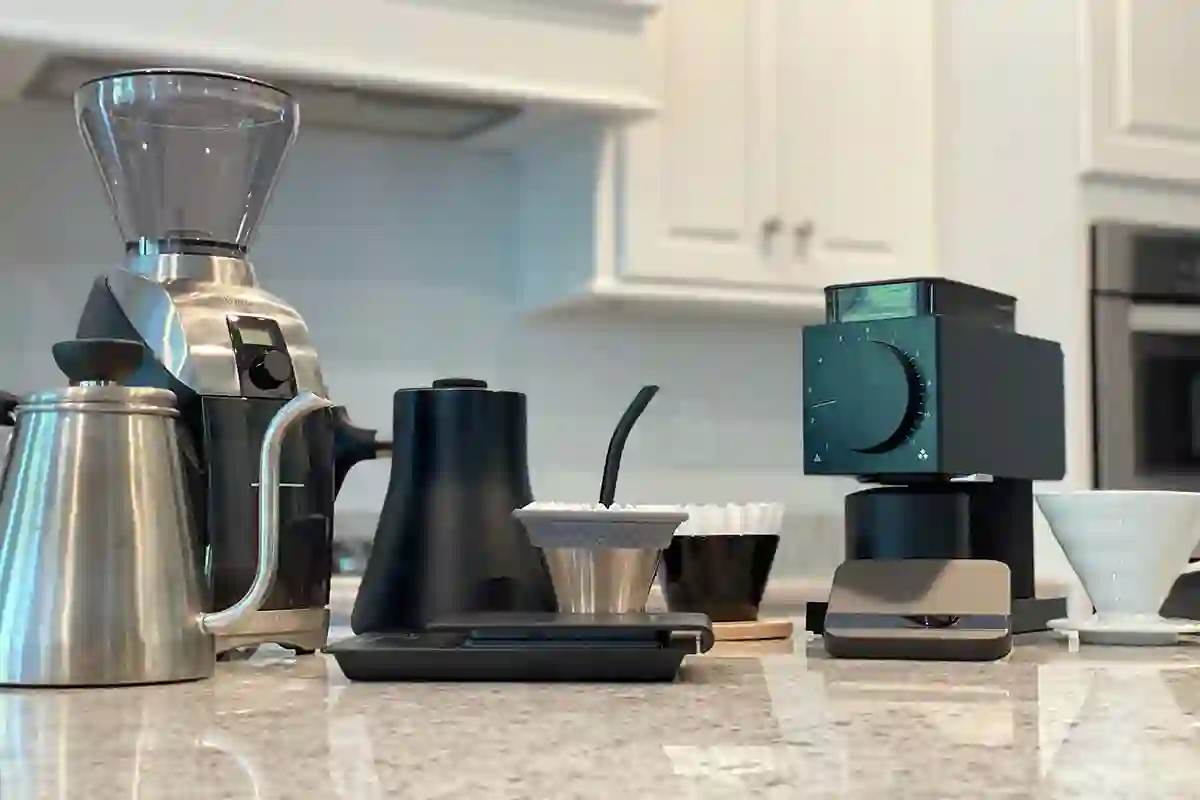
The right product mix is the difference between a store that converts and one that sits idle. These ten items cover different price points and buyer needs, giving your store real range from day one.
1. Espresso Grinders
A quality grinder matters as much as the machine itself, and serious home baristas know it. Products like the Baratza Encore ESP offer an accessible entry point for beginners, while manual hand grinders appeal to those who want portability and a lower price tag. Both segments have active buyers.
List steel burr grinders with clearly specified grind ranges and machine compatibility notes. Customers shopping for premium coffee brewing tools do their homework, and detailed listings earn more trust than vague descriptions.
2. Espresso Machines
The espresso machine is the centerpiece of any home coffee bar setup and the highest-ticket item in most coffee gear dropshipping stores. Entry-level machines attract new buyers; mid-range semi-automatics pull in enthusiasts ready to invest more. Knowing which portafilter size your listed machines use (54 mm or 58 mm) matters because it drives accessory compatibility.
A coffee brewing machine for home use targets a completely different buyer than a commercial unit. Keep your product descriptions focused on home-use specs and cross-reference compatible accessories to push average order values up.
3. Self-Leveling Tampers
Most espresso machines ship with a plastic tamper that home baristas replace almost immediately. A precision tamper with a leveling guide ring that rests on the portafilter rim makes consistent tamping far easier, especially for beginners still developing technique.
Normcore makes well-regarded leveling tampers in both 54 mm and 58 mm. These are affordable, lightweight, easy to ship, and popular as gifts. Options like the Happy Tamper, which you press with your palm rather than your wrist, offer an interesting variant. Both fit naturally into any barista accessories kit.
4. WDT Tools and the Magnetic Coffee Dosing Funnel
The Magnetic Coffee Dosing Funnel paired with a WDT (Weiss Distribution Technique) needle tool has become standard home espresso puck prep. The funnel sits on the portafilter while you use fine needles to rake through the grounds, evening out distribution before tamping. This cuts down on clumping and reduces uneven extraction.
Subminimal makes a popular WDT tool worth stocking. These are lightweight, inexpensive to ship, and sell consistently year-round. Bundling a funnel with a matching WDT tool as a set is a simple way to increase average order value without adding much cost.
5. Cleaning Tools for Home Baristas
Cleaning tools for home baristas are a high-repeat purchase category that gets underestimated. Artpresso produces group head brushes with detachable cleaning pads, steam wand cleaners, and drip tray tools built specifically for home espresso setups. Their tools even include a built-in flathead that removes the group head screen without needing a separate screwdriver, which is the kind of specific detail home baristas love.
Cafiza espresso machine cleaner is another staple product worth listing. It breaks down coffee oils and buildup inside machines, portafilters, and even thermoses. Customers reorder it regularly once they find it, making it a natural fit for post-purchase follow-up campaigns.
6. Puck Screens
Puck screens sit on top of the coffee puck before extraction to distribute water more evenly from the shower head. They also keep the group head cleaner between backflushes. Weber Workshops makes a premium stainless steel version. Budget-friendly versions from general suppliers work for price-sensitive buyers.
Brands like SWORKSDESIGN also offer gold-coloured options that appeal to buyers who care about the aesthetic of their setup. Puck screens make excellent add-ons at checkout and work well as low-cost gift items throughout the year.
7. Milk Pitchers
Milk pitchers are essential barista cafe accessories for anyone making lattes, cappuccinos, or flat whites at home. The pitchers bundled with most machines are functional but limiting. A pitcher with a wider, more pronounced spout and greater depth lets baristas reach further into the cup and control milk flow much more precisely.
Slow Pour Supply produces pitchers designed specifically for home barista use, including the WPM round-spout model in 15 oz, which suits most home drinks well. These appear regularly in home barista community recommendations and gift guides, which means organic discovery is real.
8. Digital Coffee Scales
A digital coffee scale that measures to 0.1 grams and includes a built-in timer is standard equipment for anyone dialing in home espresso. These precision espresso accessories help baristas track dose, yield, and extraction time consistently. Options range from affordable entry-level models to premium units like the Acaia Lunar.
The wide price range here is an asset. You can target beginners looking for a reliable starting point and enthusiasts willing to spend more from the same category. Scales are among the best home coffee bar accessories 2026 buyers actively search for, and they pair naturally with grinders and tampers in a bundle.
9. Espresso Mirrors
An espresso mirror mounts near the group head so home baristas can watch the shot pull without crouching down. It is a niche product that home barista communities genuinely love, and because most local retailers do not stock them, e-commerce is the primary place buyers find them.
Affordable clip-on versions from Normcore and luxury ball-bearing versions from Weber Workshops both have active buyer audiences. The Weber Workshops mirror sits on a stainless steel ball bearing and is beautiful if a buyer wants to go full luxury with their setup. Stocking both price tiers gives your store real range within this category.
10. Water Mineral Packets
Water quality directly affects both taste and machine longevity. Using the wrong water causes scale buildup in the boiler or corrosion from overly pure water. Products like Third Wave Water mineral packets solve this by giving home baristas correctly mineralized water, with profiles designed specifically for espresso machines or drip coffee.
These are consumable products with strong repeat purchase rates. Once a buyer settles on a water product they trust, they reorder consistently. A TDS meter, which tests total dissolved solids through electrical conductivity, pairs naturally with these packets and is the kind of product buyers discover alongside them. Both belong in any trending dropshipping products lineup built around premium coffee brewing equipment.
Is Dropshipping Coffee Worth It?
Yes. Dropshipping coffee accessories and tools for home baristas is worth it. Here’s why:
Year-Round, Stable Demand
Coffee is not a seasonal product. Home baristas buy gear when they get a new machine, when they upgrade their setup, and when existing equipment wears out. That pattern holds all year long. Recommended coffee bar accessories for home baristas appear in search every month without the dramatic dips you see in seasonal product categories.
Home brews culture has continued growing through 2026, with more households building out dedicated coffee stations and treating the morning ritual as something worth investing in. Sellers in this space benefit from that consistency.
Healthy Margins on the Right Products
Coffee dropshipping products vary in margin. Accessories like tampers, funnels, and cleaning tools tend to sit in the 40% to 60% gross margin range when sourced well. High-ticket items like machines and grinders offer more dollar profit per order but require more buyer trust and a longer decision cycle.
Is coffee dropshipping legit as a business model? When you operate with verified suppliers, accurate shipping policies, and transparent return processes, yes. Sellers who treat it as a real business consistently generate stronger coffee gear dropshipping sales than those who approach it as a passive side experiment.
Where the Real Opportunity Sits
Popular coffee products on large marketplaces see heavy competition. Niche categories like espresso gadgets, specialty cleaning tools, and home barista setup accessories are less saturated, especially when you sell through a branded store rather than a generic listing. Buyers shopping for premium coffee equipment and accessories are often willing to pay more when the store demonstrates real product knowledge and earns their confidence.
How Much Money Can You Make by Dropshipping Coffee Products and Accessories
Earnings vary by product type, supplier terms, and how you acquire customers. Here is a realistic breakdown across three price tiers.
Entry-Level Accessories: $10 to $40 Retail
Puck screens, cleaning brushes, WDT tools, and dosing funnels fall in this range. After supplier cost and platform fees, netting $5 to $15 per order is realistic. Volume is the play at this tier. These are impulse additions to a cart and frequent gift items, so they sell without aggressive advertising and work well as order bumps at checkout.
Mid-Range Barista Tools: $40 to $120 Retail
Self-leveling tampers, milk pitchers, digital scales, and espresso mirrors sit here. Margins of $15 to $45 per order are achievable with good supplier terms. Buyers in this range are intentional and research-driven, which means targeted content and SEO convert them well without relying entirely on paid ads.
High-Ticket Equipment: $200 to $600+ Retail
Espresso machines and premium grinders sit at this level. Gross margin can reach $80 to $200 per order depending on the product and supplier deal, but acquisition cost is higher and the sales cycle is longer. These products work best when supported by strong product pages, honest comparison content, and email sequences that build buyer confidence before the purchase.
A store layering all three tiers gives you the best balance of consistent cash flow and total revenue growth. Accessories drive order volume; high-ticket items drive the top line.
Best Dropshipping Coffee Suppliers in 2026
Are you looking for top dropshipping coffee suppliers? Here is our roundup of the best dropshipping coffee suppliers for 2026:
1. Spocket
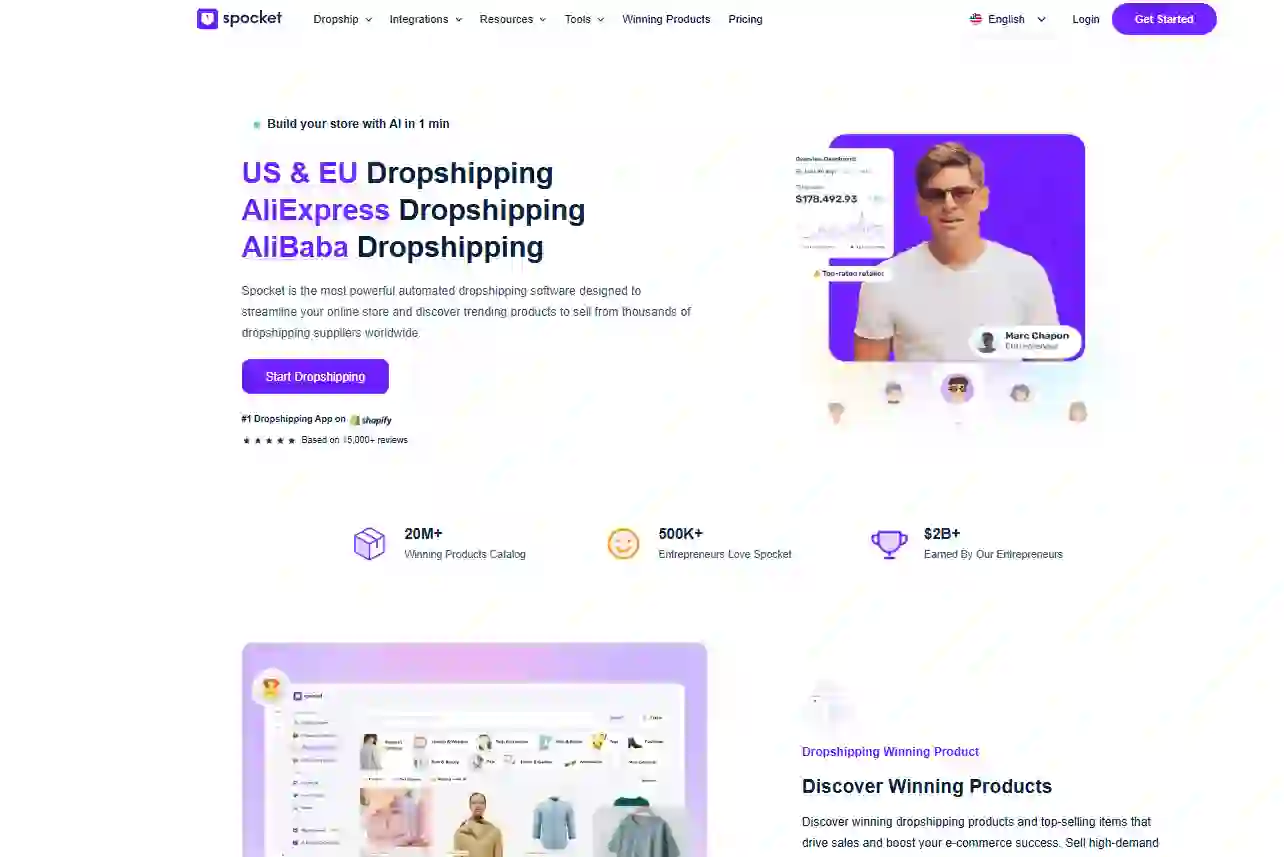
Spocket connects you with verified US and EU-based suppliers for coffee gear and accessories, with shipping times that hold up better than most overseas alternatives. Spocket has no MOQs, which means you can test products without committing to minimum order quantities. That matters most when you are still determining which items actually convert in your store.
For a broader look at your options, the dropshipping coffee suppliers guide on Spocket covers the full landscape clearly. If you are building your store on BigCommerce, Wix, or WooCommerce, Spocket integrates directly with all three, making the product import process clean and straightforward.
2. Dripshipper
Dripshipper is one of the most recognized names among the best dropshipping coffee suppliers in the market. It specializes in private-label products, meaning every order ships under your brand name. Setup takes as little as five to ten minutes, the catalog includes over 40 coffee types, and FDA compliance is built into the labeling process, removing a significant legal concern for new sellers.
If you want to build a branded coffee business rather than resell someone else's product, Dripshipper is one of the best dropshipping coffee suppliers to try in 2026. Their beginner-focused onboarding and transparent pricing make them a reliable first choice for entering the coffee niche.
3. Volcanica Coffee
Volcanica Coffee runs a dedicated dropshipping program with a broad catalog of single-origin, exotic, and specialty beans. The brand carries strong existing credibility, which transfers to sellers who list their products. For a coffee gear store that wants to add premium beans as a complementary product line, Volcanica is a practical and well-regarded pairing.
Their product photography and catalog organization are clean and easy to work with. Coffee dropshippers looking to serve buyers who invest in quality gear and quality beans will find Volcanica a strong fit for that audience.
4. JAVAMANIA
JAVAMANIA has grown as a supplier option for coffee gear dropshipping companies through 2026, supporting sellers with both coffee products and accessories from a single relationship. Their broader product base gives you more catalog range without managing multiple supplier accounts simultaneously.
For sellers who want to consolidate sourcing while still offering a full home barista toolkit, JAVAMANIA is worth evaluating as part of your supplier strategy.
5. Path Coffee Roasters
Path Coffee Roasters runs a dedicated dropshipping program with no monthly fees and one-on-one account manager support for each seller. Coffee is sourced from Central and South America, Africa, and Indonesia, which gives your store a variety of origin profiles to appeal to different buyer preferences.
The account manager model is uncommon among top dropshipping coffee suppliers and genuinely useful if you are newer to the coffee niche. Having a specific contact to reach when questions come up takes real pressure off the early learning curve.
Why Dropship Coffee Equipment for Home Baristas
The home barista market has grown into a serious segment of the broader coffee industry. Selling coffee equipment and accessories online to this audience has several concrete advantages that make it worth your time and investment.
- Repeat purchase behavior. Home baristas do not buy once and stop. They upgrade grinders, replace worn tampers, restock cleaning products, and experiment with new tools on a regular cycle. A buyer who orders a WDT tool from your store this week may return next month for a scale or a new milk pitcher. That repeat behavior is built into the category itself.
- Strong year-round gifting demand. Coffee gear makes excellent gifts. Options like custom coffee mugs, magic coffee mugs for dropshipping, and funny coffee mugs for coffee lovers perform consistently as gift purchases across holidays and occasions, giving your store reliable traffic spikes around key gifting periods.
- High online discovery rate. Most buyers searching for a home barista tools and equipment list or a barista accessories kit search online first. This makes SEO and content marketing powerful acquisition channels for a coffee gear store. Buyers arrive with intent and product knowledge already in place.
- Wide price spectrum. From a $12 cleaning brush to a $500 espresso machine, this category covers a broad range of budgets. You can serve entry-level buyers and serious enthusiasts within the same store without a disconnect in product offering.
- Community-driven word of mouth. Coffee communities on Reddit, YouTube, and TikTok actively share gear recommendations. A product that earns a genuine mention in one of those spaces can drive meaningful organic traffic with no ad spend required.
What is the Future of Coffee Product Dropshipping?
This is what the future of coffee dropshipping looks like:
Growing Demand for Premium Home Setups
The home coffee bar has gone from enthusiast hobby to mainstream aspiration. More households are setting up dedicated brewing stations with proper barista tools for home, office, and cafe use. Searches for the best coffee accessories for your home coffee bar and premium coffee brewing equipment have continued growing through 2026.
Sellers positioned in this space benefit from that expanding buyer pool. As quality home espresso gear has become more accessible, the market has widened beyond hardcore enthusiasts to include casual home brewers who want cafe-level results without leaving the house.
Print-on-Demand and Personalized Coffee Products
Print-on-demand has added a real revenue stream within coffee dropshipping products. Custom mugs, branded tumblers, and personalized brewing accessories give sellers a way to stand out from generic listings. These items appeal especially to gift buyers, which is a large and consistent segment of the coffee accessory market year-round.
Combining a standard gear catalog with a print-on-demand line gives your store two distinct entry points: buyers shopping for functional tools and buyers shopping for something personal or entertaining. Both segments convert, and neither requires holding any inventory.
Durability and Quality as a Differentiator
Buyers in 2026 pay more attention to product build quality and sourcing transparency than they did a few years ago. Coffee gear that is built to last, comes from a brand with a clear identity, or is backed by honest reviews commands higher prices and stronger loyalty. A store that leads with quality signals, through specific product descriptions, real photography, and honest specs, holds up better over time than one competing purely on price.
Top Companies Worldwide Who Are Doing Coffee Dropshipping and Marketing Right: Examples
Several coffee dropshipping companies have built their reputations by solving real problems for sellers, from branding support to compliance headaches to international reach. These four are worth watching as examples of what strong execution looks like in 2026.
1. Temecula Coffee Roasters
Temecula Coffee Roasters stands out among top dropshipping coffee suppliers for their transparent, no-hidden-fee pricing structure. What sellers pay is what they see upfront, and their label design service builds in FDA regulation compliance from the start, so your branded packaging ships legally without you having to figure out the fine print yourself.
Their weekly Zoom training sessions are genuinely unusual among coffee dropshippers. Few suppliers invest in that kind of ongoing seller education. If you are new to the niche and working through how to start a coffee dropshipping business while managing supplier relationships at the same time, that direct access to knowledgeable staff makes a real difference in how fast you get your operation running properly.
2. Limini Coffee
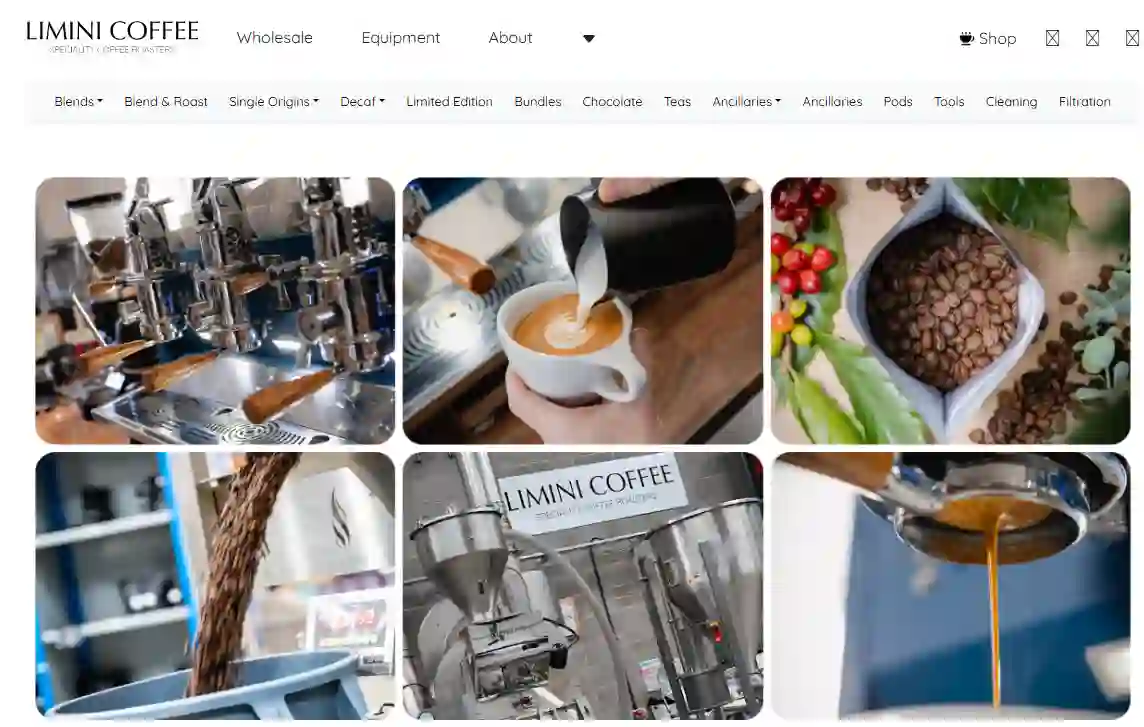
Limini Coffee serves the UK and European market with an extensive catalog covering espresso blends, single-origin coffees, and decaf options. Their next-day shipping capability is one of the more competitive advantages you will find among best dropshipping coffee suppliers operating in that region, where buyer expectations around delivery speed have risen sharply.
For coffee gear dropshipping sales targeting UK and EU buyers, Limini's order system is clean and easy to work with. Sellers looking to expand beyond the US market without the complications of long international transit times will find Limini a practical partner for serving that audience with premium coffee brewing equipment and consumables alongside physical gear.
3. Woodi Peck's
Woodi Peck's has carved out a clear niche in the coffee dropshipping products space by centering its brand around specialty and artisan coffee culture. Their marketing leans into the story behind each product, which resonates with the kind of buyer who cares about sourcing, craft, and the full ritual of the home brew experience.
Coffee gear dropshipping reviews from sellers partnered with Woodi Peck's frequently highlight product quality and the ease of matching their aesthetic to a branded store. For sellers building a premium home barista concept, the visual identity and product positioning Woodi Peck's already has in place gives your store a credible foundation to build on.
4. Roastify
Roastify runs a no-fee private-label model that removes one of the most common friction points for new coffee dropshippers: the upfront cost of getting your brand on a product. You can launch private-label coffee under your own brand without paying monthly platform fees, which changes the math considerably for sellers who are still testing which coffee products their audience actually wants.
Among coffee gear dropshipping companies worth tracking in 2026, Roastify is one of the more seller-friendly options when it comes to brand-building without financial risk. Their model suits sellers who want to move past white labeling and establish a more distinct product identity, particularly when paired with premium coffee brewing tools and accessories that reinforce the branded experience.
How to Start Dropshipping Coffee: Begin a Home Coffee Gear Dropshipping Business Now
Starting a coffee gear dropshipping business does not require a large upfront investment. The steps follow the same logic as any dropshipping store, with a few coffee-specific considerations layered in.
Choose Your Selling Platform
Your platform affects everything downstream, from design flexibility to fee structure. A self-hosted store on Wix or WooCommerce gives you full control over branding, design, and the customer experience from first visit to post-purchase. Amazon and eBay offer volume but limit your ability to build a store identity that buyers remember.
For anyone serious about how to start a coffee dropshipping business with a brand they want to grow, a self-hosted store is worth the extra setup effort. Matching your site design to your product aesthetic makes a difference in buyer trust that no marketplace listing can replicate.
Decide on White Label or Private Label
When researching how to find coffee dropshipping suppliers, you will encounter three main models: white label, private label, and reselling established brands. White labeling is the simpler starting point. You apply your brand name to existing products from a supplier and list them without modifying the product itself.
Private labeling gives you more control over the actual product, including custom blends or packaging design, but typically involves upfront costs for production minimums. Unless you have strong knowledge of coffee and specific ideas about blend profiles, starting with white-label gear is the cleaner approach. You can move toward private label once you understand what your specific buyers actually want.
Build a Focused Product List
Start with 10 to 20 items across different price tiers. A personal coffee maker, a precision tamper, a scale, a WDT tool, a dosing funnel, and a cleaning kit cover the core home barista setup without overwhelming new buyers. Use your supplier's product data as a starting point, then write original descriptions that speak directly to the home barista.
A clear coffee equipment list with pictures on your product pages performs better in search and converts more often than generic copy. Buyers in this category are informed, so specific language beats vague marketing language every time.
Drive Traffic Through Content
Organic content on TikTok and YouTube outperforms most paid channels for new coffee stores. Tutorials, gear comparisons, and honest espresso gadgets reviews attract buyers already in the market. Email marketing and retargeting scale well once you have initial buyer data to work with.
Long-term, content built around topics like coffee making equipment names, brewing gadgets USA buyers search for, and home barista tools and equipment lists builds compounding traffic that paid ads cannot replicate at the same cost. An article or video that earns organic search traffic keeps working. A paid ad stops delivering the moment you stop spending.
Top Mistakes to Avoid for Coffee Dropshippers
New sellers in this category tend to hit the same obstacles. Knowing what to avoid early saves time and protects your store's reputation.
- Skipping legal compliance. Coffee dropshipping gear, especially consumables, comes with regulatory requirements around labeling, permits, and tax registration. In the US, FDA guidelines apply to food and beverage products. Dropshipping caffeine-containing consumables without checking local regulations creates expensive problems down the line. Check your specific location's requirements before listing any consumable product.
- Choosing suppliers on price alone. The cheapest option is rarely the best one for your store's long-term health. Slow shipping, inconsistent quality, and poor return handling all show up in your customer reviews. Research shipping times, order accuracy, and return policies when figuring out how to find coffee dropshipping suppliers. Your buyers' experience depends entirely on how your supplier performs.
- Launching with copied product descriptions. Duplicating supplier copy word for word hurts search visibility and tells buyers nothing distinctive about your store. Write original descriptions for every product you list. Specific, useful copy that speaks to actual home barista needs outperforms generic spec sheets every time.
- Skipping the accessories tier. Home baristas build their setups piece by piece. A store that only carries machines and grinders leaves repeat buyers with no reason to come back. Dropship coffee free of single-product thinking and build out your full home barista tools and equipment list, including tools for every stage of the brewing process.
- Overlooking water quality products. Water mineral packets and TDS meters are easy to skip, but they are high-repeat, lower-competition products. Once a home barista finds a water product they trust, they reorder consistently. Leaving them off your store list means passing on reorder revenue that costs you almost nothing to capture.
- Not tracking what actually sells. Coffee gear dropshipping reviews and order data from your first 90 days will tell you more about what to stock than any pre-launch research. Track return rates, customer questions, and repeat purchase patterns. That early data shapes your best-performing product lineup faster than guesswork ever will.
Conclusion
Coffee gear dropshipping works because the market runs on genuine passion. Home baristas spend time researching products, upgrading their setups, and sharing what they find with other coffee lovers. That level of engagement creates a buyer base that is active, informed, and willing to spend on quality.
Your job as a seller is to show up with the right products, reliable suppliers, and a store that earns their trust. The demand is consistent, the product range is wide, and the category rewards sellers who take it seriously. Start with what you know, build from there, and treat this as a real business from day one. Use Spocket to start a coffee gear dropshipping business today!
Start your dropshipping business today
Coffee Gear Dropshipping FAQs
Is coffee gear dropshipping legal?
Yes, coffee gear dropshipping is fully legal in most markets. Selling barista tools, espresso accessories, and brewing equipment through a dropshipping model carries no specific legal restrictions. If you also list consumable coffee products, check local food safety regulations, applicable business licensing, and tax requirements for your location. Requirements vary by country and state, so research your specific market before listing any consumable product in your store.
Is dropshipping coffee profitable in 2026?
Dropshipping coffee and coffee accessories can be profitable when you select the right product mix and work with reliable suppliers. Accessories like tampers, scales, and cleaning tools carry strong margins relative to their cost. High-ticket items like espresso machines offer more dollar profit per order. Consistent profitability comes from pairing strong suppliers with a content-driven traffic strategy that brings in buyers who already know what they want.
How do I find the best dropshipping coffee suppliers?
Start with suppliers who have dedicated dropshipping programs, transparent pricing, and verifiable shipping times. Look at Dripshipper, Volcanica Coffee, Path Coffee Roasters, and platforms like Spocket that connect you with vetted US and EU suppliers. Check independent reviews, confirm return policies, and test the ordering process with a sample order before committing a supplier to your store's main catalog.
What are the best coffee gear dropshipping products to start with?
For a new store, start with accessories: self-leveling tampers, digital scales, WDT tools, dosing funnels, puck screens, and cleaning kits. These are affordable, easy to ship, and in consistent demand among home baristas year-round. Once those are converting, add higher-ticket items like grinders and espresso machines to give your store a more complete product offering that serves the full range of buyer needs.
What is the difference between white label and private label in coffee dropshipping?
White label means you sell an existing product under your own brand name without modifying the product itself. Private label means you have more input into the actual product, such as a custom coffee blend, specific packaging design, or a unique formulation. White labeling is faster and simpler to launch. Private labeling gives you a more differentiated product but typically involves higher upfront costs for customization and production minimums.
Do I need a business license to start a coffee dropshipping business?
In most locations, yes. Selling products online as a business generally requires registering your business entity, obtaining any applicable permits, and collecting sales tax where required. If you list consumable coffee products, food handling and labeling regulations may also apply. Requirements vary by country and state, so check with a local business advisor or consult your government's official small business registration resources before you launch.


Launch your dropshipping business now!
Start free trial.avif)


Related blogs
Dropshipping Supplier Directory: Where to Find Vetted Suppliers
Browse our directory of vetted dropshipping suppliers across the US and EU, complete with niches, shipping speed, and pricing. Start your free trial today.

How to Negotiate With Dropshipping Suppliers: 9 Tactics That Actually Work
Learn how to negotiate with dropshipping suppliers on price, MOQs, and payment terms. Proven tactics and email scripts to boost your margins. Try Spocket free.

Best Clothing Dropshipping Suppliers: The 2026 Guide
Compare the best clothing dropshipping suppliers for 2026 — US/EU shipping speeds, pricing, and product quality — and find the right fit to launch your store.