Best Place to Sell Clothes Online in 2026
Sell clothes online on top platforms worldwide. Compare fees, features, and audiences to find the best fit for your reselling business.


You have a closet full of clothes taking up space. Selling them locally is slow, and shipping them yourself is a hassle. You're losing money because you don't know where to list or how much to charge.
Every day your unused clothes sit in your closet, they're worth less. Trends change fast. The right buyer could be waiting online right now, but you're not reaching them. Money is sitting right there, untouched.
Online marketplaces handle the hard part for you. You upload photos, set prices, and ship when someone buys. No storefront costs. No middlemen taking massive cuts.
Thousands of people are making $100 to $500+ every month by selling clothes they already own. You can do the same. The process takes 10 minutes per item, and you'll start getting offers within hours of listing. Here’s a guide to selling clothes online for you.
Why Sell Clothes Online?
Selling clothes online beats traditional methods by a mile. You reach buyers across your entire country (or the world), not just people in your town. Shipping costs are low because buyers pay for it. You don't need a physical store, rental fees, or employees.
The money moves fast. When someone buys your item, you get paid within days. You control your prices, so you can test what works. If an item isn't selling, you lower the price and it moves. If you're underselling, you bump it up. This flexibility means you keep more profit than you'd make at a thrift store or consignment shop.
Selling online also keeps working while you sleep. Your listings stay active 24/7, pulling in buyers at any time. You're not limited by store hours or foot traffic. Plus, the secondhand fashion market is growing fast. Buyers love the deals. Sellers love the margins. You're tapping into a trend that's here to stay.
Types of Clothes You Can Sell Online
You can sell almost any clothing item online, but some categories move faster than others. The best sellers are items that are either trendy, branded, or hard to find in stores. Here's what works:
Fast-Selling Categories
- Vintage and retro clothes: Think 90s jeans, 80s band tees, and Y2K styles. Buyers hunting for these items are willing to pay premium prices because you can't find them in regular retail anymore. Condition matters less if the item has the right nostalgic appeal. A faded Nirvana tee from 1994 can sell for more than a brand-new plain black shirt, just because of what it represents.
- Branded items: Luxury brands like Coach, Louis Vuitton, Gucci, and Prada hold value. Even five-year-old designer bags often sell for 50-70% of retail. High-end denim (True Religion, Citizens of Humanity, Rock & Republic) also moves quickly. The brand name does the heavy lifting for you. Buyers trust it. They pay faster.
- Athletic and activewear: Lululemon, Nike, Adidas, and Gymshark items sell the moment you list them. People cycle through athletic gear constantly, and they're comfortable buying secondhand because the quality is high. Condition is critical here, but even gently used pieces command 60-80% of retail price.
Everyday Wear
- T-shirts, sweaters, and basic tops move steadily if they're in good condition and from decent brands. These aren't premium sellers, but they're volume items. If you price them right ($5-15), you'll get offers. The trick is bundling several items together to increase average order value.
- Jeans are always saleable, especially if they're on-trend. High-waisted mom jeans, skinny jeans, and wide-leg styles fluctuate in popularity, but there's always a buyer. Dark wash jeans sell better than faded ones. Premium brands (Levi's 501s, Gap, Old Navy) move steadily.
- Seasonal items spike at the right time of year. Winter coats sell hard from September through February. Summer dresses peak in May and June. Formal wear sells before holidays. If you time your listings with seasons, you'll sell faster and at better prices.
How to Choose the Best Clothes to Sell Online
Before you list, check your inventory carefully. Not everything in your closet is worth the effort to photograph, ship, and handle returns.
Check condition first
Hold each item up to light. Look for stains, holes, loose threads, fading, and pilling. Clothes with rips don't sell unless they're intentionally distressed vintage items. Stains kill sales. A $100 piece with a small stain might only sell for $10. If you can't remove the stain, don't list it. Save your time for items in good or excellent condition.
Research the brand
If you don't recognize the brand, search online or check the price on eBay. Fast fashion brands (H&M, Forever 21, Zara) sell poorly because they were cheap new. Buyer expectations for price are low. Premium brands (mentioned above) command higher prices. Niche brands that have a following (Patagonia, Arc'teryx, Reformation) sell better than generic names.
Size it correctly
A $50 sweater in size XS won't sell if you mislabel it as S. Check the tag twice. If the tag is missing, measure the garment yourself. Sizing matters more than anything else. Wrong size = return or negative feedback. Accurate sizing = happy buyer who pays fast.
Look for trends
Before listing, browse the platform to see what's selling. Are people buying oversized blazers or fitted ones? Cargo pants or slim fits? What colors are hot right now? Listing trending items bumps your chances of a sale by 40%. You don't need to chase every trend, but don't fight against them either.
Avoid items with low demand
Fashion from 5+ years ago (unless vintage), items in poor condition, and off-trend styles sit forever. You'll get lowball offers. They're not worth your time. Be honest with yourself. If it takes 2 minutes to list and 1 month to sell, it's dead weight.
Check age and wear
Newer is always better, but lightly worn beats unworn from 2010. Buyers assume if you owned it, you probably wore it. They're fine with that if there's no damage. Just be transparent in your photos.
Consider size ranges
Extreme sizes (XXS, XXXL) have smaller buyer pools. Standard sizes (S, M, L) sell fastest. If you only have XS or XXXL, price them lower to move them.
How to Compare Prices Before You Sell Clothes Online
Pricing is where you make money or lose it. If you overprice, your items sit. If you underprice, you leave cash on the table. You need a system.
Check completed listings on the same platform
Search for the exact item, brand, size, and color. Filter for "sold" items. This is gold. You see what the market actually paid, not just what people are asking. If the item is brand new with tags, you can charge more. If it's lightly worn, match the average sold price. If there are no completed listings, that's a red flag. The item might not sell.
Cross-list on multiple platforms
Before deciding on a final price, check the same item on 2-3 other platforms. Poshmark might list a jacket at $45. eBay might show $55. Depop might show $35. The difference is audience and fees. Know your fees so you can adjust. You want the highest price on the platform with the lowest fees (if shipping costs are equal).
Factor in fees accurately
Poshmark takes 20% on sales over $15. eBay takes roughly 13.5-15%. Depop takes about 3.3% + $0.45 (U.S.). If a jacket sells for $50 on Poshmark, you get $40. On eBay with a 13.5% fee, you get about $43. On Depop, you get about $46. The same item, different payouts. Price accordingly.
Check brand resale value
Designer brands drop slower. Fast fashion drops fast. If it was $20 new, you're lucky to get $5. If it was $200 new and it's 2 years old, you might still get $80-100. Use this as a baseline. Multiply the original retail price by 40-60% for lightly worn items, 20-40% for moderately worn items.
Adjust for demand. If 50 people are selling the same item right now, you need to price lower or make your listing stand out (better photos, faster shipping). If you're the only listing, price it higher. Supply and demand is everything.
Test price, then adjust. Don't be afraid to relist. If something doesn't sell in two weeks, lower the price by 10-15%. If it sells immediately, you priced too low. You'll learn fast what works.
Account for shipping costs. If you're offering free shipping, subtract the shipping cost from your price. Buyers like seeing "free shipping" but they're paying for it embedded in your price. Some platforms like Poshmark handle shipping, so you don't set shipping costs. Others like eBay let you set shipping. Know the difference and price accordingly.
10 Best Places to Sell Clothes Online in 2026
Here is a list of the 10 best places to sell clothes online:
1. Spocket

Spocket is different from traditional resale platforms. Instead of listing your own clothes, you source products from dropshipping suppliers and sell them through your own storefront. It connects you with vetted US and EU suppliers so you don't hold inventory. You handle the storefront and customer communication. The suppliers handle packaging and shipping. Spocket handles the technology layer—product research tools, profit calculators, inventory syncing, and order automation. If you want to build a clothing business without upfront inventory costs or MOQ (minimum order quantity) requirements, Spocket gives you access to thousands of apparel items priced competitively. You can test products with zero risk, scale profitable items, and use print-on-demand services to brand items. The platform integrates with Wix, WooCommerce, and other stores, so you control your own brand and pricing.
Key Features:
- Zero MOQs on all products, so you can test items one at a time without buying bulk quantities and wasting capital.
- 80% of suppliers are from the US and EU, which means fast, reliable shipping to your customers and higher customer satisfaction.
- Print-on-demand and branded invoicing services so you can add your logo, customize packaging, and build a real brand (not just list random items).
- Product research and profit margin calculators built into the dashboard so you see exactly how much you'll make before you ever add an item to your store.
- Automated inventory syncing and order management, so when a product sells out at your supplier, it automatically goes out of stock on your site (no overselling, no refund headaches).
- 7-day free trial with no credit card required, so you can explore the platform before paying anything.
2. Depop

Depop is where Gen Z goes to buy vintage and Y2K fashion. The platform has over 5 million active buyers, mostly ages 18-35, scrolling through feeds like Instagram. Selling on Depop feels social. You build a presence, post regularly, and engage with followers. Buyers message you, negotiate prices, and sometimes bundle multiple items. Depop removed seller fees for US and UK sellers in 2024, so you only pay payment processing (3.3% + $0.45 in the US). The audience is young and willing to pay for vintage, streetwear, and trendy pieces. If your inventory is vintage band tees, 90s jeans, or designer finds, Depop is perfect. The social aspect means active sellers make more money because they're constantly in front of buyers. You're not just listing items. You're building a brand.
Key Features:
- Zero seller fees for US and UK sellers, you only pay the small payment processing fee of 3.3% + $0.45 per sale, making it highly profitable.
- Built-in social features—followers, comments, and live selling—that let you engage directly with buyers and build a loyal customer base over time.
- Depop Shipping handles labels and tracking, or you can use your own carrier; either way, the process is frictionless and fast.
- Depop Payments via Stripe is smooth and secure; you get paid within 2 business days of delivery or 10 days after sale (whichever comes first).
- Boost feature (8% fee in US) bumps your listing to the top of feeds, useful during slow periods or when you're new to the platform.
- Prepaid shipping labels are built into the app, so you don't hunt for discounts or third-party tools; everything is integrated.
3. eBay
eBay is the oldest and largest online marketplace. It's been around for 30 years, which means the audience is massive and diverse. You'll reach older buyers who aren't on TikTok or Instagram. eBay's fees are transparent (13.25-15% final value fee depending on category), and shipping costs are clearly displayed. You get 250 free listings per month, so listing costs are basically zero if you stay under that. eBay is best for premium items, bulk sales, or if you want consistent pricing across categories. The platform enforces strict shipping and return policies, so you need to be careful with condition and descriptions. But if you're detail-oriented, eBay pays off.
Key Features:
- 250 free listings per month for most sellers, so you can list without upfront costs (beyond that, $0.35 per listing).
- Auction and fixed-price options, giving you flexibility; auctions can drive up prices for hot items, fixed price is predictable.
- Detailed seller metrics tracked publicly; good ratings mean discounts on fees and preferential placement, incentivizing quality service.
- Managed Payments (Stripe-based) keeps all payments in one place; no separate PayPal account needed.
- eBay's Money Back Guarantee protects buyers and builds trust, so they're comfortable buying clothes without returning them.
- Global reach—you can sell internationally, though international fees are extra (1.65% on total amount).
4. Amazon
Amazon is massive but strict about clothing sales. You need either an Individual seller account (pay $0.99 per item sold) or Professional ($39.99/month). Clothing falls under the "Clothing and Accessories" category with tiered referral fees (5%, 10%, or 15% depending on item price). You can sell new clothes, customer returns (marked as such), or used clothing if it's described accurately. Amazon's audience is huge and they trust the platform, so conversions are high. But Amazon also handles returns aggressively and enforces quality standards. You'll need good inventory tracking and fast shipping (Prime is preferred). Amazon works if you have consistent inventory, can handle volume, or sell branded/new items.
Key Features:
- Massive buyer audience (300+ million global shoppers), which means higher sales volume potential if you can scale listing and inventory.
- FBA (Fulfillment by Amazon) option handles storage, packing, and shipping for you; you pay per unit but customer satisfaction is highest.
- A9 search algorithm is highly refined; if your titles and descriptions are optimized, you rank well for relevant searches.
- Amazon Prime eligible items get preferential treatment and higher conversion rates; buyers trust Prime shipping.
- Detailed analytics on clicks, conversions, and competitor pricing help you optimize listings and pricing over time.
- Return policy (30 days) is buyer-friendly, meaning more returns, but also higher buyer confidence at purchase.
5. Poshmark

Poshmark is the social selling app. It's community-focused, with Posh Parties (virtual events where sellers showcase items), bundle discounts, and a culture of engagement. Sellers who are active and friendly make more money. Poshmark charges $2.95 for sales under $15 and 20% for sales over $15. Shipping is a flat $7.97 paid by the buyer, which is nice because you know your shipping cost upfront. The audience is fashion-obsessed, mostly women 18-45. If you have trendy, branded clothing and you're willing to engage with buyers, Poshmark pays. The 20% fee is high, but the built-in audience and shipping simplicity offset that. You don't need your own store or shipping labels. Poshmark handles logistics.
Key Features:
- Flat shipping ($7.97) paid by buyer for items under 5 lbs., eliminating guesswork and making shipping costs predictable.Bundle discounts encourage buyers to add multiple items to cart, increasing average order value per transaction.
- Live selling feature lets you auction items to active viewers in real-time, driving urgency and higher prices.
- Posh Parties and themed selling events give free visibility to active sellers, especially new ones getting traction.
- Prepaid shipping labels and tracking are built-in; you print and ship; no third-party logistics stress.
- Payment processing is included in the fee, so no surprise credit card charges or PayPal complications.
6. Etsy
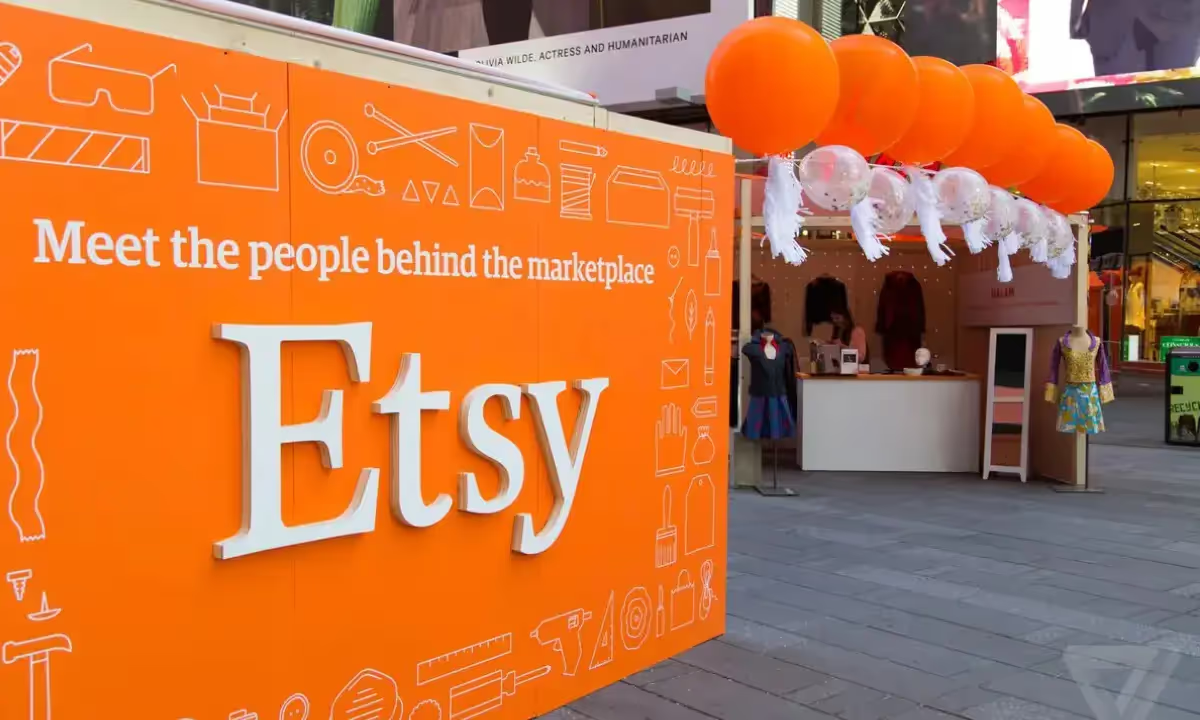
Etsy is known for handmade and vintage goods, but you can sell used clothes too. You pay $0.20 per listing, a 6.5% transaction fee, and 3% + $0.25 payment processing. So on a $50 sale, you lose about $3.70 in fees (roughly 7.4%). Etsy's audience is older (35+) and appreciates quality and vintage. If you have unique vintage finds, one-off pieces, or curated collections, Etsy works. The platform is search-driven, so your titles and tags need to be keyword-rich. You handle your own shipping, so you'll need labels and carriers. Etsy is lower volume than Poshmark or eBay, but it attracts serious buyers willing to pay for unique items.
Key Features:
- Search algorithm rewards detailed product descriptions and rich keywords, so well-written vintage descriptions rank higher.
- Etsy Payments consolidates everything; you see all fees and payouts in one dashboard, making accounting easy.
- Etsy Shipping offers discounted rates through USPS and UPS, so you can print labels and save on shipping costs.
- Offsite Ads automatically promote your items; if you get a sale from those ads, you pay an extra 15% fee (only on sales from ads).
- Reviews and shop ratings directly impact search ranking, so quality items and good communication boost visibility over time.
- Vintage category is popular; if you have true vintage (pre-1995), it gets special prominence and attracts collectors.
7. Vinted
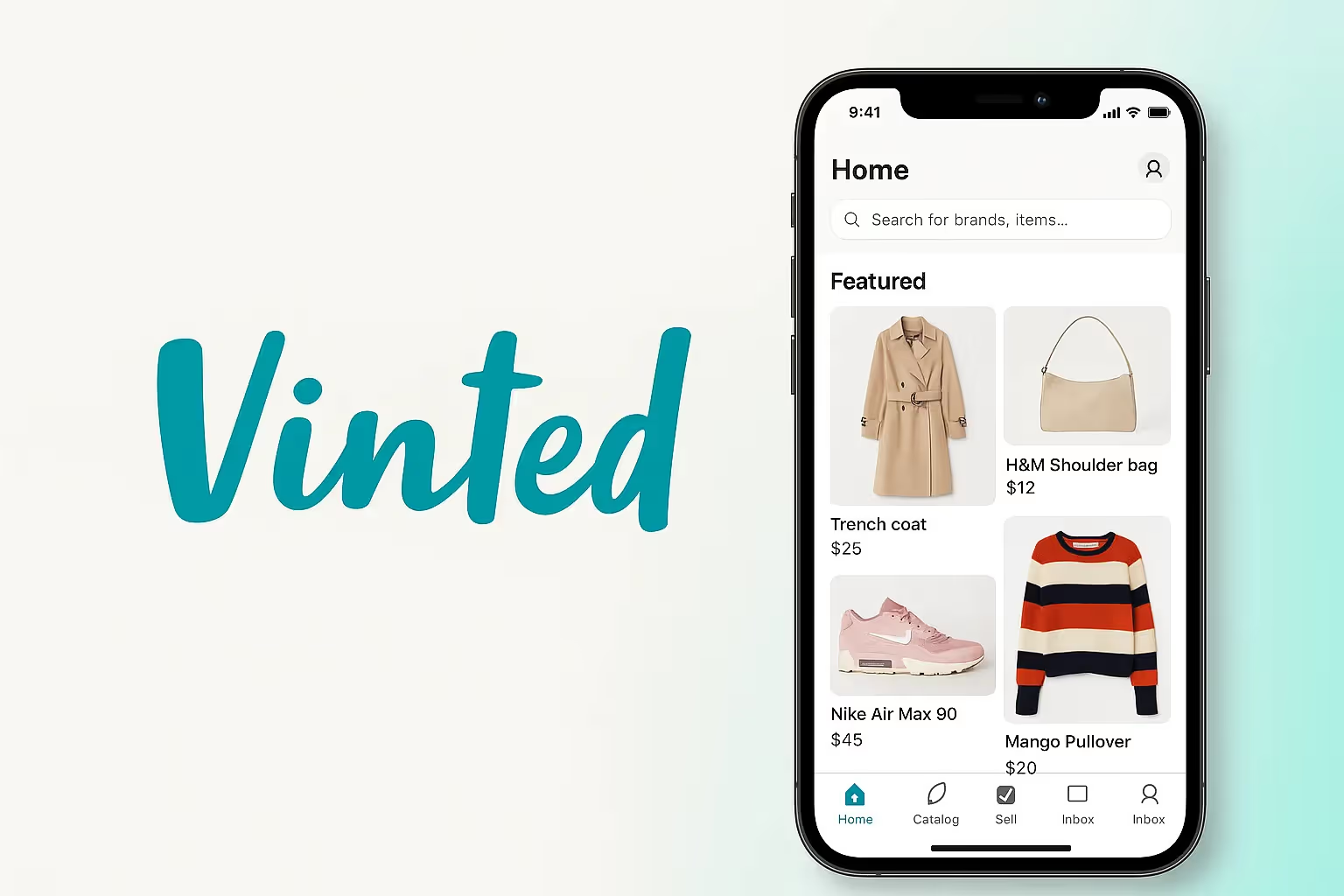
Vinted is huge in Europe and growing in the US. It's a peer-to-peer resale platform with zero seller fees (buyers pay a 3-8% fee instead). You list, you ship, you get paid. It's that simple. Vinted has over 80 million users globally, mostly young, budget-conscious buyers looking for affordable fashion.
The platform handles payments securely, so you don't worry about scams. You ship items within 5 days of sale, and you get paid once the buyer confirms delivery. Condition is important on Vinted—buyers expect good deals, so worn items need to be priced accordingly. Vinted is best if you have volume and want zero seller fees. The lack of fees means higher margins even if prices are lower.
Key Features:
- Zero seller fees (buyers pay instead), making Vinted the highest-margin platform if you sell at competitive prices.
- Simple listing process—photo, description, price—done in 2 minutes; no complex categories or SEO needed.
- Vinted Payments secures money; buyers can't withdraw claims or cause chargebacks once item is delivered and confirmed.
- Fast payout—money reaches your wallet 2 days after delivery, faster than most platforms.
- Bumping feature ($0.05-$5 depending on demand) gives you visibility without breaking the bank.
- International reach—your items can be seen across Vinted's global marketplace, increasing potential buyers.
8. CoutLoot
CoutLoot is an Indian resale platform designed for buying and selling secondhand items, especially clothing. It's mobile-first and works on a peer-to-peer model. Sellers list items, buyers purchase, and CoutLoot handles payments through its CoutLoot Swipe wallet. The platform handles logistics for some items, or you can ship yourself. Fees are lower compared to global platforms (exact percentages vary by seller category). CoutLoot is best if you're selling in India and want a local option. You can list from home, and the buyer base is price-conscious and actively hunting for deals. Payouts are credited to your CoutLoot wallet, and you can withdraw after confirming GST requirements (small sellers selling used items have exceptions).
Key Features:
- India-focused marketplace with mobile-first design, making it perfect for sellers in Indian markets and small towns.
- CoutLoot Swipe wallet handles all payments securely; funds are credited and you withdraw on your schedule (subject to GST policies).
- Reduced fees for small sellers (especially for used goods), meaning higher margins compared to global marketplaces.
- Logistics support available; CoutLoot can handle shipping for some items, though you can also ship yourself.
- Community-driven moderation; CoutLoot penalizes listing violations and poor seller behavior, keeping the marketplace trustworthy.
- Video product listings available, letting you showcase items in action and drive higher conversions.
9. Tradesy

Tradesy was acquired by Vestiaire Collective in 2022 and is now part of that global network. Historically, Tradesy charged 19.8% commission on sales over $50 and a flat $7.50 on sales under $50. The platform specializes in authenticated luxury items—designer handbags, jewelry, shoes, and high-end clothing. Tradesy handled authentication, so buyers trusted quality. Prepaid shipping labels were included. Payouts took about 20 days after sale, but the audience was serious luxury buyers willing to pay premium prices. Post-acquisition, Tradesy's independent status changed, but its authentication and luxury focus remain core. If you're selling designer items, the Vestiaire Collective network (which now includes Tradesy) still serves that market with authentication services and a global reach.
Key Features:
- Authentication review for luxury items, providing buyer confidence and reducing return disputes over counterfeit concerns.
- Prepaid shipping kits included with sale; you don't source labels or arrange carriers yourself.
- Smart pricing feedback based on market data; Tradesy suggests optimal prices to move items faster (typically 16% cheaper than competitors).
- Global reach through Vestiaire Collective's network; your items are visible across 23 million+ members worldwide.
- Commission structure (historically 19.8% on $50+ sales) encourages smart pricing, since lower prices net you the same profit due to volume.
- Luxury brand focus means higher-value items and serious buyers, reducing low-ball offers and tire-kickers.
10. Meesho

Meesho is India's largest e-commerce platform, and it operates with zero commission on all categories. Sellers list products, customers purchase, and Meesho handles logistics for a minimal fee (included in seller payouts). Meesho is B2C (business-to-consumer), though it also has a B2B reseller program. For individual sellers, you upload products, set prices, and earn the full margin (minus logistics costs). Meesho reaches 10+ crore customers across India, including rural areas. Payouts are credited to your bank account within 7 days of delivery. Meesho is best if you're selling clothing in India, have inventory to scale, or are willing to source bulk items at wholesale rates and resell them. The zero-commission model means extremely high margins if you source smart.
Key Features:
- Zero commission on all clothing categories, meaning you keep 100% of your margin minus logistics costs (which are subsidized).
- Next Day Dispatch (NDD) program gives sellers who ship within 24 hours special visibility and algorithm boosts.
- 7-day payment cycle from delivery; funds hit your bank account automatically, no manual withdrawal needed.
- Supplier panel dashboard gives real-time sales tracking, return analytics, and AI-driven product suggestions.
- Nationwide logistics network (Valmo) with discounted shipping rates (35-60% cheaper than industry average) built into your margins.
- No GST requirement for sellers with turnover below ₹40 lakh (₹20 lakh for NE states), making it accessible for beginners.
Conclusion
Selling clothes online is one of the easiest ways to earn extra income or build a full-time business. The platforms above all work, but they're not all equal for every seller. Your choice depends on your inventory, your target audience, and your comfort with fees. If you're selling vintage or trendy pieces to Gen Z, Depop wins.
For volume and serious buyers, Amazon or eBay work. If you want zero fees and trust a global audience, Vinted is solid. If you're in India and want minimal fees, Meesho is unbeatable. Start by listing on 2-3 platforms simultaneously, price competitively, and scale what works. Don't wait. Every day you delay is money sitting in your closet. Try Spocket for selling clothes online via dropshipping.
Selling Clothes Online FAQs
What's the best platform to sell clothes online for beginners?
Depop or Vinted are beginner-friendly because they have zero seller fees (or minimal fees), simple listing processes, and huge audiences. You upload a photo, write a description, set a price, and start selling within hours. No credit card needed. No complex categories. Just list and ship.
How much can I make selling clothes online?
It depends on inventory quality, pricing strategy, and platform choice. Sellers report $100-$400 monthly from casual sales, $500-$2,000 for active resellers managing multiple listings. Some full-time sellers make $5,000+ monthly, but that requires sourcing inventory consistently, managing multiple platforms, and handling 20-50+ orders per week.
Do I need a business license to sell clothes online?
In most cases, no for personal resale (selling your own items). If you're reselling sourced items or running a business, your local tax authority may require a license or business registration. Check your local rules. Some platforms (Amazon, Meesho) require GST certification in India if you exceed turnover thresholds, but smaller sellers often have exemptions.
What fees should I expect when selling clothes online?
Expect 5-20% in total fees depending on the platform. Depop charges 3.3% + $0.45 (US). Poshmark charges 20%. eBay charges 13.25-15%. Vinted charges zero seller fees. Meesho charges zero commission. Always calculate your net payout after fees before deciding where to list.


Launch your dropshipping business now!
Start free trial


Related blogs

Spring Fashion Trends 2026 The Wearable Trend Report
Discover the top spring fashion trends for 2026—from colors and silhouettes to key wardrobe pieces that will define the new season’s style.


Winter 2026 Fashion Trends: What to Wear, Buy, and Style This Season
Discover the biggest winter 2026 fashion trends, outfit ideas, colors, fabrics, and styles shaping women’s and men’s winter wardrobes.


Denim Trends 2026: The Biggest Styles Defining Spring and Beyond
Discover the biggest denim trends 2026 is bringing—from spring silhouettes to runway-inspired styles shaping everyday fashion this year.