B2B Dropshipping - How to Supply Other Businesses Using Spocket
Grow recurring orders from business clients using B2B dropshipping. See how Spocket supports sourcing, pricing, and fulfillment for modern wholesale brands.

You are leaving money on the table if you only sell single units to consumers while other stores quietly ship cartons to business buyers. B2B dropshipping lets you ship in bulk, without stacking boxes in a warehouse. You attract companies that reorder every month, not shoppers who vanish after one impulse buy. You’ll know why that matters in 2026 when ad costs keep climbing and margins get thinner.
In this guide, you’ll see how B2B dropshipping works, how to plug into it with serious suppliers, and what you should do next if you want a share of that wholesale pie.
What is B2B Dropshipping?
Think of B2B dropshipping meaning this: you sell in bulk to other businesses, but your suppliers handle storage and shipping. You run the catalog, pricing, and relationships. They hold pallets and ship cartons straight to your customers with your name on the invoice. No warehouses, no forklifts, but you still look like a proper wholesaler.
Instead of chasing one-off consumer orders, you deal with retailers, agencies, franchises, and other B2B business buyers who need repeat supply. Industry data in 2025 showed that roughly a third of firms using dropship-style fulfillment were already doing some form of wholesale, and that share is growing into 2026 as more procurement teams push orders online.
Under a classic B2B dropshipping model, a buyer sends you a bulk PO, your store or portal forwards it to the supplier, and the supplier ships directly to that buyer under your commercial terms. You invoice the buyer, pay the supplier, and keep the spread. Because orders are bigger, each relationship can be worth thousands per year.
If you notice confusion between retail and wholesale marketing in your team, a quick recap of B2B vs B2B (really B2C vs B2B) rules helps a lot: you’re speaking to buyers who care about unit economics, uptime, and reorder reliability, not just aesthetics. So B2B dropshipping sits between classic dropshipping and old-school wholesale — you get wholesale pricing and volume, without committing to containers of stock on day one.
Challenges Businesses Face with B2B Dropshipping
B2B dropshipping sounds neat on paper, but you will run into friction the moment real buyers start sending real POs. Margins are watched carefully, operations get messy across time zones, and buyers expect you to behave like a seasoned wholesaler from day one.
Add to that the pressure of B2B dropshipping wholesale expectations — volume discounts, strict SLAs, and audit-friendly paperwork — and the cracks show up fast if you wing it. Here’s where most people struggle.
1. Supplier control, lead times, and service levels
B2B dropshipping suppliers decide how your brand looks when that pallet lands. If they miss lead times or ship inconsistent quality, your “reliable wholesaler” image collapses overnight. In 2025 reports, businesses cited supplier reliability as one of the top brakes on scaling wholesale dropship operations. You can’t shrug it off; one bad shipment to a chain of stores can mean dozens of angry locations at once.
You should start with a short list of suppliers willing to lock in clear SLAs: production time, cut-off hours, packing standards, and incident response. Ask for references from other B2B dropshipper clients, check their defect rates, and check how they handle backorders. If you notice vague answers on those points, walk away early. Long-term, your best suppliers behave more like quiet partners than anonymous vendors.
Managing expectations is another headache. Large buyers want accurate ETAs on every order, plus status updates for their own internal systems. When you work across regions, delays at ports or customs can bite. Asia–Pacific alone is projected to carry over a third of global dropshipping value between 2026 and 2035, which is great for growth but also means you’ll deal with congestion. Put buffers in your timelines instead of promising fantasy delivery windows.
2. Margins, pricing, and payment terms
Wholesale buyers compare you line by line against other B2B dropshipping companies. They know landed cost, they negotiate hard, and they are not shy about walking away. Market data shows overall dropshipping revenue expanding past 500 billion dollars in 2026, which attracts more sellers and keeps prices under pressure. Under-quote, and you work for free. Over-quote, and buyers go elsewhere.
You could set staggered price tiers for case, carton, and pallet quantities so you don’t kill your margin on small reorders. Serious buyers also care about payment terms — net 15, 30, or 45 — and how you handle partial shipments. Tie your pricing logic to data: freight rates, refund rates, and historical order sizes. If returns on a line are high, bake that risk into your price or drop it entirely.
B2B wholesale India buyers add another layer. Many rely on COD or local credit cycles and still expect fast dispatch and GST-friendly invoices. Studies on Indian suppliers in 2026 highlight how local wholesale-focused dropship setups combine domestic stock with 3–5 day delivery windows. So if you sell into that market, you will need clearer payment rules than you’d ever use with casual retail customers.
3. Operations, platforms, and data consistency
On the tech side, a lot of people try to run B2B dropshipping out of improvised spreadsheets and B2C storefronts. That collapses once multiple buyers, currencies, and sales reps enter the mix. A proper B2B wholesale ecommerce platform or portal matters once you cross a threshold of orders each week.
Tools like B2B Wave show what modern wholesale ordering looks like: digital catalogs, customer-specific pricing, and order history built in. Even if you still use Spocket for sourcing, having a B2B-facing front end means buyers can self-serve quotes and reorders instead of spamming your inbox. That alone cuts down on mistakes.
Automation is no longer a luxury. A 2026 overview of dropshipping statistics noted that high-performing sellers now rely heavily on automated order routing and inventory sync. If you patch orders by hand, you’ll mis-type SKUs, confirm stock that isn’t there, or miss cut-off times from suppliers. When your catalog grows, misaligned data becomes your silent enemy: wrong pack sizes, outdated spec sheets, or missing HS codes can stall shipments or spark disputes with compliance teams.
How Spocket Can Help with B2B Dropshipping
You can think of Spocket as the bridge between your wholesale buyers and a vetted network of global suppliers. Instead of hunting through random directories, you plug into infrastructure that already handles sourcing and logistics basics at scale.
Here’s where Spocket shines for B2B dropshipper workflows:
- Deep Spocket product catalog for wholesale-friendly items
The Spocket product catalog covers everything from everyday consumables to niche inventory, so you’re not stuck reselling the same dozen SKUs as everyone else. You can build a focused Spocket products list that matches what your business buyers reorder monthly instead of chasing short-term trends only.
- Vetted Spocket suppliers with global reach
Spocket is known for curated Spocket suppliers across the US, EU, and other key regions. That matters when your B2B clients expect 3–7 day shipping instead of 30-day gambles. You can filter for suppliers that already support bulk orders, custom invoices, or private label options instead of convincing random wholesalers to “try dropship” with you.
- Central account through Spocket login
Through the main dashboard (your Spocket login), you monitor orders, track fulfillment, and manage product feeds in one place. No juggling multiple standalone portals for every supplier. That central view matters when a single corporate buyer is placing ten POs a month across several categories.
- Multi-channel access via the Spocket app
The mobile Spocket app lets you check inventory, approve orders, and handle quick edits even when you’re away from your desk. If you run sales calls or events, being able to confirm stock and pricing on the spot helps you close accounts faster.
- Transparent Spocket pricing for scaling
As you grow, you will care about plan limits and per-order costs. Spocket pricing is public and updated regularly, with tiers that make sense once you cross from testing to serious B2B volume. You don’t have to guess how many products or stores you can connect before fees spike.
- Social proof from an up-to-date Spocket review ecosystem
Third-party writers and agencies keep publishing new Spocket review breakdowns that cover supplier quality, automation, and support for 2026. You can cross-check claims before committing, instead of betting your wholesale pipeline on unverified marketing copy.
- Presence in top 10 B2B dropshipping platforms lists
When independent blogs round up the top 10 B2B dropshipping platforms, Spocket regularly appears near the top for US and EU-focused sellers. That tells you two things: it has real adoption, and there’s an ecosystem of tutorials, case studies, and support content you can tap into instead of starting from a blank page.
How to Source and Sell the Best B2B Dropshipping Products with Spocket
You could treat Spocket like a random catalog and add whatever looks shiny, or you could be intentional and pick B2B dropshipping products that actually match real wholesale demand. The second route pays better and hurts less.
Here’s a practical way to work through product selection and sales using Spocket data and features:
- Map your ideal buyers and quantities first
Before touching filters, sketch the buyer profile: retail chains, salons, gyms, or corporate gifting agencies. Estimate their order sizes per month and seasonality. Then you can hunt the Spocket products list for SKUs that move reliably in cases and cartons, not just as one-off impulse orders in someone’s personal cart.
- Use trend data instead of guessing
Categories tagged as trending dropshipping products often reveal items with rising order volume and good re-order patterns. That’s helpful when you want to propose fresh ranges to your B2B clients without gambling on total unknowns. Just avoid chasing micro-trends that burn out before a corporate buyer finishes their procurement cycle.
- Think in collections, not isolated SKUs
B2B shoppers like cohesive assortments: complete shelf sets, bundled kits, or standard ranges for all their locations. Build shortlists in the Spocket app that group related products by use case and MOQ tiers. It becomes much easier to pitch “your standard starter pack” instead of dumping a messy spreadsheet full of unrelated SKUs.
- Watch margins against freight and returns
Wholesale buyers push for discounts, so always look at net margin after shipping, duties, and likely return rates. Spocket shows supplier pricing and typical shipping estimates; combine that with your own numbers before locking quotes. If a SKU looks good on paper but ships from too far away or has fragile packaging, your real-world margin will evaporate fast.
- Plan samples and internal testing
For any category that might become a core range, order samples through your Spocket login and put them through normal use. Drop test packaging, check fit and finish, and time shipping from supplier to your office. If you wouldn’t be happy receiving that box as a business buyer, your wholesale clients will be even harsher.
- Align products with content and outreach
If you also run content or B2B affiliate marketing funnels, pick products that are easy to explain and demonstrate on video or in email sequences. You will sell faster when a buyer can see use cases, not just spec sheets.
- Use product families to support upgrades
Once a B2B buyer adopts one line, you should have upsell paths ready: premium variants, seasonal versions, or bundles. Spocket’s large product catalog makes it easier to find related SKUs by niche and supplier, so you can grow account revenue without forcing buyers to change brands mid-contract.
Best B2B Dropshipping Niches to Target with Spocket
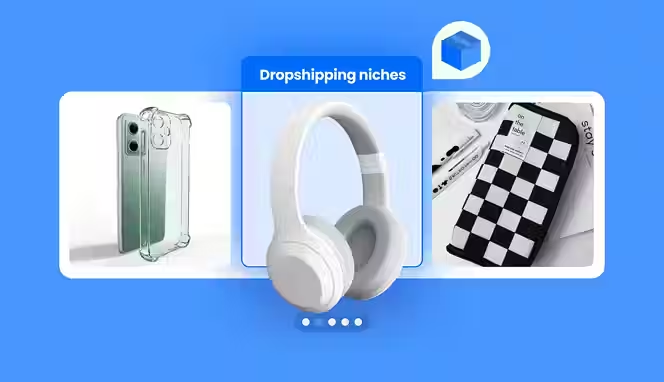
Below are niche ideas that match real demand patterns in 2026 and fit well with Spocket’s strengths. You can, of course, mix and match based on your audience and geography.
1. Branded print-on-demand merch for teams and events
The corporate merch line is not dead; it just moved to smaller, more frequent orders. With Print-on-demand, you can offer event tees, hoodies, mugs, and tech sleeves that ship directly from printers to offices or event locations. Businesses love this because they avoid holding boxes of leftover shirts in odd sizes. You handle design approvals and invoicing; printers handle production and dispatch.
2. Bath and beauty supplies for salons and boutique hotels
Salons, spas, and boutique hotels reorder personal care products constantly. Through Spocket, you can source bath and beauty items like lotions, shampoos, amenities kits, and spa consumables. These buyers care about ingredient lists, scent profiles, and packaging that matches their branding. Offer bundle pricing per room-night or per treatment chair. Once a chain standardizes on your SKUs, reorders become routine and forecastable.
3. Tech accessories for agencies, co-working spaces, and IT resellers
Every agency, co-working space, and remote-first firm needs chargers, hubs, cables, and laptop stands. The tech accessories category on Spocket aligns neatly with that need, especially when you sell in kits: “new hire desk packs” or “co-working desk refresh” bundles. In 2026, corporate IT teams also look for USB-C standardization and cable labeling to reduce clutter, so emphasise SKUs that match those trends instead of random novelty gadgets.
4. Fitness equipment and sports gear for gyms and studios
Gyms, boutique studios, and corporate wellness programs chew through mats, bands, resistance gear, and small props. Using the fitness equipment and sports categories, you can supply starter kits for new locations plus replenishment for worn items. Think sets of ten or twenty, not single dumbbells. When you pair this with good sizing charts and durability info, gyms are more likely to lock in yearly contracts for replacement cycles rather than sporadic orders.
5. Eco-conscious office supplies and packaging
Sustainability is now a board-level topic, not just a marketing slogan. Businesses want recycled notebooks, FSC-certified packaging, refillable pens, and low-waste breakroom items. B2B dropshipping products in this area do well when you provide documentation: recycled content percentages, certifications, and clear end-of-life instructions. For B2B wholesale India and Asia–Pacific clients, local sourcing can cut both emissions and freight costs, so look for regional suppliers with verifiable eco claims instead of vague “green” labels.
6. Corporate gifting and curated kits
HR teams and agencies need ready-to-ship packs for new hires, client thank-you gifts, and seasonal campaigns. Here B2B dropshipping platform setups like Spocket give you an edge: you can assemble packages spanning stationery, drinkware, snacks, and small gadgets without managing a physical warehouse. If you notice a client reordering the same style of kit each quarter, standardize SKUs and set reorder reminders so they don’t have to rethink the contents every time.
7. Resell-friendly ranges for online B2B dropshipping companies
Some of your best B2B clients will be other online sellers who want catalog extensions without opening new supplier accounts. You can curate white-label-friendly lines from Spocket, especially in categories like home goods and accessories, and position yourself as their sourcing partner. In many cases, you act as a mini B2B wholesale app for them — they send bundled requests, you route everything to suppliers, handle QA, and invoice at an agreed markup.
Conclusion
B2B dropshipping is not a quick trend; it’s where dropship-style logistics meet wholesale buying habits. You’re no longer chasing random shoppers. You are supplying businesses that think in budgets, contracts, and reorder cycles. That demands tighter supplier selection, clearer pricing, and better systems, but the reward is steadier revenue and fewer “one and done” customers.
If you keep your catalog honest, your operations transparent, and your communication sharp, you can turn B2B dropshipping into a predictable channel that supports both you and your partners for years — without ever renting a warehouse or stacking a single pallet yourself. Use Spocket to start B2B dropshipping today!
Start your dropshipping business today
B2B dropshipping FAQs
What is B2B dropshipping and how is it different from retail dropshipping?
B2B dropshipping means you sell products in bulk to other businesses while a supplier stores and ships goods directly to them. Compared to retail dropship setups, order sizes are larger, pricing is wholesale, and buyers expect contracts, credit terms, and consistent SKUs. You should treat these clients like long-term partners rather than one-time shoppers and be ready to handle POs, invoices, and repeat orders.
Is B2B dropshipping still worth starting in 2026?
Yes, B2B dropshipping still has room in 2026, but not for anyone chasing shortcuts. Market reports show the broader dropshipping space growing past the 500‑billion‑dollar mark as more B2B buyers shift to digital ordering. That growth brings tighter standards: faster shipping, better documentation, and clean digital workflows. If you can meet those expectations, you can land fewer but larger accounts instead of chasing thousands of micro-orders.
What margins can you expect with B2B dropshipping?
Margins in B2B dropshipping vary by niche, volume, and freight costs, but many wholesalers aim for 15–35% after logistics and payment fees. Higher-ticket equipment might sit at the lower end, while consumables and branded merch can stretch higher. You will need to factor in returns, damaged shipments, and currency swings. Long-term buyers care less about absolute lowest price and more about reliability, which gives you room to price fairly instead of racing to the bottom.
How do you find reliable suppliers for B2B dropshipping?
Reliable B2B dropshipping suppliers tend to show up in vetted directories, platform marketplaces, and trade show lists rather than random forums. You should always order samples, check business references, and review defect and delay rates if those stats are available. In fast-growing regions like Asia–Pacific and India, local suppliers with warehouse stock and trackable delivery windows often outperform far-flung factories for B2B use cases.
What tech stack do you need for B2B dropshipping?
For basic operations, you need an ecommerce or portal setup that can handle wholesale pricing, tax rules, and purchase orders. Many sellers pair a B2B wholesale ecommerce platform or portal with their sourcing tool so buyers never see the backend complexity. As order volume grows, you will likely add invoicing, accounting, and shipping integrations. If you notice orders getting lost between email threads, that’s your cue to upgrade from manual workflows.
Can B2B dropshipping work alongside other business models?
Yes, B2B dropshipping often runs beside standard wholesale, retail ecommerce, and even affiliate setups. Some sellers use it to test new categories before they stock them fully, while others use dropship-only ranges for fringe or seasonal items. The trick is keeping inventory, pricing, and contracts clean across channels so you don’t overcommit stock or quote conflicting prices to similar buyers. Used carefully, it becomes a flexible extra lane, not a replacement for everything else you do.


Launch your dropshipping business now!
Start free trial.avif)


Related blogs
Dropshipping Supplier Directory: Where to Find Vetted Suppliers
Browse our directory of vetted dropshipping suppliers across the US and EU, complete with niches, shipping speed, and pricing. Start your free trial today.

How to Negotiate With Dropshipping Suppliers: 9 Tactics That Actually Work
Learn how to negotiate with dropshipping suppliers on price, MOQs, and payment terms. Proven tactics and email scripts to boost your margins. Try Spocket free.

Best Clothing Dropshipping Suppliers: The 2026 Guide
Compare the best clothing dropshipping suppliers for 2026 — US/EU shipping speeds, pricing, and product quality — and find the right fit to launch your store.