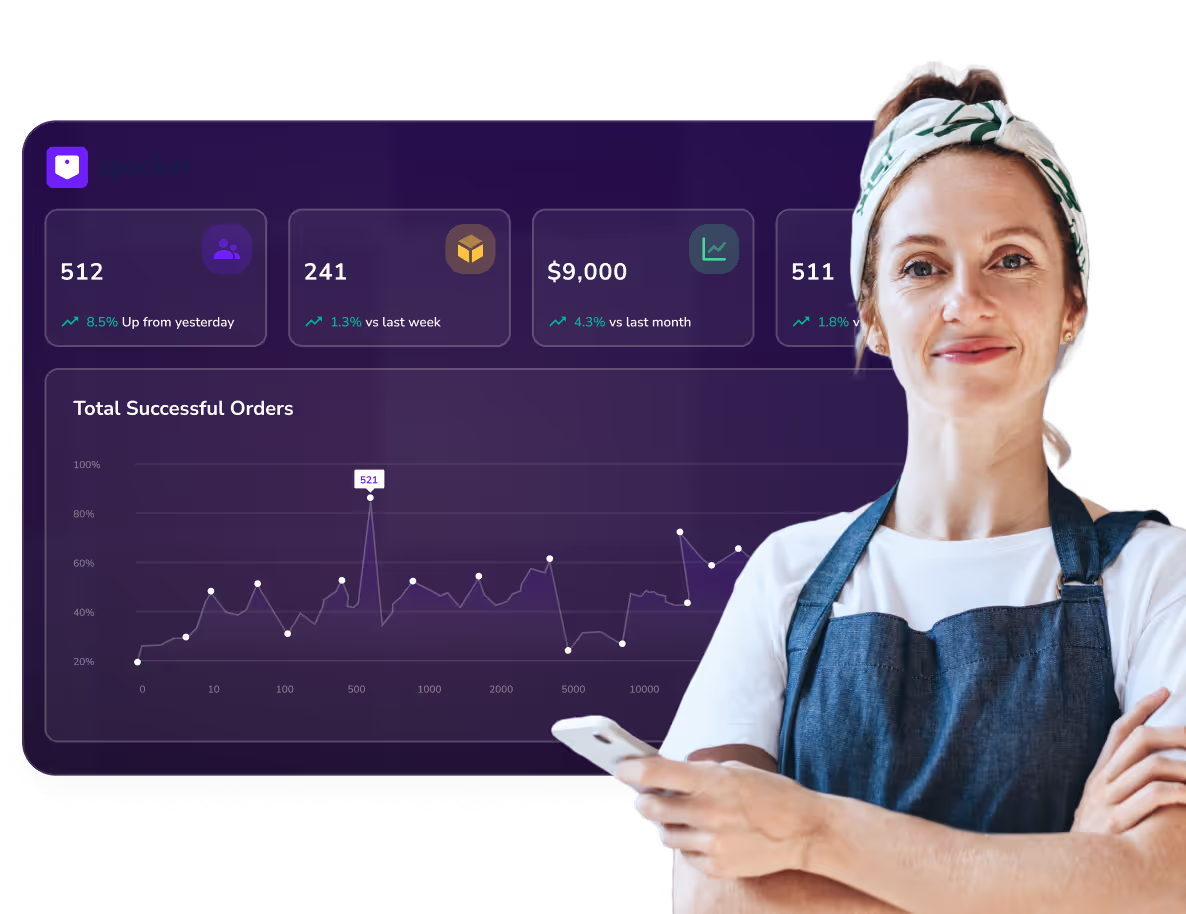
Comment diffuser des publicités Facebook et Instagram pour votre boutique de dropshipping
Learn how to create profitable Facebook and Instagram ad campaigns for your dropshipping store with product research, targeting, creatives, budgets, retargeting, and scaling tips.

.avif)

Running Facebook and Instagram ads for your dropshipping store can help you reach shoppers faster, test product demand, and turn your store into a scalable ecommerce business. These platforms work well for dropshipping because they are visual, discovery-driven, and built around content that can quickly capture attention.
But paid ads are not just about showing a product to more people. To get results, you need the right product, a clear offer, strong ad creatives, accurate tracking, and a store that makes customers feel confident enough to buy.
For dropshipping, this is especially important because most visitors are discovering your brand for the first time. They want to know if the product is useful, if the store is trustworthy, and if shipping will be reliable. That is why your ad strategy should begin before you launch a campaign.
Why Facebook and Instagram Ads Work for Dropshipping
Facebook and Instagram are powerful for dropshipping because they help people discover products while they scroll. Unlike search ads, where users already know what they want, Meta ads can introduce shoppers to products they may not have thought about buying yet.
This makes the platforms useful for products with strong visual appeal, emotional value, or problem-solving benefits. A short video, carousel, or product image can show how an item works and why it matters within a few seconds.
Facebook is useful for broad reach, retargeting, and campaign control. Instagram works especially well for lifestyle products, fashion, beauty, home decor, pet products, accessories, and fitness items. Together, they allow dropshipping stores to reach customers across different stages of the buying journey.
A customer may first notice your product through an Instagram Reel, visit your store after seeing a Facebook ad, and finally buy after being retargeted with a reminder ad. This is why Meta ads work best when they are part of a full funnel, not just a one-time campaign.
How to Run Facebook and Instagram Ads for Your Dropshipping Store
Running ads for a dropshipping store works best when you follow a clear process instead of launching campaigns randomly. Before you spend money, you need to prepare your store, choose products that are worth advertising, set up tracking, create strong ad creatives, test audiences, and optimize based on real performance data. The steps below will help you build a more structured ad strategy that supports clicks, conversions, and long-term growth.
Prepare Your Store Before Running Ads
Before spending money on ads, your store needs to be ready to convert visitors into buyers. Many dropshipping campaigns fail because the ad gets attention, but the product page does not build enough trust.
Your store should clearly explain what the product does, why it is useful, how much it costs, when it will arrive, and what customers can do if they have a problem. If these details are missing, shoppers may leave even if they liked the ad.
A strong dropshipping product page should include:
- Clear product images
- A benefit-focused product description
- Transparent shipping details
- Simple return and refund information
- Customer support details
- Secure checkout signals
- Reviews or trust-building content
- A clear call-to-action button
Since most Facebook and Instagram users shop on mobile, your store should be easy to use on smaller screens. Keep paragraphs short, make buttons easy to tap, and avoid cluttered layouts.
This is also where Spocket can help. By sourcing products from reliable suppliers, you can create a smoother customer experience and reduce issues related to unclear product quality or long delivery expectations.
Choose Products That Are Worth Advertising
Not every dropshipping product is right for paid ads. Some products may look interesting but have low margins, weak visuals, or poor shipping timelines. Since ads cost money, you need products that can realistically support your campaign costs.
The best products for Facebook and Instagram ads usually solve a clear problem, look appealing, or create an emotional response. They should be easy to understand quickly and simple to show in a short video or image.
Look for products that:
- Solve a specific problem
- Are easy to demonstrate visually
- Have strong perceived value
- Appeal to a clear audience
- Support healthy profit margins
- Have reasonable shipping times
- Can be promoted with multiple ad angles
For example, a pet grooming tool can show instant results. A kitchen organizer can show a messy drawer becoming neat. A beauty tool can show convenience or transformation.
Before choosing a product, ask whether the benefit can be understood in five seconds. If the answer is yes, it may be a strong candidate for Meta ads.
Set Up Meta Business Tools Correctly
To run Facebook and Instagram ads properly, you need the right setup inside Meta. This helps you manage campaigns, connect your assets, track sales, and understand performance.
You will usually need a Facebook Business Page, an Instagram professional account, a Meta Business account, an ad account, a payment method, and Meta Pixel installed on your store.
Your Facebook Page and Instagram account should be connected so you can run ads across both platforms from Meta Ads Manager. This gives you more control than simply boosting posts.
Boosted posts may increase visibility, but Ads Manager allows you to choose better objectives, build audiences, test creatives, manage budgets, and optimize for sales. If your goal is purchases, your setup should be built around tracking purchases.
Install Meta Pixel and Track Key Events
Meta Pixel helps you understand what visitors do after clicking your ads. This is essential for dropshipping because clicks alone do not tell you whether your campaign is profitable.
Pixel data shows whether people view products, add items to cart, begin checkout, or complete a purchase. This information helps you measure performance and gives Meta better data for optimization.
The most important events to track are:
- Page View
- View Content
- Add to Cart
- Initiate Checkout
- Purchase
After installing Pixel, test your events before launching ads. If your tracking is not working, you may waste money without knowing which ads are producing results.
As your store grows, you can also explore advanced tracking options like server-side tracking or Conversions API. For beginners, the main priority is making sure basic events are accurate.
Choose the Right Campaign Objective
Your campaign objective tells Meta what kind of result you want. Choosing the wrong objective can bring the wrong audience to your store.
For dropshipping, the sales objective is usually the best choice because your goal is to generate purchases. Traffic campaigns may bring cheaper clicks, but cheaper clicks do not always turn into buyers. Engagement campaigns may get likes and comments, but they do not always lead to revenue.
Common objectives include:
- Awareness for visibility
- Traffic for website visits
- Engagement for likes or interactions
- Leads for collecting customer information
- Sales for purchases and conversions
If your store is new, you may be tempted to optimize for add-to-cart or checkout events. This can be useful in some early testing situations, but your long-term goal should be purchase optimization.
Understand Campaign Structure
Meta campaigns are organized into three levels: campaign, ad set, and ad. Understanding this structure makes it easier to test and improve your results.
At the campaign level, you choose your main objective, such as sales. At the ad set level, you choose your audience, budget, schedule, placements, and optimization event. At the ad level, you upload your creative, copy, headline, call to action, and destination link.
A simple beginner structure could include:
- One sales campaign
- One to three ad sets
- Three to five ads per ad set
Avoid making your first campaign too complicated. If you test too many audiences, creatives, and offers at once, it becomes difficult to know what is working. Start simple, study the data, and improve from there.
Create Scroll-Stopping Ad Creatives
Your creative is one of the biggest factors in ad performance. People scroll quickly, so your ad needs to capture attention almost immediately.
For dropshipping, product demonstration videos often work well because they show the item in action. A short video can quickly explain the problem, show the solution, and make the product feel useful.
Strong ad creatives usually include:
- A clear hook in the first few seconds
- A product demonstration
- A problem-solution angle
- Simple text overlays
- Lifestyle visuals
- A clear benefit
- A direct call to action
For example, if you sell a closet organizer, show the messy space first, then the organized result. If you sell a pet product, show how it helps in a real-life setting.
Your ads do not need to look like expensive commercials. In many cases, simple user-generated-style videos feel more natural and perform better because they match the way people already consume content on Facebook and Instagram.
Use the Right Ad Formats
Facebook and Instagram offer different ad formats, and each format works differently depending on your product and goal.
Image Ads
Image ads are simple and useful for visually appealing products. They can work well for fashion, accessories, beauty, home decor, and simple offers.
Use clean images, clear product focus, and benefit-driven copy. Avoid low-quality supplier images that make your store look generic.
Video Ads
Video ads are ideal for showing how a product works. They are useful for gadgets, beauty tools, pet products, kitchen items, and products with a strong before-and-after effect.
Keep videos short, direct, and mobile-friendly. Show the most interesting part of the product early.
Carousel Ads
Carousel ads allow you to show multiple images or videos in one ad. They are useful for highlighting product benefits, color options, bundles, or step-by-step use.
Each carousel card should add something new. Avoid repeating the same message across every slide.
Stories and Reels Ads
Stories and Reels ads are vertical, mobile-first formats. They work well for fast product demos, lifestyle clips, limited-time offers, and user-generated-style content.
Use simple captions or text overlays because many users watch videos without sound.
Write Ad Copy That Sounds Human
Your ad copy should support the creative and help shoppers understand why the product matters. It should feel natural, clear, and helpful.
Avoid overused phrases like “best product ever” or “must-have item.” Instead, focus on the problem your product solves and the benefit it gives the customer.
A simple ad copy formula is:
- Start with a problem or desire
- Introduce the product naturally
- Explain the benefit
- Add a trust point or offer
- End with a clear call to action
For example: “Messy drawers can make your kitchen feel frustrating. This compact organizer helps keep your essentials easy to find without taking up extra space. Simple, practical, and easy to use every day.”
This sounds more believable because it explains the value instead of pushing too hard.
Test Audiences and Creatives
Testing helps you learn what your audience responds to. Your first ad may not be profitable, and that is normal. The goal is to gather data and improve.
Start by testing different creative angles. If you sell a travel accessory, you could test a packing convenience angle, a space-saving angle, a gift angle, and a problem-solution angle.
You can also test:
- Broad audiences
- Interest-based audiences
- Website visitors
- Instagram engagers
- Lookalike audiences once you have enough data
Do not change too many things at once. If you test a new audience, new creative, new product page, and new offer together, you will not know what caused the result.
Set a Realistic Budget
Your budget should be enough to collect useful data without creating too much risk. Paid ads require testing, and not every product or creative will work.
Start with a daily budget you can afford to lose during the testing phase. Think of the first stage as research. You are paying to learn what products, creatives, and messages your audience responds to.
When setting your budget, consider:
- Product cost
- Shipping cost
- Selling price
- Profit margin
- Average order value
- Expected cost per purchase
If your margins are too low, ads become harder to scale profitably. This is why product sourcing matters. With Spocket, you can look for products with better perceived value, reliable suppliers, and shipping options that support customer trust.
Optimize Your Product Page for Conversions
Your ad brings people to your store, but your product page turns them into buyers. If people click but do not purchase, review your page before blaming the ad.
A good product page should include clear images, short benefit-led copy, bullet points, shipping information, reviews, FAQs, and a strong call-to-action button.
Your product page should also match the ad. If your ad focuses on saving space, the landing page should clearly show how the product saves space. This consistency reassures shoppers and reduces hesitation.
Use simple language and focus on outcomes. Instead of only listing product features, explain how those features make the customer’s life easier.
Use Retargeting to Recover Lost Sales
Most shoppers do not buy the first time they visit your store. Retargeting helps bring back people who already showed interest.
You can retarget:
- Product page visitors
- Add-to-cart users
- Checkout abandoners
- Instagram engagers
- Facebook page engagers
- Past customers
Retargeting ads should not simply repeat your cold audience ads. These people already know the product, so your message should address hesitation. You can use reviews, reminders, free shipping messages, FAQs, or limited-time offers.
For example:
“Still thinking it over? Your cart is waiting. Complete your order today and enjoy a simple upgrade for your everyday routine.”
Track the Metrics That Matter
Do not judge your campaigns only by likes, comments, or views. These numbers can be useful, but they do not always show profitability.
Track metrics such as:
- CPM
- CTR
- CPC
- Add-to-cart rate
- Checkout initiation rate
- Conversion rate
- Cost per purchase
- Average order value
- Return on ad spend
- Profit after ad spend
Each metric tells you something different. If people are not clicking, your creative may need work. If people click but do not add to cart, your product page may be weak. If they add to cart but do not buy, your shipping, price, or checkout process may be causing hesitation.
Scale Winning Ads Carefully
Once you find an ad that generates profitable sales, you can begin scaling. But avoid increasing the budget too quickly.
Start by raising your budget gradually and watching performance. If your cost per purchase stays stable, continue scaling slowly. You can scale by:
- Increasing budget gradually
- Creating new versions of winning creatives
- Testing broader audiences
- Expanding placements
- Building lookalike audiences
- Adding bundles or upsells
- Retargeting warm audiences
Creative fatigue can happen when people see the same ad too often. Keep creating fresh versions based on your best-performing hooks and angles.
Common Mistakes to Avoid
Many dropshipping stores lose money on Facebook and Instagram ads because they rush the process. Avoiding basic mistakes can protect your budget and improve results.
Common mistakes include:
- Running ads before your store is ready
- Choosing low-quality products
- Using weak supplier images
- Ignoring product margins
- Choosing traffic campaigns when you want sales
- Not installing Pixel correctly
- Hiding shipping information
- Making exaggerated claims
- Testing too many things at once
- Scaling before proving profitability
Les publicités ne peuvent pas corriger une offre peu attrayante ou une mauvaise expérience client. Votre produit, votre boutique et votre processus d'exécution des commandes doivent soutenir votre marketing.
Conclusion
Les publicités Facebook et Instagram peuvent vous aider à développer votre boutique de dropshipping, mais elles fonctionnent mieux lorsqu'elles sont soutenues par une stratégie complète. Il vous faut un produit solide, un message clair, un suivi fiable, des créatifs qui retiennent l'attention et une boutique qui inspire confiance.
Commencez modestement, testez avec prudence et utilisez vos données pour vous améliorer. Ne vous attendez pas à ce que chaque campagne soit rentable immédiatement. Chaque test vous aide à mieux comprendre votre audience.
Plus important encore, assurez-vous que votre expérience d'exécution des commandes corresponde à la promesse faite dans vos publicités. Avec Spocket, vous pouvez vous procurer des produits de dropshipping de qualité auprès de fournisseurs fiables et bâtir une base plus solide pour la satisfaction client. De meilleurs produits, des options d'expédition plus claires et des fournisseurs dignes de confiance peuvent faciliter la mise à l'échelle de vos campagnes publicitaires Facebook et Instagram.
Start your dropshipping business today
FAQ sur les publicités Facebook et Instagram
Les publicités Facebook et Instagram sont-elles efficaces pour le dropshipping ?
Oui, les publicités Facebook et Instagram peuvent très bien fonctionner pour le dropshipping car elles aident les acheteurs à découvrir les produits visuellement. Elles sont particulièrement utiles pour les produits qui résolvent un problème, qui sont attrayants ou qui peuvent être démontrés rapidement.
Quel est le meilleur objectif de campagne pour les publicités de dropshipping ?
L'objectif de ventes est généralement le meilleur choix car il aide à optimiser vos publicités pour les achats. Les campagnes de trafic et d'engagement peuvent générer des clics ou des "j'aime", mais elles ne mènent pas toujours à des ventes.
Combien devrais-je dépenser pour les publicités de dropshipping ?
Commencez avec un budget de test que vous pouvez vous permettre de perdre. Votre budget doit être suffisant pour tester plusieurs créatifs et collecter des données sans mettre trop de pression sur votre entreprise.
Quel type de créatif publicitaire fonctionne le mieux pour le dropshipping ?
Les courtes vidéos de produits, les démonstrations problème-solution, les clips avant-après, les publicités carrousel et les vidéos de style généré par l'utilisateur fonctionnent souvent bien.
Dois-je diffuser des publicités sur Facebook ou Instagram ?
Vous pouvez diffuser des publicités sur les deux plateformes via le Gestionnaire de publicités Meta. Instagram est puissant pour les produits visuels et de style de vie, tandis que Facebook peut bien fonctionner pour une portée plus large, le reciblage et les produits qui nécessitent plus d'explications.


Launch your dropshipping business now!
Start free trial


Blogs connexes
Annuaire des fournisseurs de dropshipping : où trouver des fournisseurs vérifiés
Parcourez notre annuaire de fournisseurs en dropshipping vérifiés aux États-Unis et en Europe, avec des informations sur leurs niches, leurs délais de livraison et leurs tarifs. Commencez votre essai gratuit dès aujourd'hui.

Comment négocier avec des fournisseurs de dropshipping : 9 tactiques qui fonctionnent vraiment
Apprenez à négocier les prix, les quantités minimales de commande (MOQ) et les conditions de paiement avec vos fournisseurs en dropshipping. Découvrez des tactiques éprouvées et des modèles d'e-mails pour booster vos marges. Essayez Spocket gratuitement.

Meilleurs fournisseurs de dropshipping de vêtements : le guide 2026
Comparez les meilleurs fournisseurs de dropshipping de vêtements pour 2026 — délais de livraison aux États-Unis/en Europe, tarifs et qualité des produits — et trouvez le partenaire idéal pour lancer votre boutique.