Ecommerce Branding for Dropshipping : How to Build Customer Loyalty
Learn ecommerce branding strategies for dropshipping to build trust, increase repeat purchases, and turn customers into loyal brand advocates.


Customer loyalty in dropshipping isn’t built by discounts alone. People come back when they trust you, remember you, and feel confident that the next purchase will be just as smooth as the first. That’s exactly what ecommerce branding does. It turns a “one-time purchase” store into a recognizable business customers choose again and again.
In dropshipping, the challenge is real: you don’t control every part of fulfillment the way a traditional brand does. But that doesn’t mean you can’t build loyalty. It means your brand has to be intentional about the moments you do control—how you position the store, how the site feels, how your policies are written, how you communicate after purchase, and how you choose suppliers that protect the customer experience.
This guide breaks down a complete, practical approach to ecommerce branding for dropshipping so you can build trust, increase repeat purchases, and create the kind of customer loyalty that compounds over time.
What Ecommerce Branding Means in Dropshipping
Ecommerce branding is the set of signals and experiences that tell a customer who you are, what you stand for, and why they should trust you. In a dropshipping business, it’s not just a logo or a color palette. Branding is also your shipping clarity, your product quality consistency, your tone in support emails, and how you handle problems when they happen.
In other words, your brand isn’t what you say—it’s what customers experience.
Branding vs marketing vs retention
Branding, marketing, and retention often get mixed up, but they’re different jobs:
- Branding is your identity and promise. It’s how customers understand you in seconds.
- Marketing is how you reach people and convince them to try you.
- Retention is what happens after the first purchase—whether customers come back.
Here’s the relationship: branding makes marketing more efficient, and it makes retention easier. If your store feels trustworthy and consistent, customers are less anxious about ordering, less likely to complain, and more likely to buy again.
Why branding is harder in dropshipping and how to win anyway
Dropshipping makes branding harder because customers often worry about three things:
- “Will the product match the photos?”
- “Will it arrive on time?”
- “If something goes wrong, will this store help me?”
You can win by treating branding as a system, not decoration. That means:
- Choosing a clear niche promise so you’re not interchangeable
- Using trust-building design and copy on every key page
- Setting shipping and returns expectations without fluff
- Communicating post-purchase like a real brand, not a random seller
- Sourcing products and suppliers that don’t damage your reputation
This is where Spocket becomes practical, because supplier reliability and shipping consistency directly impact brand trust.
The Retention Flywheel For Dropshipping
Customer loyalty doesn’t just happen; it’s built through consistent, thoughtful experiences that make shoppers want to return. Think of it as a flywheel — once it gains momentum, every good interaction keeps it spinning faster. Here’s how that flywheel works for a dropshipping business.
Why Loyalty Is Harder In Dropshipping
Let’s be honest — dropshipping isn’t the easiest model for building loyalty. You don’t manage inventory, you don’t handle packaging, and you don’t control delivery times. When a supplier slips up, your customer doesn’t blame them — they blame you. That’s the harsh truth.
But that challenge is also your opportunity. Most dropshippers stay silent when problems arise. If you can communicate clearly, set realistic expectations, and take responsibility, customers will notice. Transparency and reliability turn disappointment into trust — and trust is the foundation of every loyal relationship.
The Three Stages Of The Flywheel
The strongest dropshipping brands create loyalty through three powerful stages: trust, delight, and advocacy. Each stage builds on the last, forming a system that keeps customers engaged long after their first order.
Pre-Purchase Trust
Before a customer ever hits “buy,” they’re silently judging your credibility. Honest product descriptions, authentic photos, and clear shipping timelines speak louder than any ad. It’s better to promise delivery in 8–10 days and deliver early than to claim 5 days and arrive late. Setting honest expectations builds confidence — and confidence drives conversion.
Post-Purchase Delight
This is where real loyalty begins. Once an order is placed, your communication and care define the experience. Send a warm confirmation email, keep customers updated, and show appreciation with small gestures like thank-you notes or digital discount cards. Even though you don’t pack the box yourself, you can still make it feel personal.
Expansion And Advocacy
When you’ve earned trust and delivered delight, customers start doing your marketing for you. Encourage reviews, photo shares, and referrals. Reward repeat buyers with early access or special perks. The more valued your customers feel, the faster your flywheel spins — turning one-time shoppers into brand ambassadors who spread the word for free.
Brand Positioning That Makes Customers Choose You Again
If customers can’t tell why you exist, they won’t remember you. Positioning is the foundation of ecommerce branding because it defines what you “own” in the customer’s mind.
One-line brand positioning template
Use this formula to define your positioning:
“We help [specific audience] achieve [specific outcome] with [product category] that [unique advantage].”
Examples:
- “We help busy home cooks make healthier meals with tools that simplify prep and cleanup.”
- “We help new pet parents keep their pets calm and comfortable with gentle grooming essentials.”
- “We help minimalists organize small spaces with smart storage that looks good anywhere.”
This single sentence should influence your homepage headline, product selection, product descriptions, and content strategy.
Your niche promise and brand voice
Your promise is what customers expect from you every time. In dropshipping, the best promises are not vague. They’re specific and believable.
Instead of: “High-quality products for everyone”
Try: “Everyday essentials that ship fast, look premium, and are easy to return.”
Then match it with a consistent brand voice:
- Calm and reassuring for health/wellness products
- Energetic and playful for lifestyle accessories
- Minimal and direct for productivity/tech categories
Brand voice is a retention tool. When customers recognize your tone, your emails and messages feel like they’re coming from a real brand.
What to own in the customer’s mind
Pick one strong idea to own. A few examples:
- “Fast shipping without stress”
- “Problem-solving bundles for beginners”
- “Premium look, simple price”
- “Giftable, thoughtful, always on time”
Your brand becomes memorable when you repeat one idea consistently across your store, emails, and support.
Visual and Verbal Branding That Builds Instant Trust
Branding is what customers see and feel quickly. Your goal isn’t to look “fancy.” Your goal is to look reliable and intentional.
Store design cues that look legit
Focus on credibility first:
- Clean navigation with obvious categories
- Consistent spacing and layout across pages
- Clear fonts that are easy to read on mobile
- A simple color system used consistently
- High-quality product images with consistent style
Avoid common trust killers:
- Too many popups
- Random fonts and inconsistent buttons
- Overhyped “limited time” claims everywhere
- Cluttered homepages that don’t explain what you sell
Your site design is a branding asset because it reduces doubt.
Product page branding elements that reduce doubt
Your product pages should do more than “describe.” They should reassure. Include:
- A clear first paragraph: what it is and why it matters
- Benefit-driven bullet points (not just features)
- Shipping and returns info near the buy button
- Trust notes like “support replies within 24 hours”
- FAQs that handle objections (size, usage, durability, shipping)
- Real social proof, even if it starts small
If you want loyalty, product pages must set expectations correctly. Misaligned expectations create refunds and negative reviews.
Brand voice guidelines for product copy and support
Consistency matters more than poetic writing. Set simple rules:
- Use the same tone across product pages, emails, and support
- Be honest about delivery timelines
- Use short sentences for clarity
- Don’t overpromise outcomes your product can’t guarantee
Support messages should match the brand voice too. A calm, solution-first tone protects trust when something goes wrong.
Map Your Metrics (So You Can Improve Them)
You can’t improve what you don’t measure. To build customer loyalty, you need to understand how people behave after their first purchase. Tracking the right metrics helps you spot what’s working, what’s breaking trust, and where you can make small tweaks for big results.
Baseline The Essentials
Before chasing new strategies, get a clear picture of your current performance. These core metrics reveal how loyal your customers truly are — and whether your retention efforts are paying off.
Repeat Purchase Rate (RPR)
Your repeat purchase rate tells you how many customers come back for another order. It’s calculated by dividing the number of repeat customers by the total number of customers within a specific period.
A good RPR for dropshipping brands often falls between 20–30%. If yours is lower, don’t panic — it just means your post-purchase experience needs work. Focus on improving communication and product satisfaction first.
Customer Lifetime Value (LTV) And Customer Acquisition Cost (CAC)
LTV shows how much revenue a customer generates throughout their relationship with your brand. To find it, multiply your average order value by the number of repeat orders and your profit margin.
Compare this number with your acquisition cost (CAC). Ideally, your LTV should be at least three times higher than your CAC. If not, you’re spending too much on new customers and not nurturing the ones you already have.
Net Promoter Score (NPS) And Customer Satisfaction (CSAT)
NPS measures how likely your customers are to recommend your store to others. Ask them on a scale of 0 to 10, “How likely are you to recommend us?” Scores of 9 or 10 mean promoters; 0–6 means detractors.
CSAT is simpler — it asks, “How satisfied were you with your purchase?” Send this a few days after delivery to get fresh, honest feedback. Tracking both helps you spot issues before they lead to lost customers.
Build A Simple Retention Dashboard
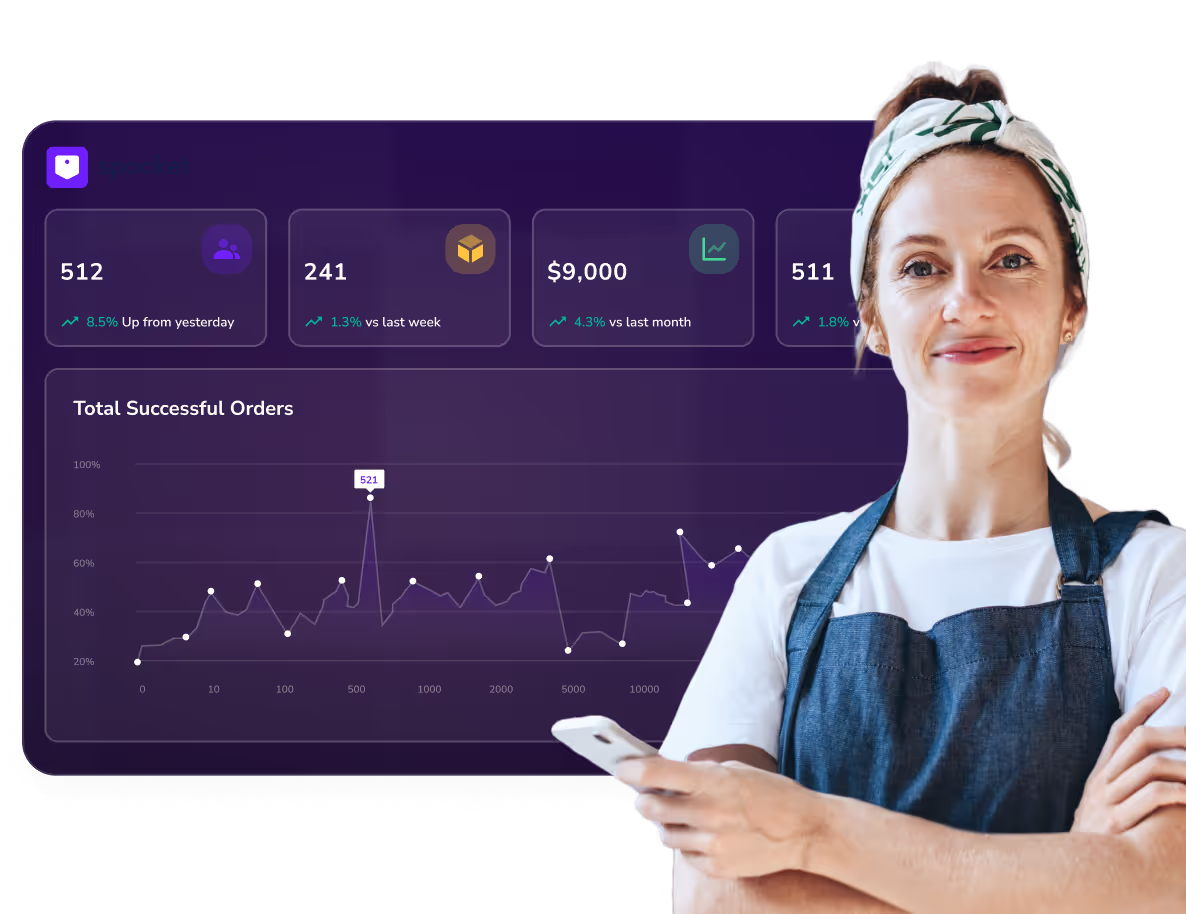
Data only helps when you can see it clearly. Create a dashboard that visualizes how customers move through your funnel — from first-time buyers to repeat purchasers to loyal advocates.
Plot your repeat purchase rate, LTV, and NPS side by side each month. Add cohort tracking to see how customers from different months behave over time. This makes it easy to notice trends, such as whether customers who joined during a sale come back less often.
By checking this dashboard weekly, you’ll start noticing patterns — which products bring repeat buyers, which marketing channels bring loyal ones, and which parts of the journey cause drop-offs. Once you see the data clearly, improving loyalty becomes a science, not a guessing game.
Nail The Foundations That Actually Create Loyalty
Loyalty doesn’t come from discounts or clever ads; it starts with the basics. If your delivery, communication, or return process fails, no loyalty program will save you. The foundation of retention is trust — and trust is built through systems that make customers feel cared for every step of the way.
Supplier SLAs You Must Lock Down
Your suppliers directly shape your customer experience. Late shipments or poor packaging aren’t just supplier problems — they’re your problems. Setting clear Service Level Agreements (SLAs) protects your reputation and ensures consistency.
Lead Time Windows And Promise Dates
Ask your supplier for average and worst-case delivery times. Don’t rely on “standard” estimates — get real numbers. Use these to set honest delivery promises on your site. It’s better to underpromise and overdeliver than to apologize later for delays. When something does go wrong, communicate early and transparently.
Packaging And Inserts
Even if you can’t control every shipment, you can influence presentation. Ask suppliers if they can include simple branded inserts or thank-you cards. A handwritten note, QR code to track the order, or small freebie can turn an ordinary delivery into something memorable. These small human touches go a long way in building emotional connection.
Returns Workflow
Returns are a loyalty moment, not a loss. Make the process simple, fair, and easy to find. Create a self-service portal where customers can print labels and track refund status. Avoid hidden fees or confusing terms — transparency during a problem builds far more trust than perfect orders ever will.
Trust Signals On Your Store
People buy when they feel confident. Your website should silently answer every doubt before it’s even asked.
Delivery Dates On Product Pages
List exact delivery ranges on product and cart pages. “Arrives by March 25–28” feels trustworthy. “Delivery in 5–15 days” feels like guesswork. The more specific you are, the more reliable you seem.
Reviews And Real Photos
Showcase real customer photos and recent reviews right under product descriptions. This tells new visitors that people like them have already trusted you — and were happy with the outcome. Bonus: verified reviews also boost your store’s SEO and conversion rate.
Policy Clarity
Your return, refund, and shipping policies shouldn’t be hidden in fine print. Use short summaries or icons on product pages that highlight key points — like “30-day returns” or “Tracked shipping.” Simplicity builds confidence.
Support That Wins Loyalty
Customer support is where loyalty is truly tested. A fast, empathetic response can save a bad situation and turn a frustrated buyer into a lifelong fan.
Response-Time Standards
Set clear internal response goals — for example, reply within two hours and resolve within 24. Communicate these standards on your contact page so customers know what to expect. Meeting those expectations consistently builds credibility.
Make-It-Right Menu
Not every order goes smoothly, but every mistake is a chance to impress. Create a simple “make-it-right” system: minor issue = small credit, major issue = replacement or partial refund. This turns complaints into stories of how well you handled things — and people love sharing those stories.
When you get these fundamentals right, everything else — emails, loyalty programs, and repeat orders — becomes easier. It’s the solid base that keeps your entire business steady when problems pop up.
Brand Trust Systems Shipping Returns and Support
In dropshipping, operational clarity is branding. Customers judge your brand by whether the experience feels controlled and professional.
This section matters because most loyalty problems in dropshipping come from the basics: unclear shipping, confusing returns, and slow support.
Delivery expectations as a branding lever
Delivery is one of the strongest emotional moments in ecommerce. It’s where trust is either confirmed or broken.
Branding best practices for shipping:
- Use a realistic delivery range, not wishful promises
- Separate processing time from transit time
- Explain what tracking looks like and when it updates
- Add a short “If delayed, here’s what to do” line
Customers don’t mind waiting nearly as much as they mind uncertainty. Clear expectations reduce chargebacks and “Where is my order?” tickets.
Returns as a loyalty moment
Returns are not just a policy—they’re a test of your brand.
A strong returns experience should feel:
- Simple
- Predictable
- Respectful
Your returns page should clearly state:
- Time window
- Condition requirements
- How to start a return
- How refunds are processed
- Typical timelines
When customers feel safe buying, they’re more likely to purchase again. A generous, clear policy can improve conversion and long-term loyalty.
Support scripts that protect brand trust
Support is where your brand voice matters most. Create a simple support standard:
- Acknowledge within 24 hours
- Clarify the issue without blaming the customer
- Offer a next step quickly
- Close the loop with confirmation or tracking
Your customers don’t need perfect outcomes. They need to feel taken care of. That’s branding.
Lifecycle Automation: Flows That Drive Second Orders
Once your foundation is solid, it’s time to automate. The goal here isn’t just to sell again — it’s to make customers feel remembered, valued, and excited to return. Smart, human-centered automation turns one-time buyers into repeat customers without sounding robotic or pushy.
Core Post-Purchase Series (With Timing)
Your post-purchase experience should feel like a helpful conversation, not a marketing campaign. Set up automated flows that follow a natural timeline and genuinely improve the customer journey.
Order Confirmation And Value Email
Send a confirmation email immediately after purchase, but make it sound personal. Thank them by name, restate the estimated delivery time, and add a short message like, “We’re excited for you to try this out — it’s one of our favorites.” A little personality goes a long way in making the first impression warm and human.
Delivery Check-In
Most stores go silent after shipping. That’s your chance to stand out. Send a friendly message when the order is expected to arrive, asking, “Did everything go smoothly?” If they reply yes — great! If not, you’ve opened the door to fix it fast, which builds trust instantly.
Review And UGC Request
Once customers have received and used the product, follow up with a review request. Keep it light and conversational. Instead of “Please leave a review,” try “How did it go? We’d love to hear what you think — photos welcome!” Encourage them to share pictures and stories, and thank them for their time.
Replenishment Or “Complete The Set” Offer
If your products are consumable or part of a collection, schedule a reminder a few weeks later. For example, “Running low? Here’s 10% off your refill,” or “You’ve got the top — now grab the matching bottoms.” Gentle, helpful nudges create repeat sales naturally.
Win-Back And Lapsing Logic
Even the happiest customers can go quiet. That’s why you need win-back sequences that re-engage them before they disappear.
Identify Lapse Periods
Track how long your typical customer waits before a second purchase — maybe 30, 60, or 90 days. When someone passes that window, trigger a reactivation email with a friendly tone like, “We miss you — here’s what’s new.” Avoid spammy discounts; offer value or personalization instead.
Tiered Incentives
Not every customer needs the same push. High-value customers might respond better to early access or bonus points, while newer ones might need a small discount. Customize offers based on how profitable or engaged they’ve been. It’s smarter — and cheaper — than blanket promos.
VIP Track
Your most loyal customers deserve special treatment. Create a “VIP” flow that automatically activates when someone hits a spending or order threshold.
Exclusive Access And Perks
Send VIPs early access to new drops, priority support, or limited-edition items. The goal isn’t just to reward spending — it’s to make them feel recognized and valued. A simple “Hey, you’re part of our top 5% of customers” can mean more than any coupon code.
Personal Touchpoints
Automate small gestures that feel personal — birthday greetings, anniversary notes, or handwritten thank-you emails. When customers feel like you actually know them, they’re far more likely to come back.
Automation isn’t about removing the human element — it’s about scaling it. When done right, these flows make every customer feel like they’re your only one, even when your business is growing fast.
Loyalty Programs That Actually Move RPR
Once you’ve nailed your automation flows, the next step is to give customers a reason to stay for the long haul. A well-designed loyalty program doesn’t just reward purchases — it creates belonging. Done right, it turns routine buying into something people are genuinely excited about.
Choose Your Model
Not all loyalty programs are built the same. The right model depends on your products, margins, and how often customers buy.
Points Programs
This is the simplest and most popular approach. Customers earn points for every purchase and redeem them later for discounts or freebies. It works well for lower-priced or frequently purchased products. The key is making points feel valuable — 100 points should mean something, not feel like pocket change.
Tiered Or VIP Programs
A tiered system rewards your best customers with bigger perks. For example, a “Bronze, Silver, Gold” setup gives shoppers something to strive for. You could offer early access, free shipping, or special gifts for top-tier members. These programs gamify loyalty, making customers proud to move up the ladder.
Referral Programs
Referrals blend loyalty with growth. Offer store credit or discounts when existing customers bring in new ones. It’s an easy way to turn your happiest buyers into your best marketers. Just make sure the process is frictionless — if it feels complicated, people won’t bother.
Design For Excitement, Not Just Discounts
Loyalty programs often fail because they focus only on saving money. The best ones build emotion and engagement instead.
Experiential Rewards
Instead of more coupons, give access to experiences — early product drops, exclusive communities, or co-creation opportunities. Customers love feeling like insiders who help shape your brand.
Event-Based Boosts
Double-point weekends, birthday bonuses, or anniversary surprises keep the program alive. It shows customers you’re paying attention to more than their wallet.
Branded Naming And Visuals
Give your program a unique identity. Names like “The Inner Circle” or “The Fam” feel warmer than “Rewards Club.” Use visuals that match your brand personality — playful, premium, or minimalist — to make the experience cohesive.
Implementation Quick-Start
Building a loyalty program doesn’t have to be overwhelming. Start simple and scale over time.
- Export your existing customer data — order history, spend, and frequency.
- Segment your audience into new, active, and loyal groups.
- Choose a loyalty app that integrates with your email or SMS platform.
- Set realistic thresholds — for example, 1 point per dollar spent or free shipping after three orders.
- Promote it everywhere: on-site banners, post-purchase emails, and packaging inserts.
Once live, track the impact on your Repeat Purchase Rate (RPR). If you notice a lift within 60 days, you’ll know the system is working.
Templates To Get You Started
Here’s a simple loyalty launch email you can customize:
“Hey [Name], we’ve just launched our loyalty program — and you’re automatically in. Earn points every time you shop, share, or review. As one of our first members, you’ll start with 100 bonus points on us. Welcome to the circle!”
You can also add a short banner on your homepage or product pages:
“Earn rewards every time you shop. Join free today.”
Loyalty programs should feel rewarding, not complicated. Keep it simple, keep it personal, and make every perk feel like a thank-you, not a transaction.
How Spocket Helps Strengthen Ecommerce Branding
Dropshipping branding becomes easier when you can keep your promises. That’s why supplier quality and shipping consistency matter so much.
Spocket supports ecommerce branding in practical ways:
- Helping you source products from suppliers that align with faster shipping expectations in key markets like the US and EU
- Reducing customer frustration that comes from long, unpredictable delivery windows
- Supporting a smoother customer experience, which leads to fewer support tickets and higher trust
- Making it easier to build a store that feels reliable, not random
Branding isn’t just what your store looks like—it’s what customers experience. When your supply chain supports your promises, loyalty becomes a natural outcome.
If your goal is to build a real brand that customers remember, choosing suppliers through Spocket can be one of the simplest ways to protect your reputation as you scale.
Conclusion
Customer loyalty in dropshipping is not a mystery—it’s the natural result of strong ecommerce branding. When your store feels intentional, your messaging is consistent, your policies are clear, and your post-purchase experience is reassuring, customers stop seeing you as “another dropshipping site.” They start seeing you as a brand they can trust.
If you’re building for the long term—whether it’s a side hustle that helps you make money online, a path to passive income, or one of the most realistic apps to make money style ecommerce plays—you’ll grow faster by investing in brand trust early.
To make your branding easier, protect your customer experience at the supplier level. Spocket helps you source products with suppliers that can better match US and EU shipping expectations, which reduces refunds, improves reviews, and makes repeat purchases more likely. Explore Spocket to build a dropshipping store that feels like a real brand—and earns loyalty that lasts.
FAQs About Ecommerce Branding for Dropshipping
What is ecommerce branding for a dropshipping store?
Ecommerce branding is the identity and customer experience that makes your dropshipping store feel trustworthy, memorable, and consistent. It includes visuals, messaging, policies, delivery expectations, and post-purchase communication.
Can you build a brand without custom packaging?
Yes. Branding isn’t only packaging. You can build a strong brand through consistent site design, original product descriptions, clear policies, thoughtful emails, and support that feels human. Digital “unboxing” through post-purchase flows can be just as powerful.
What makes a dropshipping store look legit?
Clear trust pages, realistic shipping timelines, clean product pages, visible contact options, transparent returns, and genuine social proof. A store looks legit when it reduces uncertainty.
How does branding improve customer loyalty?
Branding improves loyalty because customers feel safe buying again. They understand your promise, trust the experience, and know what to expect. That reduces hesitation and increases repeat purchases.
What is the fastest way to improve dropshipping loyalty?
Fix the customer experience: shipping clarity, support response time, and product consistency. Then add post-purchase communication and review systems. Loyalty grows when the basics are solid.
How do I make my store different from competitors selling similar products?
Differentiate through positioning, bundles, content, brand voice, and experience. Many stores sell similar products. Few stores sell them with a clear promise, consistent trust signals, and reliable delivery.


Launch your dropshipping business now!
Start free trial


Related blogs
.avif)
First Year Fumbles: 10 Common Beginner Dropshipping Mistakes Made (and Solutions)
Starting a dropshipping business is tough. We break down the 10 most common beginner dropshipping mistakes that drain your budget and show you how to solve them.

Navigating VAT for International Dropshippers
Selling across borders? You need to know dropshipping VAT rules for 2026. This guide covers EU compliance, US tax, and common mistakes to avoid.
Best Kitchen Gadgets to Dropship
Discover the best kitchen gadgets dropshipping products to sell online. Explore trending, profitable, and easy-to-ship kitchen tools for your store.