Meilleurs fournisseurs de dropshipping pour les vendeurs néo-zélandais
Find the best dropshipping suppliers in New Zealand for NZ sellers, with local and global options, shipping tips, niches, vetting criteria, and FAQs
.avif)

Finding reliable dropshipping suppliers in New Zealand can feel tricky, especially when you need quality products, fair margins, fast shipping, and suppliers that actually support NZ customers. Whether you are launching a Shopify store or improving an existing ecommerce business, the right supplier can make the difference between repeat customers and refund requests.
New Zealand sellers often compare local suppliers, Australian suppliers, and global dropshipping platforms to find the best mix of product variety, delivery speed, and automation. In this guide, we will break down the best options for NZ sellers, what to look for before choosing a supplier, which product categories work well, and how platforms like Spocket can help you source quality products without holding inventory.
What Makes a Good Dropshipping Supplier for NZ Sellers?
Choosing the right supplier is crucial for any New Zealand dropshipping business. Since you do not hold inventory, your supplier directly impacts product quality, shipping speed, customer satisfaction, and repeat sales. Before comparing the best dropshipping suppliers in New Zealand, here’s what to look for.
Fast and Transparent Shipping to New Zealand
NZ customers expect clear delivery timelines, tracking details, and honest updates. Check whether the supplier ships to Auckland, Wellington, Christchurch, and rural areas, and confirm processing times, tracking availability, shipping costs, and return options.
A good supplier should clearly provide:
- Estimated NZ delivery time
- Order processing time
- Tracking details
- Shipping costs
- Rural delivery rules
- Return process
Fast shipping does not always mean same-week delivery. It means the supplier is consistent and transparent enough for you to set accurate expectations.
Product Quality and Sample Ordering
Product quality affects reviews, refunds, and customer trust. Supplier photos can look polished, but samples reveal the real packaging, durability, sizing, and overall value.
Before listing a product, check:
- Does it match the photos?
- Is the packaging presentable?
- Is the quality worth the retail price?
- Did it arrive on time?
- Were tracking updates accurate?
This is especially important for beauty, pet, fashion, home decor, and electronics products.
Ecommerce Platform Integration
A reliable supplier should integrate smoothly with platforms like Shopify, WooCommerce, Wix, or BigCommerce. This helps you import products, manage orders, update inventory, and track fulfillment without doing everything manually.
Look for features like:
- Quick product imports
- Product detail sync
- Variant management
- Store push tools
- Order tracking
- Automatic inventory updates
For example, Spocket supports major ecommerce integrations, helping NZ sellers manage sourcing and fulfillment more efficiently.
Inventory Sync and Order Automation
Without inventory sync, you may sell out-of-stock products and disappoint customers. Automation also reduces manual errors as your order volume grows.
The best suppliers usually offer:
- Automatic stock updates
- One-click import
- Automated fulfillment
- Tracking updates
- Pricing rules
- Variant management
Platforms like Spocket help reduce repetitive work, giving sellers more control over daily operations.
Return, Refund, and Customer Support Policies
Even if your supplier ships the product, your customer sees you as responsible. Before choosing a supplier, review their refund rules, return process, and support response time.
A good supplier should offer:
- Clear refund rules
- Responsive support
- Simple return instructions
- Reliable tracking
- Help with damaged or incorrect items
- Transparent delay updates
For NZ sellers, supplier reliability is not just about products. It is about supporting the full customer experience from order to delivery.
Best Dropshipping Suppliers in New Zealand for NZ Sellers
Finding the best dropshipping suppliers in New Zealand depends on your business model, niche, budget, and shipping expectations. Some sellers prefer local or Australian suppliers for faster delivery, while others use global platforms for better product variety and automation.
Below are some of the best supplier options for NZ sellers, including global dropshipping platforms, supplier directories, print-on-demand providers, and regional suppliers.
1. Spocket — Best for Quality Global Products and Store Automation
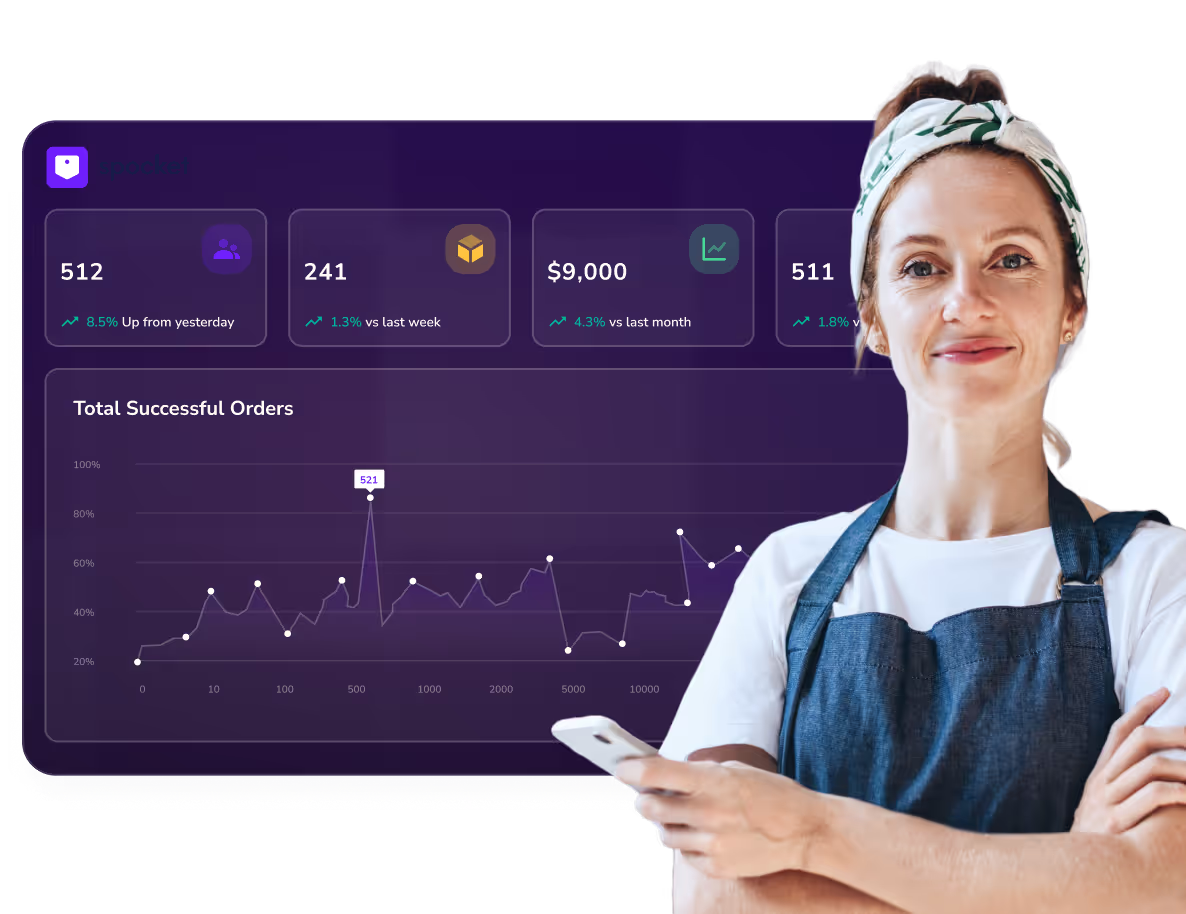
Spocket is one of the strongest options for NZ sellers who want access to high-quality dropshipping products, reliable supplier discovery, and ecommerce automation. Instead of manually contacting dozens of suppliers, sellers can browse products, import them to their store, and manage orders through a more streamlined system.
For sellers comparing dropshipping suppliers in New Zealand, Spocket is useful when you want global supplier access with automation rather than relying only on local wholesalers. This is especially helpful for NZ sellers who want to test products across different niches without buying inventory upfront.
.avif)
Best for:
- Shopify and WooCommerce sellers
- NZ stores targeting premium or lifestyle products
- Sellers who want global products without holding inventory
- Stores that need product import and order automation
- Beginners who want a more organized sourcing process
Product categories:
- Home decor
- Beauty and wellness products
- Pet accessories
- Fashion accessories
- Gifts
- Eco-friendly lifestyle products
- Sports and Outdoors
- Tech accessories
Why it works for NZ sellers:
Spocket gives NZ sellers access to a wide product range without the need to manage warehouse space or bulk inventory. It is especially useful for sellers who want to build a branded store around quality products instead of listing random low-cost items.
The platform also supports ecommerce integrations, which helps sellers manage product imports, order processing, and store operations more efficiently.
Key features:
- Product sourcing from global suppliers
- Ecommerce platform integrations
- Product import tools
- Order management support
- Supplier discovery
- Wide category selection
Pros:
- Good for product testing
- Beginner-friendly
- Useful for Shopify and WooCommerce sellers
- Helps reduce manual supplier work
- Suitable for niche and lifestyle stores
Cons:
- NZ sellers should check product-level shipping availability
- Delivery times can vary by supplier and product
- Best results come from careful product selection
2. SaleHoo — Best Supplier Directory for NZ Sellers
SaleHoo is a well-known supplier directory and is especially relevant for New Zealand sellers because it was founded in New Zealand. It is useful for sellers who want to research multiple wholesale and dropshipping suppliers in one place instead of searching manually across the web.
Unlike a fully automated dropshipping platform, SaleHoo works more like a supplier research tool. You can use it to discover suppliers, compare product categories, and find potential partners for your store.
Best for:
- Sellers who want to research multiple suppliers
- Beginners who want a directory instead of random Google searches
- NZ sellers comparing wholesale and dropshipping options
- Store owners who are comfortable contacting suppliers directly
Product categories:
- Fashion
- Electronics
- Beauty
- Toys
- Home goods
- Sports products
- General merchandise
Why it works for NZ sellers:
SaleHoo can help NZ sellers discover suppliers that may be difficult to find through normal search. It is especially useful if you want to compare wholesale suppliers, dropshipping suppliers, and niche product sources.
However, sellers still need to check shipping times, product margins, supplier terms, and automation options before committing to any supplier.
Key features:
- Supplier directory
- Product research tools
- Access to multiple categories
- Supplier discovery
- Wholesale and dropshipping options
Pros:
- Strong research tool
- Useful for finding niche suppliers
- Relevant for NZ-based sellers
- Good for supplier comparison
Cons:
- Not all suppliers offer automation
- Requires manual outreach
- Shipping times must be checked individually
- Product quality depends on the supplier
3. Syncee — Best for Marketplace-Style Supplier Sourcing
Syncee is a dropshipping and wholesale marketplace that gives sellers access to suppliers from different regions. It is a good option for NZ sellers who want a broad marketplace experience and the ability to explore many product categories from one platform.
Syncee can be useful for sellers who want supplier variety, but it is important to check each supplier’s delivery options to New Zealand before importing products.
Best for:
- Sellers who want a broad supplier marketplace
- Shopify store owners
- Product testing across different categories
- Sellers looking for global supplier options
Product categories:
- Fashion
- Beauty
- Home
- Pet products
- Accessories
- Lifestyle products
Why it works for NZ sellers:
Syncee gives NZ sellers access to many suppliers and product types, which can be helpful when testing niches. It works well for sellers who want to compare suppliers and product catalogs without depending on only one source.
However, because supplier terms vary, sellers should check shipping times, product costs, return policies, and customer reviews before adding products to their store.
Key features:
- Supplier marketplace
- Product catalog access
- Ecommerce integrations
- Product data management
- Supplier filtering
Pros:
- Wide supplier selection
- Good for niche testing
- Marketplace-style browsing
- Useful for product discovery
Cons:
- Supplier quality can vary
- NZ delivery must be checked supplier by supplier
- Some products may have lower margins
- Requires careful product filtering
4. Gelato — Best for Print-on-Demand in New Zealand
Gelato is a print-on-demand platform that works well for sellers who want to create custom products without buying inventory. Print-on-demand is especially appealing for NZ sellers because products are made only after customers place an order.
This model is ideal for creators, designers, niche brands, and ecommerce stores that want to sell personalized or branded products.
Best for:
- Custom apparel
- Posters
- Mugs
- Wall art
- Personalized gifts
- Creator merchandise
Product categories:
- T-shirts
- Hoodies
- Posters
- Canvas prints
- Mugs
- Stationery
- Photo products
Why it works for NZ sellers:
Gelato is useful for NZ sellers who want to launch a custom product store without holding stock. Since print-on-demand products are produced after purchase, there is less risk of unsold inventory.
It is also a good choice for sellers targeting gift buyers, artists, influencers, or niche communities.
Key features:
- Print-on-demand fulfillment
- Création de produits personnalisés
- Réseau de production mondial
- Intégrations e-commerce
- Aucune exigence d'inventaire
Avantages :
- Pas besoin d'acheter de stock à l'avance
- Idéal pour les marques personnalisées
- Bon pour les boutiques de cadeaux
- Facile de tester des designs
Inconvénients :
- Les marges peuvent être inférieures à celles des produits traditionnels
- La qualité du produit dépend du fournisseur d'impression
- Pas idéal pour les magasins de dropshipping généralistes
- Les frais d'expédition doivent être vérifiés par produit
5. Dropshipzone — Idéal pour les produits généralistes basés en Australie
Dropshipzone est une option de fournisseur axée sur l'Australie qui peut être pratique pour les vendeurs néo-zélandais. Les fournisseurs australiens sont souvent attrayants car ils peuvent offrir une meilleure expédition régionale que les fournisseurs situés plus loin.
Pour les boutiques e-commerce néo-zélandaises vendant des articles pour la maison, de fitness, des meubles ou des marchandises générales, Dropshipzone peut valoir la peine d'être exploré.
Idéal pour :
- Magasins de meubles
- Vendeurs d'articles pour la maison
- Magasins de produits de fitness
- Magasins de marchandises générales
- Vendeurs recherchant un approvisionnement basé en Australie
Catégories de produits :
- Meubles
- Articles pour la maison
- Outils
- Équipement de fitness
- Produits d'extérieur
- Marchandises générales
Pourquoi cela fonctionne pour les vendeurs néo-zélandais :
Dropshipzone peut être utile pour les vendeurs néo-zélandais qui souhaitent un approvisionnement régional depuis l'Australie plutôt que de dépendre uniquement de fournisseurs étrangers. Cela peut aider à renforcer la confiance des clients et à mieux gérer les attentes de livraison, selon le produit et la configuration d'expédition.
Cependant, les vendeurs doivent vérifier les coûts d'expédition, les délais de livraison et la disponibilité des produits pour la Nouvelle-Zélande avant de lister des articles.
Caractéristiques principales :
- Accès à des fournisseurs basés en Australie
- Vastes catégories de produits
- Catalogue de marchandises générales
- Accent sur la maison et le style de vie
- Support de données produit
Avantages :
- Utile pour l'e-commerce AU/NZ
- Catégories fortes pour la maison et le style de vie
- Bon pour les magasins généralistes
- Option de fournisseur régional
Inconvénients :
- L'expédition vers la Nouvelle-Zélande peut varier selon le produit
- Certains articles peuvent avoir des frais d'expédition élevés
- Les produits volumineux peuvent réduire les marges
- La configuration de l'intégration peut nécessiter un examen
6. iDropship — Idéal pour les marchandises générales d'Australie
iDropship est une autre option de fournisseur basée en Australie pour les vendeurs qui souhaitent accéder à des marchandises générales. Il peut être utile pour les vendeurs néo-zélandais qui veulent explorer des produits d'un marché voisin tout en évitant la gestion des stocks.
Ce type de fournisseur peut bien fonctionner pour les magasins vendant des produits de style de vie, pour la maison, électroniques et des produits e-commerce généraux.
Idéal pour :
- Magasins e-commerce généralistes
- Vendeurs d'articles pour la maison
- Magasins d'électronique
- Magasins de produits de style de vie
- Vendeurs recherchant des fournisseurs basés en Australie
Catégories de produits :
- Articles pour la maison
- Électronique
- Produits de style de vie
- Articles cadeaux
- Marchandises générales
Pourquoi cela fonctionne pour les vendeurs néo-zélandais :
iDropship peut être une bonne option pour les vendeurs qui souhaitent s'approvisionner en Australie et tester différentes catégories. L'Australie étant géographiquement plus proche de la Nouvelle-Zélande que de nombreux centres de fournisseurs mondiaux, elle peut offrir des options d'exécution plus pratiques pour certains produits.
Néanmoins, les vendeurs néo-zélandais doivent vérifier attentivement les coûts d'expédition, les délais de livraison, les niveaux de stock et les marges des produits.
Caractéristiques principales :
- Approvisionnement en produits basé en Australie
- Sélection de marchandises générales
- Modèle adapté au dropshipping
- Accès au catalogue de produits
- Option de fournisseur régional
Avantages :
- Bon pour les magasins généralistes
- Option d'approvisionnement régional
- Utile pour tester différents types de produits
- Pas besoin de détenir de stock
Inconvénients :
- Les marges peuvent varier
- L'expédition vers la Nouvelle-Zélande doit être vérifiée
- Certains produits peuvent être largement disponibles ailleurs
- Les options d'automatisation doivent être vérifiées
7. EPROLO — Idéal pour l'approvisionnement en produits à faible coût et le branding
EPROLO est une plateforme de dropshipping mondiale souvent utilisée par les vendeurs qui recherchent un approvisionnement en produits à faible coût, des tests de produits et un support de branding. Elle peut être utile pour les vendeurs néo-zélandais qui souhaitent tester des produits généralistes avant de se lancer dans des niches plus spécifiques.
Elle est particulièrement pertinente pour les vendeurs qui souhaitent accéder à un vaste catalogue et sont à l'aise avec la vérification minutieuse des délais d'expédition avant de lister des produits.
Idéal pour :
- Vendeurs soucieux de leur budget
- Tests de produits
- Dropshipping de marque
- Magasins généralistes
- Vendeurs recherchant des produits à faible coût
Catégories de produits :
- Mode
- Beauté
- Électronique
- Articles pour la maison
- Produits pour animaux de compagnie
- Accessoires
Pourquoi cela fonctionne pour les vendeurs néo-zélandais :
EPROLO gives sellers access to a wide range of products and can support branding features, which may be useful for stores trying to look more professional. It is a good option for product testing, especially when you want to explore multiple niches.
However, because shipping times can vary, NZ sellers should avoid overpromising delivery speed and should test products before scaling ads.
Key features:
- Global product sourcing
- Product branding options
- General catalog access
- Fulfillment support
- Product testing opportunities
Pros:
- Good for testing products
- Wide catalog
- Branding features
- Useful for general stores
Cons:
- Shipping times can vary
- Quality should be checked through samples
- Not every product will suit NZ customers
- Requires careful product selection
8. Printful — Best for Premium Print-on-Demand Stores
Printful is a popular print-on-demand supplier for sellers who want to create branded apparel, accessories, and custom merchandise. It is a good option for NZ sellers building a brand around designs, creators, communities, or niche audiences.
Printful is often seen as a premium POD option because of its product quality, branding features, and professional mockups.
Best for:
- Apparel brands
- Creator merchandise
- Custom gift stores
- Premium print-on-demand products
- Niche communities
Product categories:
- T-shirts
- Hoodies
- Hats
- Tote bags
- Posters
- Home decor
- Accessories
Why it works for NZ sellers:
Printful is useful for sellers who want to build a brand without buying inventory. Products are printed after each order, which reduces upfront risk and allows sellers to test different designs.
It works best for sellers who focus on strong branding, original designs, and niche-specific messaging.
Key features:
- Print-on-demand fulfillment
- Product mockups
- Branding options
- Ecommerce integrations
- Custom product creation
Pros:
- Good product presentation
- Strong for branded stores
- No inventory needed
- Suitable for creators and designers
Cons:
- Pricing can be higher
- Margins depend on product and shipping
- Not ideal for low-ticket generic products
- Delivery time should be checked for NZ orders
9. Printify — Best for POD Supplier Choice
Printify is another strong print-on-demand option, especially for sellers who want to compare print providers, product pricing, and fulfillment options. It gives sellers flexibility because they can choose from different print partners depending on product type, cost, and delivery.
For NZ sellers, Printify can be useful when testing different custom product ideas and comparing margins across providers.
Best for:
- Sellers who want supplier flexibility
- Niche print-on-demand brands
- Custom gift stores
- Design-led ecommerce stores
- Product testing with POD
Product categories:
- Apparel
- Mugs
- Phone cases
- Home decor
- Bags
- Stationery
- Accessories
Why it works for NZ sellers:
Printify allows sellers to test custom products without buying stock. Since multiple print providers may be available, sellers can compare product cost, production location, shipping cost, and delivery estimates.
It is especially useful for stores selling personalized gifts, niche apparel, or seasonal products.
Key features:
- Multiple print provider options
- POD product catalog
- Ecommerce integrations
- Mockup tools
- Custom product creation
Pros:
- Flexible supplier choice
- Good for product testing
- Wide POD catalog
- No inventory required
Cons:
- Quality may vary by print provider
- Shipping to NZ should be checked carefully
- Margins can differ between providers
- Requires sample testing
10. BrandsGateway — Best for Luxury Fashion Dropshipping
BrandsGateway is a niche dropshipping supplier focused on luxury and designer fashion. It is best suited for sellers who want to build a premium fashion store rather than a general low-cost dropshipping store.
Because designer fashion products usually have higher retail prices, this model can offer higher order values. However, it also requires stronger branding, better customer trust, and careful pricing.
Best for:
- Premium fashion stores
- Designer apparel sellers
- Luxury accessories stores
- High-ticket ecommerce brands
- Fashion-focused entrepreneurs
Product categories:
- Designer clothing
- Shoes
- Bags
- Sunglasses
- Accessories
- Luxury fashion items
Why it works for NZ sellers:
BrandsGateway can work for NZ sellers targeting customers who want premium fashion products. It is especially useful for sellers who prefer a focused niche instead of selling broad general merchandise.
However, the higher product costs mean sellers need to understand their audience, margins, advertising costs, and return policies before launching.
Key features:
- Designer fashion catalog
- Luxury product focus
- High-ticket product selection
- Fashion niche positioning
- Dropshipping model
Pros:
- Strong niche focus
- Higher-value products
- Good for premium branding
- Less generic than mass-market products
Cons:
- Higher upfront or subscription costs
- Premium pricing may limit audience size
- Returns can be more sensitive
- Requires strong branding and customer trust
11. Local New Zealand Wholesalers — Best for Niche Local Stores
Some of the best dropshipping suppliers in New Zealand may not call themselves dropshipping suppliers. They may be boutique homeware brands, skincare makers, gift stores, pet product wholesalers, outdoor gear suppliers, or local artisan brands.
These suppliers can be great for niche stores because they may offer faster local delivery, unique products, and stronger customer trust. However, they may need a custom arrangement for order forwarding, packaging, and returns.
How to Find Local NZ Suppliers
Search terms like “wholesale skincare New Zealand” or “wholesale pet products NZ.” You can also contact local brands directly, attend trade shows, check supplier directories, and ask if they support blind shipping. Before partnering, confirm order forwarding, packaging rules, delivery timelines, and return handling.
How to Choose the Right Dropshipping Supplier in New Zealand
The right supplier should offer more than low prices. For NZ sellers, shipping reliability, product quality, automation, and customer support matter just as much as product cost.
Check Shipping Time Before Product Price
A cheap product is not worth it if delivery takes too long or tracking is unclear. Slow shipping can lead to bad reviews, refund requests, and fewer repeat customers.
Calculate True Profit Margins
Do not look at product cost alone. Include supplier shipping, payment processing fees, app subscriptions, ad costs, refund allowance, and GST considerations before setting your selling price.
Test Supplier Communication
Message the supplier before listing their products. Ask about shipping, returns, stock updates, and damaged items. Fast, clear replies are a good sign.
Read Reviews and Order Samples
Check supplier reviews, customer feedback, product quality, delivery speed, and service standards. Always order samples before scaling a product so you know exactly what your customers will receive.
Confirm Integrations and Automation
Manual fulfillment may work for five orders a week, but it becomes difficult as your store grows. Choose suppliers that support product imports, inventory sync, automated fulfillment, tracking updates, and pricing rules.
How to Start Dropshipping in New Zealand
Starting a dropshipping business in New Zealand is easier when you choose the right niche, supplier model, and store platform from the beginning.
Choose a Niche That Fits NZ Demand
Focus on products that match New Zealand buying habits. Outdoor gear, home products, pet accessories, beauty items, wellness products, and eco-conscious goods are strong options.
Choose Your Supplier Model
You can work with local NZ suppliers, Australian suppliers, global platforms, print-on-demand companies, or a hybrid mix. Local suppliers may offer faster delivery, while platforms like Spocket provide wider product variety and automation.
Build Your Store
Create your online store using Shopify, WooCommerce, Wix, or BigCommerce. Choose a clean theme, simple navigation, strong product pages, and clear shipping information.
Add Products and Set Margins
Import products, write unique descriptions, set realistic prices, and clearly mention shipping timelines. Make sure your margins cover product cost, supplier shipping, ads, refunds, and platform fees.
Test Orders Before Running Ads
Place sample orders before spending money on ads. This helps you check product quality, packaging, tracking, and real delivery time.
Launch with SEO, TikTok, Meta Ads, and Google Shopping
Start with a mix of organic and paid traffic. Use SEO for long-term visibility, TikTok for product discovery, Meta Ads for testing audiences, and Google Shopping for high-intent buyers.
Common Mistakes NZ Dropshippers Should Avoid
Avoiding common mistakes can protect your margins, reviews, and customer trust.
Choosing the Cheapest Supplier
Low-cost suppliers can create problems if product quality is poor or shipping is unreliable. Cheap products often lead to refunds, chargebacks, and negative reviews.
Ignoring Shipping to Rural New Zealand
Always check rural delivery rules, tracking availability, and extra shipping costs. Some suppliers may deliver quickly to major cities but take longer for rural areas.
Selling Generic Products With No Niche Angle
New Zealand is a smaller market, so generic products can be harder to scale. Choose a clear niche, audience, or product angle to stand out.
Not Checking Refund and Return Policies
Customers blame your store when something goes wrong, not the supplier. Make sure you understand refund rules, return windows, and damaged item policies.
Copying Supplier Product Descriptions
Copied descriptions hurt SEO and make your store look generic. Write unique, helpful product descriptions that answer buyer questions and include relevant keywords naturally.
Final Verdict: Which Dropshipping Supplier Is Best for NZ Sellers?
The best supplier depends on your store model. Choose Spocket if you want a user-friendly platform with quality products, global suppliers, ecommerce integrations, and automation. Choose SaleHoo if you prefer manual supplier research. Choose Gelato, Printful, or Printify for print-on-demand. Choose Dropshipzone or iDropship for AU-based general products, and local NZ wholesalers for niche products and local fulfillment.
For most NZ sellers, the best approach is not choosing one supplier forever. Start with a reliable platform like Spocket, test a focused niche, compare shipping times, and expand into local or AU-based suppliers once you know what your customers actually buy.
Start your dropshipping business today
NZ Dropshipping Suppliers FAQs
What are the best dropshipping suppliers in New Zealand?
The best dropshipping suppliers in New Zealand include Spocket, SaleHoo, Syncee, Gelato, Dropshipzone, iDropship, EPROLO, Printful, Printify, and selected local NZ wholesalers. The right choice depends on your niche, shipping expectations, ecommerce platform, and whether you want local, Australian, or global suppliers.
Are there dropshipping suppliers based in New Zealand?
Yes, there are some New Zealand-based wholesalers and niche suppliers, but many do not publicly advertise themselves as dropshipping suppliers. NZ sellers often use a mix of local suppliers, Australian suppliers, and global dropshipping platforms to balance product range, delivery speed, and automation.
Is dropshipping legal in New Zealand?
Yes, dropshipping is legal in New Zealand. Sellers still need to follow business, tax, advertising, and consumer protection rules. For example, GST registration may be required once taxable turnover reaches or is expected to reach NZ$60,000 in a 12-month period.
Do I need to register for GST for dropshipping in New Zealand?
You must register for GST in New Zealand if your taxable activity turnover was at least NZ$60,000 in the last 12 months or is expected to reach at least NZ$60,000 in the next 12 months.
Can I use Australian dropshipping suppliers for New Zealand customers?
Yes. Many NZ sellers use Australian suppliers because they often offer more product variety than NZ-only suppliers and may provide faster shipping than overseas suppliers. However, always check NZ shipping costs, processing times, tracking, and return rules before listing products.
Is Spocket good for New Zealand dropshipping?
Yes, Spocket can be a strong option for New Zealand sellers who want access to quality global products, ecommerce integrations, and supplier automation. Sellers should still check product-level shipping availability and delivery times for New Zealand customers before importing products.
What products are best for dropshipping in New Zealand?
Popular dropshipping product categories for New Zealand include eco-friendly products, home and garden items, pet accessories, outdoor gear, wellness products, beauty tools, fashion accessories, and print-on-demand gifts.
How do I find reliable dropshipping suppliers in New Zealand?
Start by checking supplier reviews, ordering samples, testing customer support, comparing shipping times, reviewing return policies, and confirming ecommerce integrations. Xero recommends looking at product quality, shipping speed, customer service, and platform compatibility when comparing suppliers.
Can I dropship to New Zealand from China?
Yes, but delivery times can be longer, and customers may be less satisfied if shipping estimates are unclear. If you use China-based suppliers, choose tracked shipping, reliable suppliers, realistic delivery estimates, and products with strong margins.
What is better for NZ sellers: local suppliers or global platforms?
Local suppliers can offer faster delivery and local trust, while global platforms offer more product variety and automation. Many NZ sellers use a hybrid model: global platforms for testing products and local or AU suppliers for faster fulfillment once winners are proven.


Launch your dropshipping business now!
Start free trial


Blogs connexes
Annuaire des fournisseurs de dropshipping : où trouver des fournisseurs vérifiés
Parcourez notre annuaire de fournisseurs en dropshipping vérifiés aux États-Unis et en Europe, avec des informations sur leurs niches, leurs délais de livraison et leurs tarifs. Commencez votre essai gratuit dès aujourd'hui.

Comment négocier avec des fournisseurs de dropshipping : 9 tactiques qui fonctionnent vraiment
Apprenez à négocier les prix, les quantités minimales de commande (MOQ) et les conditions de paiement avec vos fournisseurs en dropshipping. Découvrez des tactiques éprouvées et des modèles d'e-mails pour booster vos marges. Essayez Spocket gratuitement.

Meilleurs fournisseurs de dropshipping de vêtements : le guide 2026
Comparez les meilleurs fournisseurs de dropshipping de vêtements pour 2026 — délais de livraison aux États-Unis/en Europe, tarifs et qualité des produits — et trouvez le partenaire idéal pour lancer votre boutique.