What is Micromarketing and How to Use it Effectively
Learn what micromarketing is, how it works, its benefits, examples, and how ecommerce businesses can use it to target niche customers effectively.

.avif)

Marketing works best when the right message reaches the right person at the right time. That is exactly where micromarketing comes in. Instead of speaking to a broad audience, micromarketing helps businesses focus on smaller, more specific customer groups with messages that feel personal, relevant, and useful.
For ecommerce businesses, this approach can be especially valuable. Online shoppers have different needs, budgets, lifestyles, and buying habits. A customer looking for eco-friendly home decor is not the same as someone searching for trending beauty products or fast-shipping pet accessories. When brands understand these smaller groups clearly, they can create better campaigns and improve conversions.
Micromarketing is not about selling to fewer people. It is about selling more effectively to the people most likely to care.
What is Micromarketing?
Micromarketing is a strategy where businesses target a narrowly defined group of customers based on specific characteristics such as location, interests, behavior, income level, lifestyle, profession, purchase history, or product preferences.
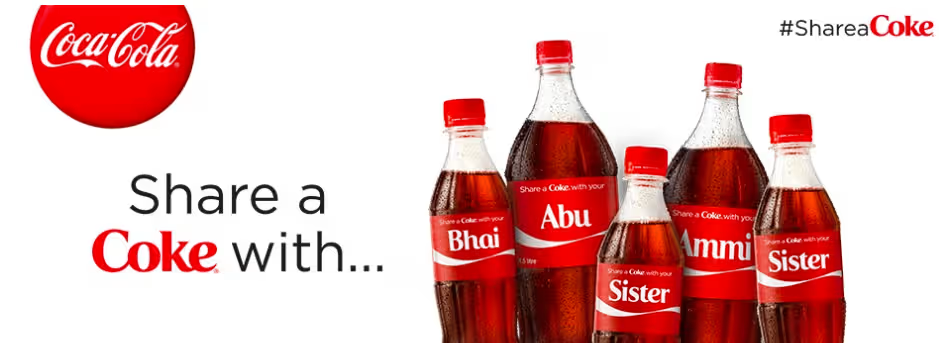
In simple terms, it means narrowing your audience so your marketing feels more personal. Instead of promoting a general message to everyone, you create a campaign for a specific group with shared needs.
For example, a regular campaign may say: “Shop our latest fitness products.”
A micromarketing campaign may say: “Compact workout gear for busy parents who want to exercise at home.”
The second message speaks to a clear audience. It understands their lifestyle, problem, and buying intent. That makes the campaign more meaningful.
Micromarketing can be used by businesses of all sizes. A local bakery may target nearby office workers with lunch-hour deals. A SaaS company may target startup founders looking for affordable automation tools. An ecommerce store may target customers searching for fast-shipping products from local suppliers.
Why Micromarketing Matters in Today’s Business Landscape
Customers today are exposed to hundreds of ads, emails, product recommendations, and social media posts every day. Generic marketing often gets ignored because it does not feel relevant. People are more likely to respond when a brand understands their needs. The key to this understanding lies in active listening. Before you can market to a niche, you have to find where they are talking and what they are saying. There are tools to help you out with this. For instance, BrandMentions app help bridge this gap by monitoring digital conversations in real-time.
This is why micromarketing has become so important. It helps businesses cut through the noise by creating campaigns that feel specific rather than broad.
A customer is more likely to click an ad that reflects their lifestyle, location, interest, or current problem. For example, someone living in a cold climate may respond better to winter skincare products than a generic beauty ad. A new pet owner may respond better to beginner-friendly pet essentials than a broad pet supplies campaign.
Micromarketing matters because it helps businesses:
- Reach customers with stronger buying intent
- Reduce wasted advertising spend
- Improve campaign relevance
- Build stronger customer relationships
- Create more personalized shopping experiences
- Compete in niche markets without needing a huge budget
For small businesses and ecommerce sellers, this can be a major advantage. Instead of trying to compete with large brands everywhere, they can dominate a smaller, more specific segment.
How Micromarketing Works
Micromarketing begins with understanding your audience in detail. The goal is to identify smaller customer groups and create messages that match their exact needs.
The process usually starts with data. Businesses look at who their customers are, what they buy, where they live, how they interact with the brand, and what motivates their purchase decisions.
For an ecommerce business, useful data may include:
- Products customers view most often
- Items added to cart
- Past purchases
- Average order value
- Location
- Search behavior
- Email engagement
- Social media interactions
- Customer reviews
- Repeat purchase patterns
Once the business understands these patterns, it can divide customers into smaller groups. These groups are then targeted with personalized campaigns.
For example, an online fashion store may create different campaigns for:
- College students looking for affordable outfits
- Working professionals looking for office wear
- Shoppers interested in sustainable fashion
- Customers who often buy accessories
- Repeat buyers who prefer premium products
Each group receives a different message, product recommendation, offer, or ad creative.
This is what makes micromarketing effective. It does not assume every customer wants the same thing.
Micromarketing vs. Mass Marketing
Mass marketing focuses on reaching as many people as possible with one broad message. Micromarketing focuses on reaching a smaller group with a more tailored message.
Both approaches can work, but they serve different purposes.
Mass marketing is useful when a product has broad appeal. For example, everyday household goods, basic food products, or widely used services may benefit from mass campaigns.
Micromarketing is better when customer needs are more specific. It works well for niche products, local campaigns, premium segments, specialized services, and personalized ecommerce experiences.
The difference can be understood like this:
Mass marketing says, “Everyone can use this.”
Micromarketing says, “This is made for people like you.”
That small shift can make a big difference in how customers respond.
For a dropshipping business, mass marketing may involve promoting a general store full of random trending products. Micromarketing would involve promoting carefully selected products to a specific audience, such as minimalist home decor for apartment renters or travel accessories for digital nomads.
The second approach is usually more focused, easier to brand, and more likely to build loyal customers.
Key Benefits of Micromarketing
Micromarketing offers several advantages, especially for ecommerce brands, small businesses, SaaS companies, and niche sellers. When done well, it can improve both marketing performance and customer satisfaction.
Better Audience Targeting
The biggest benefit of micromarketing is precision. You are not guessing who might be interested. You are building campaigns around people who already match a specific need, behavior, or interest.
This helps businesses avoid wasting time and money on audiences that are unlikely to convert.
For example, instead of targeting everyone interested in “home products,” a store can target renters looking for space-saving home organizers. This makes the campaign more specific and easier to act on.
Higher Customer Engagement
People engage more with content that feels relevant. If your ad, email, or product recommendation matches what a customer needs, they are more likely to click, read, save, or buy.
Micromarketing improves engagement because it speaks directly to the customer’s situation. A generic message may feel forgettable. A targeted message can feel helpful.
Stronger Conversion Rates
When customers feel that a product solves their exact problem, they are more likely to buy. Micromarketing improves conversions by matching product positioning with customer intent.
For example, “premium skincare products” is broad. “Gentle skincare for dry, sensitive skin” is more specific. The second message gives the customer a clearer reason to care.
Better Use of Marketing Budget
Broad campaigns can be expensive because they reach many people who may not be interested. Micromarketing helps businesses spend more carefully by focusing on smaller, high-value segments.
This is useful for startups and small ecommerce sellers that do not have large advertising budgets.
Instead of spending money trying to attract everyone, they can invest in campaigns for the customers most likely to buy.
Improved Customer Loyalty
Customers are more likely to stay loyal to brands that understand them. When your messages, products, and offers feel relevant, customers feel seen.
Over time, this can lead to repeat purchases, stronger trust, and better word-of-mouth.
For ecommerce brands using Spocket, this can be especially helpful. Sellers can select products that match a niche audience and build a store experience around that customer’s lifestyle.
Common Challenges of Micromarketing
Micromarketing is effective, but it also requires careful planning. A highly targeted campaign can fail if the business does not understand its audience properly.
It Requires Accurate Customer Data
Micromarketing depends on data. If the data is incomplete, outdated, or incorrect, the campaign may target the wrong people.
For example, if a business assumes customers want budget products when they actually value quality, the messaging will miss the mark. Businesses should regularly review customer behavior, sales patterns, feedback, and campaign performance to keep their targeting accurate.
It Can Take More Time to Create
A broad campaign may use one message for everyone. Micromarketing requires different messages for different segments. This means more research, more planning, and more content creation. However, the extra effort can pay off if the campaigns perform better.
Over-Personalization Can Feel Intrusive
Personalization should feel helpful, not uncomfortable. If a brand uses too much personal information in its messaging, customers may feel watched instead of understood.
The best micromarketing campaigns are relevant without being invasive. For example, saying “Recommended for your small apartment” feels useful. Saying “We noticed you looked at storage boxes three times last night” feels awkward.
Small Audiences Can Limit Scale
Micromarketing focuses on narrow groups, which means the audience size may be limited. This is not always a problem, but businesses need to make sure the segment is large enough to support their goals.
A good micromarketing segment should be specific, but not so small that growth becomes difficult.
5 Types of Micromarketing
Micromarketing can take different forms depending on how a business defines its audience. The right type depends on your product, market, and customer behavior.
1. Location-Based Micromarketing
Location-based micromarketing targets customers in a specific geographic area. This could be a city, neighborhood, region, or country.
A restaurant may target people within a few miles. An ecommerce store may promote winter products to customers in colder regions. A dropshipping business may highlight fast domestic shipping to customers in a specific country.
For Spocket sellers, location-based marketing can be useful because the platform connects merchants with suppliers from regions such as the US and EU. This allows sellers to promote faster shipping and region-relevant products to the right customers.
2. Demographic Micromarketing
Demographic micromarketing targets customers based on traits such as age, gender, income, education, profession, or family status.
For example:
- Baby products for new parents
- Affordable fashion for students
- Home office products for remote workers
- Premium wellness products for high-income buyers
This approach works well when a product clearly fits a specific life stage or customer profile.
3. Behavioral Micromarketing
Behavioral micromarketing focuses on what customers do. This includes browsing habits, past purchases, cart activity, email clicks, product views, and repeat buying behavior.
For example, a store can target customers who abandoned their cart with a reminder email. It can also recommend similar products to customers who recently purchased from a specific category. Behavioral targeting is powerful because it is based on real actions, not assumptions.
4. Psychographic Micromarketing
Psychographic micromarketing focuses on values, interests, lifestyle, personality, and motivations.
For example:
- Eco-conscious shoppers
- Minimalist home decor lovers
- Fitness-focused professionals
- Luxury beauty buyers
- Pet owners who treat pets like family
This approach helps brands create emotional connections. It is not just about what people buy, but why they buy it.
5. Product-Based Micromarketing
Product-based micromarketing targets customers around a specific product category, feature, or use case.
For example, instead of marketing “kitchen products,” a store may promote “space-saving kitchen tools for small apartments.” This helps position products more clearly and makes campaigns easier to understand.
How to Build a Micromarketing Strategy
A strong micromarketing strategy does not happen by accident. It requires research, segmentation, testing, and continuous improvement.
Understand Your Existing Customers
Start by studying the people who already buy from you. Look for patterns in their behavior. Ask questions like:
- Who buys most often?
- Which products sell best?
- What problems do customers mention in reviews?
- Where are your customers located?
- Which products get repeat purchases?
- Which campaigns bring the best traffic?
- What type of customers spend the most?
This helps you identify your most valuable customer segments.
If you are just starting, study your target niche instead. Look at customer discussions, product reviews, social media comments, and search trends to understand what people care about.
Create Clear Customer Segments
Once you understand your audience, divide them into smaller groups. Each group should have a clear reason for existing.
Avoid vague segments like “young people” or “online shoppers.” These are too broad. Instead, create segments like:
- First-time pet owners looking for affordable essentials
- Busy professionals buying meal prep accessories
- New moms searching for practical baby products
- Apartment renters looking for compact home storage
- Eco-conscious shoppers looking for reusable products
The clearer your segment, the easier it becomes to create the right message.
Build Customer Personas
A customer persona is a simple profile that represents your ideal buyer in a segment. It helps you understand who you are speaking to. A useful persona may include:
- Age range
- Lifestyle
- Main problem
- Buying motivation
- Budget
- Preferred product type
- Common objections
- Where they spend time online
- What kind of message they respond to
For example, a persona for a home decor store may be:
“A 28-year-old apartment renter who wants stylish but affordable decor. They care about aesthetics, small-space solutions, and quick delivery. They often discover products through social media.”
This gives your marketing direction.
Personalize Your Messaging
Once you know your segment, adjust your messaging to match their needs.
Your product may be the same, but the way you present it should change depending on the audience. For example, a reusable water bottle can be marketed as:
- A gym essential for fitness lovers
- A sustainable choice for eco-conscious shoppers
- A travel accessory for frequent flyers
- A school item for students
- A daily office essential for professionals
Each message highlights a different benefit. This is the heart of micromarketing.
Choose the Right Channels
Not every audience uses the same platform. Your campaign should appear where your target segment already spends time. For example:
- Younger audiences may respond well to short-form video platforms
- Professionals may engage with email and search-based content
- Local audiences may respond to location-based ads
- Visual shoppers may discover products through image-led platforms
- Repeat customers may respond best to email or SMS campaigns
Choosing the right channel helps your message reach people in the right context.
Test Small Campaigns First
Micromarketing works best when you test before scaling. Start with a small audience and measure performance. You can test:
- Ad headlines
- Product images
- Email subject lines
- Landing page copy
- Product bundles
- Discounts
- Audience segments
- Call-to-action text
Small tests help you learn what works without wasting your full budget.
Measure and Improve
A micromarketing strategy should keep improving. Track performance and use the results to refine your campaigns. Important metrics include:
- Click-through rate
- Conversion rate
- Cost per acquisition
- Average order value
- Repeat purchase rate
- Email open rate
- Cart abandonment rate
- Customer lifetime value
The goal is not just to launch campaigns. The goal is to learn which customer groups respond best and why.
How Dropshipping Businesses Can Use Micromarketing
Dropshipping businesses often struggle when they try to sell too many unrelated products to too many people. Micromarketing helps solve this by creating focus.
Instead of building a store around random trending products, sellers can build around a specific audience or problem.
Choose a Focused Niche
The first step is to choose a niche that has clear demand and a definable audience. Good niche examples include:
- Pet travel accessories
- Minimalist home office products
- Eco-friendly kitchen items
- Baby care essentials
- Fitness accessories for small spaces
- Beauty tools for at-home routines
- Gifts for new homeowners
A focused niche makes it easier to write product descriptions, build ads, create content, and attract repeat customers.
Match Products to Customer Intent
Once you choose a niche, select products that match what your audience actually needs.
For example, if your audience is remote workers, do not just sell random desk accessories. Focus on products that solve real problems, such as posture, organization, lighting, productivity, and comfort.
With Spocket, sellers can explore products from reliable suppliers and build collections around specific customer needs. This supports a more targeted ecommerce strategy.
Create Niche Landing Pages
Instead of sending every visitor to a generic homepage, create landing pages for specific segments. For example:
- “Home office essentials for remote workers”
- “Pet travel must-haves for weekend trips”
- “Eco-friendly kitchen swaps for everyday use”
- “Small apartment storage solutions”
These pages help customers quickly understand why the products are relevant to them.
Use Personalized Email Campaigns
Email is one of the best channels for micromarketing because it allows segmentation. You can send different emails to:
- First-time visitors
- Cart abandoners
- Repeat buyers
- High-value customers
- Customers interested in a specific category
- Seasonal shoppers
For example, a customer who bought pet grooming products can receive recommendations for pet care accessories. A customer who browsed home decor can receive styling tips and product bundles.
The more relevant the email, the more likely it is to convert.
Build Ads Around Specific Problems
A strong micromarketing ad does not just show a product. It speaks to a problem.
Instead of saying: “Buy our storage boxes.”
Say: “Running out of space in your small apartment? Try compact storage that keeps your home clutter-free.”
This message speaks to a specific customer and a specific need.
Conclusion
Micromarketing helps businesses move away from generic campaigns and toward more meaningful customer connections. Instead of trying to appeal to everyone, it focuses on the people most likely to care, engage, and buy.
For ecommerce brands, this strategy can improve targeting, reduce wasted ad spend, and make product messaging more effective. It also helps sellers build stores around real customer needs instead of random products.
When used properly, micromarketing is not just a marketing tactic. It becomes a smarter way to understand customers, choose products, create campaigns, and grow a brand with purpose. For sellers using Spocket, it can be a practical way to connect niche products with the right buyers and build a more focused dropshipping business.
Start your dropshipping business today
FAQs about Micromarketing
What is micromarketing in simple terms?
Micromarketing is a strategy where businesses target a small, specific group of customers with personalized messages, offers, or products instead of marketing to a broad audience.
Why is micromarketing important?
Micromarketing helps businesses reach the right customers, improve engagement, reduce wasted ad spend, and create campaigns that feel more relevant to specific buyer needs.
What is an example of micromarketing?
An example of micromarketing is an ecommerce store targeting apartment renters with space-saving home decor instead of promoting general home products to everyone.
How is micromarketing different from mass marketing?
Mass marketing targets a large audience with one broad message, while micromarketing focuses on smaller customer groups with tailored campaigns based on their needs, location, interests, or behavior.
How can ecommerce businesses use micromarketing?
Ecommerce businesses can use micromarketing by segmenting customers, creating niche campaigns, personalizing emails, building targeted landing pages, and recommending products based on customer behavior.


Launch your dropshipping business now!
Start free trial


Blogs relacionados

Reseñas de Dripshipper: ¿Vale la pena esta plataforma de dropshipping de café?
Lea esta revisión detallada de Dripshipper que cubre las características, los pros, los contras, los precios, los comentarios de los clientes, la rentabilidad y las mejores alternativas de dropshipping.

¿BigBuy es legítimo? Revisión honesta para empresas de dropshipping
Descubre si BigBuy es un proveedor fiable de dropshipping, incluidas sus características, ventajas, desventajas, problemas de precios, reseñas y alternativas para los vendedores de comercio electrónico.

Uso de carteras Web3 para pagos
Explore cómo funcionan las carteras Web3 para los pagos, sus beneficios, el proceso de configuración y cómo las empresas pueden aceptar criptopagos de forma segura y eficiente.