Cómo hacer pruebas A/B en páginas de producto en tu tienda de dropshipping de Shopify
Learn how to A/B test Shopify product pages, improve conversions, optimize dropshipping listings, and turn more visitors into buyers.
.avif)

Many Shopify dropshipping stores are able to bring visitors to their product pages through ads, social media, SEO, or influencer campaigns. But the problem begins when those visitors leave without clicking “Add to Cart.” In most cases, the issue is not always traffic. It is the product page experience.
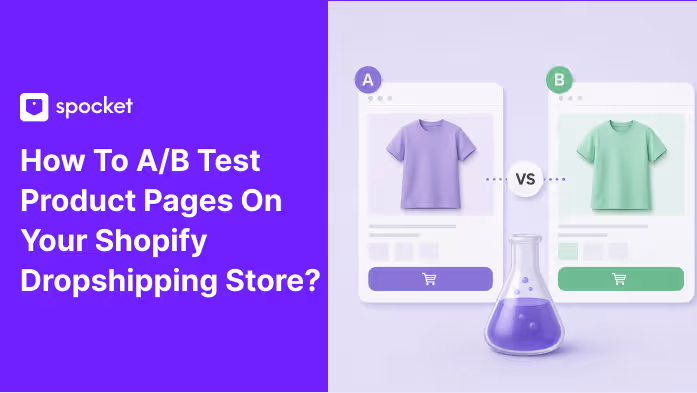
That is where A/B testing helps. When you A/B test Shopify product pages, you compare two versions of a page to see which one performs better based on real customer behavior. Instead of assuming what shoppers like, you test product images, descriptions, CTA buttons, pricing display, shipping information, reviews, and trust signals to find what actually improves conversions.
Even small changes can affect add-to-cart rate and sales. For dropshipping stores, testing works best when your store is built around quality products, reliable suppliers, and clear delivery expectations. Platforms like Spocket help with that foundation by giving merchants access to trusted dropshipping suppliers and products worth optimizing.
What is A/B Testing for Shopify Product Pages?
Before changing product images, pricing, descriptions, or buttons, it is important to understand what A/B testing actually measures. A/B testing shows how shoppers respond to one version of a product page compared to another. It helps you make decisions based on data, not personal preference.
A/B Testing Definition
A/B testing compares two versions of a product page or one specific page element to see which version performs better. Version A is usually your original product page. Version B includes one controlled change, such as a different product image, headline, CTA button, product description, price display, or shipping message.
For example, you may test a standard “Add to Cart” button against a more action-focused button like “Get Yours Today.” If the second version gets more add-to-cart clicks or purchases, it may be the better option.
A/B Testing vs Split Testing vs CRO
A/B testing and split testing are often used in the same way. Both compare different versions of a page to find the stronger performer. CRO, or conversion rate optimization, is the bigger strategy behind it. CRO includes improving your store experience so more visitors become buyers, while A/B testing is one method used to improve conversions.
Why It Matters for Dropshipping Stores
Dropshipping stores often sell products that shoppers can find elsewhere. That means trust, speed, product visuals, copy, pricing, reviews, and shipping clarity matter a lot. A/B testing helps you understand what makes buyers feel confident enough to take action.
Why A/B Testing Product Pages Can Increase Shopify Sales?
Product pages carry most of the buying decision. A shopper may discover your store through an ad, TikTok video, Instagram post, Google search, or product recommendation, but the product page decides whether they trust the offer enough to buy. That is why A/B testing can directly impact revenue, not just clicks.
It Removes Guesswork
Many Shopify merchants change product pages based on what looks good to them. But your opinion is not always the same as your customer’s behavior. A/B testing shows what real shoppers prefer. You can test whether they respond better to lifestyle images, shorter descriptions, stronger CTAs, visible shipping timelines, or trust badges near the buy button.
It Improves Add-to-Cart Rate
If visitors are landing on your product page but not adding products to cart, something may be missing. The product benefits may not be clear. The images may not feel convincing. The CTA may be too weak. Shipping details may be hard to find. A/B testing helps identify which change encourages more shoppers to take the next step.
It Helps You Spend Ads More Efficiently
If you run Meta, TikTok, Pinterest, or Google ads, every visitor costs money. A better product page conversion rate means you can generate more sales from the same traffic. This can lower your customer acquisition cost and make your dropshipping campaigns more profitable.
It Reveals Buyer Objections
Testing shipping copy, return policy placement, product reviews, bundles, FAQs, and descriptions can show what shoppers need before buying. If a clearer shipping message increases sales, delivery uncertainty may have been the problem. If reviews improve conversions, trust may have been the missing piece.What to Do Before You Start A/B Testing?
A/B testing works best when your Shopify store has enough data and a clear reason for each test. If you start changing product pages without understanding the current problem, your results may be confusing or unreliable.
Check Your Current Product Page Performance
Start by reviewing your current product page metrics. Look at your conversion rate, add-to-cart rate, bounce rate, average order value, checkout completion rate, and revenue per visitor. These numbers help you understand where shoppers are dropping off.
For example, if your product page gets traffic but very few add-to-cart clicks, the issue may be your product images, offer, CTA, description, or trust signals. If many shoppers add to cart but do not complete checkout, the problem may be pricing, shipping cost, delivery time, or payment trust.
Make Sure You Have Enough Traffic
A/B testing needs enough visitors to produce useful results. If your store has low traffic, you may not get reliable insights quickly. A few clicks or one extra sale is not enough to prove that one version is better.
For newer stores, start with heatmaps, session recordings, customer feedback, competitor research, and Shopify analytics before running formal tests. These methods can help you spot obvious product page issues even when traffic is limited.
Pick One Goal per Test
Each A/B test should focus on one goal. You may want to increase add-to-cart rate, improve product page conversion rate, increase average order value, reduce bounce rate, improve scroll depth, or increase clicks on your size guide, reviews, or shipping details.
One clear goal makes the result easier to measure.
Create a Clear Hypothesis
A strong A/B test starts with a hypothesis. For example: “If we move shipping information above the add-to-cart button, more shoppers will add the product to cart because delivery expectations are clearer.”
This approach keeps your test focused. Random changes make results harder to interpret, while hypothesis-driven testing helps you learn what shoppers actually need before buying.
How to A/B Test Product Pages on Shopify Step by Step?
This is the most important part of Shopify A/B testing. Once you understand your current product page performance, you need a simple process that helps you test, measure, and improve without changing too many things at once.
Choose the Product Page You Want to Test
Start with a product page that already gets traffic or has strong sales potential. Testing a page with almost no visitors will take too long and may not give you reliable results.
For dropshipping stores, prioritize bestsellers, products receiving paid ad traffic, products with high views but low sales, or products with many add-to-cart actions but few purchases. These pages usually have enough activity to show whether your changes are working.
You can also test products that are important to your business strategy, such as high-margin items, seasonal products, bundles, or trending dropshipping products.
Identify the Problem
Before creating a new version, understand what is going wrong. Your Shopify analytics can give useful clues.
A high bounce rate may suggest that the first impression is weak. The product image, headline, price, or above-the-fold layout may not be convincing enough.
A low add-to-cart rate may suggest a poor offer, unclear product benefits, weak images, missing reviews, or a CTA that does not stand out.
A high checkout drop-off rate may point to pricing, shipping costs, delivery timelines, payment trust, or return policy concerns.
Low scroll depth may suggest that the page is too long, poorly structured, or not engaging enough near the top.
Once you identify the likely issue, it becomes easier to choose what to test.
Choose One Element to Test
Test one major change at a time. This is one of the most important rules of A/B testing.
If you change the hero image, product title, CTA button, pricing display, and reviews section all at once, you will not know which change caused the result. Testing one element helps you understand what actually influenced customer behavior.
Good first tests include product images, CTA button text, product description format, shipping message placement, review placement, discount display, or product title.
Create Version A and Version B
Version A is your current product page. Version B is the test variation.
For example, Version A may use a plain product image, while Version B uses a lifestyle image showing the product in use. Or Version A may have a long paragraph-style product description, while Version B uses shorter benefit-led bullet points.
You can also test different CTA text, such as “Add to Cart” versus “Get Yours Today,” or test whether adding reviews above the fold improves conversions.
The goal is to make one controlled change that directly connects to your hypothesis.
Split the Traffic
Once both versions are ready, divide your traffic between them as evenly as possible. Ideally, half of your visitors should see Version A and the other half should see Version B.
Shopify merchants can use A/B testing apps, landing page builders, or advanced CRO platforms depending on store size, budget, and technical comfort. Many tools allow you to test product pages, landing pages, themes, layouts, and specific page elements without heavy coding.
For smaller stores, a before-and-after test can still offer directional insights, but it is less reliable because traffic quality, ad performance, day of the week, and seasonality can affect results.
Run the Test Long Enough
Do not stop your test after one good day. Early results can be misleading.
Run the test until you have enough traffic, enough conversions, and ideally a full business cycle. This means your test should cover different days of the week and normal buying patterns.
If your store gets high traffic, you may reach useful results faster. If your store has lower traffic, the test may need more time. The key is to avoid making decisions based on a small sample.
Analyze the Results
When reviewing results, focus on business metrics, not vanity metrics. A version that gets more clicks is not always better if it produces fewer purchases or lower revenue per visitor.
Look at the metric tied to your goal. If your goal was to increase add-to-cart rate, compare add-to-cart performance. If your goal was to increase revenue, compare purchase conversion rate, average order value, and revenue per visitor.
Also check whether the winning version caused any negative side effects. For example, a discount message may increase sales but reduce profit. A bold urgency message may increase conversions but also increase refund requests if expectations are unclear.
Apply the Winner and Document the Learning
Once you have a clear winner, apply it to the product page. Then document the test name, hypothesis, test dates, traffic, result, winning version, and key learning.
This helps you build a repeatable CRO process. Over time, you may discover that your shoppers respond better to lifestyle images, shorter descriptions, visible shipping timelines, stronger reviews, or bundle offers.
A/B testing is not a one-time task. It is an ongoing process that helps you improve your Shopify dropshipping store with real customer behavior.
Start your dropshipping business today
Prueba Spocket gratis
What Should You A/B Test on Shopify Product Pages?
The best product page tests focus on elements that influence trust, clarity, urgency, value, and buying confidence. For Shopify dropshipping stores, your goal is to help shoppers understand the product quickly, trust the store, and feel confident enough to add the item to cart.
Product Images and Videos
Product visuals are one of the first things shoppers notice. Test lifestyle images against plain product images, different image orders, product-in-use visuals, close-up detail shots, before-and-after images, and short product videos.
For dropshipping stores, this is especially important because shoppers cannot touch or inspect the product in person. Strong visuals reduce uncertainty and help customers imagine how the product fits into their daily life.
Product Titles
Test simple product titles against benefit-led product titles. A title like “Travel Backpack” may be clear, but “Anti-Theft Travel Backpack with USB Charging Port” communicates more value immediately.
Your product title should help shoppers understand what the product is and why it matters without making the page feel stuffed with keywords.
Product Descriptions
Product descriptions can be tested in several ways. Try long-form descriptions against concise bullet points. You can also test benefit-first copy against feature-first copy.
A strong product description should explain the product’s benefits, use cases, dimensions, materials, care instructions, and what is included in the order. For dropshipping stores, clarity matters because vague descriptions can create hesitation and increase support questions.
Add-to-Cart Button
Your add-to-cart button is one of the most important elements on the page. Test CTA text, placement, visibility, button size, and sticky add-to-cart bars.
For example, you can test “Add to Cart” against “Get Yours Today” or “Buy Now.” You can also test whether a sticky button improves mobile conversions by keeping the buying action visible as shoppers scroll.
Pricing and Discount Display
Pricing presentation can affect perceived value. Test percentage discounts against dollar discounts, compare-at pricing, bundle pricing, free shipping thresholds, and limited-time offer messaging.
For example, some audiences may respond better to “Save 20%,” while others may respond better to “Save $10 Today.” Make sure the discount feels clear and honest, not forced.
Shipping Information
Shipping clarity is especially important for dropshipping stores. Test placing delivery estimates near the price, close to the add-to-cart button, inside an accordion, or in a short shipping note below the CTA.
If customers cannot find shipping details quickly, they may leave before adding the product to cart. Merchants using Spocket can source products from vetted suppliers, including US and EU suppliers, which can support stronger shipping and quality messaging on Shopify product pages.
Reviews and Social Proof
Reviews help reduce doubt. Test review placement, photo reviews, star ratings near the product title, customer testimonials, UGC blocks, and “customers also bought” sections.
You can also test whether showing reviews higher on the page improves conversions compared to keeping them lower near the bottom.
Trust Badges and Return Policy
Trust signals can make new shoppers feel safer. Test secure checkout badges, money-back guarantee placement, return policy summaries, customer support messaging, and payment icons.
The goal is not to overcrowd the page. The goal is to answer trust-related questions before they stop someone from buying.
Product Bundles and Upsells
Bundles and upsells can increase average order value. Test offers like “Buy 2, Save 10%,” frequently bought together, product bundles, variant bundles, and complementary product recommendations.
For dropshipping stores, this works best when the products naturally fit together. A forced upsell can feel distracting, while a relevant bundle can make the offer more useful.
Page Layout
Finally, test your overall product page layout. Try short pages against longer pages, accordion descriptions against open sections, reviews above versus below product details, and sticky CTA buttons against standard CTAs.
The best layout is the one that helps shoppers find answers quickly and move toward purchase with less friction.
Best Shopify A/B Testing Tools for Product Pages
The right A/B testing tool depends on your store’s traffic, technical skill, budget, and test complexity. A new dropshipping store may only need simple no-code tools, while a larger Shopify store may need deeper experimentation and analytics features.
Shopify A/B Testing Apps
Shopify A/B testing apps are a good starting point for merchants who want no-code or low-code testing. These apps can help you test product pages, themes, layouts, pricing, buttons, and page elements without needing a developer for every experiment.
They are useful for small and mid-sized stores that want to test faster and make decisions based on store data.
Page Builders with A/B Testing
Page builders with A/B testing features are helpful if you want more control over product page design. Tools like Shogun are often used by Shopify merchants for building and testing landing pages or product pages.
These tools are useful when you want to test different layouts, content blocks, product sections, and page structures without editing your Shopify theme manually.
CRO and Experimentation Platforms
Larger Shopify stores may need advanced CRO and experimentation platforms. These tools can support deeper segmentation, personalization, audience targeting, and detailed reporting.
For example, you may want to test different product page experiences for mobile users, returning visitors, paid ad traffic, or shoppers from a specific location.
Analytics and Behavior Tools
Before running a test, use analytics and behavior tools to find what needs improvement. Shopify Analytics, GA4, heatmaps, and session recordings can show where shoppers click, scroll, pause, or leave.
These insights help you choose better tests. Instead of guessing what to change, you can use customer behavior to decide whether to test images, CTAs, shipping messages, reviews, pricing, or page layout.
Key Metrics to Track During Shopify Product Page A/B Tests
A winning A/B test should improve the metric that matters to your business, not just surface-level engagement. More clicks, longer time on page, or more scrolling can be useful signals, but they do not always mean more sales.
Primary Metrics
Start with the metrics closest to revenue. Product page conversion rate shows how many visitors buy after landing on the page. Add-to-cart rate shows whether your product page is convincing enough to move shoppers forward.
Checkout initiation rate helps you understand whether shoppers are serious after adding the product to cart. Purchase conversion rate shows the final buying result. Revenue per visitor helps you measure how much money each visitor brings in. Average order value shows whether bundles, upsells, or pricing changes increase the value of each order.
Secondary Metrics
Secondary metrics help explain customer behavior. Bounce rate shows whether visitors leave quickly. Scroll depth shows how much of the product page they view. Time on page can reveal whether shoppers are engaging with the content.
You can also track CTA click-through rate, variant selection rate, review interaction rate, image gallery clicks, size guide clicks, and shipping information clicks. These metrics help you understand how shoppers interact with different page elements.
Guardrail Metrics
Some tests may increase conversions but create other problems. For example, an aggressive discount may increase sales but reduce profit. A strong urgency message may increase purchases but also increase refund requests if expectations are unclear.
Always check profit, average order value, refund rate, customer complaints, and delivery expectations before choosing a winner.
Common A/B Testing Mistakes Shopify Dropshippers Should Avoid
A/B testing can mislead store owners when tests are rushed, poorly planned, or measured incorrectly. To get useful results, every test needs a clear purpose, enough data, and the right success metric.
Testing Too Many Changes at Once
If you change the product image, CTA button, price display, headline, and description in the same test, you will not know what caused the result. Test one major change at a time so you can clearly understand what worked.
Ending Tests Too Early
Early results can be misleading. One strong sales day does not prove that a variation is better. Wait until the test has enough traffic, enough conversions, and enough time to reflect normal customer behavior.
Testing Without a Hypothesis
Random testing wastes time. Every test should start with a specific problem and expected outcome. For example, if shoppers are not adding products to cart, you may test clearer product benefits or stronger shipping information.
Ignoring Mobile Users
Many dropshipping stores get mobile-heavy traffic from Meta, TikTok, Instagram, and Pinterest ads. If your product page looks good on desktop but feels crowded or confusing on mobile, your conversions may suffer. Always review and test mobile first.
Copying Competitors Without Testing
A competitor’s layout may not work for your product, audience, price point, traffic source, or offer. Use competitors for inspiration, but rely on your own data before making permanent changes.
Optimizing Weak Products Instead of Replacing Them
CRO can improve a good product page, but it cannot fully fix a weak product. If the product has poor photos, low perceived value, weak margins, slow delivery, or limited demand, testing buttons and headlines will only help so much.
This is where Spocket can make a difference. By sourcing quality dropshipping products from reliable suppliers, merchants can start with products worth testing before spending time optimizing the page.
A Simple A/B Testing Checklist for Shopify Product Pages
Use this checklist whenever you want to test a Shopify product page. It keeps the process simple, focused, and easier to repeat.
- Choose one product page to test
- Review current product page metrics
- Identify one clear problem
- Write one hypothesis
- Select one variable to test
- Create Version B with one controlled change
- Split traffic between Version A and Version B
- Run the test long enough to collect useful data
- Track primary and secondary metrics
- Check guardrail metrics like profit, refunds, and AOV
- Apply the winning version
- Document the result and key learning
- Plan the next test based on what you learned
This checklist helps you avoid random changes and build a repeatable Shopify product page optimization process.
How Spocket Helps You Build Product Pages Worth Testing
Product page optimization works best when the product itself is strong. You can improve images, descriptions, CTAs, pricing displays, and trust badges, but shoppers still need to believe the product is worth buying.
Spocket helps Shopify dropshippers build that foundation by giving them access to high-quality products from vetted suppliers, including US and EU options. This can support stronger product pages with better product quality, clearer shipping expectations, and a more reliable customer experience.
When your products are backed by dependable suppliers, your A/B tests become more meaningful. You are not trying to hide weak delivery times or poor product value. You are improving how a strong offer is presented.
Before you test headlines, buttons, and layouts, make sure the product is worth optimizing. Explore winning dropshipping products on Spocket and build Shopify product pages that are easier to trust, test, and scale.
Conclusion
A/B testing Shopify product pages helps dropshippers improve conversions through data-backed decisions instead of guesswork. By testing one element at a time, tracking the right metrics, and learning from real customer behavior, you can improve add-to-cart rate, product page conversion rate, and revenue per visitor.
The strongest results come when testing is paired with quality products and reliable suppliers. Start with products shoppers actually want, use Spocket to source from trusted dropshipping suppliers, and keep optimizing each product page with focused, measurable tests.
A/B Testing of Shopify Product Pages FAQs
What is A/B testing for Shopify product pages?
A/B testing for Shopify product pages is the process of comparing two versions of a product page to see which one performs better. You can test images, descriptions, CTA buttons, shipping information, reviews, pricing displays, or layouts.
How do I A/B test a product page on Shopify?
Choose a product page, review its current performance, create a hypothesis, change one element, split traffic between the original and new version, then compare results using metrics like add-to-cart rate, conversion rate, and revenue per visitor.
What should I A/B test first on a Shopify product page?
Start with high-impact elements such as the main product image, add-to-cart button, product description, price display, shipping message, reviews, and trust badges. These elements usually influence buying decisions directly.
Can I A/B test Shopify product pages without coding?
Yes. Many Shopify A/B testing apps and page builders allow no-code testing for product pages, themes, landing pages, and layouts. The right tool depends on your traffic, budget, and testing needs.
How long should a Shopify A/B test run?
Una prueba A/B de Shopify debe ejecutarse el tiempo suficiente para recopilar tráfico y conversiones fiables. Evita detener una prueba después de uno o dos días. Idealmente, deja que la prueba cubra diferentes días de la semana, patrones de tráfico y ciclos de comportamiento del comprador.
¿Qué métricas importan más en las pruebas A/B de páginas de producto?
Las métricas más importantes son la tasa de conversión de la página de producto, la tasa de adición al carrito, la tasa de inicio de pago, la tasa de conversión de compra, los ingresos por visitante y el valor medio del pedido. Evita elegir un ganador basándote solo en los clics.
¿Es útil la prueba A/B para tiendas de dropshipping?
Sí. Las tiendas de dropshipping a menudo compiten en confianza, presentación del producto, claridad del envío y valor percibido. Las pruebas A/B ayudan a identificar qué elementos de la página de producto convencen a los compradores para que compren.
¿Puede la prueba A/B solucionar un mal producto de dropshipping?
No siempre. Las pruebas A/B pueden mejorar la presentación y reducir la fricción, pero no pueden solucionar completamente la mala calidad del producto, la baja demanda, las imágenes deficientes, los márgenes bajos o los envíos poco fiables. Empieza con mejores productos de proveedores fiables como Spocket, y luego optimiza la página.


Launch your dropshipping business now!
Start free trial


Blogs relacionados
Directorio de proveedores de dropshipping: dónde encontrar proveedores verificados
Explora nuestro directorio de proveedores de dropshipping verificados en EE. UU. y la UE, con información sobre nichos, tiempos de envío y precios. Comienza tu prueba gratuita hoy mismo.


Cómo negociar con proveedores de dropshipping: 9 tácticas que realmente funcionan
Aprende a negociar precios, cantidades mínimas de pedido (MOQ) y condiciones de pago con tus proveedores de dropshipping. Utiliza tácticas probadas y plantillas de correo para aumentar tus márgenes. Prueba Spocket gratis.

Los mejores proveedores de dropshipping de ropa: La guía 2026
Compara los mejores proveedores de dropshipping de ropa para 2026 (velocidad de envío en EE. UU./UE, precios y calidad del producto) y encuentra el socio ideal para lanzar tu tienda.