Best Abacus AI Alternatives: Top Tools Compared
Discover the best abacus ai alternatives with features, pricing, and use cases. Compare top Abacus AI competitors and choose the right AI tool for your needs.
.avif)

If you’ve been exploring abacus ai alternatives, you’re not alone. Abacus AI is a powerful platform for building and deploying AI models, especially for businesses that want automation, machine learning workflows, and predictive analytics in one place. But as AI tools evolve quickly, many companies are now comparing Abacus AI with other platforms that offer better pricing, easier setup, stronger integrations, or more specialized features.
In reality, choosing the right AI platform isn’t just about picking the “most popular” option. It’s about finding a solution that fits your team’s workflow. Some teams want a full-featured MLOps platform with enterprise-grade governance. Others want a simpler no-code AutoML tool. And many modern companies are now prioritizing LLM-based tools that support generative AI, AI agents, and advanced automation.
That’s why this guide covers the top Abacus AI competitors worth considering in 2026. Each tool in this list has been selected based on real-world value — including scalability, ease of use, AI capabilities, deployment support, and ecosystem integrations.
What Is Abacus AI and Why Look for Alternatives
If you’re searching for abacus ai alternatives, you’re likely trying to answer one simple question: Is Abacus AI the best AI platform for my needs, or is there a better fit?
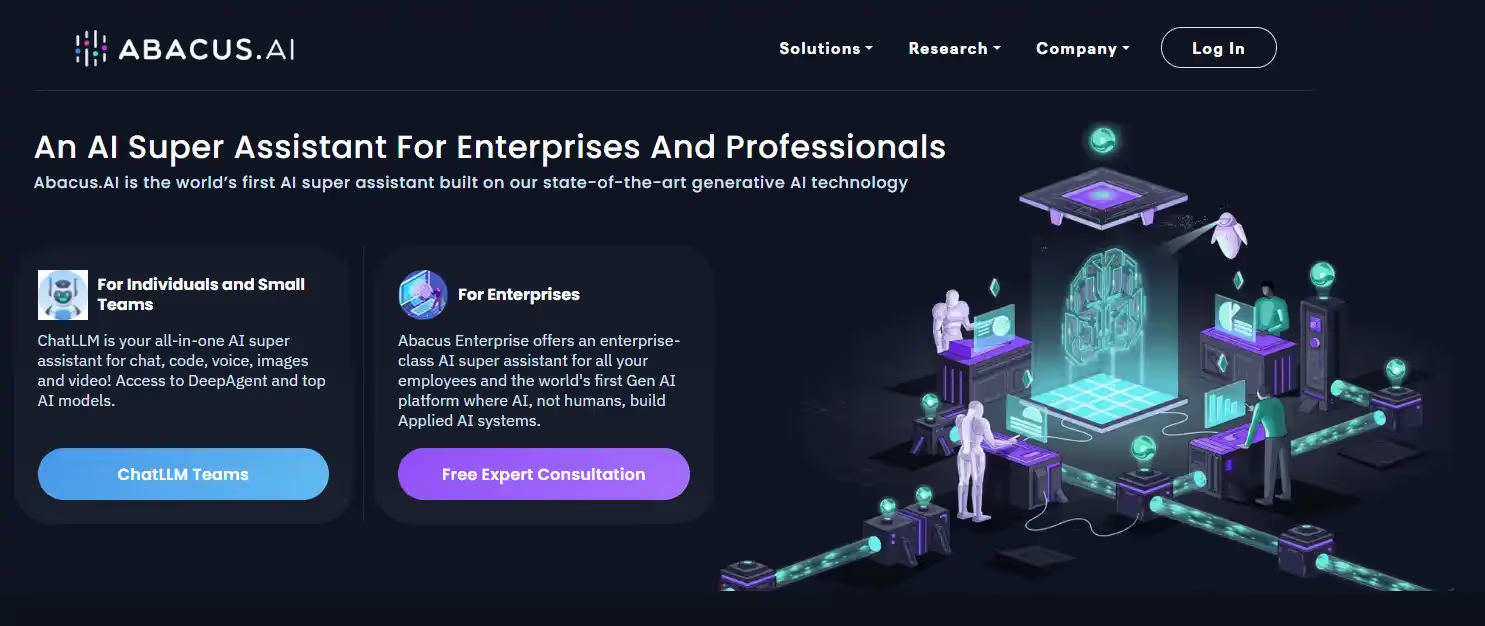
Abacus AI (Abacus.ai) is widely known as an end-to-end AI and machine learning platform designed to help businesses build, deploy, and scale ML models with less manual effort. It combines automated workflows, model training, and predictive analytics into one system — which is why many teams shortlist it when they’re looking for an all-in-one AI solution.
But as the AI tooling landscape has matured, companies are comparing Abacus.ai with more specialized or flexible platforms — including cloud-native MLOps tools (like Vertex AI or SageMaker), no-code AutoML platforms (like DataRobot), and open-source stacks (like Kubeflow + MLflow). This is where abacus ai competitors become important — because the “best” tool depends heavily on your team size, budget, data maturity, and deployment needs.
What Abacus AI Does Best
Abacus.ai is designed to reduce the time and complexity of building production-ready ML systems. Instead of stitching together multiple tools, it aims to provide a single platform that supports core ML workflows from start to finish.
Here are the three areas where Abacus AI typically shines:
End-to-End ML Workflows
One of Abacus AI’s strongest selling points is the ability to manage a full machine learning lifecycle in one environment. That includes data preparation, model selection, training, and deployment workflows — all built to help teams move faster without building an MLOps setup from scratch.
For many companies, this “everything-in-one-place” approach reduces tool sprawl and simplifies implementation — especially when they don’t want to combine separate platforms for data pipelines, training, and deployment.
Model Training + Deployment
Abacus.ai is often chosen because it supports both training and deployment in a guided workflow, enabling teams to move from experimentation to production more easily. Users also highlight that it provides modern neural network implementations “out of the box,” which makes it appealing for teams working across text, image, and audio use cases.
In simpler terms, Abacus.ai tries to remove the friction between “building the model” and “getting it live.”
Predictive Analytics
Abacus AI is especially useful for predictive analytics and business forecasting use cases — such as churn prediction, revenue forecasting, personalization, and recommendation systems. Review feedback often points to its ability to generate forecasts with minimal effort and embed AI into existing applications.
This makes it a strong option for teams looking for AI that directly impacts business decisions — not just experimentation.
Why Users Search for Abacus AI Alternatives
Even when a platform is strong, it might not be right for every team. Many buyers exploring alternatives to Abacus AI are not looking for a “better tool overall,” but a tool that fits their workflow more naturally — whether that means lower cost, simpler onboarding, or deeper integration with their existing tech stack.
Here are the most common reasons people compare Abacus.ai with other abacus ai competitors, based on patterns seen across review platforms and pricing breakdowns:
Pricing Can Feel Unpredictable
Pricing is one of the biggest triggers behind searches for abacus ai alternatives. While the base plan might look attractive, several pricing analyses point out that Abacus AI can use a credit-based system that may feel hard to estimate — which can lead to unpredictable cost scaling as usage increases.
For businesses managing strict budgets, this lack of clarity often pushes them toward competitors with simpler consumption models or transparent enterprise pricing.
Steep Complexity and Learning Curve
Abacus.ai offers advanced functionality — but that often comes with a learning curve, especially for teams without strong ML engineering support. This is common with many end-to-end platforms: the more features they provide, the longer it may take for teams to fully adopt them.
Companies that want “quick wins” may prefer low-code or guided AutoML alternatives such as DataRobot or RapidMiner.
Limited Integrations Compared to Cloud-Native Stacks
Another reason users explore tools like Abacus AI is integration depth. Many companies already run their infrastructure on AWS, Google Cloud, or Azure. In those cases, cloud-native alternatives often win because they integrate directly with existing identity systems, data warehouses, pipelines, and security tools.
This makes platforms like Vertex AI, SageMaker, and Azure ML common comparisons — because they reduce integration friction and improve enterprise governance.
Need for More Specialized Tools
Abacus.ai is built as an all-in-one platform. But not every team wants a “one tool for everything.” Many ML teams prefer best-in-class tools for:
- experiment tracking
- pipeline orchestration
- deployment automation
- model monitoring
- LLM and GenAI workflows
That’s why the market includes both full-suite platforms and modular tools. If a team only needs deployment or monitoring, they may choose lighter alternatives rather than adopting a full ecosystem.
Preference for Open-Source or Modular ML Stacks
A growing number of engineering-led teams are moving toward open-source ML stacks because they want:
- more control over deployment environments
- no vendor lock-in
- portability across clouds
- predictable infrastructure costs
This is where options like Kubeflow, MLflow, and other modular MLOps tools become serious Abacus AI competitors — especially for teams building large-scale ML infrastructure in Kubernetes.
Top 10 Abacus AI Alternatives
The best abacus ai alternatives aren’t always the most expensive or most popular — they’re the tools that align with your specific AI workflow. Below, we’ve compared the top Abacus AI competitors based on ease of use, integrations, scalability, deployment options, and pricing flexibility. Whether you want a full enterprise AI platform or a modular stack, these alternatives to Abacus AI are some of the strongest options for 2026.
1. Google Vertex AI
Best for: Enterprise ML teams using Google Cloud
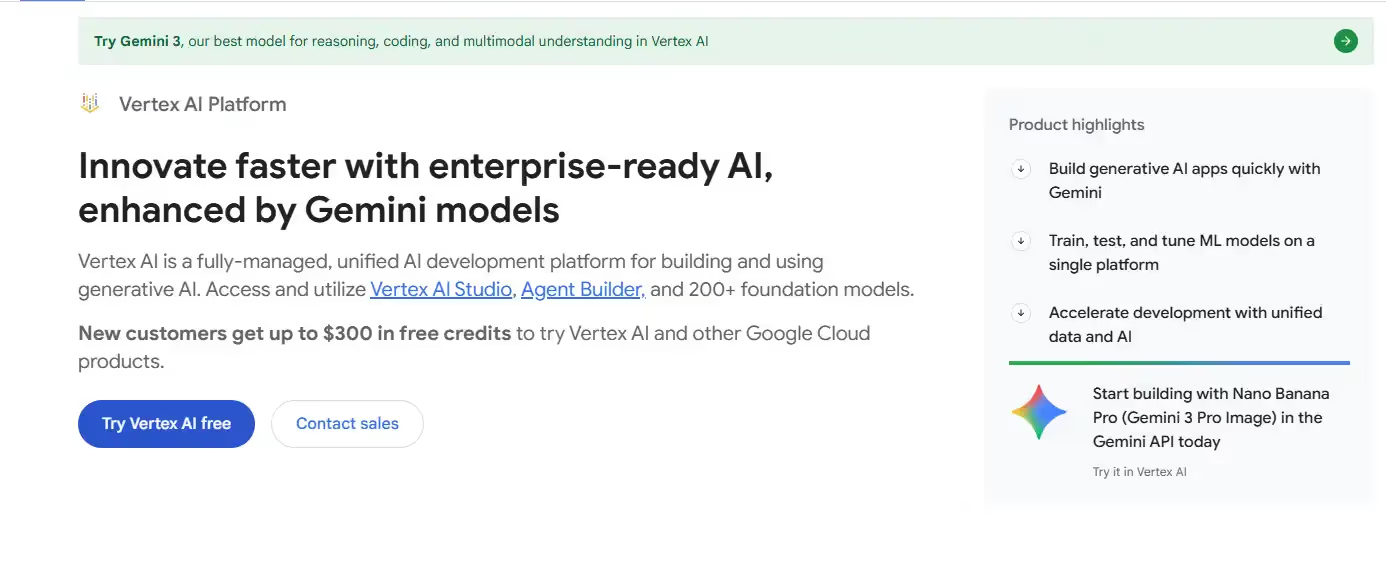
Google Vertex AI is a powerful managed ML platform that helps businesses train, deploy, and monitor machine learning models at scale. It’s ideal for teams that want a structured MLOps pipeline with tight integration across the GCP ecosystem.
Key strengths
- End-to-end ML lifecycle management
- Works seamlessly with BigQuery, Dataflow, and GCP services
- Strong governance, security, and model monitoring tools
Why it’s a strong Abacus AI alternative: Vertex AI is a top choice if you want enterprise-grade model deployment and cloud-native MLOps with deep automation and scalability.
2. Amazon SageMaker
Best for: Full ML lifecycle workflows on AWS
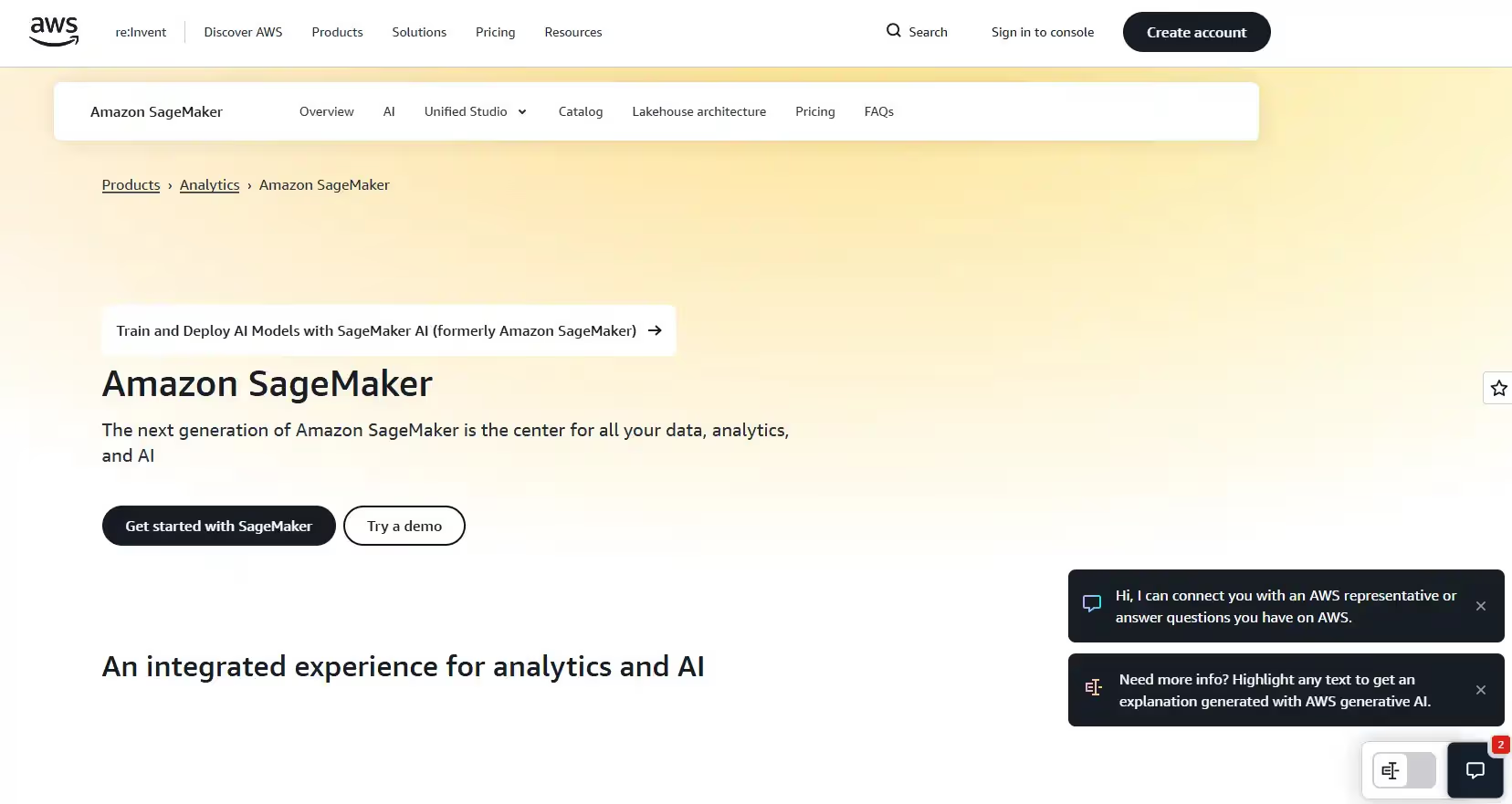
Amazon SageMaker is one of the most complete Abacus AI competitors for building, training, deploying, and scaling ML models. It’s especially valuable for businesses already deeply invested in AWS infrastructure.
Key strengths
- Supports notebooks, AutoML, training, and deployment
- Built-in model monitoring and model registry tools
- Highly customizable workflows for ML engineers
Why it’s a strong Abacus AI alternative: SageMaker provides everything Abacus AI offers — but with greater infrastructure flexibility and control for engineering teams.
3. Databricks Machine Learning
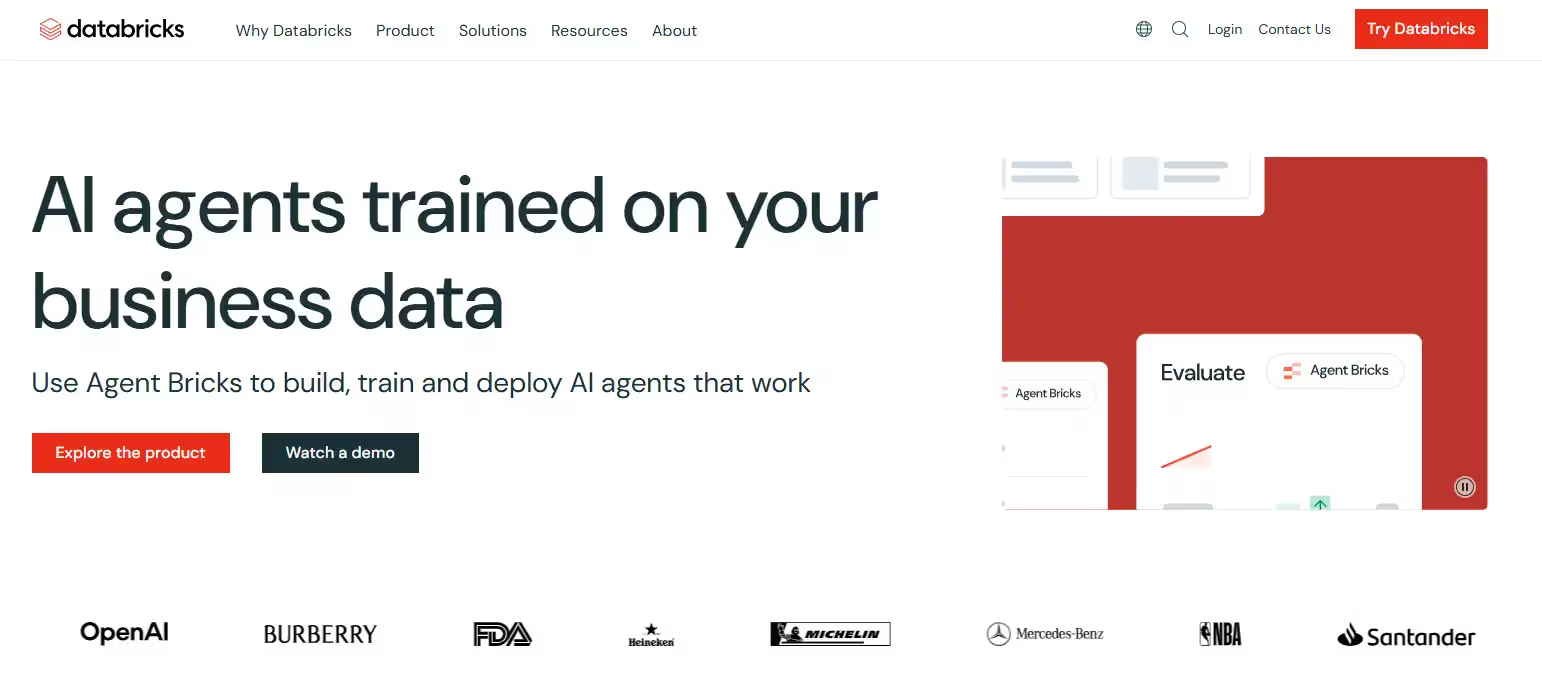
Best for: Teams that want data + ML + AI in one workflow
Databricks ML is built for organizations that want machine learning tightly connected to large-scale data engineering. It’s best known for collaboration, scalable pipelines, and fast experimentation using Spark-powered workloads.
Key strengths
- Unified platform for data pipelines + ML + analytics
- Strong collaboration and notebook workflows
- Supports production ML and LLM workflows at scale
Why it’s a strong Abacus AI alternative: If your ML workflows depend heavily on big data, Databricks is often more suitable than Abacus AI because it combines ETL + modeling + deployment under one platform.
4. DataRobot
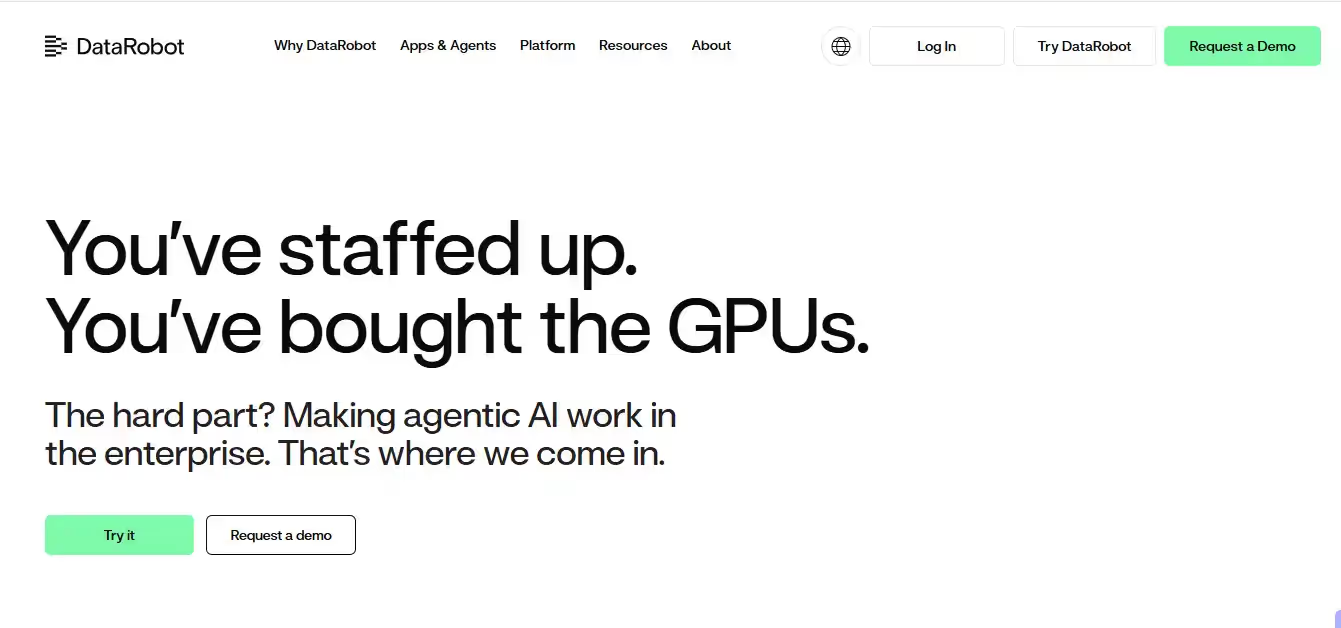
Best for: AutoML and business-driven predictive analytics
DataRobot is a leading AutoML platform that helps businesses build predictive models quickly, with strong explainability and automation. It’s ideal for teams that want speed and results without requiring deep ML engineering expertise.
Key strengths
- Fast AutoML training and model selection
- Strong explainability, governance, and insights
- Designed for business analysts and ML teams
Why it’s a strong Abacus AI alternative: DataRobot is perfect if you want a more guided, automation-heavy ML experience — especially for predictive analytics and enterprise decision-making.
5. H2O.ai
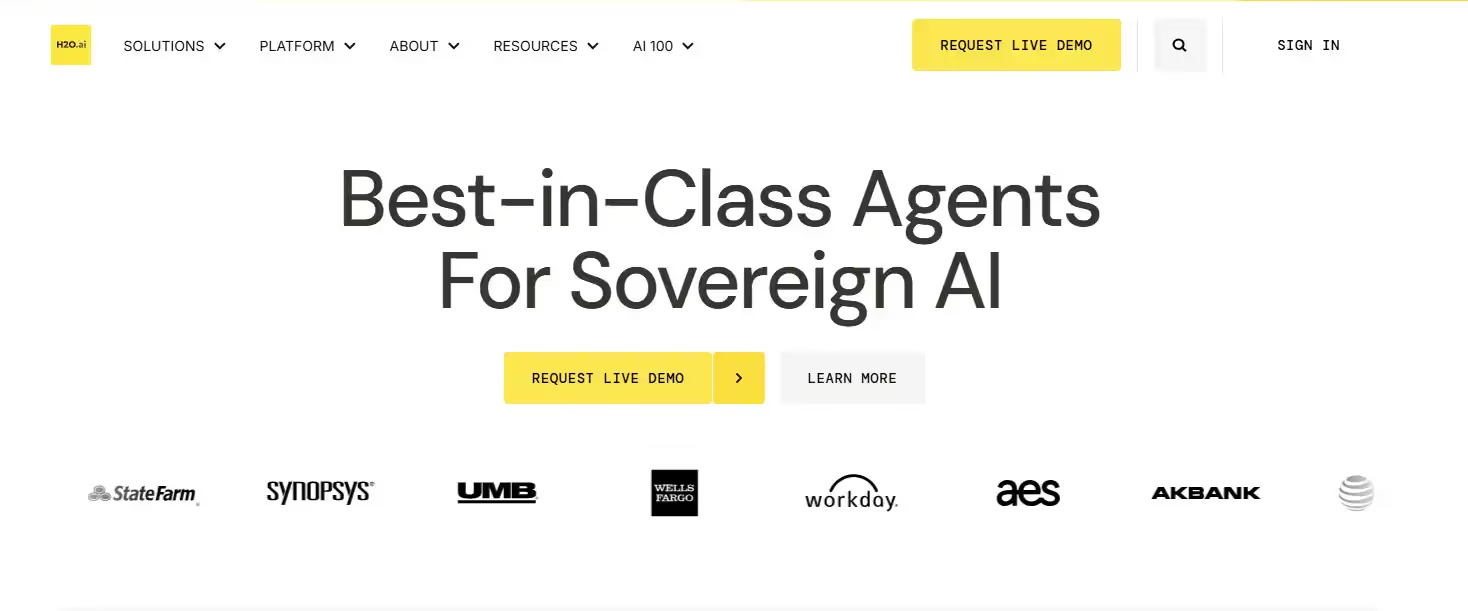
Best for: Open-source ML flexibility and scalable AutoML
H2O.ai offers both open-source tools and enterprise ML solutions, making it a strong alternative to Abacus AI for teams that want control, customization, and cost efficiency without locking into one vendor ecosystem.
Key strengths
- Popular open-source AutoML platform
- High-speed model training and optimization
- Strong ecosystem for model interpretability
Why it’s a strong Abacus AI alternative: If you want the benefits of Abacus AI but prefer open-source flexibility (and lower cost), H2O.ai is one of the best alternatives available.
6. Azure Machine Learning
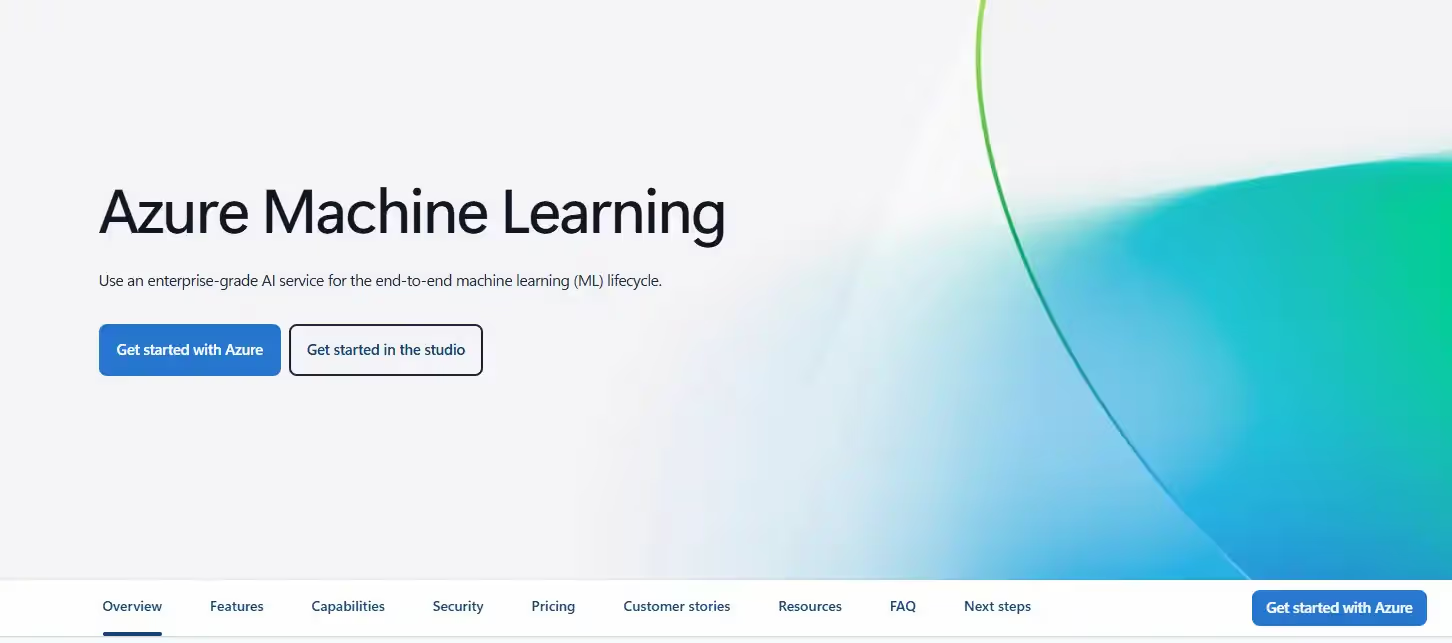
Best for: Microsoft ecosystem and regulated enterprises
Azure ML is designed for businesses that need secure and scalable ML workflows, especially those already using Microsoft products like Azure, Power BI, Microsoft Fabric, and enterprise security tools.
Key strengths
- Strong MLOps pipelines and deployment workflows
- Enterprise governance and security controls
- Seamless integration with Microsoft stack
Why it’s a strong Abacus AI alternative: Azure ML is a strong option when compliance, governance, and Microsoft-first infrastructure matter more than speed or simplicity.
7. Kubeflow
Best for: Open-source MLOps on Kubernetes
Kubeflow is an open-source machine learning toolkit designed for Kubernetes. It’s best suited for engineering-first teams who want full control over ML pipelines, training infrastructure, and deployment environments.
Key strengths
- Kubernetes-native ML pipelines
- Highly customizable and infrastructure-controlled
- Works well for large-scale ML deployments
Why it’s a strong Abacus AI alternative: If your team wants full ownership of infrastructure and prefers open-source MLOps over managed platforms, Kubeflow is a top Abacus AI competitor.
8. Dataiku
Best for: Enterprise AI teams that need collaboration + governance
Dataiku is a leading enterprise AI and analytics platform built for collaboration between data scientists, analysts, and business stakeholders. It’s especially strong for organizations that need controlled workflows, shared projects, and responsible AI practices.
Key strengths
- Visual workflows + coding flexibility (Python/R supported)
- Built-in MLOps deployment, monitoring, and governance
- Excellent for cross-functional enterprise teams
Why it’s a strong Abacus AI alternative: If your company needs a platform that blends business usability with deep ML development and compliance controls, Dataiku is one of the strongest Abacus AI competitors.
9. RapidMiner
Best for: No-code / low-code predictive analytics and automation
RapidMiner is a popular low-code data science platform that makes building predictive models easier for teams that don’t want complex infrastructure. It focuses heavily on drag-and-drop modeling, automated data prep, and business-friendly analytics pipelines.
Key strengths
- Easy-to-use visual modeling interface
- Strong automation for data prep + predictive workflows
- Great for fast experimentation without heavy ML engineering
Why it’s a strong Abacus AI alternative: RapidMiner is ideal if you want Abacus AI-like predictive capabilities but with a simpler UI, shorter learning curve, and business analyst-friendly approach.
10. MLflow
Best for: Open-source model tracking and experiment management
MLflow is an open-source MLOps framework used to track experiments, manage model lifecycle, and deploy models across environments. It’s often used inside engineering-heavy ML stacks — especially for teams that want flexibility without vendor lock-in.
Key strengths
- Experiment tracking + model registry
- Works with any ML library and most clouds
- Lightweight and highly customizable
Why it’s a strong Abacus AI alternative: If you don’t want an all-in-one platform and prefer building your own ML stack, MLflow is a strong alternative to Abacus AI for tracking models and making deployment workflows smoother.
What Makes a Tool a True Abacus AI Competitor
When people search for abacus ai alternatives, they often end up with a long list of tools that sound similar but don’t actually compete with Abacus.ai in a meaningful way. Some platforms focus only on data preparation. Others only handle AutoML. And a few are strong in analytics but weak in deployment.
A true Abacus AI competitor should cover the same core problem Abacus.ai solves: helping businesses build, deploy, and scale machine learning models efficiently — without turning AI projects into long engineering-heavy workflows.
To make your decision easier, here’s how to identify tools that genuinely qualify as Abacus AI competitors, and not just “AI tools” listed on random alternative pages.
The Core Capabilities a Real Abacus AI Competitor Must Offer
1. End-to-End ML Lifecycle Support (Not Just One Feature)
The most important benchmark for any platform claiming to be an alternative to Abacus.ai is whether it supports the full ML lifecycle. That includes:
- data ingestion and preparation
- model training and experimentation
- deployment and hosting
- monitoring and iteration
If a tool only offers one part (like model tracking or data labeling), it can still be useful — but it’s not really competing with Abacus.ai as a platform.
What to look for: a solution that can take you from raw data to a production-ready model with minimal friction.
2. Production-Grade Deployment Options
Many AI tools help you train models — but struggle when it’s time to deploy them in production.
A strong competitor should support real deployment use cases such as:
- API-based model serving
- batch predictions
- real-time predictions
- edge deployment (if relevant)
- CI/CD integration for ML pipelines
Why this matters: Abacus.ai is often used because teams want fast, reliable deployment — so your alternative must match or exceed this ability.
3. Strong Integrations With Modern Data and Cloud Stacks
One common reason users compare Abacus.ai with other tools like Abacus AI is ecosystem fit.
A true alternative should integrate smoothly with:
- cloud platforms (AWS, Azure, GCP)
- data warehouses (BigQuery, Snowflake, Redshift)
- orchestration tools (Airflow, Prefect)
- BI tools (Power BI, Looker, Tableau)
- identity and security systems (SSO, IAM)
What to look for: a platform that reduces integration effort instead of creating more work for your team.
4. MLOps Features That Scale
A real Abacus AI competitor should include MLOps features that help models stay reliable in the real world, such as:
- model monitoring
- drift detection
- version control / model registry
- experiment tracking
- audit logs and governance
Why this matters: building a model is only half the job. Scaling AI means keeping it stable, trackable, and trustworthy over time.
5. Ease of Use for Your Team Type
This is where many companies get stuck. A tool can be powerful, but if your team can’t use it efficiently, adoption fails.
A true Abacus AI competitor should match your team’s profile:
- engineering-led teams may prefer modular tools and open-source stacks
- business and analytics teams may prefer AutoML and low-code platforms
- enterprise teams often need governance, security, and compliance
What to look for: the right balance between usability and flexibility.
6. Transparent Pricing and Predictable Scaling
Pricing plays a major role in why people search for abacus ai alternatives in the first place.
A true competitor should offer:
- predictable pricing tiers
- clear cost scaling based on usage
- enterprise pricing transparency (when possible)
- flexible plans (startup vs enterprise)
Why it matters: AI models often scale quickly. If pricing scales unpredictably, it becomes difficult to budget and justify ROI.
When You Should Switch
Even if Abacus.ai is a strong platform, switching can be the right move when your business or AI needs evolve. Here are the clearest signs that it’s time to seriously explore alternatives to Abacus AI.
1. Budget Constraints and Rising Costs
If your AI usage is increasing — more models, more users, more predictions — costs can grow quickly. This often leads teams to explore Abacus AI competitors that offer:
- more predictable pricing
- open-source options that reduce platform fees
- cloud-native tools that fit their existing cloud spend
Switch when: you’re paying for features you don’t use or you can’t forecast monthly costs reliably.
Best alternatives for budget-focused teams: open-source stacks (Kubeflow + MLflow), H2O.ai (open-source), or modular MLOps tools.
2. Performance Needs and Scalability Limitations
As AI systems mature, performance becomes a bigger concern — not just model accuracy, but also infrastructure speed, latency, and scaling.
You may need:
- faster training workloads
- better GPU scaling
- distributed training capabilities
- faster inference for real-time predictions
Switch when: your AI platform struggles with speed, reliability, or scaling under real-world demands.
Best alternatives for performance-driven teams: Google Vertex AI, AWS SageMaker, or Databricks ML for scalable workloads.
3. Compliance Requirements and Stronger Governance
If you work in regulated industries like fintech, healthcare, enterprise SaaS, or government, compliance becomes non-negotiable.
You may require:
- audit logs and access controls
- governance workflows
- data residency controls
- model explainability and compliance documentation
- enterprise SSO and security standards
Switch when: your platform doesn’t meet internal compliance standards or slows down security approvals.
Best alternatives for compliance-heavy teams: Azure Machine Learning, Dataiku, or enterprise cloud-native ML stacks.
4. Faster Deployment Expectations
One of the biggest reasons companies switch from one AI platform to another is deployment speed. If your team feels stuck between experimentation and production, it’s a major red flag.
Switching makes sense if:
- deployment workflows are slow or unreliable
- the platform lacks automation for CI/CD
- monitoring and versioning feels manual
- you struggle to roll out improvements quickly
Switch when: your deployment pipeline is slowing down product releases or business impact.
Best alternatives for fast deployment: AWS SageMaker, Vertex AI, or MLflow for engineering-led pipelines.
Final Verdict Which Abacus AI Alternative Should You Choose
Choosing the best abacus ai alternatives depends on your team and goals. If you’re a startup team, go with Google Vertex AI or Databricks ML for speed and scalability. For an enterprise ML team, Azure Machine Learning or Dataiku offers stronger governance and compliance. If you’re a non-technical team, DataRobot is the easiest option for fast AutoML results. And for an engineering-led team, Kubeflow + MLflow gives maximum flexibility with an open-source MLOps stack.
Want to turn AI insights into real business growth? Browse more practical AI and ecommerce guides on Spocket’s blog to level up your strategy.
Start your dropshipping business today
Abacus AI Alternatives FAQs
What are the best Abacus AI alternatives?
The best abacus ai alternatives include Google Vertex AI, AWS SageMaker, Databricks ML, Azure Machine Learning, DataRobot, Dataiku, and H2O.ai. These tools offer strong model training, deployment, MLOps workflows, and enterprise-grade AI automation.
What is the best free alternative to Abacus AI?
The best free alternative to Abacus AI is MLflow, especially for experiment tracking and model lifecycle management. You can also use Kubeflow for open-source MLOps if your team wants full control over pipelines and deployments.
Which Abacus AI competitor is best for enterprise teams?
For enterprise teams, top Abacus AI competitors include Azure Machine Learning, Google Vertex AI, and Dataiku. They offer strong security, governance, compliance support, scalable infrastructure, and seamless integration with cloud ecosystems and enterprise data tools.
Is Abacus AI an MLOps tool or AutoML tool?
Abacus.ai is best seen as a hybrid platform. It combines AutoML features for faster model building with MLOps capabilities for deployment, monitoring, and lifecycle management—making it useful for teams that want an all-in-one AI development platform.
Can I use open-source tools instead of Abacus AI?
Yes, you can use open-source tools instead of Abacus.ai. Popular options include Kubeflow for ML pipelines and deployment, MLflow for experiment tracking, and H2O.ai for AutoML. This approach gives flexibility and avoids vendor lock-in.
Is Abacus.AI better than ChatGPT?
Abacus.ai and ChatGPT serve different purposes. Abacus.ai is built for training and deploying custom machine learning models, while ChatGPT is a conversational AI tool for text generation, support, and productivity. “Better” depends on your use case.
Is Abacus.AI free or paid?
Abacus.ai is primarily a paid platform with tiered pricing based on usage and features. While it may offer trials or limited access for testing, most business-grade capabilities like deployment, monitoring, and scaling require a paid plan.


Launch your dropshipping business now!
Start free trial


Blogs relacionados
Cómo configurar el procesamiento automático de pedidos con Spocket y Shopify
Configura un flujo de trabajo de dropshipping de Shopify más fluido con Spocket conectando tu tienda, importando productos, procesando pedidos, sincronizando el seguimiento y reduciendo las tareas manuales de cumplimiento.


Cómo abrir una cuenta bancaria de empresa para tu tienda de dropshipping
Organiza tus finanzas de dropshipping de la manera adecuada con una cuenta bancaria empresarial dedicada, diseñada para pagos, pagos a proveedores, impuestos y el crecimiento a largo plazo de tu tienda.

Spocket vs Dropified: ¿Qué herramienta es mejor para la escalabilidad multitienda?
Compara Spocket y Dropified para dropshipping multitienda, calidad de proveedores, automatización, gestión de pedidos, aprovisionamiento de productos y escalabilidad en plataformas de comercio electrónico.