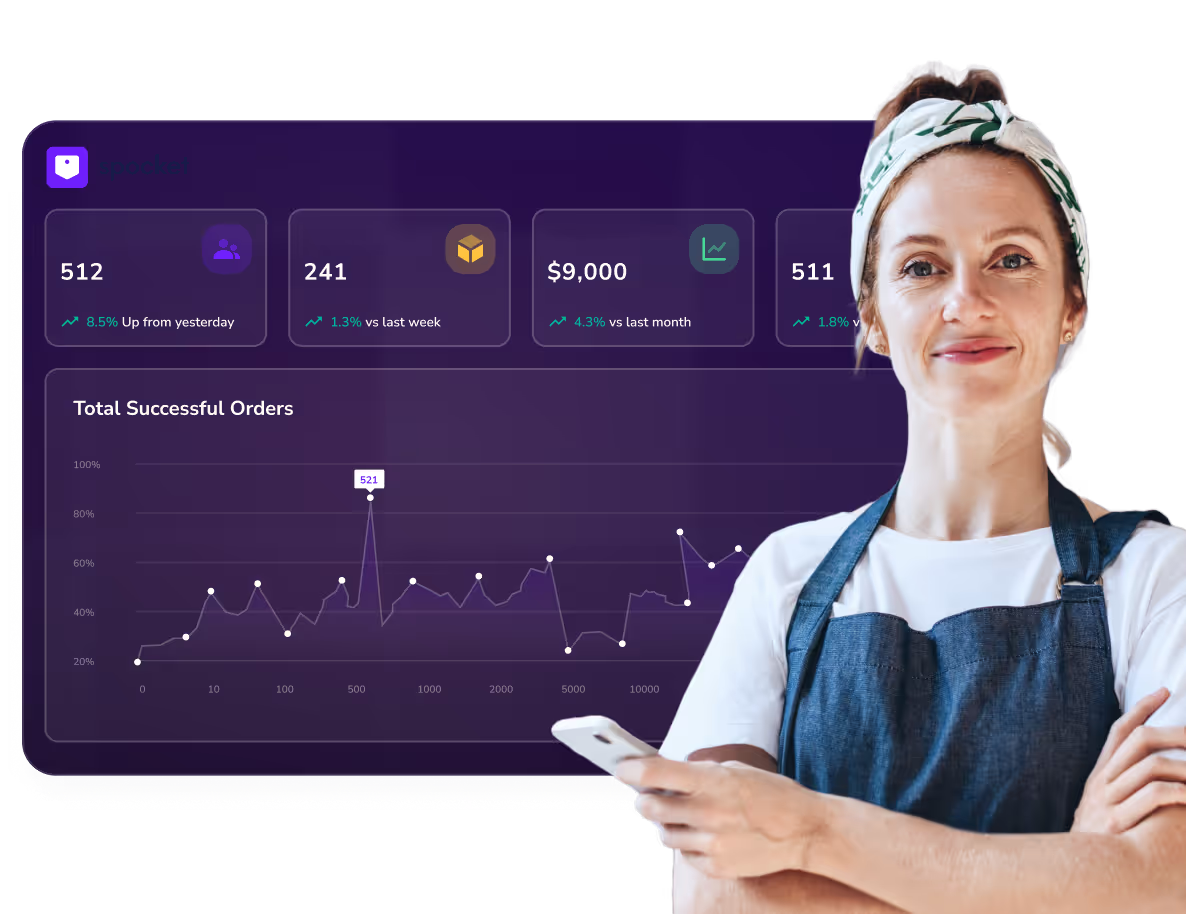
Come passare dal dropshipping a possedere il proprio inventario
Move from dropshipping to owned inventory with a step-by-step strategy for testing products, managing risk, improving margins, and scaling your ecommerce brand.
.avif)

Dropshipping is one of the simplest ways to start an ecommerce business because you can sell products without buying stock upfront. You do not need a warehouse, large investment, or complex fulfillment setup. You can test different products, learn what your audience wants, and build sales before taking on bigger operational risks.
But as your store grows, dropshipping can start to feel limiting. You may face supplier delays, inconsistent packaging, lower profit margins, limited branding control, and less visibility over stock availability. These issues can affect customer trust and make it harder to build a long-term ecommerce brand.
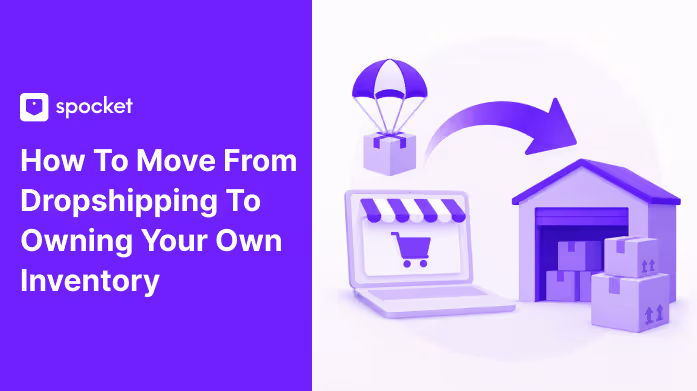
That is where owning inventory becomes the next step. Moving from dropshipping to your own inventory does not mean abandoning dropshipping completely. Instead, it means using dropshipping as a testing model, identifying your proven products, and gradually stocking the items that already show strong demand.
What Does Moving from Dropshipping to Owning Inventory Mean?
Moving from dropshipping to owning inventory means you are no longer relying only on suppliers to store, pack, and ship every order. Instead, you purchase selected products in advance and manage how they are stored, shipped, packaged, and restocked.
In dropshipping, your store accepts orders and the supplier ships products directly to your customers. This keeps things simple in the beginning because you do not need to buy stock before making sales. It is a low-risk way to test products and start selling online.
Owning inventory works differently. You buy products before customers order them. Then, you either store them yourself or use a fulfillment partner to handle storage and shipping. This gives you more control over product quality, delivery speed, packaging, and customer experience.
The transition does not need to happen all at once. Many ecommerce businesses use a hybrid model. They continue dropshipping new or experimental products while stocking only their proven bestsellers.
For example, a store may test 30 products through Spocket, find that three products sell consistently, and then buy inventory only for those three items. The rest of the catalog can remain dropshipped until more products prove themselves.
This approach reduces risk because you are not guessing. You are using real sales data to decide which products deserve investment.
Why Dropshipping Is a Good Starting Point
Dropshipping is valuable because it helps you start lean. Instead of spending money on inventory before knowing whether a product will sell, you can test demand first. This makes it especially useful for beginners and small ecommerce brands with limited capital.
One of the biggest benefits is low upfront cost. You do not need to buy hundreds of units, rent storage space, or manage shipping operations from day one. This gives you room to experiment without putting too much money at risk.
Dropshipping also helps with product testing. You can add products to your store, run ads or organic campaigns, and see what customers actually buy. If a product does not perform, you can remove it and test another one. This flexibility is difficult when you already own inventory.
Another benefit is catalog flexibility. You can test multiple categories, price points, and product angles without being tied to stock. This is helpful because ecommerce trends change quickly, and customer demand is not always easy to predict.
For growing sellers, Spocket can support this testing stage by giving access to products and suppliers that can be added to an ecommerce store without upfront inventory commitments. This allows sellers to validate demand before moving into bulk purchasing.
Why Move from Dropshipping to Owning Your Own Inventory?
Owning inventory becomes attractive when your store starts getting consistent sales. At that point, your goal changes from testing products to improving profit, speed, control, and brand experience.
The first major reason is better margins. Dropshipping often has lower profit margins because you buy products one order at a time. When you purchase inventory in bulk, you may get a lower cost per unit. This can create more room for profit, advertising, discounts, or better packaging.
The second reason is faster shipping. In dropshipping, delivery depends on the supplier’s process. If the supplier is slow or inconsistent, your customer experience suffers. When you own inventory, you can store products closer to your customers and create faster delivery expectations.
The third reason is better branding. Dropshipped products often arrive in plain packaging. This may be fine in the beginning, but it does not create a memorable brand experience. When you own inventory, you can add branded packaging, thank-you cards, product inserts, bundles, and better presentation.
Owning inventory also improves quality control. You can inspect products before shipping them, check packaging, review materials, and reduce the risk of customers receiving poor-quality items. This can lower returns and improve customer satisfaction.
Another advantage is business stability. If your best products are always dependent on third-party stock, your business can be disrupted when a supplier runs out of inventory or changes pricing. Owning stock gives you more control over availability and fulfillment.
For long-term growth, owning inventory can also make your store look more mature. A business with proven products, controlled fulfillment, repeat customers, and clear margins is often stronger than one that depends entirely on supplier availability.
When Should You Move from Dropshipping to Inventory?
You should not move to inventory just because a product had a good sales week. Inventory requires upfront investment, so the decision should be based on consistent data, not excitement.
A product may be ready for inventory when it has steady sales for at least 60 to 90 days. This gives you enough time to see whether demand is real or just temporary. A product that sells well across different campaigns, traffic sources, or customer segments is usually more reliable.
You should also check your margins. Before buying stock, calculate how much profit you make after product cost, shipping, advertising, payment fees, refunds, and other expenses. If the product is only barely profitable while dropshipping, buying inventory may not automatically solve the problem.
Customer feedback is another important signal. If customers like the product, leave positive reviews, and rarely ask for refunds, it may be a good inventory candidate. But if the product creates complaints, sizing issues, damage claims, or quality concerns, avoid stocking it too soon.
You may also be ready if customers are asking for faster delivery. If shipping time is hurting conversions or repeat orders, owning inventory can help improve the experience.
Before moving into inventory, make sure you have:
- Consistent product sales
- Healthy profit margins
- Low refund rates
- Positive customer feedback
- Tested product samples
- A reliable supplier
- Enough cash flow
- A clear fulfillment plan
The best time to buy inventory is when the product has already proven itself through real orders and customer behavior.
Which Products Should You Stock First?
Not every product in your store should become owned inventory. Stocking too many products too quickly can create cash flow problems and increase the risk of unsold stock. The smarter move is to start with your strongest products.
The best products to stock first are consistent sellers. These are products that keep generating sales over time, not just during a temporary trend. They should have stable demand, clear customer interest, and enough profit potential to justify bulk buying.
Small and lightweight products are often easier to manage. They cost less to store, are usually cheaper to ship, and are less likely to create fulfillment problems. Durable products are also better because they reduce the risk of damage during storage or delivery.
You should also look for products with branding potential. If a product can be packaged better, bundled with related items, or positioned as part of a niche brand, owning inventory can help you create a stronger customer experience.
Avoid stocking products that are highly seasonal, fragile, bulky, difficult to size, or likely to go out of trend quickly. These products may still be useful for dropshipping, but they can be risky for inventory ownership.
A good rule is to start with your top 5% to 10% of products. Keep testing new products through dropshipping, but only stock the items that clearly perform well.
How to Move from Dropshipping to Owning Inventory Step by Step
Moving into inventory should be gradual. You do not need to change your entire business model overnight. The safest approach is to test products, study your numbers, order small batches, and scale only when the product continues to perform.
Identify Your Winning Products
Start by reviewing your product data. Do not choose products based only on total sales. A product may sell well but still be risky if it has low margins, high refunds, or frequent complaints.
Look at sales volume, profit margin, return rate, customer reviews, support tickets, shipping issues, and repeat purchases. A true winning product is one that sells consistently, satisfies customers, and leaves enough profit after all costs.
If you use Spocket to test products, review which items are getting reliable sales and positive customer responses. These are the products that may be worth considering for inventory.
Order Samples First
Before buying inventory, always order samples. Product photos and descriptions are not enough. You need to see what customers will actually receive.
Check the product quality, packaging, size, material, finish, and overall presentation. Test whether the product matches the listing and whether it feels good enough to represent your brand.
Also review the delivery experience. Look at how long shipping takes, whether the product arrives safely, and whether the packaging protects the item properly. This step can prevent costly mistakes before you place a larger order.
Calculate the Real Cost
Inventory costs include more than the product price. Before placing an order, calculate the full cost of getting the product ready for customers.
Include:
- Product cost
- Shipping to your storage location
- Packaging
- Storage fees
- Fulfillment fees
- Returns
- Damaged products
- Taxes or duties, if applicable
- Marketing costs
- Payment processing fees
This gives you a more accurate idea of your profit per unit. If the numbers still look strong after including all costs, the product may be ready for a small inventory order.
Start with a Small Batch
Your first inventory order should be small. Avoid buying too much just because the supplier offers a discount. A lower unit cost does not help if the product stops selling or cash gets stuck in stock.
Start with enough inventory to cover around two to four weeks of expected demand. This lets you test your fulfillment setup, packaging, delivery speed, and customer response without taking a major risk.
If the product sells through quickly and profitably, you can reorder with more confidence.
Choose a Fulfillment Method
Once you own inventory, you need a clear fulfillment plan. For small stores, storing products at home may work in the beginning. This keeps costs low, but it can become difficult as orders increase.
A fulfillment partner can store, pack, and ship orders for you. This adds cost, but it can save time and improve delivery consistency. It is usually better for sellers with growing order volume.
The right option depends on product size, order volume, target market, and budget. The goal is to choose a method that keeps shipping reliable without reducing your margins too much.
Keep Dropshipping as a Backup
You do not need to stop dropshipping after buying inventory. A hybrid model is often safer. You can own inventory for your proven bestsellers and continue dropshipping new products.
This gives you flexibility. If a stocked item sells out, dropshipping may help you continue fulfilling orders while waiting for more inventory. If you want to test a new trend, you can do it without buying stock first.
For many sellers, dropshipping and owned inventory work best together.
Why the Hybrid Model Works Best
Un modello ibrido ti permette di combinare la flessibilità del dropshipping con il controllo dell'inventario di proprietà. Invece di scegliere completamente un solo modello, utilizzi ciascuno per lo scopo giusto.
Il dropshipping rimane utile per la scoperta di prodotti. Puoi testare nuovi articoli, esplorare la domanda dei clienti e mantenere aggiornato il tuo catalogo senza acquistare scorte in anticipo. Questo protegge il tuo flusso di cassa e riduce il rischio di inventario invenduto.
L'inventario di proprietà funziona meglio per i prodotti collaudati. Una volta che sai che un prodotto vende costantemente, averlo in magazzino può aiutare a migliorare i margini, la velocità di spedizione, l'imballaggio e la soddisfazione del cliente.
Questo approccio aiuta anche il tuo negozio a crescere in modo più naturale. Non è necessario investire pesantemente in ogni prodotto. Puoi concentrare i tuoi soldi sui prodotti che generano già entrate mentre utilizzi il dropshipping per continuare a testare nuove opportunità.
Con Spocket, i venditori possono continuare a testare i prodotti mentre spostano gradualmente gli articoli collaudati in un modello di inventario più controllato. Questo rende la transizione meno rischiosa e più basata sui dati.
Checklist definitiva prima di acquistare l'inventario
Prima di acquistare l'inventario, esamina attentamente il tuo prodotto. La decisione dovrebbe basarsi sui dati, non sulla pressione o sull'emozione.
Assicurati che:
- Il prodotto ha venduto costantemente per 60-90 giorni
- I margini di profitto sono solidi dopo tutti i costi
- Il feedback dei clienti è positivo
- I tassi di reso sono bassi
- Hai ordinato campioni
- Il fornitore è affidabile
- Conosci il costo totale di sbarco
- Hai un piano di evasione ordini
- Hai abbastanza liquidità dopo aver acquistato le scorte
- Puoi continuare a fare dropshipping di altri prodotti
- Sai quando riordinare
Se non riesci a confermare questi punti, continua a testare prima di investire in scorte. È meglio aspettare che acquistare merce che non vende.
Conclusione
Passare dal dropshipping alla gestione del proprio inventario è un passo successivo intelligente quando i tuoi prodotti hanno una domanda comprovata. Il dropshipping ti aiuta a iniziare in modo snello, a testare i prodotti e a capire cosa vogliono i clienti. L'inventario ti aiuta a migliorare i margini, la spedizione, il controllo qualità e il branding una volta che sai cosa funziona.
La strategia migliore è graduale. Non rifornire l'intero catalogo. Inizia con i tuoi prodotti più performanti, ordina campioni, calcola i costi reali, acquista piccoli lotti e mantieni il dropshipping come soluzione di riserva.
Con Spocket, i venditori possono testare i prodotti prima di prendere decisioni più importanti sull'inventario. Questo rende il passaggio dal dropshipping all'inventario più strategico, meno rischioso e più adatto alla crescita a lungo termine dell'e-commerce.
Start your dropshipping business today
Domande frequenti sul passaggio dal dropshipping alla gestione del proprio inventario
Quando dovrei passare dal dropshipping alla gestione dell'inventario?
Dovresti passare quando un prodotto ha vendite costanti, pochi resi, feedback positivi dei clienti e margini sani. Aspettare almeno 60-90 giorni ti fornisce dati migliori prima di fare un investimento in inventario.
Dovrei smettere di fare dropshipping dopo aver acquistato l'inventario?
No. Molti venditori utilizzano un modello ibrido. Immagazzinano i bestseller comprovati e continuano a fare dropshipping per i prodotti nuovi o a rotazione più lenta. Questo mantiene l'attività flessibile migliorando il controllo sui prodotti di punta.
Quanto inventario dovrei acquistare inizialmente?
Inizia con un piccolo lotto che copra circa due-quattro settimane di vendite previste. Questo riduce il rischio e ti aiuta a testare l'evasione degli ordini, l'imballaggio e la risposta dei clienti prima di effettuare ordini più grandi.
È meglio gestire l'inventario rispetto al dropshipping?
Gestire l'inventario può essere migliore per i prodotti comprovati perché può migliorare i margini, la velocità di spedizione, il branding e il controllo qualità. Tuttavia, il dropshipping è ancora utile per testare nuovi prodotti con meno rischi.
Qual è il rischio maggiore della gestione dell'inventario?
Il rischio maggiore è la merce invenduta. Se la domanda cala o il prodotto non vende come previsto, il tuo denaro può rimanere bloccato nell'inventario. Ecco perché testare prima di acquistare è importante.


Launch your dropshipping business now!
Start free trial


Blog correlati
Elenco fornitori dropshipping: dove trovare fornitori verificati
Esplora la nostra directory di fornitori dropshipping verificati negli Stati Uniti e nell'Unione Europea, completa di nicchie, tempi di spedizione e prezzi. Inizia oggi la tua prova gratuita.

Come negoziare con i fornitori dropshipping: 9 tattiche che funzionano davvero
Scopri come negoziare con i fornitori dropshipping prezzi, MOQ e termini di pagamento. Strategie comprovate e modelli di email per aumentare i tuoi margini. Prova Spocket gratuitamente.

Best Clothing Dropshipping Suppliers: The 2026 Guide
Compare the best clothing dropshipping suppliers for 2026 — US/EU shipping speeds, pricing, and product quality — and find the right fit to launch your store.