


Circuit & Glow: Caso di studio sul dropshipping di Smart Home con Spocket
See how Circuit & Glow used Spocket to escape Amazon competition, reach 52% margins, and grow to $36K revenue in 7 months.
.jpg)
When Nadia Fernandez launched Circuit & Glow from Miami, FL, she was not trying to build another generic tech accessories store. She had already seen what happens when sellers compete on Amazon: lower prices, shrinking profits, copycat listings, and almost no room to build a real brand.
“I didn’t want to win by being the cheapest,” Nadia says. “I wanted products customers could not instantly compare on Amazon. Spocket helped me find that edge.”
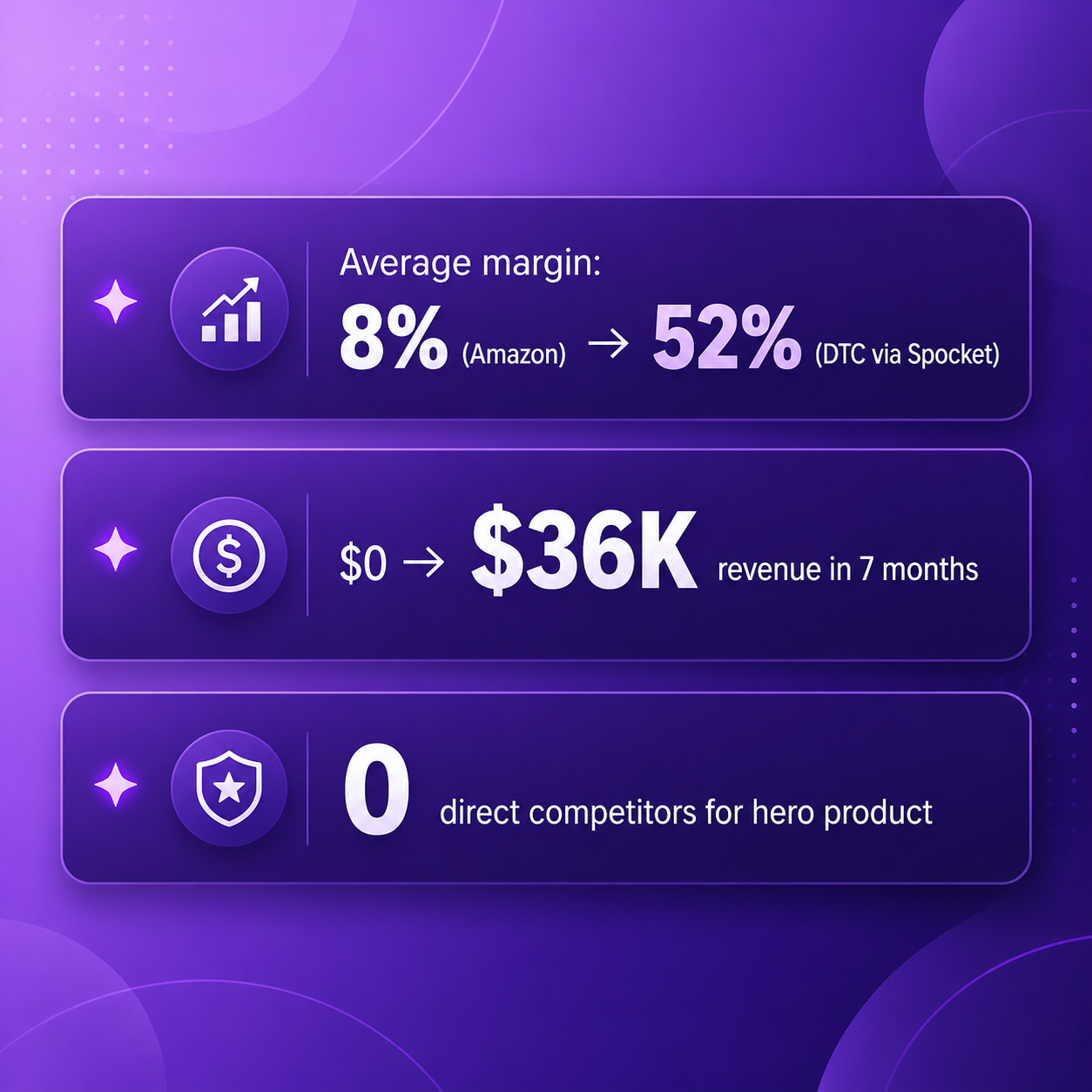
That edge became the foundation of Circuit & Glow, a smart home and tech accessories brand built for tech-savvy homeowners aged 25–45 in urban US markets. By using Spocket to source differentiated products from exclusive suppliers, Nadia went from $0 to $36K in revenue in seven months, increased her average margin from 8% to 52%, and found a hero product with no direct competitors.
This is the story of how one Latina entrepreneur escaped the Amazon race to the bottom and built a DTC tech brand from scratch.
The Brand: Circuit & Glow
Circuit & Glow is a direct-to-consumer smart home and tech accessories store focused on products that make modern homes more convenient, stylish, and connected.
A Store Built for Tech-Savvy Homeowners
Nadia knew her target audience clearly from day one. She was not selling to bargain hunters looking for the cheapest phone cable or gadget. She wanted to reach homeowners, renters, remote workers, and design-conscious tech users who cared about function, aesthetics, and convenience.
Her ideal customer was between 25 and 45, lived in a US city, and wanted smart products that felt useful without making their home look cluttered.
This audience gave Circuit & Glow a stronger brand direction. Instead of listing random electronics, Nadia focused on products that solved small everyday problems: better charging, cleaner setups, smarter lighting, and compact tech accessories for modern homes.
Why Smart Home Dropshipping Looked Promising
Smart home dropshipping gave Nadia a way to enter ecommerce without holding inventory or buying bulk stock upfront. The category also had clear demand because customers were already searching for smarter ways to upgrade their homes.
But there was one major challenge. Many smart home and tech accessories were already heavily listed on Amazon, Walmart, AliExpress, and other marketplaces. That meant Nadia needed more than demand. She needed differentiation.
The Problem: Amazon Had Turned Tech Accessories Into a Price War
Before using Spocket, Nadia researched popular tech accessories on Amazon. The numbers looked attractive at first, but the deeper she looked, the more obvious the problem became.
Razor-Thin Margins Made Growth Risky
Most products Nadia found had too many sellers offering nearly identical items. Even when she spotted trending accessories, dozens of listings already existed with similar photos, similar features, and aggressive discounts.
That created an immediate margin problem.
On Amazon-style marketplace pricing, Nadia estimated her average margin would sit around 8%. That was not enough to cover ads, returns, payment fees, customer support, and the cost of testing new products.
At 8%, one bad ad campaign or a few refunds could wipe out the profit from multiple orders.
Generic Products Made Branding Hard
The second issue was brand positioning. If customers could find the same product on Amazon in two seconds, why would they buy from Circuit & Glow?
Nadia did not want to build a store where every product page felt replaceable. She wanted items that could support a brand story, lifestyle photography, better product descriptions, and stronger perceived value.
To make Circuit & Glow work, she needed DTC-only products that were not already saturated across major marketplaces.
The Goal: Build a High-Margin DTC Tech Brand
Nadia’s goal was not just to launch a dropshipping store. She wanted to prove that tech accessories could be sold with strong margins when the products were positioned correctly.
Before choosing her supplier platform, she set three clear goals.
Find Products Customers Could Not Easily Compare
Nadia wanted products that did not instantly trigger price comparison. If a shopper could copy the product name into Amazon and find twenty cheaper alternatives, the store would lose trust and conversion power.
Her ideal product needed to feel unique, useful, and brandable.
Keep Startup Risk Low
As a first-time DTC founder in the niche, Nadia did not want to commit thousands of dollars to inventory. Dropshipping gave her a lean way to test demand, but only if the supplier quality and product selection were strong enough.
Move Fast Without Losing Control
Nadia wanted to launch quickly, but not carelessly. She needed product sourcing, fulfillment, and supplier access to be simple enough to manage while she focused on branding, product pages, and customer acquisition.
That is where Spocket became central to her launch plan.
How Spocket Helped Circuit & Glow Find Its Differentiation?
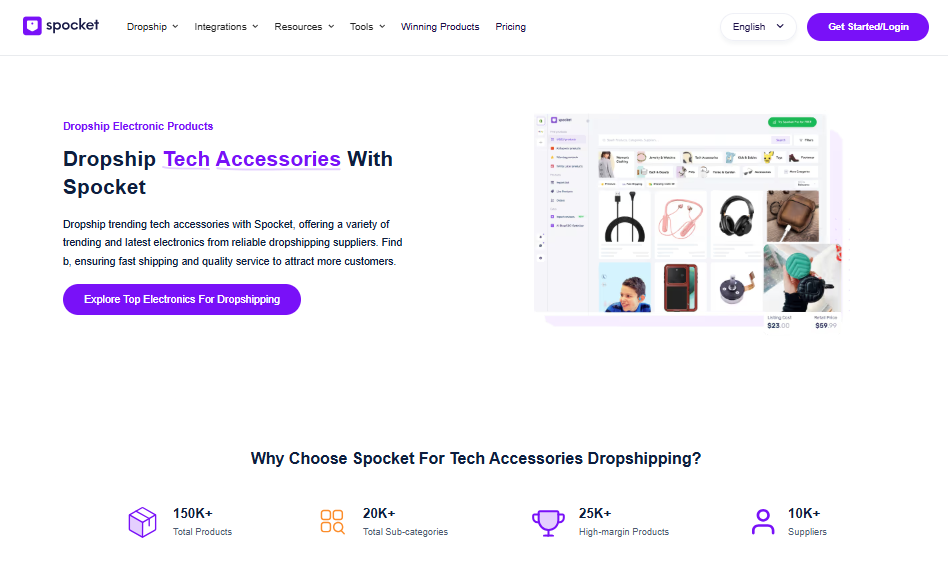
Spocket helped Nadia move beyond generic marketplace products and find items that gave Circuit & Glow a stronger competitive angle.
The Exclusive Supplier Filter Changed the Search
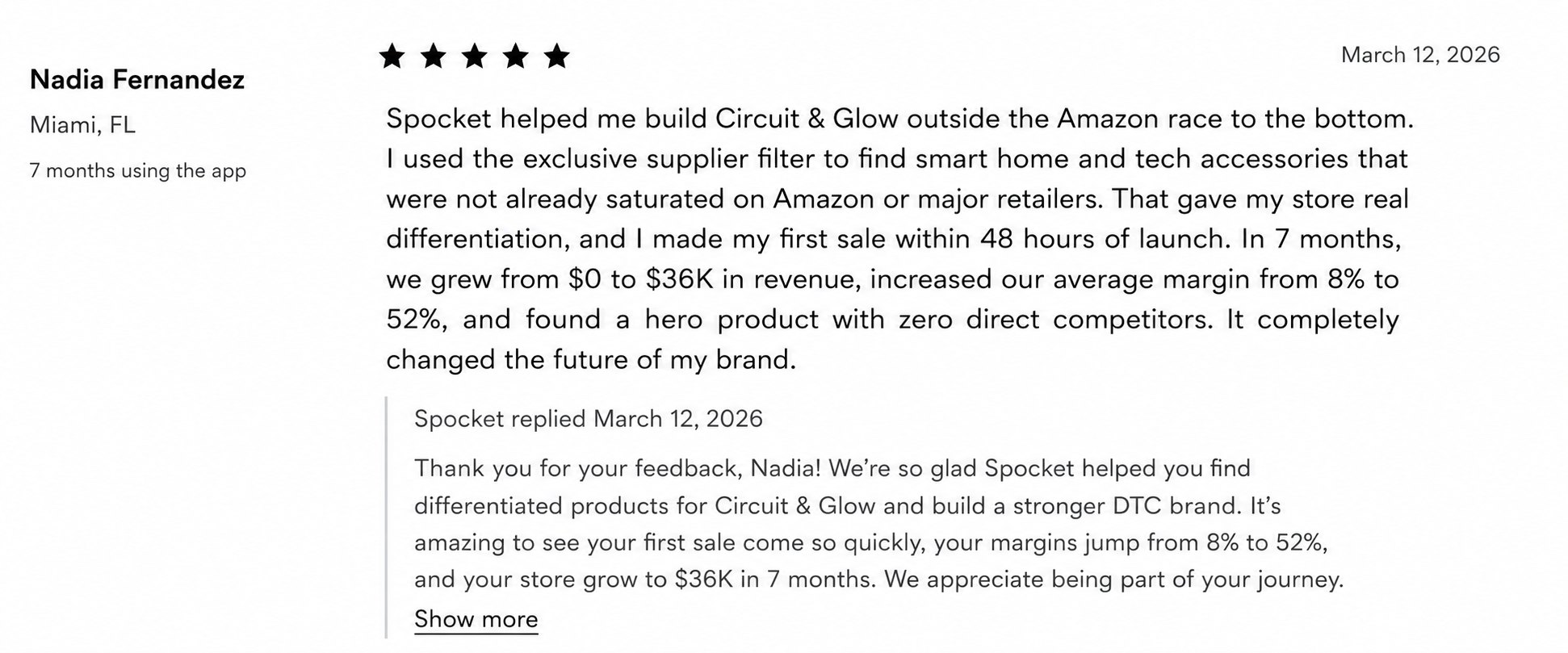
The turning point came when Nadia used Spocket’s exclusive supplier filter. Instead of browsing the same products every other seller could easily find on marketplaces, she could focus on items that were not available on Amazon or major retailers.
That changed her product research process completely.
Instead of asking, “Can I sell this cheaper?” she started asking, “Can I build a brand around this?”
That mindset shift helped her avoid the trap many tech accessories sellers fall into. She stopped chasing saturated bestsellers and started looking for products with a cleaner path to differentiation.
Better Product Positioning Became Possible
Once Nadia found products that were not directly duplicated across major marketplaces, she could create stronger product pages.
She focused on benefits like cleaner home setups, modern convenience, compact design, and everyday usability. These were not just tech products anymore. They became lifestyle upgrades for busy, tech-friendly homeowners.
This made her store feel more curated and less like a random gadget catalog.
Supplier Access Reduced the Pressure to Hold Inventory
Because Spocket connected Nadia with dropshipping suppliers, she could test products without buying bulk inventory upfront. That mattered because the smart home and tech accessories category can move quickly. Trends change, customer preferences shift, and new product designs appear often.
With a dropshipping model, Nadia could validate demand before committing more resources to marketing and branding.
The Launch: First Sale Within 48 Hours
Circuit & Glow launched with a focused product selection instead of a large catalog. Nadia chose a small number of smart home and tech accessories that matched her audience and positioned one product as the hero offer.
A Simple Store Built Around One Hero Product
Rather than overwhelming customers with too many options, Nadia built her early store experience around one hero product.
This product had three advantages:
- It solved a clear everyday problem
- It looked visually appealing for DTC marketing
- It had no direct competitors in Nadia’s research
That gave Circuit & Glow a strong starting point. Nadia could write sharper copy, create better ads, and build a product page around one clear promise.
The First Sale Came Fast
Within 48 hours of launch, Circuit & Glow received its first sale.
For Nadia, that first order was more than revenue. It validated the strategy. Customers were willing to buy tech accessories from a new DTC brand when the product felt different enough and the positioning was clear.
That early momentum gave her the confidence to keep testing creatives, refine product descriptions, and improve the store experience.
The Results: From 8% Marketplace Margins to 52% DTC Margins
The biggest win for Circuit & Glow was not just revenue. It was the quality of that revenue.
Average Margin Increased From 8% to 52%
Before Spocket, Nadia expected tech accessory margins to be around 8% if she competed with Amazon-style pricing.
After sourcing differentiated DTC products through Spocket, Circuit & Glow reached an average margin of 52%.
That difference changed the economics of the business. With stronger margins, Nadia had more room to test paid ads, improve packaging inserts, invest in creative assets, and handle customer support without feeling squeezed on every order.
Revenue Grew From $0 to $36K in Seven Months
In seven months, Circuit & Glow grew from a new store with no sales to $36K in revenue.
The growth came from a focused strategy: source unique products, position them for a defined audience, and avoid direct marketplace comparison.
Nadia did not need hundreds of products to get traction. She needed the right product, the right supplier access, and a clear reason for customers to buy from her store.
The Hero Product Had Zero Direct Competitors
One of the strongest results was the discovery of a hero product with zero direct competitors.
For a tech accessories store, that is a major advantage. It meant Nadia could create demand without constantly defending her price against identical listings. It also made the product easier to promote through lifestyle-led messaging rather than discount-heavy selling.
What Made the Strategy Work?
Circuit & Glow’s growth was not accidental. Nadia made a few smart decisions that helped her turn product sourcing into a brand advantage.
She Avoided Saturated Marketplace Products
Many new dropshippers start by copying products they see trending on Amazon or TikTok. Nadia took the opposite route. She used marketplace research to understand what was saturated, then looked for alternatives with less direct competition.
That helped Circuit & Glow feel fresher and more trustworthy.
She Built Around a Specific Customer
Nadia did not try to sell tech accessories to everyone. She focused on tech-savvy homeowners in US urban markets.
This made her messaging more specific. Product descriptions, visuals, and ads all spoke to people who wanted smarter, cleaner, more modern home setups.
She Used Margins as a Growth Tool
A 52% margin gave Nadia breathing room. Instead of fighting for pennies, she could test marketing ideas and improve the customer journey.
For ecommerce founders, this is important. Higher margins do not just increase profit. They create flexibility.
Perché questo caso di studio è importante per i nuovi fondatori di dropshipping?
Circuit & Glow dimostra che il dropshipping non deve necessariamente significare vendere prodotti generici con margini deboli.
La vera opportunità non sta nel copiare ciò che tutti gli altri vendono. Sta nel trovare prodotti che corrispondano a un pubblico ben definito, che abbiano spazio per il posizionamento del brand e che non siano già schiacciati dalla concorrenza del marketplace.
La differenziazione batte lo sconto
La storia di Nadia dimostra perché la differenziazione è importante. Competere solo sul prezzo è estenuante, specialmente nel settore degli accessori tecnologici. Ma quando i clienti non possono facilmente confrontare il tuo prodotto con inserzioni identiche, il tuo brand ha più potere.
È qui che l'approvvigionamento dei prodotti diventa una decisione strategica, non solo un compito operativo.
La piattaforma di fornitori giusta può plasmare l'intero brand
Per Circuit & Glow, Spocket non era solo uno strumento di evasione ordini. Ha aiutato Nadia a trovare il tipo di prodotti che hanno reso possibile il suo brand.
Utilizzando i filtri dei fornitori e concentrandosi su prodotti esclusivi, è riuscita a creare un negozio che si distingueva da Amazon e da altri marketplace.
Come Spocket può aiutarti a costruire un negozio più differenziato?
Se stai cercando di avviare un negozio di dropshipping per la smart home, un brand di accessori tecnologici o qualsiasi attività di e-commerce DTC, la tua fonte di prodotti è importante.
Spocket aiuta gli imprenditori a scoprire prodotti dai fornitori, importarli nel loro negozio e gestire l'evasione degli ordini senza detenere scorte. Per fondatori come Nadia, il vantaggio maggiore è stato l'accesso a prodotti che supportavano una reale differenziazione.
Usa Spocket per trovare prodotti con un potenziale di brand migliore
Invece di scegliere prodotti solo perché sono di tendenza, cerca articoli che supportino un chiaro angolo di brand.
Chiediti:
- Questo prodotto risolve un problema specifico?
- Posso spiegarne il valore in un modo unico?
- È già ovunque su Amazon?
- Posso venderlo con margini sani?
- Corrisponde al mio cliente target?
Queste domande hanno aiutato Nadia a passare dalla ricerca generica di prodotti alla selezione di prodotti guidata dal brand.
Inizia in modo snello, poi scala ciò che funziona
Circuit & Glow ha iniziato con un lancio mirato e da lì è cresciuta. Questo approccio è particolarmente utile per i nuovi fondatori di dropshipping.
Non hai bisogno di un catalogo enorme per iniziare. Ti serve un prodotto che le persone desiderano, un processo di fornitura affidabile e un'esperienza di negozio che crei fiducia.
Spocket offre ai fondatori un modo più semplice per testare i prodotti, rifornirsi dai fornitori e iniziare a vendere senza grandi rischi di inventario iniziale.
Considerazione finale
Nadia Fernandez ha costruito Circuit & Glow rifiutandosi di competere nella corsa al ribasso di Amazon.
Invece di inseguire prodotti saturi con margini dell'8%, ha usato Spocket per trovare accessori per la smart home e tecnologici differenziati che hanno dato al suo brand spazio per crescere. Entro sette mesi, Circuit & Glow ha raggiunto 36.000 dollari di entrate, ha ottenuto margini medi del 52% e ha lanciato un prodotto di punta che non aveva concorrenti diretti.
La sua storia è un promemoria che il successo nel dropshipping non riguarda solo il lancio veloce. Riguarda l'approvvigionamento più intelligente, un migliore posizionamento e la costruzione di un negozio che i clienti non possono facilmente confrontare con tutti gli altri.
Se vuoi costruire un brand di dropshipping con margini più solidi e una reale differenziazione del prodotto, Spocket è un ottimo punto di partenza.
Key Insights:
Prova Spocket gratuitamente
I Risultati: Da Margini di Marketplace dell'8% a Margini DTC del 52%
Il più grande successo per Circuit & Glow non è stato solo il fatturato. È stata la qualità di quel fatturato.
Margine Medio Aumentato Dall'8% al 52%
Prima di Spocket, Nadia si aspettava che i margini degli accessori tecnologici fossero intorno all'8% se avesse gareggiato con i prezzi in stile Amazon.
Dopo aver approvvigionato prodotti DTC differenziati tramite Spocket, Circuit & Glow ha raggiunto un margine medio del 52%.
Questa differenza ha modificato l'economia del business. Con margini più solidi, Nadia ha avuto più spazio per testare annunci a pagamento, migliorare gli inserti delle confezioni, investire in risorse creative e gestire l'assistenza clienti senza sentirsi sotto pressione ad ogni ordine.
I ricavi sono cresciuti da 0 a 36.000 $ in sette mesi
In sette mesi, Circuit & Glow è cresciuto da un nuovo negozio senza vendite a 36.000 $ di ricavi.
La crescita è derivata da una strategia mirata: reperire prodotti unici, posizionarli per un pubblico definito ed evitare il confronto diretto sul mercato.
Nadia non aveva bisogno di centinaia di prodotti per ottenere risultati. Aveva bisogno del prodotto giusto, del giusto accesso ai fornitori e di un motivo chiaro per cui i clienti acquistassero dal suo negozio.
Il prodotto di punta non aveva concorrenti diretti
Uno dei risultati più significativi è stata la scoperta di un prodotto di punta senza concorrenti diretti.
Per un negozio di accessori tecnologici, questo è un grande vantaggio. Significava che Nadia poteva creare domanda senza dover costantemente difendere il suo prezzo contro inserzioni identiche. Ha anche reso il prodotto più facile da promuovere attraverso messaggi incentrati sullo stile di vita piuttosto che con vendite basate su sconti.
Cosa ha fatto funzionare la strategia?
La crescita di Circuit & Glow non è stata casuale. Nadia ha preso alcune decisioni intelligenti che l'hanno aiutata a trasformare l'approvvigionamento dei prodotti in un vantaggio per il marchio.
Ha evitato prodotti saturi sul mercato
Molti nuovi dropshipper iniziano copiando prodotti che vedono in tendenza su Amazon o TikTok. Nadia ha preso la strada opposta. Ha utilizzato la ricerca di mercato per capire cosa fosse saturo, cercando poi alternative con meno concorrenza diretta.
Questo ha aiutato Circuit & Glow a sembrare più fresco e affidabile.
Si è concentrata su un cliente specifico
Nadia non ha cercato di vendere accessori tecnologici a tutti. Si è concentrata su proprietari di casa esperti di tecnologia nei mercati urbani degli Stati Uniti.
Questo ha reso la sua comunicazione più specifica. Descrizioni dei prodotti, elementi visivi e annunci parlavano tutti a persone che desideravano configurazioni domestiche più intelligenti, pulite e moderne.
Ha utilizzato i margini come strumento di crescita
Un margine del 52% ha dato a Nadia spazio di manovra. Invece di lottare per pochi centesimi, poteva testare idee di marketing e migliorare il percorso del cliente.
Per i fondatori di e-commerce, questo è importante. Margini più elevati non solo aumentano il profitto, ma creano anche flessibilità.
Perché questo caso di studio è importante per i nuovi fondatori di dropshipping?
Circuit & Glow dimostra che il dropshipping non deve significare vendere prodotti generici con margini deboli.
La vera opportunità non sta nel copiare ciò che tutti gli altri vendono, ma nel trovare prodotti che corrispondano a un pubblico ben definito, che abbiano spazio per il posizionamento del brand e che non siano già schiacciati dalla concorrenza del mercato.
La differenziazione batte lo sconto
La storia di Nadia mostra perché la differenziazione è importante. Competere solo sul prezzo è estenuante, specialmente negli accessori tecnologici. Ma quando i clienti non possono facilmente confrontare il tuo prodotto con inserzioni identiche, il tuo brand ha più potere.
È qui che l'approvvigionamento dei prodotti diventa una decisione strategica, non solo un compito operativo.
La giusta piattaforma di fornitori può plasmare l'intero brand
Per Circuit & Glow, Spocket non era solo uno strumento di evasione ordini. Ha aiutato Nadia a trovare il tipo di prodotti che hanno reso possibile il suo brand.
Utilizzando i filtri dei fornitori e concentrandosi su prodotti esclusivi, è riuscita a creare un negozio che si distingueva da Amazon e da altri marketplace.
Come Spocket può aiutarti a costruire un negozio più differenziato?
Se stai cercando di avviare un negozio di dropshipping per la smart home, un brand di accessori tecnologici o qualsiasi attività di e-commerce DTC, la tua fonte di prodotti è fondamentale.
Spocket aiuta gli imprenditori a scoprire prodotti dai fornitori, importarli nel loro negozio e gestire l'evasione degli ordini senza detenere scorte. Per fondatori come Nadia, il vantaggio maggiore è stato l'accesso a prodotti che supportavano una reale differenziazione.
Usa Spocket per trovare prodotti con un potenziale di brand migliore
Invece di scegliere prodotti solo perché sono di tendenza, cerca articoli che supportino un chiaro angolo di brand.
Chiediti:
- Questo prodotto risolve un problema specifico?
- Posso spiegarne il valore in un modo unico?
- È già ovunque su Amazon?
- Posso venderlo con margini sani?
- Corrisponde al mio cliente target?
Queste domande hanno aiutato Nadia a passare dalla ricerca generica di prodotti alla selezione di prodotti basata sul brand.
Inizia in modo snello, poi scala ciò che funziona
Circuit & Glow è partito con un lancio mirato e da lì è cresciuto. Questo approccio è particolarmente utile per i nuovi imprenditori di dropshipping.
Non hai bisogno di un catalogo enorme per iniziare. Ti serve un prodotto che le persone desiderano, un processo di fornitura affidabile e un'esperienza di negozio che costruisca fiducia.
Spocket offre ai fondatori un modo più semplice per testare i prodotti, approvvigionarsi dai fornitori e iniziare a vendere senza un grande rischio di inventario iniziale.
Conclusione
Nadia Fernandez ha costruito Circuit & Glow rifiutandosi di competere nella corsa al ribasso di Amazon.
Invece di inseguire prodotti saturi con margini dell'8%, ha usato Spocket per trovare accessori smart home e tecnologici differenziati che hanno dato al suo brand spazio per crescere. Nel giro di sette mesi, Circuit & Glow ha raggiunto 36.000 dollari di entrate, ha ottenuto margini medi del 52% e ha lanciato un prodotto di punta che non aveva concorrenti diretti.
La sua storia ci ricorda che il successo nel dropshipping non riguarda solo il lancio veloce. Riguarda l'approvvigionarsi in modo più intelligente, il posizionarsi meglio e il costruire un negozio che i clienti non possano facilmente confrontare con tutti gli altri.
Se vuoi costruire un brand di dropshipping con margini più elevati e una reale differenziazione del prodotto, Spocket è un buon punto di partenza.
