Why E-Commerce Brands Are Humanizing AI Content to Win at SEO
E-commerce brands aren’t just using AI to scale content they’re learning that only humanized AI writing wins on Google.
E-commerce brands aren’t just using AI to scale content they’re learning that only humanized AI writing wins on Google.
Why AI-Generated Content Alone Is No Longer Enough
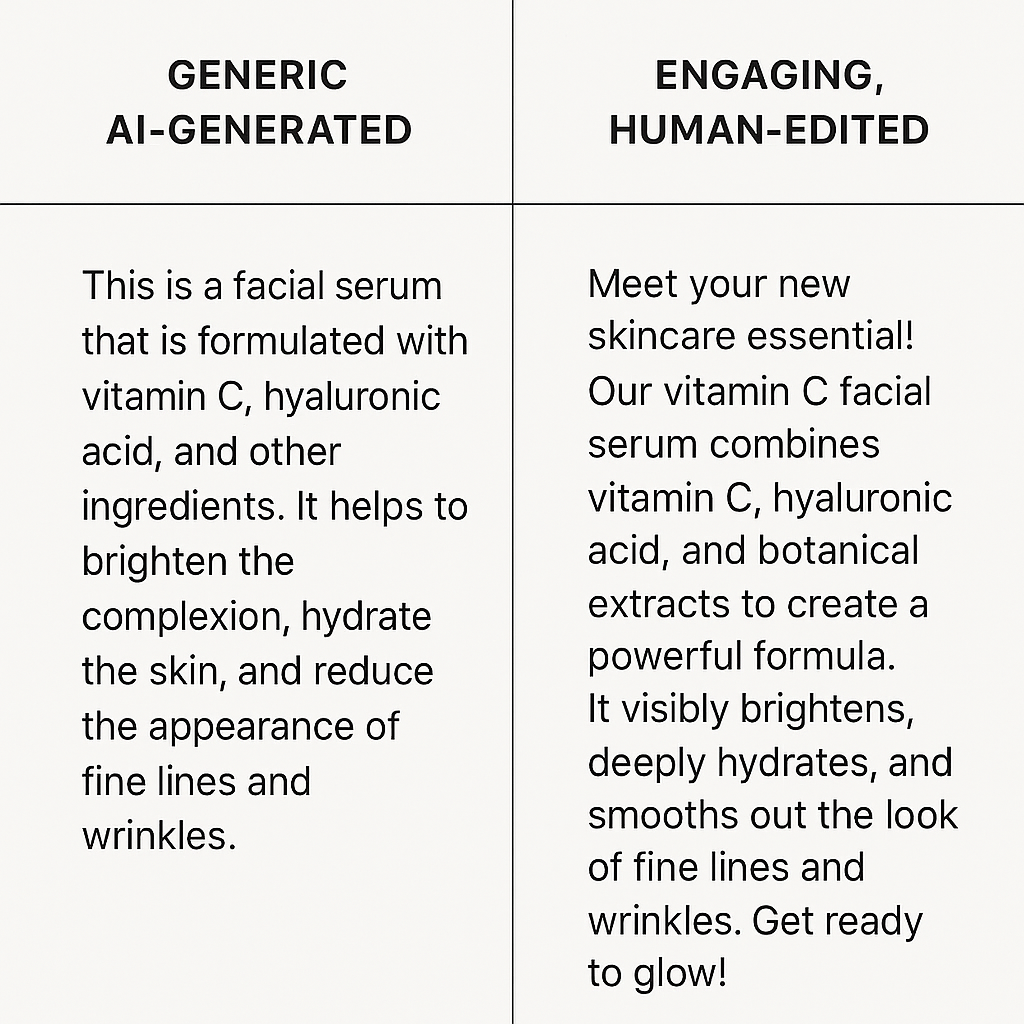
AI has dramatically changed our writing, publishing and optimizing content processes.
Ecommerce companies now use artificial intelligence copywriting tools, including platforms like Walter Writes AI to generate hundreds of product description pages at a fraction of the cost to human teams that would take much longer to produce them. To many overworked marketing professionals, this type of automation is nothing short of a dream; virtually unlimited scalability, an exact consistent tone and output 24/7.
But here’s the catch: speed isn’t the same as strategy. As the novelty of AI content wears off, shoppers are becoming more discerning. They can spot lifeless, templated writing instantly. Sentences that sound “too perfect,” lack emotion, or read like generic summaries fail to capture attention or drive conversions.
Now even search engines are aware of this distinction as well. Google's algorithms do not simply index keywords anymore they look at all the engagement signals that come with a particular page. If readers leave after reading one sentence, never click through to another page on your website, or do not engage in any way, you will likely see your ranking decline regardless of how many pages you create and post. Thus, smart marketers today are focusing their efforts not merely on AI content creation, but also on AI content optimization.
Transforming robot sentences to emotional, storytelling content for customer connections in a deeper way is the emerging gold standard of e-commerce SEO.
The SEO Gap – Why Raw AI Content Underperforms
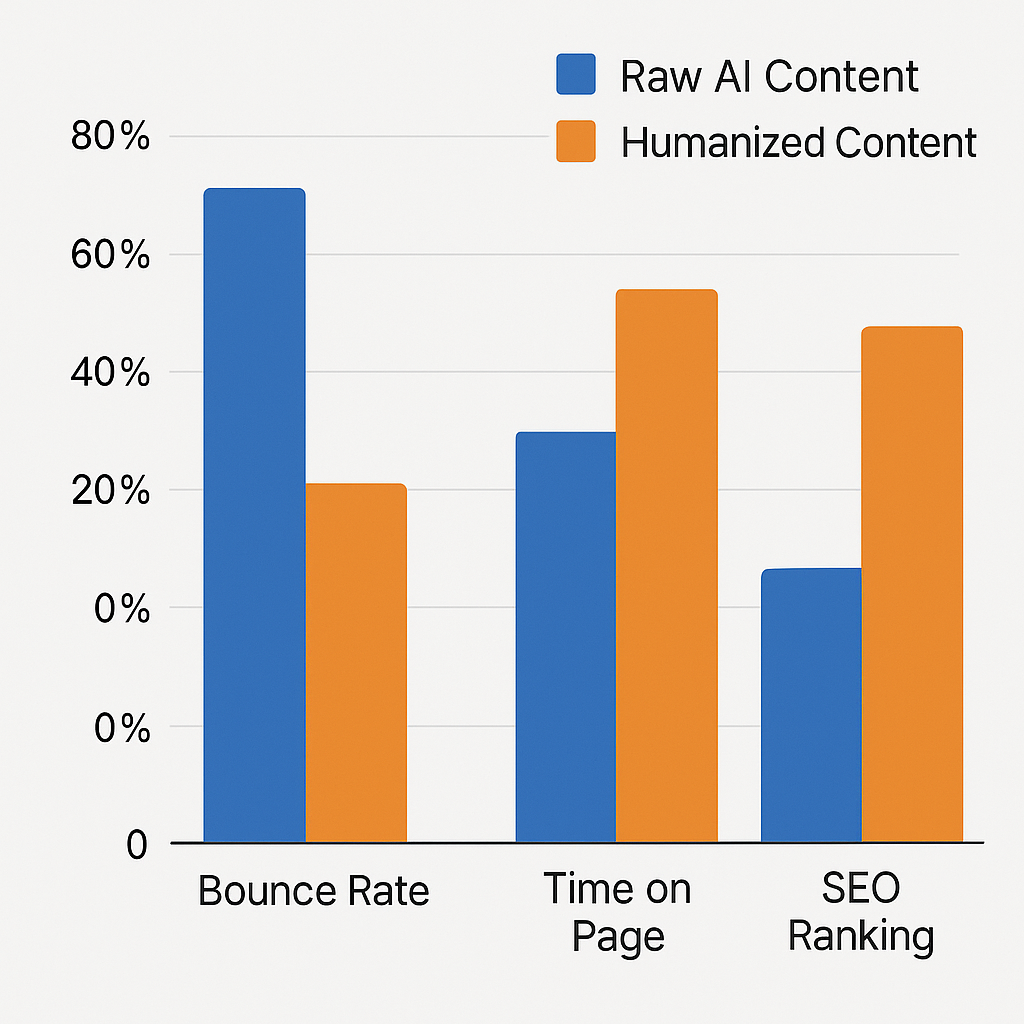
On paper, AI-written content appears fine. Everything lines up, the grammar works and the keywords fit, but when real people read it, something feels off. People lose interest and the SEO performance gap between raw AI text and human-refined versions becomes clear.
SEMrush reviewed close to 20,000 articles and found a consistent pattern. Human-written content reached the top three positions 6.2% more often and appeared in the top five 4.6% more often than AI-generated content. Readers look for signs of trust and experience, which are present in Google’s E-E-A-T framework, that is, Experience, Expertise, Authoritativeness, and Trustworthiness..
The Problem with Raw AI Copy:
- It lacks empathy. AI can say what a product does, but the feeling of actually using it rarely comes through, which is where conversions slip.
- It overuses structure. The lines start to echo one another showing repetitive patterns and that looping rhythm is what creates AI fatigue for readers.
- It can be context-blind. The tone sometimes lands a little off because cultural cues or market nuances don’t fully register.
- It fails to express authority. Search engines look for signals that sound like specificity, a confident voice and deep insights which AI often miss.
The results often surprise because these pages appear fine to an algorithm but fall short when real people read them. They get low engagement, high bounce rates, and weak conversion numbers.
Ahrefs’ 2024 Content Quality Index clearly pointed to this fact quite well. Humanized AI writing lifted average dwell time by 78% and cut bounce rates by 32% compared to unedited AI pages. These shifts have a direct impact on search performance.
It is quite clear that if you want strong results in ecommerce SEO, raw automation will not carry the load.The AI needs a human pass to turn that draft into something that sounds lived-in enough for users and convincing enough for search algorithms.
What Is Humanized AI Content & Why It Matters for E-Commerce
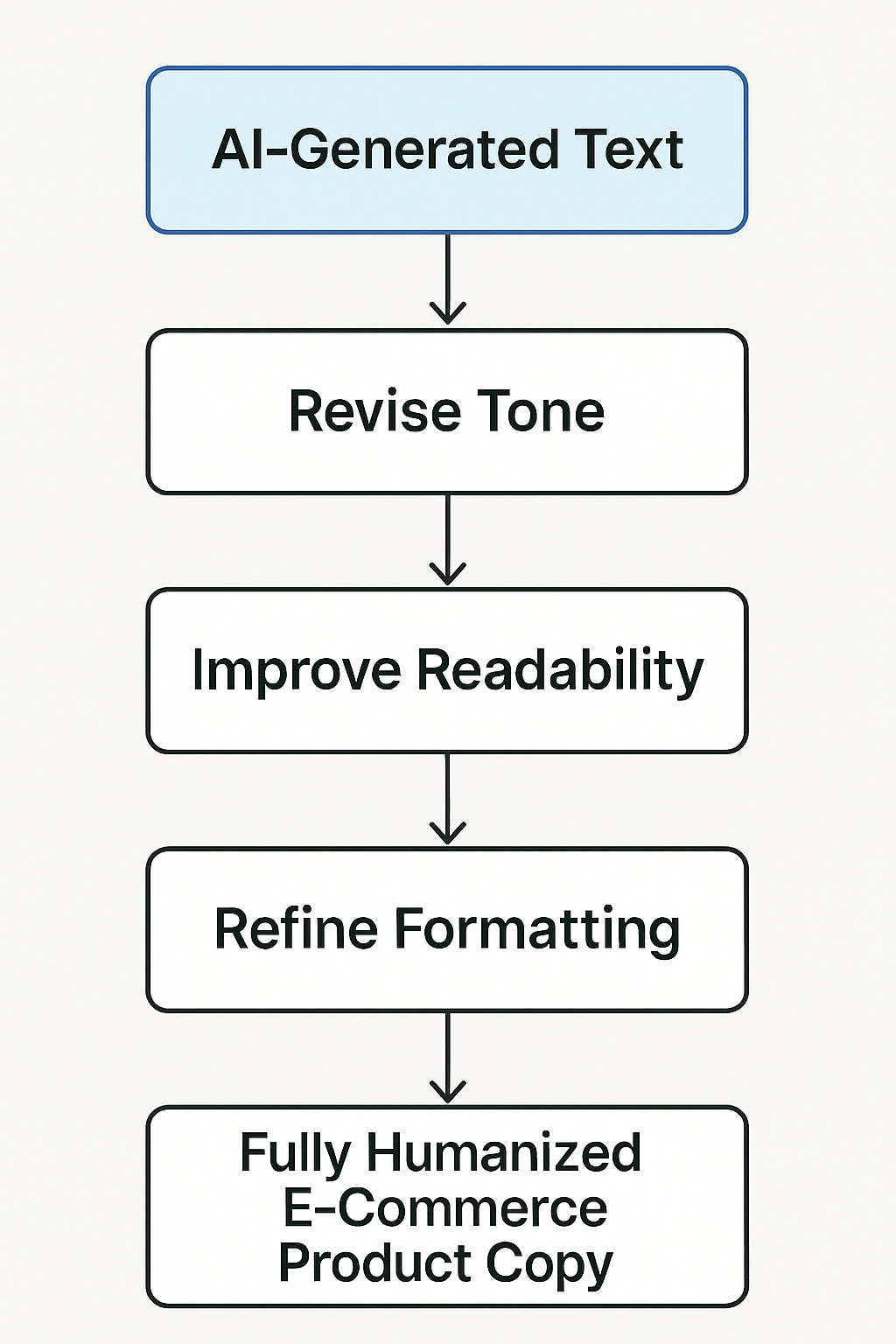
Humanized AI content goes beyond editing. It works more like translation. You take the technical voice of a machine and reshape it into something that carries emotion, a clear brand voice and a steady sense of purpose.
When someone opens a product page, they aren’t just scanning lines of text. They want a reason to trust what they’re seeing. Humanized content helps create that trust through tone, pacing and an honest feel that comes from real intention rather than raw output.
Key Elements of Humanized AI Content
- Tone Personalization: Every brand speaks in its own style. Fashion labels usually sound minimal and aspirational, fitness brands push harder with a more assertive voice and skincare often needs something softer that puts the shopper at ease.
- Contextual Awareness: Humanized content picks up on the signals around the buyer, their expectations, seasonal shifts, even emotional triggers shaping the moment.
- Narrative Flow: It does not move through facts in a straight line. It guides the reader from early interest to steady trust and then toward a decision. The movement feels natural, almost like a small story.
- Conversion Optimization: The language works quietly to remove hesitation. It makes the next step feel simple, whether that means a click or an add to cart.
Consider a raw AI line:
“This coffee mug is made of ceramic and holds 12 ounces.”
A humanized rewrite might look closer to this:
“Start your morning right. This handcrafted ceramic mug keeps your brew warm and your mood a little brighter with every sip.”
The shift is easy to spot. The second line speaks to a moment in someone’s day instead of repeating product specs.
A 2024 Shopify report highlighted how much this approach mattered. Brands using humanized AI content saw conversion lifts between 18 to 30%, especially on mobile product pages. When the storytelling is aligned with emotional triggers, browsers behave differently and become buyers.
How Humanized Content Boosts Rankings & Conversions
Humanized content isn’t just nicer to read; it performs better in real SEO measurements. Google’s RankBrain system looks at behaviors such as dwell time, click-through patterns, and how often a reader returns. When the writing feels human, those signals rise almost on their
Why It Works
- Better Readability: A humanized structure lets people follow the message without working for it. Comprehension sticks longer.
- Emotional Engagement: When the content lands with a bit of feeling, users don’t rush away. They stay.
- Authenticity Signals: A personalized tone gives the page a sense of trust that supports stronger E-E-A-T signals.
- SEO Reinforcement: The longer sessions and more clicks loop back into search performance, nudging rankings upward in a way algorithms don’t ignore.
In the end, humanization turns machine-made text into communication that actually reaches people. Tools like Walter Writes AI, a specialized AI humanizer tool, help brands scale that process so thousands of product pages can be rewritten without losing tone or accuracy.
Workflow: Humanizing Your Product Descriptions with Walter Writes AI
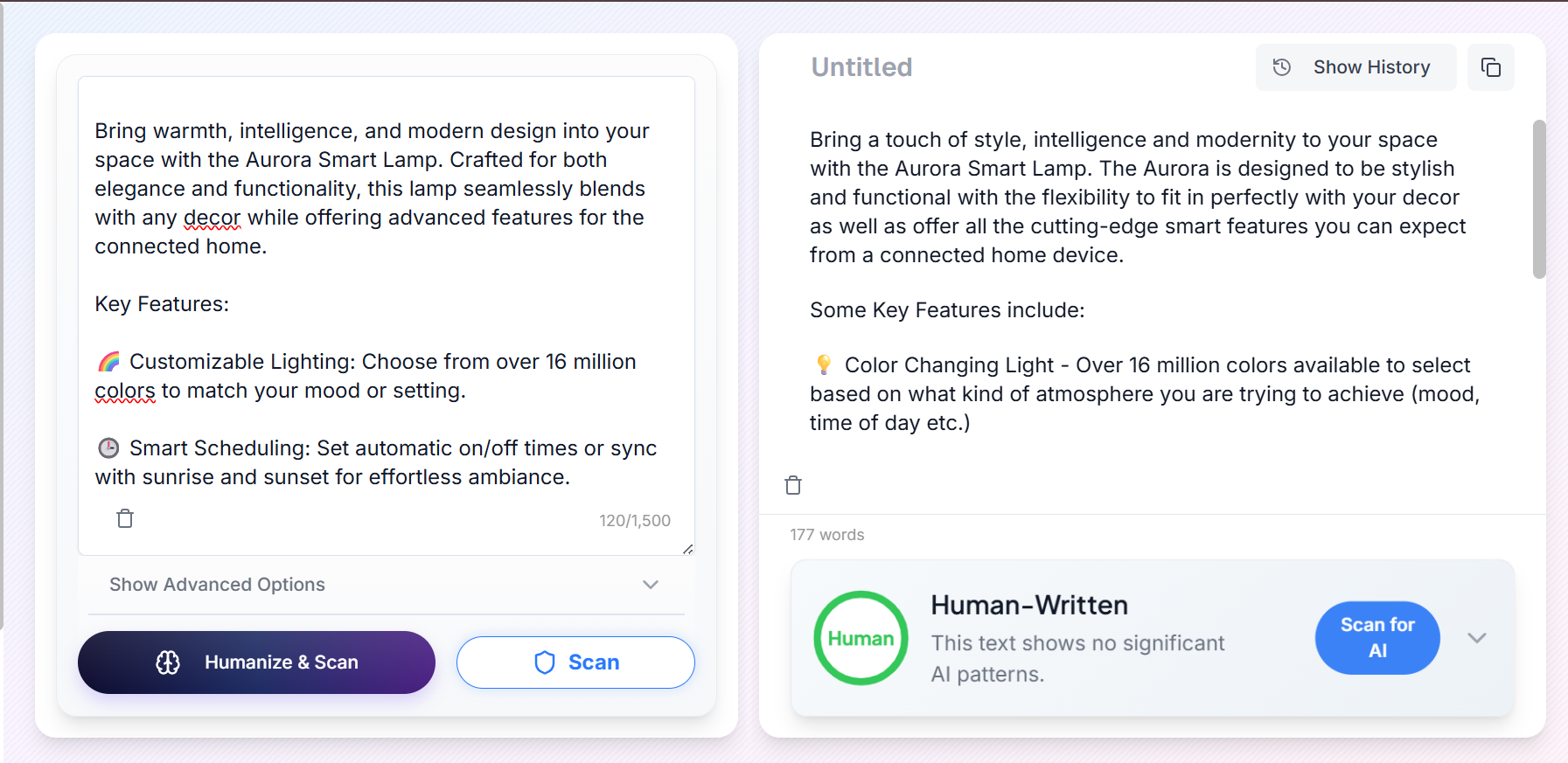
Humanizing AI text doesn’t need to feel like a long editing grind. AI humanizer tools like Walter’s turn machine-written drafts into writing that reads like a person shaped it. Brands use it to create quality content at scale. Here’s how the flow usually looks in practice.
Step 1: Input Your AI Draft
Drop your AI-generated text into Walter’s interface whether it came from ChatGPT, Jasper or any other platform.
Step 2: Choose Your Tone & Intent
Pick from the built-in tone styles Luxury, Friendly, Bold or Informative or set up your own. Some users match it to a persona like a Gen Z shopper or an eco-conscious parent so the voice lands closer to their market.
Step 3: Add Brand & Product Context
Walter gives you space to add details about your audience demographics, brand personality or a product USP. Those hints help the rewrite fall into the right voice instead of sounding generic.
Step 4: Click ‘Humanize’
The tool reshapes the draft in seconds using its tone modeling, emotional calibration and semantic variation. Sentences shift into a warmer rhythm and the typical AI gets scrubbed out.
Step 5: Optimize & Export
Before exporting, Walter highlights places where keywords might fit more naturally or where readability could be tightened and suggests clean meta tags. Once it looks right, you can send the final copy straight into Shopify, WooCommerce or your CMS.
Example in Action:
AI Draft: “Our phone case protects your device from scratches and drops.”
Humanized Output: “Meet the case built for real life sleek protection that laughs at drops, resists scratches, and still fits your pocket like a glove.”
That kind of shift turns simple information into an interesting story, the sort that nudges both conversions and SEO performance upward.
Best Practices: Combine AI Efficiency with Human Clarity
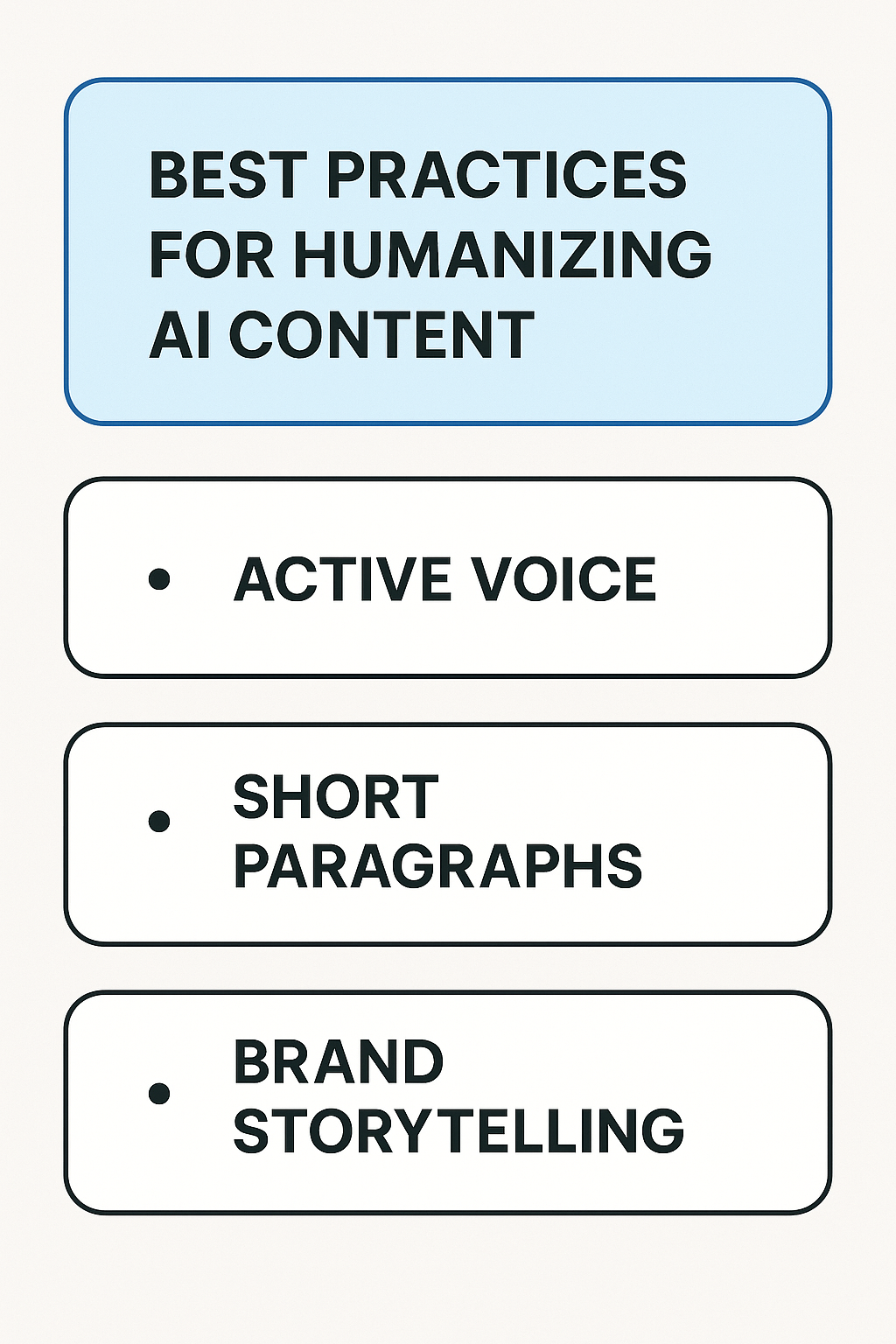
Humanizing AI content isn’t a one-click trick. It works best when machine output meets human judgment and both push the draft into something readers actually enjoy. To get the most out of that mix, follow these practices.
1. Write for People, Not Robots
SEO starts with humans. Aim for clarity and a bit of curiosity, something that feels like a real conversation. Inculcate keywords naturally once the message makes sense. Engagement is what algorithms react to.
2. Mirror how your customers talk
Look at the words shoppers use in reviews or in quick comments on social platforms. If your audience keeps saying snug fit instead of tight-fitting, that’s the phrasing that should show up in your copy.
3. Keep it easy to skim
Short paragraphs help readers land on what matters. Bullets and subheadings catch the eye before the mind decides whether to read deeper. Most people skim first then settle in.
4. Use active voice with verbs that carry weight
Swap out lines like ‘is designed to provide’ for something that moves faster. For instance, ‘gives you’ or ‘keeps you covered’ tends to feel more direct, which is key in e-commerce.
5. Add small moments or micro-stories
A brief sensory cue can make a product stick in someone’s mind. Something simple like “Inspired by mountain mornings, this hoodie wraps you in warmth and freedom.”
6. Match emotion to the buying stage
Excitement works when someone is discovering your product for the first time. Near checkout they look for reassurance instead. Humanized AI can adjust to both as long as the intent data is properly feeded.
7. Look for Readability Metrics
Aiming for a Flesch Reading Ease score in the 60–80 range keeps the text light enough for fast readers and still clear for cautious ones. Walter Writes AI can score it instantly and point to places that need smoothing.
8. Test, Measure, Repeat
After humanizing the content, monitor changes in dwell time, click-through behavior and cart completions. Treat the whole thing as an ongoing optimization loop rather than a finish-line task.