How Jordan Kim Built a $14K/Month Wellness Store Using Spocket’s US Suppliers
Certified nutritionist Jordan Kim built a $14.8K/month wellness store using Spocket’s US suppliers, careful product review, and trust-led content.
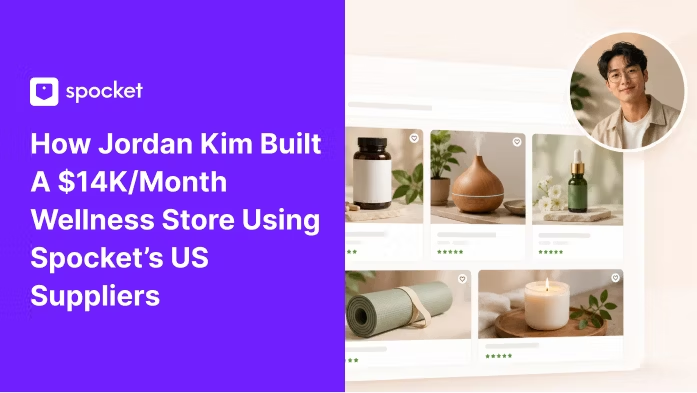
“People were asking me what to take, what to avoid, and which labels to trust. I couldn’t build a store unless I could answer those questions honestly.”
— Jordan Kim, Founder, Functional Wellness
Jordan Kim did not enter wellness ecommerce because she was chasing a trend. She entered it because her clients kept asking the same question.
“What supplement would you actually recommend?”
As a certified nutritionist in Austin, Jordan had spent six years helping clients build better routines around food, energy, recovery, hydration, and general wellness. She was used to reading labels carefully. She knew how easily supplement marketing could become exaggerated. She also knew that most customers had no idea how to tell the difference between a trustworthy product and a beautifully packaged one.
That was the gap she wanted to fill.
Jordan had no interest in launching another loud supplement brand with dramatic promises and vague claims. She wanted to build a small, curated wellness store where every product had a reason to exist. But the moment she started researching supplement dropshipping, she understood why people had warned her against it. The niche was messy. A lot of suppliers made big claims. Some had unclear manufacturing details. Some product pages were full of buzzwords but offered very little documentation. Others looked fine until she asked basic questions about labels, testing, sourcing, or compliance.
If she recommended a product through her store, she needed to know where it came from, how it was labelled, and whether the supplier could support the claims being made. That is why FunctionalWellness started with a simple rule: no product gets listed unless Jordan can review the supplier, the label, and the documentation first.

The problem with selling wellness products online
Wellness products are not impulse buys in the same way phone cases or home decor items are. Customers are not just asking, “Does this look good?”
They are asking, “Can I trust this?” “Is the label accurate?” “Where was this made?” “Is this safe for my routine?” “Is the person recommending it qualified?”
Jordan knew those questions because she had answered versions of them for years.
That made her cautious from the beginning.
When she first explored generic dropshipping platforms, she found plenty of wellness products. Too many, actually. The challenge was not finding items to sell. The challenge was finding products she could stand behind.
Some listings used unclear ingredient descriptions. Some suppliers could not explain their quality process. Some products had labels that looked incomplete. Some made claims Jordan would never repeat as a nutritionist.
She quickly realized that low-cost sourcing was not the advantage in this niche. Trust was.
Jordan also knew supplement dropshipping in the USA comes with compliance concerns. Sellers need to be careful with supplier claims, product labels, manufacturing standards, advertising language, and customer expectations. The category requires more diligence than many beginner dropshippers expect.
For Jordan, that meant she had to build the store more slowly.
- No massive catalog
- No rushed product uploads.
- No copy-pasted supplier descriptions.
- No “miracle” positioning.
She wanted a wellness store that felt calm, careful, and transparent.
“If a customer is putting something in their body because I recommended it, I need to know why I recommended it. That standard slowed me down, but it also protected the business.”
— Jordan Kim, Founder, Functional Wellness
How Spocket helped Jordan narrow the supplier pool
Jordan did not use Spocket to find the most products. She used it to reduce risk.
Her first filter was supplier location. She focused on US-based wellness suppliers because she wanted shorter shipping times, clearer communication, and a supplier base that better aligned with her customer expectations.
That decision shaped the entire store. Instead of building a huge wellness marketplace, Jordan created a focused catalog around daily wellness, hydration, fitness recovery, sleep-support routines, clean lifestyle products, and simple nutrition-adjacent accessories.
She avoided anything that felt too aggressive, too vague, or too difficult to explain responsibly.
Before adding a product, Jordan reviewed it against her own checklist:
- Is the supplier based in the US?
- Is the product label clear?
- Are the ingredients easy to understand?
- Does the supplier provide enough product information?
- Are the claims cautious and realistic?
- Can this product fit into a general wellness routine without overpromising?
- Would Jordan feel comfortable explaining it to a client?
If a product did not pass the checklist, it did not go live.
That made the launch slower than she expected. Her first version of Functional Wellness had only 18 products. But that was intentional.
Jordan did not want customers scrolling through hundreds of random items. She wanted them to feel like someone knowledgeable had already done the filtering for them.
Over time, she expanded the catalog to 52 products. Every new addition went through the same review process.
Spocket helped with the operational side: product imports, supplier communication, inventory syncing, order processing, and fulfillment.
Jordan could spend less time managing logistics and more time doing the work that made the store different — reviewing products, writing clear explanations, and building customer trust.
A wellness store built around explanation, not hype
Functional Wellness did not look like a typical supplement dropshipping store.
There were no dramatic transformation claims. No countdown timers shouting urgency. No influencer-heavy product pages. No complicated wellness jargon designed to sound scientific.
Jordan built the store around clarity.
Every product page included a short note from her explaining why the product was included. She broke down key ingredients in plain language and avoided medical claims. When a product was only relevant for certain routines, she said so. When a product was not meant to be a magic fix, she made that clear too.
That honesty became part of the brand. A typical product page had three simple sections:
- What it is: A plain explanation of the product and where it fits in a wellness routine.
- Why we chose it: Jordan’s reason for including it in the store, based on supplier information, label clarity, and customer use case.
- What to know before buying: Practical notes about expectations, usage, and when customers should speak to a healthcare professional.
This changed how people interacted with the store. Customers were not just browsing products. They were reading Jordan’s reasoning.
That mattered because wellness buyers often need reassurance before they purchase. They want to feel informed, not pushed.
Jordan’s monthly email, “What I’m Reviewing This Month,” became one of the store’s strongest channels. Instead of sending generic discounts, she shared what she was testing, what she was removing from the catalog, and which products she thought were worth keeping.
Sometimes the email recommended products. Sometimes it explained why she chose not to list something. That level of honesty made the brand feel more credible.
“The store grew when I stopped trying to sound like ecommerce and started sounding like myself. My customers didn’t need hype. They needed someone to explain things clearly.”
— Jordan Kim, Founder, FunctionalWellness
How Jordan grew without rushing the catalog
Jordan’s growth was steady rather than explosive. The first three months were mostly about setup, testing, product review, and content. She made a few sales from existing clients and referrals, but the store was not yet a major revenue stream.
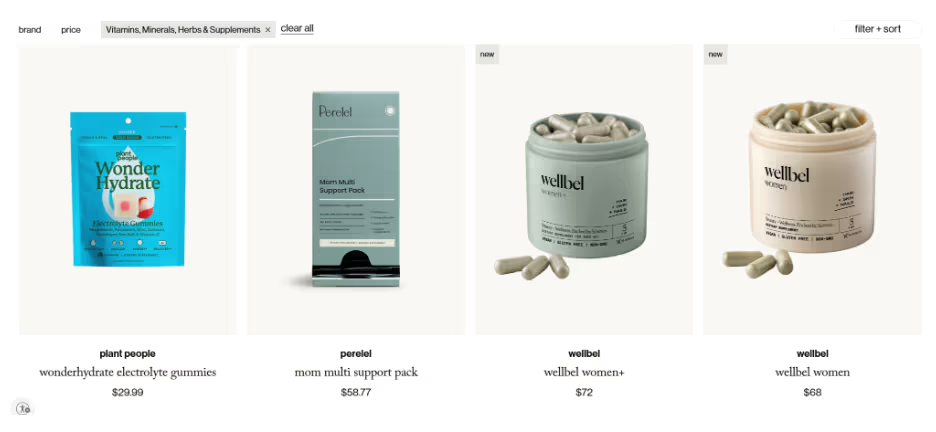
By month six, FunctionalWellness was bringing in around $4.2K per month. That early revenue came from three places: Jordan’s client network, a small email list, and educational blog posts that answered common wellness questions. By month ten, the store crossed $9K in monthly revenue.
At that point, Jordan had a clearer system. She knew which products customers understood quickly, which product pages needed better explanations, and which email topics drove the most clicks.
By month fourteen, FunctionalWellness reached $14.8K in monthly revenue. That number felt realistic for the way Jordan wanted to operate. She was not adding products every day. She was not running aggressive paid ads. She was not chasing every trending supplement on TikTok.
She was building a store around trust, repeat purchases, and careful content. Her strongest revenue drivers were:
- Educational wellness guides
- Product explainer emails
- Returning customers
- Bundled routine recommendations
- Organic search traffic
- Direct referrals from clients and subscribers
Bundles helped raise the average order value to $72.

Instead of selling single products in isolation, Jordan grouped items around simple routines: morning hydration, post-workout recovery, sleep-support habits, and beginner wellness essentials.
These bundles worked because they made decision-making easier. Customers did not have to build a routine from scratch. Jordan gave them a starting point, with clear notes and realistic expectations.
Why trust became the real growth channel
Jordan’s best marketing asset was not a paid ad campaign.
It was consistency.
She published long-form guides that sounded like they came from a professional, not a copywriter trying to rank for supplement keywords. Topics included how to read wellness labels, how to compare supplement claims, what to ask before buying a product, and how to build a simple daily routine without overcomplicating it.

These articles helped the store rank for search terms related to wellness products dropshipping, US health products, supplement safety, and ingredient education. But more importantly, they gave customers a reason to believe Jordan knew what she was talking about.
Her emails did the same.
The highest-converting email sequence was not a discount campaign. It was a five-part “Label Literacy” series that taught subscribers how to read wellness product labels more carefully.
Each email explained one concept, then linked to products that met Jordan’s standards. That approach brought in fewer impulse buyers, but better customers. They asked thoughtful questions. They came back for repeat purchases. They left detailed reviews. They trusted the brand because it did not talk down to them.
By month fourteen, FunctionalWellness had a 4.8-star average review rating.
Most reviews mentioned the same things: clear product descriptions, fast shipping, useful guidance, and a store that felt less overwhelming than large supplement marketplaces. That was exactly what Jordan had wanted to build.
What wellness founders can learn from Jordan
Jordan’s story is a useful reminder that not every ecommerce business needs to grow fast to grow well.
In a category like wellness, speed can create problems.
- A rushed product page can create confusion.
- An exaggerated claim can create risk.
- A poor supplier choice can damage trust.
- A product you cannot explain can weaken your brand.
Jordan avoided that by building slowly and deliberately.
She treated supplier selection as part of the brand, not just a backend task. She used Spocket to find US suppliers, automate fulfillment, and manage product operations. Then she used her own expertise to create the layer customers actually cared about: interpretation.
That is the difference between selling wellness products and curating them.
Build a wellness store customers can trust
Wellness customers do not only buy products. For anyone researching supplement dropshipping USA compliance, wellness products dropshipping, FDA registered dropshipping suppliers, verified supplement suppliers, or how to dropship supplements legally, Jordan’s approach offers a more grounded path.
Start with the standard. Then build the store. Not the other way around.
They buy confidence.
With Spocket, you can source wellness products from US suppliers, build a more transparent catalog, automate fulfillment, and create a store that reflects the level of care your customers expect. Start your free trial today.