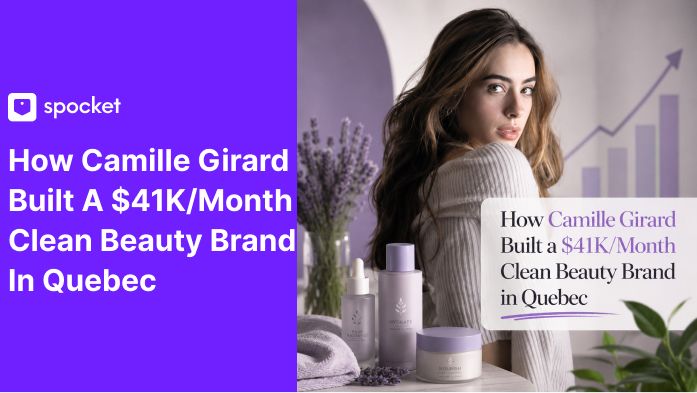
How Camille Girard Built a $41K/Month Clean Beauty Brand in Quebec — By Mastering Compliance with Spocket
Camille Girard scaled Boreal Beauty Supply from CAD $8K to $41K/month in 9 months. Here's how she won Quebec's toughest beauty market using Spocket.
“Breaking into the beauty industry was tough. But Spocket’s suppliers made my journey possible. I wasn’t just solving customer’s skincare woes, my products helped them reclaim their life and confidence.”
-Camille Girard, Boreal Beauty Supply

★ CAD $8K → CAD $41K revenue in 9 months
★ Zero regulatory issues
★ 70% of sales from repeat customers
Store: Boreal Beauty Supply
Owner: Camille Girard
Location: Montréal, QC, Canada
Niche: Clean Beauty & Skincare
Platform: Shopify
Market: Quebec & French-Canadian women, ages 22–45
Camille Girard spent three years behind the counter of a Montréal pharmacy watching the same thing happen over and over. Customers would come in asking for fragrance-free serums, clean-ingredient moisturizers, paraben-free creams. She'd flip the packaging over. Half the time the label was English-only. No French translation. No complete ingredient list. Not legal to sell in Quebec the way they were labeled, but there they sat on the shelf anyway.
She also noticed who those customers were. They weren't bargain shoppers. They knew their INCI terms. They read the back of the packaging before deciding to buy. They'd pay more for a shorter, cleaner ingredient list if they trusted the brand behind it. And they weren't being well served by what was available online.
The French-Canadian clean beauty dropshipping market was real, it was growing, and most online sellers were getting the compliance side wrong. Stores shipping into Quebec either didn't know about the bilingual labeling rules or weren't prioritizing them. Camille knew about them. She saw a gap.
She launched Boreal Beauty Supply in late summer, took the compliance side seriously from week one, and spent the next nine months going from CAD $8,000 to CAD $41,000 a month.
Why Quebec Cosmetics Compliance Isn't Optional?
Selling beauty products in Quebec is not the same as selling them in Ontario or BC. Health Canada's Cosmetics Regulations require bilingual French and English labeling on every product, full ingredient disclosure using INCI naming conventions, and proper safety documentation from the supplier. Quebec's Office québécois de la langue française adds its own layer on top of that, with French-language requirements that go further than the federal standard. A product that passes labeling checks in most of Canada might still fail a Quebec regulatory review.
For a clean beauty dropshipping seller, this creates a real sourcing problem. Most suppliers on generic aggregators don't think about Canadian bilingual compliance when printing labels. Some ship with English-only packaging. Others list ingredients by casual names rather than INCI standards. A few will send over a certificate-of-compliance PDF that was clearly auto-translated and wouldn't hold up under scrutiny.
Camille understood all of this before she launched. Her years in pharmacy gave her a specific picture of what compliant actually meant in this context. She wasn't guessing. From the start, her product search ran through one question: can this supplier prove their labels meet Canadian and Quebec standards?
That question cut out almost everything she found in the first two weeks of searching.
She contacted 6 suppliers. Most came back with nothing useful. 1 European brand told her bilingual labeling "wasn't required for Canada," which was wrong.
A supplier out of China sent documentation that looked official but was clearly machine-translated and wouldn't survive any real inspection. One promising Canadian company turned out to be a reseller with no access to their own safety sheets.
She had 2 real choices at that point:
- Build the brand from scratch and handle the compliance work herself, which would be expensive and slow.
- Or find a sourcing app that could surface suppliers who were already doing things correctly.
Finding Compliant Suppliers Through Spocket
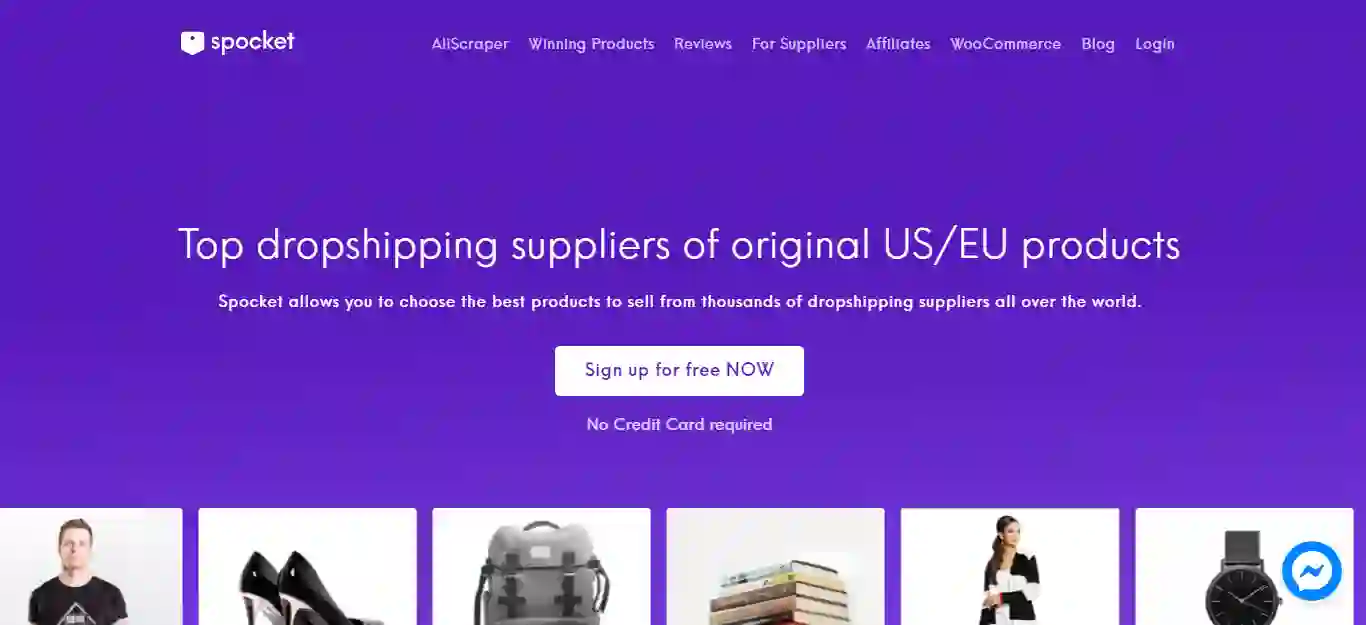
She found Spocket while researching clean beauty dropshipping and gave it a proper look.
Her first impression was that the filtering actually worked. She could sort by supplier country, focus on Canadian and European vendors, and read full supplier profiles listing what certifications and labeling standards they held.
That was fundamentally different from what she'd been doing. Instead of cold-emailing suppliers one by one hoping for documentation, she could see upfront which ones already worked within the regulatory frameworks she needed.
In her first two days on the app, she found 6 Canadian suppliers and 3 European ones carrying best bath and beauty products that were INCI-compliant and either bilingual-ready or able to confirm French labeling on request. The European vendors were especially useful. EU cosmetic regulations require full ingredient disclosure across multiple languages, and French was already on most of the products she looked at.
She put in product orders to check them properly. Three suppliers made the cut. Two were based in British Columbia, one in Quebec City. The Quebec City supplier was a small-batch skincare producer already selling into Quebec pharmacies. Their documentation was in French and English by default because they'd built their process that way from day one.
Her first compliant product was live in Week 2.
Other Spocket sellers have pointed to the same thing. Marc Chapon, one of the better-known dropshipping success stories on the app, has said that finding the right vetted suppliers was what actually changed his numbers.
Not ad spend. Not store design. Supplier quality.
Camille's experience went the same way.
How She Built the Catalog?
Camille kept her product selection deliberate and small, on purpose.
By month nine, she had 38 products live. She'd personally used every one before listing it. Her pharmacy background made that feel necessary, not optional. She couldn't sell something she hadn't checked herself.
She started with core skincare: a hydrating serum, a gentle cleanser, two moisturizers suited for Quebec's dry winters. Later she added vegan beauty products to the catalog, which her audience responded to well. She also brought in some luxury beauty products at higher price points toward the end of the year. Those premium items had better margins than the mid-range ones, and customers didn't push back on pricing when they already trusted the sourcing.
Before adding anything to the store, she ran the numbers through the profit margin calculator on Spocket. Her margins sat between 35% and 48% depending on the product. That was the range she wanted to stay in.
One thing she kept coming back to: Spocket had no MOQs.
She could put in a single-unit order to check quality before committing to anything in volume. In her first two months, she checked around 25 products and listed 14 of them. That selectivity is a big part of why her early reviews stayed strong.
The Growth: Month by Month

Month 1: CAD $8,000. She had a small launch list from pharmacy contacts and a few local Facebook groups where she'd been active. Word spread faster than she expected once people realized the bilingual labeling on her products was actually correct and complete, not just an afterthought sticker.
Month 3: CAD $18,000. A French-language blogger in Laval wrote about Boreal Beauty Supply after noticing that the ingredient lists were properly in French and fully complete. That post drove a couple hundred new visitors over two weeks, and they bought at a higher rate than any paid traffic she'd tried.
Month 4: She started paid ads. French-language keywords only. She aimed her ads at Quebec, plus parts of New Brunswick and northern Ontario with French-speaking populations. She ran two weeks of smaller budgets watching results before pushing up on what was working.
Month 6: CAD $31,000.
Month 9: CAD $41,000. At that point, 70% of revenue was coming from returning customers. For a dropshipping store under a year old, that number is uncommon. People weren't buying once and moving on. They were coming back.
She never received a regulatory complaint, an OQLF notice, or a customer asking why their packaging was English-only. That kind of record comes from getting the sourcing right from week one, not from luck.
What Other Sellers Keep Missing?
Most people building a store around best beauty products to dropship think about margins first and compliance somewhere later, if at all. That approach falls apart in markets like Quebec, where the documentation has to actually hold up.
Camille made compliance her first filter, not an afterthought. That meant a smaller catalog and a slower start. But it also meant almost no competition in her specific market. Most sellers aiming at French-Canadian buyers had skipped the hard part. She hadn't.
The other thing she got right: she stayed specific. 38 products. She knew every one of them. Wrote about each with real detail. Customers noticed that, and it's a big part of why 70% of sales came from people who'd bought before.
As the store grew, she moved to the Empire plan. Spocket's pricing at that tier gave her automated inventory sync. When something ran low, she found out before her customers did.
Worth knowing if you're evaluating your setup: Spocket also connects to WooCommerce, Wix, eBay, and BigCommerce, not just Shopify. It also has Print-on-demand for sellers who want branded products in the mix without carrying physical inventory.
By month 9, Camille was browsing trending dropshipping products in body care and wellness, looking to grow her catalog without losing focus. She was also in early conversations about white label health and beauty products, putting the Boreal Beauty Supply name on formulations her customers had been buying long enough for her to feel confident about.
Conclusion
Camille got a few things right and kept getting them right.
She picked a market that most sellers had written off as too complicated. She understood the compliance requirements before sourcing a single product. She used Spocket to find Canadian and EU suppliers that already met those requirements, rather than trying to fix the documentation problem after the fact. She kept her catalog small, checked every product herself, and let her repeat-buyer base build before spending seriously on paid acquisition.
CAD $8K to $41K in nine months. Zero regulatory issues. 70% of sales from returning customers. Those results trace directly back to choices she made in month one, not month seven.
If you're thinking about clean beauty dropshipping or any niche where what your supplier can actually prove matters, getting the sourcing right at the start isn't optional. That's the work that makes the repeat sales, the strong reviews, and the clean compliance record possible.
Start your free trial on Spocket and see which Canadian and EU beauty suppliers are available in your market today.