How Fieldstone Kitchen Bought Back Their Time and Grew Into a $24K/Month Brand
See how Fieldstone Kitchen used Spocket automation to reduce order work, cut fulfillment errors, and grow into a $24K/month kitchen brand.

Fieldstone Kitchen started as a side project for Ryan and Megan Okafor, a husband-and-wife team based in Nashville, Tennessee.
They both loved cooking, hosting, and discovering kitchen tools that felt more personal than the mass-produced products found in big-box stores. What began as a small online shop for artisan kitchen tools slowly grew into a brand for home cooks who cared about quality, design, and the experience of preparing meals at home.
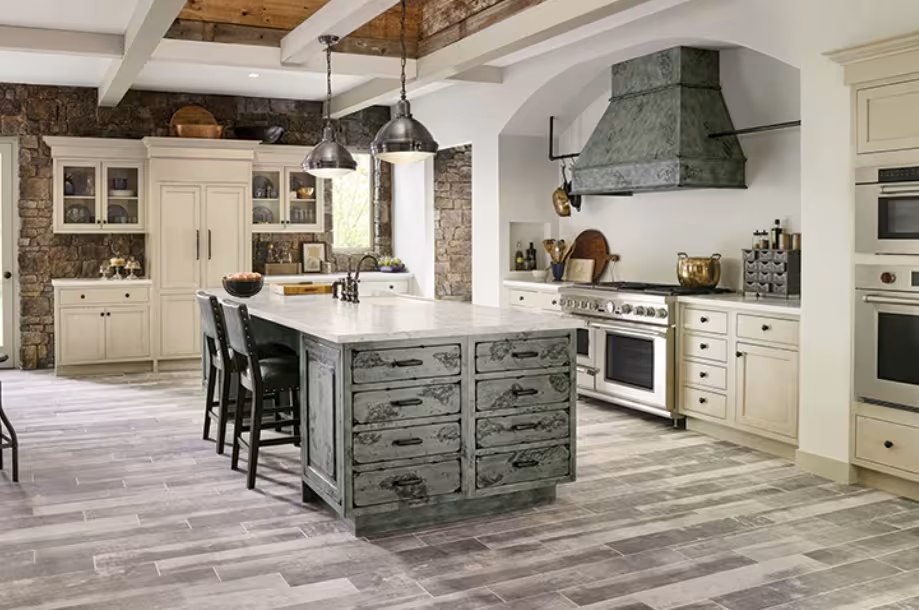
The store sold wooden utensils, ceramic cookware, cast iron accessories, serving boards, oil dispensers, measuring tools, and small kitchen essentials with a handcrafted feel.
Their customers were mostly home cooks, foodie couples, and gift buyers between the ages of 30 and 50, especially across the U.S. South and Midwest. Many were people who enjoyed slow cooking, weekend hosting, family dinners, and creating a warm kitchen space.
The brand had potential from the beginning. Ryan handled most of the operations, supplier communication, and product listings, while Megan focused on photography, content, and customer support.
But as orders increased, the business became harder to manage.
The couple was spending more time forwarding orders than growing the brand. What once felt like a creative side business had slowly turned into a daily admin job.
That changed when they started using Spocket to automate fulfillment and reduce the manual work behind every order.
The Challenge
Fieldstone Kitchen’s biggest problem was not demand. Customers liked the products, the brand had a clear niche, and repeat buyers were slowly starting to come back for gifts, hosting essentials, and seasonal kitchen items.
The real issue was time.
Before using Spocket, Ryan and Megan were manually forwarding orders to suppliers every day. Each order had to be checked, copied, confirmed, and tracked. If a customer ordered multiple items from different suppliers, the process became even more time-consuming.
At first, it felt manageable. A few orders a day did not seem like a major issue. But as the store grew, manual fulfillment became a real bottleneck.
On busy days, Ryan spent more than three hours handling order-related tasks. That included checking customer details, forwarding orders, confirming supplier information, updating tracking numbers, and responding to customers when something looked off.
The more orders they received, the more room there was for small mistakes.
A product variant could be missed. A wrong address could be copied. Tracking could be delayed. Supplier emails could get buried. None of these mistakes were huge on their own, but together, they created stress and made the business feel fragile.
For a couple running the store alongside other responsibilities, this was exhausting.
They had started Fieldstone Kitchen because they loved the niche and wanted to build a brand around home cooking. But they were spending too much energy on repetitive backend work.
The business was growing, but it was not yet sustainable for them.
The Goal
Ryan and Megan knew they needed to automate before scaling any further.
Their goal was simple: reduce manual fulfillment work without losing control of the customer experience.
They wanted to cut down the time spent forwarding orders, reduce human errors, improve tracking updates, and free up more time for content marketing.
The couple also wanted Fieldstone Kitchen to feel more like a brand, not just a store. Megan had been wanting to create more recipe-style videos, product demos, and kitchen tips. Ryan wanted to improve product pages, build better bundles, and test email campaigns.
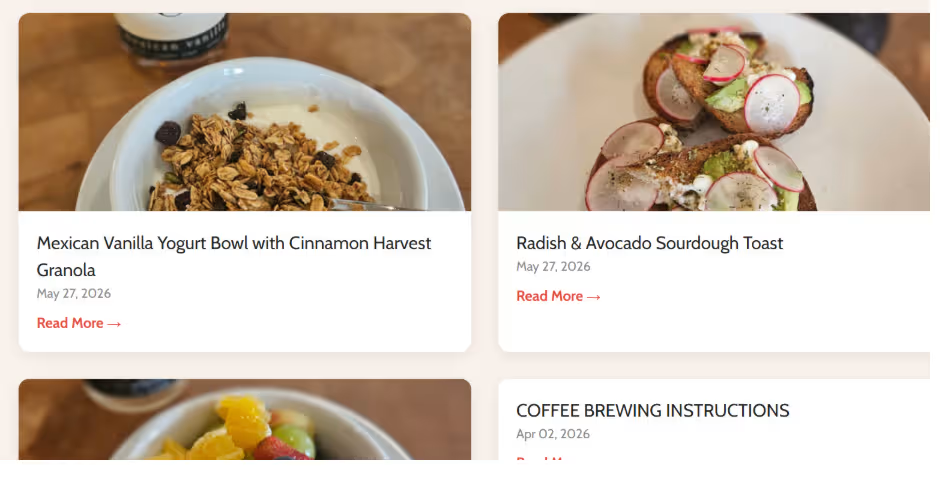
But none of that was possible if fulfillment kept taking over the day.
They did not want growth to mean longer nights and more mistakes. They wanted a system that could support higher order volume without requiring them to manually touch every order.
How Spocket Helped
Ryan and Megan started using Spocket to simplify sourcing and fulfillment for Fieldstone Kitchen.
The biggest difference came from Spocket’s one-click order fulfillment and supplier automation. Instead of manually forwarding each order and checking every detail across supplier messages, they could process orders faster and with fewer steps.
Within the first week, they had their core fulfillment workflow running through Spocket.
Orders became easier to manage. Supplier details were more organized. Product information stayed clearer. Tracking updates were easier to follow. Most importantly, Ryan and Megan were no longer losing hours every day to basic order processing.
Before Spocket, fulfillment and order forwarding took around three hours a day on busy days. After the new workflow was in place, that dropped to about 25 minutes for order review, checks, and customer follow-up.
The change did not make the business feel less personal. It made the business easier to run.
By removing repetitive backend tasks, Ryan and Megan had more time for the parts of Fieldstone Kitchen that customers actually noticed: content, product storytelling, customer experience, and community building.
The Strategy
Once fulfillment became easier, Fieldstone Kitchen shifted focus from simply keeping up with orders to actively growing the brand.
Ryan and Megan decided to reinvest the time they saved into content marketing.
This made sense for their niche. Kitchen tools and cookware are highly visual, but customers also want context. They want to know how a product feels, how it is used, where it fits in the kitchen, and why it is worth buying over something generic.
Megan started creating more short videos and YouTube content around everyday cooking moments. Instead of only showing product photos, she showed products in use.

A wooden spoon appeared in a Sunday sauce recipe. A ceramic baking dish was used for a family-style pasta bake. A serving board was styled for a simple dinner night. Measuring spoons appeared in baking tutorials.
This helped Fieldstone Kitchen feel more like a real kitchen brand and less like a basic ecommerce catalog.
Ryan focused on improving product pages and email flows. Product descriptions became more useful and story-driven. Instead of only listing materials and dimensions, the pages explained who the product was for, how it could be used, and why it made sense for home cooks.
They also built simple bundles around common kitchen moments, such as hosting essentials, baking prep sets, weeknight cooking tools, and housewarming gifts.
Because fulfillment was no longer eating up their day, they had time to think more clearly about growth.
The Execution
The first step was cleaning up the product catalog.
Ryan and Megan removed products that created too many support questions or did not match the Fieldstone Kitchen feel. They wanted the store to focus on artisan-style tools and cookware that looked good, worked well, and made sense for their audience.
Next, they sourced more products through Spocket, focusing on suppliers that offered reliable kitchen tools, cookware accessories, and home-friendly products suitable for U.S. customers.
Then they rebuilt their fulfillment workflow.
Instead of manually handling each order from start to finish, they used Spocket to automate more of the process. One-click fulfillment helped them process orders faster, while supplier automation reduced back-and-forth communication.
This cut manual work dramatically.
Before Spocket, fulfillment and order forwarding could take more than three hours a day during busy periods. After the new workflow was live, order review and fulfillment checks took roughly 25 minutes most days.
That time difference changed the business.
Megan used the extra hours to create YouTube videos, recipe clips, and product demos. Ryan used the time to improve email campaigns, test bundles, and optimize the website.
Their YouTube channel became an important part of the brand. It was not overly polished or corporate. It felt like a couple sharing practical kitchen ideas from home.
That made the brand more relatable.
Customers started discovering Fieldstone Kitchen through videos, then visiting the store to buy the tools they had seen in use.
The Results
Within 6 months of automating fulfillment with Spocket, Fieldstone Kitchen became a much stronger and more manageable business.
Monthly revenue grew from around $8,700 to $24,600, driven by better content, smoother operations, stronger bundles, and more consistent customer follow-up.
Manual order work dropped by about 90%, going from more than three hours on busy days to about 25 minutes for daily review and checks.
Order errors dropped by 82%. Before automation, most mistakes came from manual copying, missed variants, or delayed supplier updates. After moving more of the workflow into Spocket, those errors became much less common.
Their YouTube channel grew from 6,200 to 31,000 subscribers over the same period. The channel helped build trust because customers could see the products being used in a real kitchen, not just photographed on a product page.
Repeat purchase rate increased from 18% to 27%, especially among customers buying gifts, cookware accessories, and seasonal kitchen items.
Key result metrics included:
- Monthly revenue grew from $8,700 to $24,600 in 6 months
- Manual order work dropped from 3+ hours a day to about 25 minutes
- Order errors dropped by 82%
- YouTube channel grew from 6,200 to 31,000 subscribers
- Repeat purchase rate increased from 18% to 27%
- Full fulfillment workflow was live within the first week
The biggest win was not just revenue. It was breathing room.
Ryan and Megan were no longer trapped in daily admin work. They had time to create, test, improve, and actually build the brand.
Founder Statement
“Before Spocket, we were excited that Fieldstone Kitchen was growing, but honestly, we were tired. Every order needed manual attention, and even small mistakes could turn into customer issues. Once fulfillment became easier, the whole business felt lighter. We got our evenings back, and we finally had time to make videos, improve the store, and focus on the parts of the brand that customers actually connect with.”
— Ryan & Megan Okafor, Founders of Fieldstone Kitchen
Why It Worked
Fieldstone Kitchen grew because Ryan and Megan solved the operational problem before it became a bigger growth blocker.
Many small ecommerce stores try to scale by adding more products or spending more on marketing. But if fulfillment is still manual, growth can quickly create more stress, more mistakes, and a weaker customer experience.
By using Spocket for one-click order fulfillment and supplier automation, Ryan and Megan removed the repetitive work that was slowing them down.
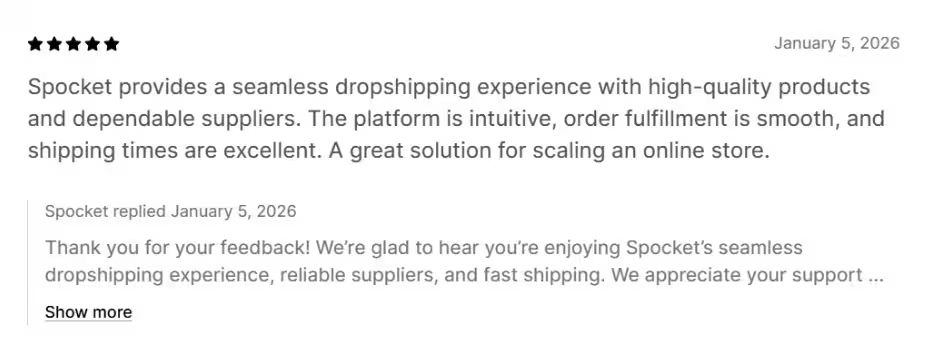
That gave them more time to do what actually moved the business forward.
They created useful content. They improved product pages. They built bundles. They connected with customers through YouTube. They turned kitchen products into real cooking moments.
The automation did not replace the human side of the brand. It made space for it.
The Takeaway
Fieldstone Kitchen proves that sometimes the biggest growth move is not doing more. It is removing the work that keeps you stuck.
For Ryan and Megan, Spocket helped turn a time-consuming side hustle into a more scalable kitchen brand. With one-click fulfillment and supplier automation, they reduced manual work, lowered order errors, and reinvested their time into content marketing.
That shift helped the brand grow to $24,600 a month while still feeling personal, warm, and founder-led.
👉 Start your free trial – 7 days, no credit card needed.
Fieldstone Kitchen did not scale because the founders worked longer hours. It scaled because they bought back their time and used it where it mattered most.