How Sarah Chen Turned Her Parenting Blog into a $15K/Month Baby Store with Spocket
Sarah Chen had 22K monthly blog readers but zero product revenue. See how she built a $15K/month certified baby products store using Spocket.
“My readers don’t just read my blog. They put my recommendations in their baby’s mouth. I cannot afford to get that wrong.”
— Sarah Chen, Founder, TinyTrove Shop
Sarah Chen had what most new ecommerce founders spend years trying to build. An audience.
For three years, she had been running a parenting blog from her home office in Seattle, writing about newborn routines, toddler sleep, feeding tips, sensory play, nursery organization, and the everyday chaos of raising small children. By the time she started TinyTrove Shop, her blog was already getting 22,000 monthly readers.
Her comment section was active. Parents trusted her because she wrote like someone who had actually been there — not like a brand trying to sell them something.
But there was one problem. Sarah was helping thousands of parents make buying decisions every month, yet she was barely earning from those recommendations. Display ads brought in some revenue. Affiliate links helped a little. But every time she sent readers to Amazon or another marketplace, she felt like she was giving away the most valuable part of her business: trust.
Her readers did not just want random product links. They wanted Sarah’s opinion. They wanted to know what she would actually use in her own home. So she decided to build a baby products store connected directly to her blog.

Why product safety is not negotiable in the baby niche
Baby products are emotional purchases.
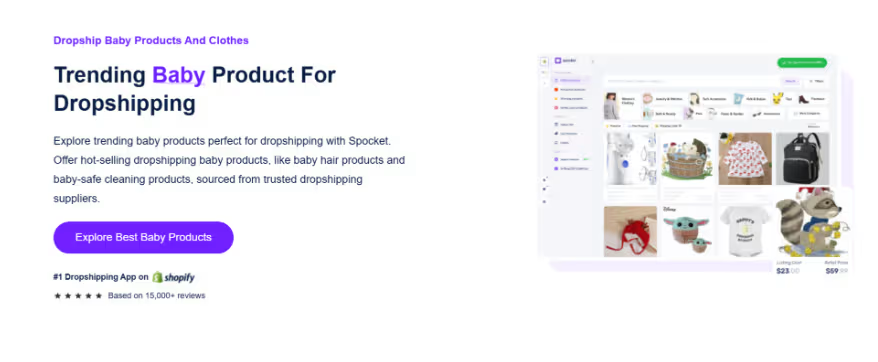
Parents do not buy a teether, blanket, onesie, wooden toy, or feeding spoon the same way they buy a phone stand. They ask questions. They compare materials. They read labels. They worry about what goes near their baby’s skin, mouth, crib, and hands.
Sarah knew this better than anyone because her readers asked those questions every day.
- Was the fabric organic?
- Was the toy paint non-toxic?
- Was the feeding product BPA-free?
- Was the sleepwear safe for sensitive skin?
- Was the supplier based somewhere with real product standards?
These were not small details. They were the entire foundation of the niche.
Sarah first looked at the same low-cost overseas marketplaces many new dropshippers use. The prices looked great. The margins looked even better. But the deeper she went, the more uncomfortable she became.
Many products were labeled “baby safe,” but there was no clear way to verify the claim. Some listings mentioned certifications without showing documents. Some suppliers gave vague answers. Others did not answer at all.
For a general store, that might feel like a sourcing problem.
For Sarah, it was a credibility problem.
Her entire blog was built on the idea that parents could trust her judgment. One bad product recommendation would not just create a refund request. It could damage three years of community-building.
She spent six weeks looking for a dropshipping solution that could support the kind of product diligence her audience expected. She did not want the cheapest suppliers. She wanted suppliers she could stand behind.
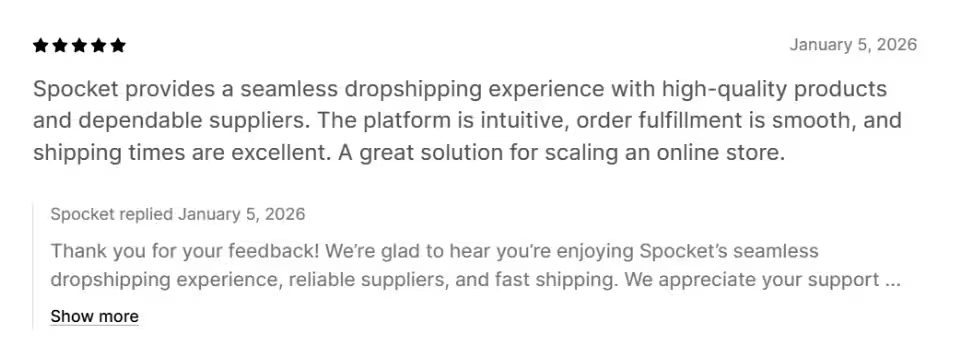
That search led her to Spocket.
Finding certified EU and US baby suppliers on Spocket
Sarah signed up for Spocket with a very specific goal. She was not trying to build a huge catalog. She was trying to build a trusted one.
The first thing she did was filter for EU and US suppliers in the baby, kids, and family categories. Instead of scrolling through anonymous listings with uncertain quality, she found products from suppliers with clearer sourcing, faster shipping options, and a level of accountability she had not seen on generic marketplaces.
Her early shortlist included organic cotton baby clothing, wooden toys, nursery accessories, BPA-free feeding items, soft blankets, and parent-friendly gift products.

But Sarah still had a rule: nothing went live on TinyTrove Shop until she had reviewed it herself.
She ordered eight product samples first.
When the packages arrived, she photographed them in her home nursery. Not on a white studio background. Not with stock images. She placed the products where her readers expected to see them — next to a crib, on a changing table, inside a play basket, beside her toddler’s books.
That became part of the brand.
TinyTrove did not look like a dropshipping store. It looked like an extension of Sarah’s blog.
She also built a dedicated “Safety Standards” page for the store. Every product category explained what Sarah looked for before listing an item, including textile quality, toy safety, feeding-material standards, supplier location, and product-use notes.
That page quickly became one of the most important trust-builders on the site.
“I could ask questions before listing a product, order samples, and build the store around what I would actually recommend to another parent. That changed everything.”
— Sarah Chen, Founder, TinyTrove Shop
The biggest shift was psychological.
Sarah was no longer linking out to products she could not control. She was curating a store around the same editorial judgment that made her blog successful in the first place.
Key Spocket features that helped her here included EU and US supplier access, sample ordering, supplier communication, branded invoicing, product imports, automated fulfillment, and inventory syncing.
Turning 22,000 monthly readers into paying customers
Sarah did not launch TinyTrove Shop with paid ads.
She did not need to.
She already had 22,000 monthly readers visiting her blog for parenting advice. Her opportunity was not to find a new audience. It was to give her existing audience a natural next step.
So she started with her top-performing posts.
Articles like newborn nutrition, baby shower gift ideas, toddler playroom setup, feeding must-haves, and minimalist nursery checklists already attracted high-intent readers. These were parents actively researching what to buy.
Instead of placing banner ads across the site, Sarah added product recommendations directly inside the content.
- A post about sensory play linked to soft wooden toys.
- A baby shower gift guide featured curated bundles from TinyTrove.
- A nursery organization article recommended storage baskets and blankets.
- A feeding routine post included BPA-free accessories from her store.
It did not feel like an ad because it matched the reader’s intent.
That was the funnel.
Helpful blog post first. Relevant product recommendation second. rust-based purchase third.
Her “My Favourites” series became the biggest driver of early sales. Once a month, Sarah published a roundup of baby products she was testing, using, or recommending. She wrote the posts in the same voice her readers already loved: honest, practical, slightly tired, and very human.
No hard selling. No exaggerated claims. Just useful commentary from a parent who had done the research.
When the store went live, Sarah emailed her newsletter subscribers with a simple announcement. She explained why she had built the shop, how she selected products, and why safety standards mattered to her.
The email drove her first wave of traffic.
Six days later, TinyTrove made its first sale.
By the end of the first launch push, readers were not just clicking. They were replying to her emails with product requests, safety questions, and suggestions for future collections.
That feedback loop became the business.
Pinterest became the second growth channel. Sarah reused her original product photography to create baby shower boards, nursery checklists, newborn essentials pins, and “things I actually use” product roundups. Because the images felt personal and lived-in, they performed better than generic product graphics.
Within 60 days, Pinterest was sending steady traffic to both the blog and the store.
Scaling content and commerce together
By month four, TinyTrove was no longer just a side project attached to Sarah’s blog.
It had become part of the content engine. Sarah noticed that posts with store recommendations performed better because they gave readers a complete answer. Someone searching for baby shower gift ideas did not just want inspiration. They wanted products they could buy. Someone reading about toddler play setups did not just want theory. They wanted safe toys that fit the idea.
So she stopped treating the blog and store as separate businesses.
Every new content piece had a commerce angle, but only where it made sense.
Her best-performing offer was the “New Parent Starter Kit,” a curated bundle of baby essentials sourced through Spocket suppliers. It worked because it solved a real problem. New parents and gift buyers did not want to compare 25 products. They wanted someone trustworthy to narrow the list.
The bundle also increased her average order value.
Single product orders were useful, but curated kits turned casual readers into higher-value customers. TinyTrove’s average order value reached $61, driven largely by bundles, baby shower gifts, and multi-product purchases.
Sarah also used her newsletter differently after launching the store.
Before TinyTrove, her emails mostly promoted new blog posts. After the launch, she built flows around reader intent:
- A welcome flow introduced new subscribers to her safest product picks.
- A post-purchase flow explained how to use and care for products.
- A seasonal flow promoted baby shower gifts, winter nursery essentials, and toddler activity ideas.
- A re-engagement flow brought inactive readers back with useful guides before showing products.
She never wanted the emails to feel like a store shouting at parents.
They still sounded like Sarah.
“My blog and my store feed each other. New content brings readers to the store. The store validates the blog. I stopped thinking of them as separate things six months ago.”
— Sarah Chen, Founder, TinyTrove Shop
The operational side stayed lean because Spocket handled the parts Sarah did not want to manage manually.
Product imports saved time when building collections. Inventory sync helped prevent her from promoting unavailable products inside blog posts. Automated fulfillment meant she did not have to process every order herself. Branded invoicing helped TinyTrove feel like a real baby brand, not a random collection of third-party products.
That mattered because her audience was not buying from a faceless store. They were buying from Sarah.
The results
Eight months after launch, TinyTrove Shop reached $15.3K in monthly revenue.
Sarah did it without turning her blog into a hard-sell marketplace. She did it by using the trust she had already built and giving that trust somewhere to convert.
Her audience was already asking what to buy. Spocket gave her a way to answer that question with products she could curate, sample, and confidently recommend.
TinyTrove Shop by the numbers
- $15.3K in monthly revenue by month 8: Within eight months of launching TinyTrove Shop, Sarah grew the store to $15.3K in monthly revenue. The growth came from her existing parenting blog audience, organic content, email marketing, Pinterest traffic, and curated baby product bundles.
- 22K existing blog readers at launch: Sarah did not start from zero. She already had 22,000 monthly blog readers who trusted her parenting advice. This gave her a strong foundation to introduce a curated baby products store without relying on paid ads.
- First sale in 6 days: TinyTrove made its first sale just six days after launch. Instead of pushing products aggressively, Sarah introduced the store naturally through her blog content and newsletter.
- $61 average order value: The store reached a $61 average order value, helped by curated product recommendations and bundles like the “New Parent Starter Kit.” These bundles made it easier for readers to buy multiple trusted products at once.
- 38% blog-to-store click-through rate: Sarah’s blog became the main conversion engine for the store, with a 38% blog-to-store click-through rate. Product recommendations were placed contextually inside relevant parenting articles, making them feel helpful rather than promotional.
- EU + US certified supplier standard: Sarah built TinyTrove around EU and US certified suppliers, which was essential for the baby products niche. This helped her reassure readers about safety, quality, and trust before they made a purchase.
The biggest lesson from Sarah’s story is simple: content creators do not always need a bigger audience. Sometimes they need a better way to monetize the audience they already have.
Sarah had spent years building trust through parenting content. TinyTrove worked because it did not interrupt that trust. It extended it.
Build a store your audience already trusts
For bloggers, influencers, and creators wondering how to monetise a parenting blog with dropshipping, Sarah’s model is a clear blueprint.
- Start with the content your audience already loves.
- Add products that naturally support that content.
- Choose suppliers your audience can trust.
- Use samples, safety standards, and personal recommendations to make the store feel curated.
- Then let content and commerce grow together.
That is how Sarah Chen turned a parenting blog into a $15K/month baby products store without leaving the platform her readers already trusted.
Your readers already come to you for advice. Give them products worth recommending.
With Spocket, you can source high-quality baby and kids products from EU and US suppliers, order samples, build a curated catalog, and automate fulfillment while you keep creating content your audience loves.