How Dev Kapoor Built a Seasonal Outdoor Store That Makes $18K in 4 Months Using Spocket
Dev Kapoor is a teacher who made $18.6K dropshipping outdoor gear across four peak months using Spocket suppliers and automated fulfillment.

“I don’t want to be checking Shopify at 11 p.m. on a Tuesday in October when I have students at 7 a.m. I needed a business that understood I had another life.”
— Dev Kapoor, Founder, TrailReady Co.
Dev Kapoor never wanted to quit teaching. He liked his job as a high school PE teacher in Denver. He liked coaching students, planning fitness drills, and spending his days helping teenagers build healthier habits. But like many teachers, he also knew his income had a ceiling.
Summers gave him something the school year rarely did: time.
Dev had always been an outdoor person. Hiking, camping, trail running, weekend trips into the mountains — that was already part of his life. So when he started thinking about building a business, outdoor gear felt natural.
A store that could earn during spring and summer, then slow down when the school year started again. That became the idea behind TrailReady Co., a seasonal outdoor gear dropshipping store built with Spocket.

Why most side businesses do not actually turn off
A lot of part-time ecommerce advice sounds simple until you try to run a store around a full-time job.
- Start a store.
- Run ads after work.
- Answer customers in the evening.
- Ship orders during your free time.
- Scale when sales start coming in.
That advice did not fit Dev’s life.
During the school year, his days started early. He had classes, gym sessions, student activities, lesson plans, grading, meetings, and occasional coaching responsibilities. By the time he got home, he did not want to spend hours chasing suppliers or responding to order complaints.
He had already learned that lesson the hard way.
Before TrailReady Co., Dev tried a small print-on-demand merch store selling outdoor-themed shirts and water bottles. It seemed manageable at first. But orders came in during term time, customer emails piled up, and delayed shipping created refund requests he could not respond to quickly enough.
The store was not big enough to replace his salary. But it was demanding enough to create stress. That experience changed how he looked at business. He stopped asking, “How do I build something huge?” and started asking, “How do I build something that actually fits my life?”
For Dev, the answer was a seasonal dropshipping business strategy.
Outdoor gear had a natural rhythm. People start planning camping trips in spring. They buy hiking accessories before summer weekends. Families look for outdoor essentials before road trips, lake days, national park visits, and long holiday breaks.
That seasonal demand worked perfectly with Dev’s schedule. He could prepare the store before summer, actively run it during peak months, and let it move into standby mode once school started again.
The niche did not need to be forced into a year-round business. It was better because it was seasonal.
Automation was non-negotiable, not a bonus feature
When Dev started building TrailReady Co., automation was not a nice-to-have feature.
It was the only way the business could work. He needed order processing that did not depend on him manually forwarding details to suppliers. He needed inventory to update automatically, especially during peak months when products could sell faster. He needed reliable shipping so customers would not flood his inbox asking where their gear was.
That is why he chose Spocket.
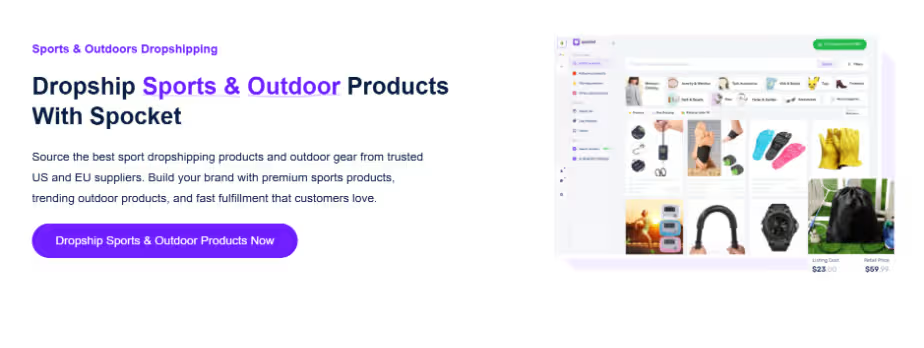
The first thing Dev did was filter for US and Canadian suppliers in the outdoor, sports, camping, and travel categories. His customers were mostly based in North America, and outdoor buyers are often shopping around specific trip dates.
If someone is leaving for a camping trip next Friday, they are not going to wait three or four weeks for a lantern, dry bag, or hiking accessory. Faster domestic shipping helped Dev in two ways. It improved the customer experience, and it reduced support work.
That mattered because Dev was not trying to build a business that required him to sit in front of a laptop all day. He wanted a store that could handle most of the operational work in the background.
His product catalog was intentionally simple.
He focused on compact, practical outdoor products that were easy to understand and easy to ship: camping lights, waterproof bags, hiking organizers, insulated bottles, picnic blankets, portable cookware, small first-aid kits, and beginner-friendly trail accessories.
He avoided products that were too bulky, fragile, sizing-heavy, or likely to create complicated customer questions. That product discipline made TrailReady Co. easier to run.
With Spocket, orders were processed automatically. Suppliers received order details, fulfilled the products, shipped them, and tracking information was sent back to customers without Dev needing to manage every step manually.
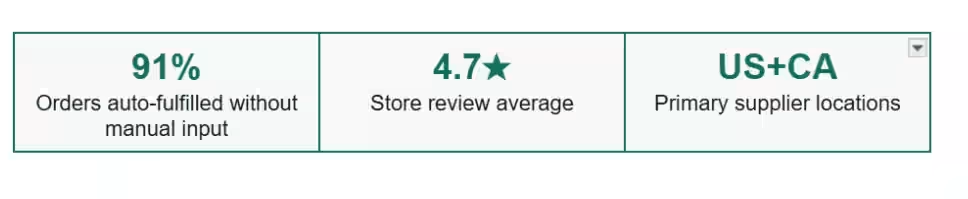
By the end of his first full summer season, about 91% of TrailReady’s orders were auto-fulfilled without manual input.
Dev still checked the store regularly during peak months, but the workload stayed manageable. During the busiest weeks, he averaged around three to five customer emails per day. Most were simple questions about delivery windows, bundle recommendations, or product use.
He could answer them in 20 minutes. For a part-time seller, that difference mattered. TrailReady Co. was not passive income. But it was realistic income.
Dev’s annual seasonal dropshipping playbook
Dev did not treat TrailReady Co. like a store that had to run at full speed all year. He built it around a repeatable yearly rhythm. That rhythm became the core of his seasonal dropshipping business strategy.
February: Refresh the catalog
February is Dev’s planning month.
He spends two weeks looking at the previous season’s performance. He checks which products sold well, which ones had the fewest support issues, which items earned good reviews, and which products were not worth keeping.
Then he browses Spocket for new outdoor gear, camping accessories, and travel-friendly products that could fit the TrailReady audience.
He usually tests five to seven new products before the season starts.
If a product feels useful, ships reliably, and matches the brand, it gets added to the spring catalog. If it feels gimmicky or too complicated, he skips it.
This is also when he updates product descriptions, improves collection pages, refreshes old blog posts, and prepares the store for spring traffic.
March: Warm up the store
March is the ramp-up period.
Dev starts with a small Google Shopping budget, usually around $15 to $20 a day. He does not expect massive revenue from this stage. He uses it to test which products people are clicking, saving, and buying before the real summer spike begins.
He also starts creating Pinterest content around camping checklists, beginner hiking gear, outdoor gift ideas, and weekend trip essentials.
By the end of March, Dev usually knows which products deserve more attention during peak season.
April to August: Peak selling season
April through August is when TrailReady Co. becomes active.
This is the only part of the year when Dev checks the store every day. He watches ad performance, monitors bestsellers, updates bundles, and keeps an eye on supplier availability through Spocket.
His strongest products usually fall into three categories:
- Beginner camping accessories
- Family outdoor trip essentials
- Lightweight hiking and trail gear
The best-performing offer was his “Weekend Trail Kit,” a simple bundle of small outdoor essentials for first-time campers and casual hikers.
The bundle worked because it solved a real customer problem.
Most beginner campers do not want to compare 25 different accessories. They want someone to tell them what they actually need for a weekend outside.
That bundle helped TrailReady reach a $64 average order value during peak season. By the end of the four-month selling period, the store generated $18.6K in seasonal revenue.
For Dev, that number felt right. It was enough to make the business worth continuing, but not so large that it required a full-time team or year-round pressure.
September: Wind down without shutting down
Once school starts again, Dev reduces ad spend almost completely.
He does not close the store. He simply stops actively pushing it.
In September, he sends one “autumn adventure” email to past customers, usually featuring hiking accessories, picnic gear, and lightweight outdoor products for fall weekends.
That gives the store a small extension after summer without requiring much effort.
October to January: Standby mode
From October through January, TrailReady Co. stays live but quiet.
The store still picks up occasional organic orders from blog posts, Pinterest pins, and returning customers. Some months bring in a few hundred dollars. Some months are slower.
Dev is fine with that.
The off-season is not supposed to be the main revenue period. It is when the store stays open without taking over his school year.
That was the entire point of the business.
How Dev uses the off-season to build next summer
Dev does not disappear completely during the off-season. He just changes the kind of work he does.
During the school year, he writes one detailed outdoor gear guide every month. These are practical, search-friendly posts designed to rank before the next summer season.
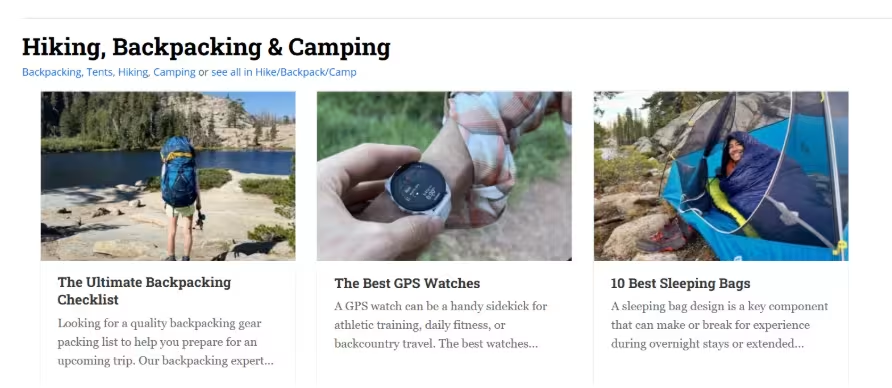
Some of his best-performing topics include:
- The Ultimate Backpacking Checklist for beginners
- Lightweight Hiking Gear for summer trails
- Family Camping Checklist for first-time campers
- Best outdoor gifts for hikers and campers
These posts do not always generate immediate sales in November or December.
But they create an SEO foundation. By the time spring arrives, the guides are already indexed. Some are ranking. Some are bringing in Pinterest traffic. Some are warming up buyers before they are ready to purchase.
That means Dev does not have to rely only on paid ads once outdoor demand spikes again. The content has already started doing the work.
In his second season, TrailReady grew more steadily with almost the same ad budget. The difference came from better content, improved bundles, returning customers, and organic traffic that had been building quietly in the background. That became Dev’s long-term advantage.
Seasonal sellers who only show up during the season usually plateau. Dev uses the off-season to make the next peak season stronger.
What seasonal sellers can learn from Dev
Dev’s story works because it is not built on unrealistic passive income promises. It is built on structure. He picked a niche with natural seasonal demand. He matched the business to his real-life calendar. He kept the catalog tight. He used Spocket to automate fulfillment and reduce operational pressure. Then he used the off-season to build content that would support the next selling season.
For anyone interested in outdoor gear dropshipping, camping products dropshipping, part-time dropshipping, or dropshipping for teachers, Dev’s approach is a practical blueprint.
Build a business that works around your life
You do not need to quit your job to build a serious ecommerce business. You do not always need a store that runs at full speed all year. Sometimes the smarter move is to build a business that knows when to peak and when to rest. Dev did not fight the seasonality of outdoor gear. He used it. And with Spocket, he built a business that could work around his life instead of taking it over.
With Spocket, you can source outdoor products from reliable US and Canadian suppliers, automate fulfillment, sync inventory, and run a seasonal store without spending the entire year managing orders manually.